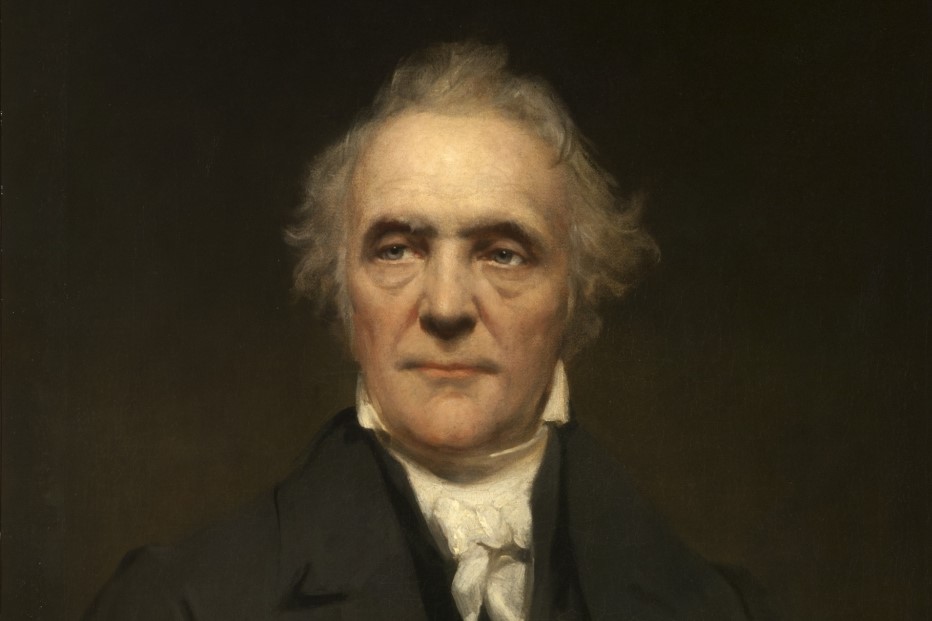
Below is an alphabetically arranged catalogue of several of Thomas Chalmers’ primary sources with the digital files made accessible. Where I’ve audio-recorded the resource, the title has been hyperlinked. So click to listen away, all you multi-taskers! [A work in progress here; and starting with his material directly or indirectly related to his advocacy of parish missions.]
Last week, I had a Puritan Seminary student join me (Puritan alum, Class of 2005), for some intensive urban outreach in central Rhode Island. Anderson Oliveira, a Brazilian Presbyterian student, had sat in on my Reformed Parish Mission presentation in Grand Rapids last February and expressed interest in interning. So he flew out last Wednesday, and we logged many hours together over several days bringing the Gospel of the Kingdom to my Warwick and especially South Providence parishes. It was a joy to have him tag along and participate.
He started out helping me in the mundane task of printing and folding Gospel leaflets. Not glamorous, but ever-so-necessary. The particular one we used for most of the visits included the prophecy of the Suffering Servant of Isaiah 53. We often used this text as a launchpad – as Phillip of old – to announce to sinners the vicarious Remedy. Each doorstep talk was a doorway to heaven, opened on earth. But alas! Though heaven’s door is set open to sinners, the Spirit of God must move them to take that vital step. And so Anderson and I frequently stopped to plead with the Lord, that He might send forth His irresistible Wind, who blows where He wills.
Any confessionally Reformed pastors, elders, or theological students, want to read and study Thomas Chalmers on parish missions? Interested in also talking application, the nuts and bolts of how these principles might be applied in the modern day? Have you “chalked out” a parish yourself and want to compare notes, share trials and successes, and troubleshoot problems? Or are you a church member who is mission-minded and interested in learning more?
I’ve been reading, researching, and writing on Chalmers’ parish mission model for about 15 years and have been trying to apply his principles in my own pastoral ministry almost that long. If you’d like participate in a group by video call to talk through readings in Chalmers and other Reformed figures who advocated and practiced parish missions, let me know.
Drop me a note. My e-mail is mjives dot refparish at gmail dot com, text me at 515-783-5637, or message me through Facebook. You’ll then be on the invite list with the Zoom call-in information for each meeting.
Next Meeting: Thursday, November 18, 2021 @ 4:00 p.m. EST
“A Charge to New Elders at the Tron Kirk, Glasgow” (1816)
Classic Presbyterianism has been enjoying a small renaissance. It seems like every day I’m encountering new people and pastors embracing the “regulative principle of worship,” singing psalms exclusively, removing instruments in church, and objecting to holy days of human origin, such as Christmas. Sacred cows are a-falling, or at least are being questioned.
With respect to Christmas, then, it’s been reassuring to see more and more voices pointing out its pagan origins, and more and more being willing to cross the personal Rubicon … and not looking back. I rejoice in these things and thank the Lord for any and all Reformation gains. But I am concerned that for some, even good fathers and brothers in the faith, certain concessions are made that I fear leave a weed in place to grow back in full force. In other words, I respectfully express my concern about the informal retention of Christmas while officially going on the record as against it.
While reading through a dissertation treating confessional subscription among Presbyterians prior to the Adopting Act of 1729, I came across a discussion of the English Presbyterian Daniel Wilcox. Apparently, the influence of Enlightenment thinking regarding authority and toleration was infiltrating English Presbyterians at that time in a big way, and even Arianism began to rear its ugly head. If I’m not mistaken, this would be the caldron from which Unitarianism basically took over Presbyterianism in England.
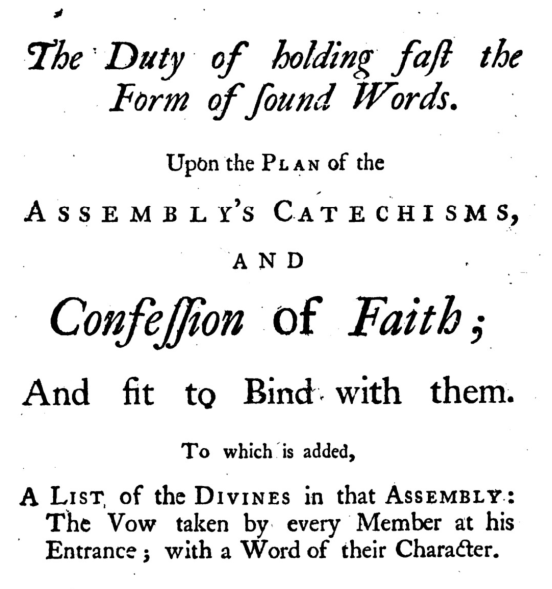
During this intermediate period, Wilcox published a short justification for confessions and the practice of confessional subscription. Very interestingly, he puts it in the form of a catechism! Just recorded it, which you can access here.
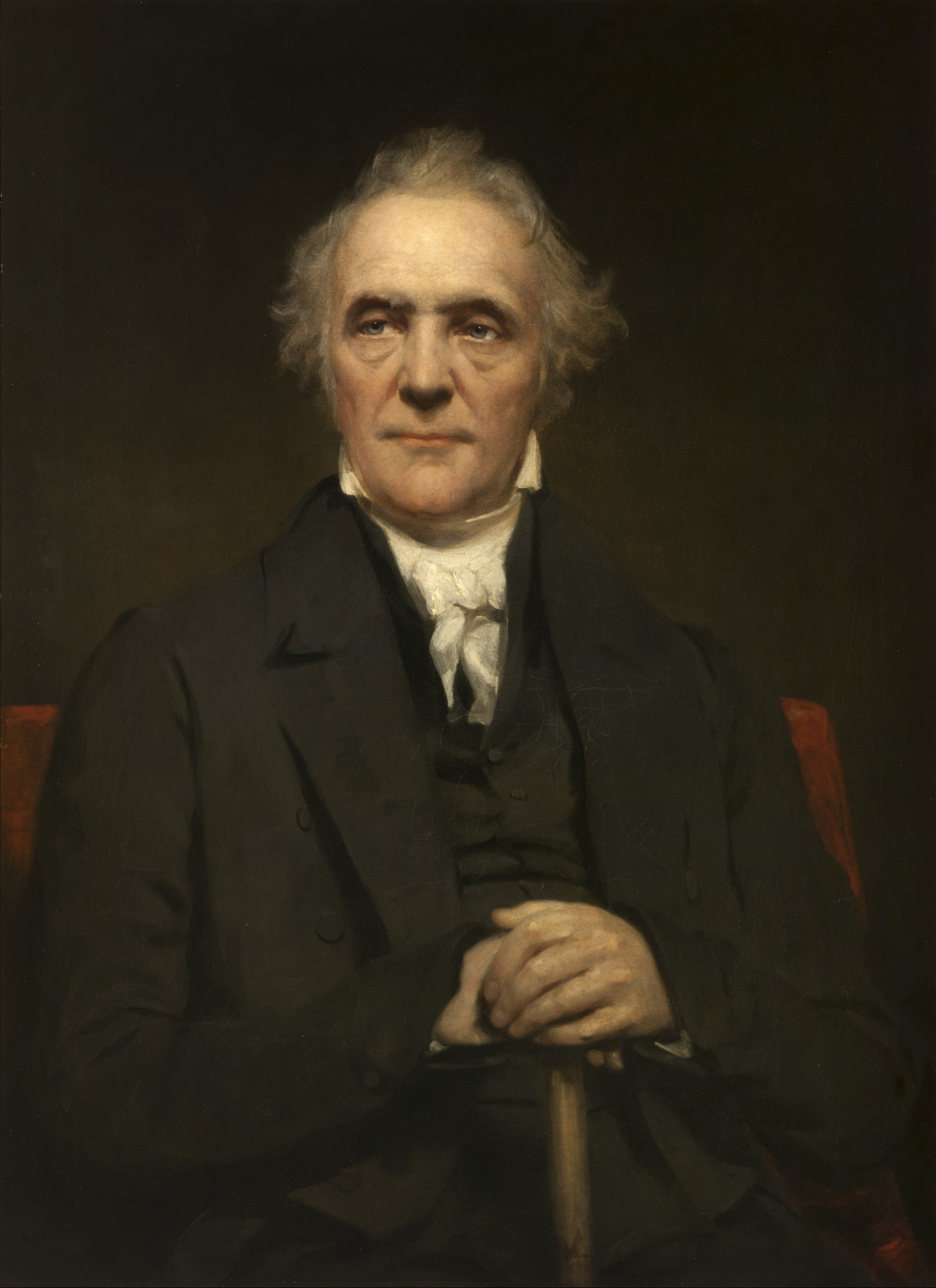
I recently added a tremendous sermon by Thomas Halyburton (1674-1712), representing some of the best of the old, venerable Old Church of Scotland. Explore further recorded sermons at WPE Audio!
Dr. Beeke below gives an introduction to Haylburton, who was buried next to Samuel Rutherford:
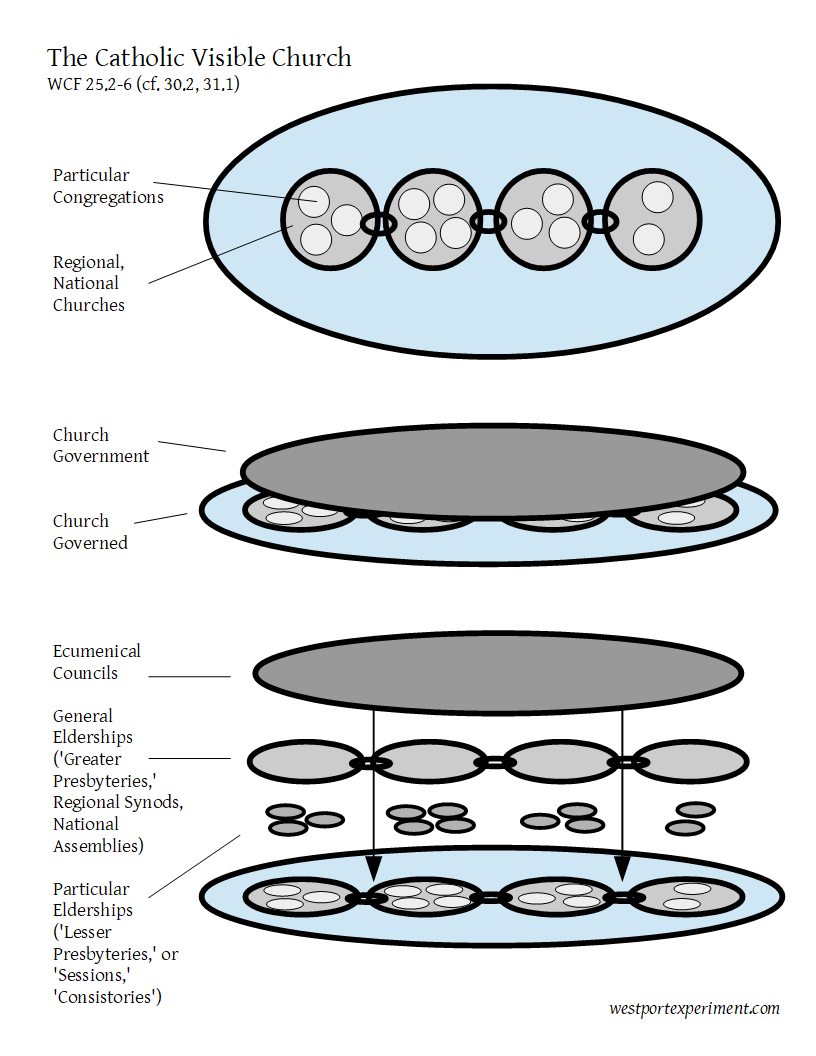
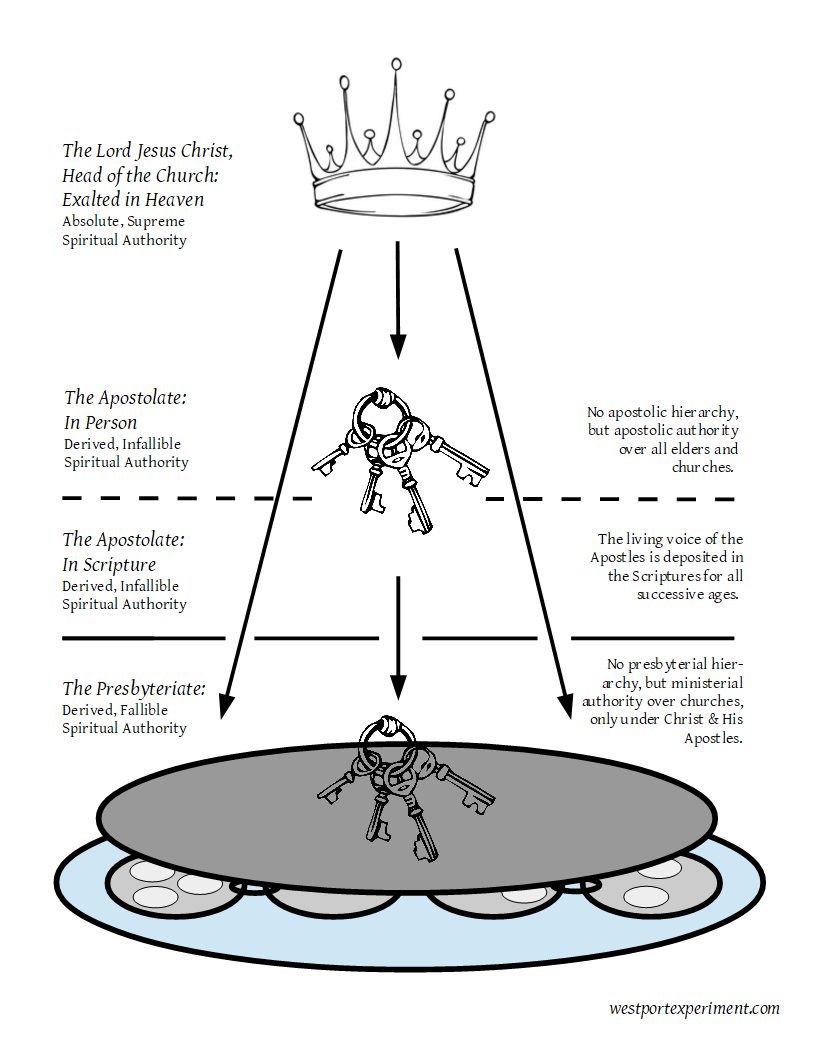
I designed the following diagrams to illustrate my recent lesson on the Reformed doctrine of the “Catholic Visible Church” (WCF 25.2-6; cf. 30.2, 31.1). Watch the class here.
I could use some helpers, from near or far. Here’s the situation.
I’ve been doing a series in our second services on “Reformed Biblical Theology” (or Covenant Theology, if you like), tracing the one unfolding plan of God to save His people through Christ. The original purpose – beyond edifying our own folks locally – was to build a distance learning course for Westminster Theological Academy, our denomination’s program to train Liberian pastors and theological students. Since then, opportunities to use it among Spanish speakers have developed, both at home and abroad. A theological academy in Latin America has expressed interest in it, and now I’ve been approached by a Hispanic pastor here in Providence who is trying to get a Bible school off the ground.
Because my Spanish is not yet at the level where I can preach and teach in it, I need to utilize helpers. I’m considering a subscription to a transcription service to render my sermons/lectures into English manuscripts. Before they are translated into Spanish, I just need a volunteer (or more) to listen to the original audio, edit, and perfect the English manuscript. Then, I could a bilingual helper – fluent in English & Spanish – to translate the English manuscript into a Spanish one. We can then take it from there, whether reading and recording into audio, or utilizing for video subtitles.
In the following quote, Chalmers explains how a territorial establishment, where parish missions bring the Gospel to every home and hearth, is a double blessing. Even if few souls are saved, the social and moral impact of the Gospel effort leavens the lump:
“And perhaps it will give in your eyes less of a Utopian, and more of an experimental character, to our anticipations of a result so general—if we ask you to consider the just observation of Mr. Wilberforce, on the effect of Christianity even beyond the circle of its own proper and genuine disciples. It elevates the general standard of morals, in every country or neighbourhood which it enters. Even though it should but spiritualize the few, it civilizes the many. Over and above its direct influence on those whom it converts, it has, through the medium of their example and their virtues, a reflex or secondary influence on the families of every little vicinity around them-insomuch that the sanctities and the extraordinary graces of a small number, with the influence of a purifying and preserving salt on the general mass, tell, by a certain overawing power, in restraining the profligacies, and so in raising the character for decency and morals of society at large. This will be remarkably seen in any parish that is under a reclaiming process from the out-fields of heathenism, if the experiment be but well and vigorously conducted. We do not say that the minister will Christianize all; or that he will introduce the worship of God, the voice of psalms, into every family. But the melody that is heard in the habitations of the righteous, will have a certain softening and subduing effect on the inmates of other habitations; and it will be found no romance, but in strict accordance with the realities of human nature, if-by means of his schools and of his other parochial institutes, and (of no small account either) if, by means of his own frequent and various intercourse with the people, and the dignifying effect upon all the householders of their personal acquaintance with the clergyman, and of the personal cognizance which he takes of them and of their families—he mollifies, and to a very great degree, the general aspect of that parochial community over which he presides ; and bequeaths to his successors a far blander and better generation, than he had to encounter himself at the outset of his great undertaking” (Works 14:334-335)

 West Port Experiment