Feeds:
Posts
Comments

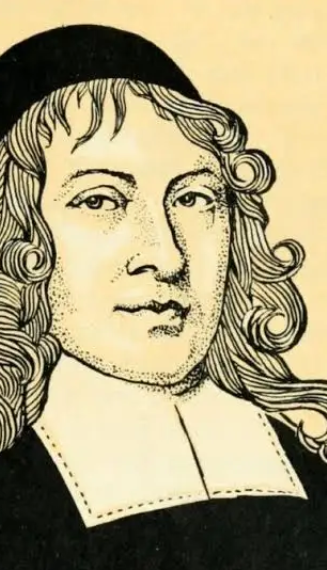
Where all, or the most considerable part of free Planters profess their desire and purpose of enjoying, and securing to themselves and their Posterity, the pure and peaceable enjoyment of the Ordinances of Christ in Church-fellowship with his People and have liberty to cast themselves into that Mold or Form of a Common-wealth, which shall appear to be best for them. Tending to prove the Expediency and Necessity in that case of entrusting free Burgesses which are members of Churches gathered amongst them according to Christ, with the power of Choosing from among themselves Magistrates, and men to whom the Managing of all Public Civil Affairs of Importance is to be committed. And to vindicate the same from an Imputation of an Under-Power upon the Churches of Christ, which hath been cast upon it through a Mistake of the true state of the Question.

Reverend Sir,

The Sparrow being now gone, and one days respite from public Labors on the Lords-day falling to me in course, I have sought out your Writing, and have reviewed it, and find (as I formerly expressed to your self) that the Question is mis-stated by you; and that the Arguments which you produce to prove that which is not denied, are (in reference to this Question) spent in vain, as arrows are when they fall wide of the Marks they should bit, though they strike in a White which the Archer is not called to shoot at.

The terms wherein you state the Question, are these:

Whether the Right and Power of Choosing Civil Magistrates belongs unto the Church of Christ?

To omit all critical Inquiries, in your thus stating the Question, I utterly dislike two things.

* * * * *

Read the rest here or view a facsimile of the original below. I have also recorded it in audio here. Also view all our audio resources at WPE Audio. This discourse is especially meaningful to me personally, since my ancestor, William Ives came over the Atlantic with John Davenport and eventually signed his name to the original town covenant of the New Haven Colony in Connecticut.

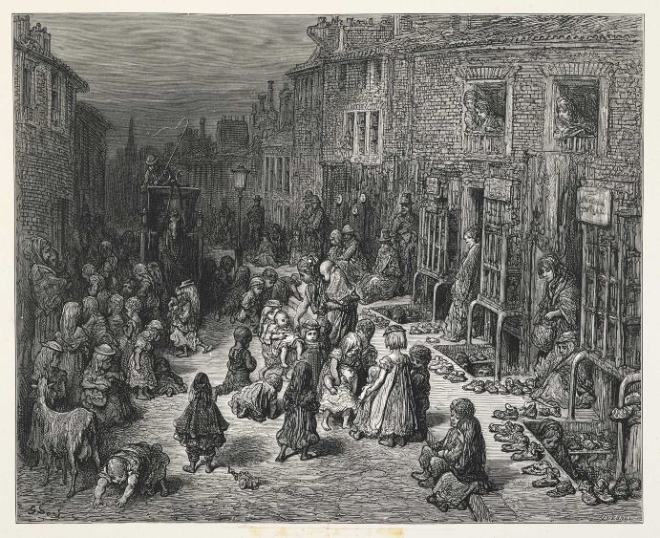
As Reformed people, we are deeply committed to the covenant. We have a solemn responsibility to our children—who after all are not ours, but the Lord’s. We as parents and as pastors have a sacred trust. As pastors, we require solemn vows of parents as they present their covenant children for holy baptism. As parents, we take those public vows in deep, humble gratitude for the manifold grace of God in ‘spreading His skirt over our little ones.’ With faith, we lay hold of the gracious promise, yet with a real trembling for the stewardship that is ours to raise them up in the “fear and admonition of the Lord.”

And yet, while our covenant-tradition is clothed with solemnity and gravitas, the lighter side of life shines through (or, it ought to!) as we endeavor to light the flame of faith in our children. There is a place for play; and, in fact, there is great promise in it. I’m increasingly convinced after twenty years of pastoring, twenty-five years of parenting, and now almost two years of grand-parenting, that one major ingredient of parenting and, yes, even pastoring, involves play. And I believe this is all the more vital in small, first- and second-generation Reformed and Presbyterian churches who lack the longevity of larger multi-generational churches. The margins are smaller and the risk of losing our children greater. Especially in our circles, the imperative to do all we lawfully can to create a home and church environment where our covenant children will naturally want to profess faith, commune, marry, bear children, and put down deep roots in our rootless world.

But whether your church is large or small and your subculture more fragile or more robust, these children are still ‘ours to lose.’ Yes, the Holy Spirit must regenerate. Enculturation is a barren womb without free and sovereign grace. But our responsibility, in giving and taking baptismal vows, is not just to catechize and keep good order in home and church. We may and must, if I may put it this way, “win” our children winsomely. And so I say, let us play.

Continue Reading »

Once again, good material from Timon Cline. The original address on which he comments is pretty interesting as well, though Timon rounds things off so as not to dismiss all legitimate interest by the commonwealth on the national birthrate.

The following is included as one of several appendices to Princeton Seminary’s first president and American Presbyterian worthy, Archibald Alexander. Entitled “Counsels to Christian Mothers,” this piece is worth the cost of the book, and the book itself truly worth its weight in gold. This is definitely one of my all-time favorites, a rich exploration of Christian experience in all its varieties, complexities, trials and triumphs, and all from a confessionally Reformed viewpoint and drawn from the heart of a seasoned physician of souls. The Banner of Truth has been continuously publishing it for I don’t know how long, and for good reason. Also, if you’d like to hear a recording of it, I did that several years back (I have improved in quality since then, so fair warning!). For more audio resources, visit WPE Audio here.

* * * * * *

When I address myself to Christian mothers, I do not mean to intimate non-Christian mothers stand in no need of admonition. Alas! that in a Christian country there should be mothers who have nothing of the spirit of Christ! Young people often promise themselves that they will attend to true religion after they are married and settled in the world. How preposterous is this! It ought rather to be their resolution not to think of entering into a state involving such weighty responsibilities, and the exercise of so many virtues—until they have become the possessors of true religion! Without vital piety how is it possible for any woman rightly to fulfill the duties of a wife, and especially of a mother? I feel that no woman destitute of religion is fit to become a wife and mother. Only think of it—an impious mother! If it were not so common, the very expression would excite emotions similar to those which we experience when we hear of an impious minister.

I address Christian mothers, because from them alone can I expect a patient hearing. I address Christian mothers, because all mothers ought to be sincere Christians. Is there a person on earth, whose mind is so perverted by prejudice, as not to perceive a congruity between piety and this tender relation? It was formerly a current opinion, even among infidels that religion was an ornament and safeguard to a woman. I knew one distinguished man who had renounced all belief in the Christian religion himself, who encouraged it in his wife, and furnished her with all the necessary means of attending church; and when one of his friends complained to him, that his wife was becoming pious, which gave him great concern, he told him that he was a fool, for that nothing was more suitable and desirable than that a wife should be pious. Even infidels are constrained, like the demons of old, to give their testimony in favor of Christ. Many ungodly men desire to obtain wives of genuine piety, and few intelligent men in our country would be pleased with a female infidel. Such a character was so rare in Virginia forty years ago, when infidelity abounded among the higher classes of men, that when a certain lady was pointed out as the advocate of deistical opinions, it created a revulsion of feeling in almost every mind.

Here I take pleasure in saying that in no class of society anywhere have I found examples of more pure and elevated piety than among the ladies of Virginia. And I have reason to believe that these examples have rather been increased than diminished since I left my native State. It may, in an important sense, be said that the Commonwealth has been preserved from utter destruction by the prudence, purity and piety of Virginian mothers. They have been the salt which has arrested the progress of moral corruption in the mass of society. Accordingly there is no country in the world, perhaps, where mothers are so much respected by their children, and have so great an influence over them. Ask almost any young Virginian where he will look for the brightest examples of moral excellence, and his thoughts will turn at once to the character of pious females, and perhaps to his own mother, if she happens to be pious.

Continue Reading »

While doing some research in a related area, I ran into this first article by Torrance Kirby in the great Italian Reformer, Peter Martyr Vermigli. I know rather little of him, though he has been recognized as a major figure alongside Calving, Bullinger, etc. I wasn’t aware of how involved he was with the Church of England. As of the moment, I haven’t read the following two I post here, but they look similarly interesting. Here’s the source for these online.

Continue Reading »

As we turn in deep gratitude to the Most High for all His blessings towards us, let us remember especially the unique favor He has shown to our fathers and mothers of the faith who first came to these shores on a holy “errand into the wilderness.” In the words of the Mayflower Compact (1620), their cause was “undertaken for the Glory of God, and Advancement of the Christian Faith, and the Honour of our King and Country.”

Let me encourage you to listen to our Pilgrim and Puritan fathers. In addition to other amateur recordings, I’ve been steadily adding to this collection of sermons, treatises, and narratives from the pen of these giants of the faith, who helped found this “City on a Hill.” And if you’d like to hear an early account of the Pilgrim colony, check out Cotton Mather’s, “Magnalia Christi Americana 1.1: Discoveries of America.” Also, John Winthrop’s original sermon where he speaks of the “city on an hill,” is available under “A Modell of Christian Charity.”

And as we thank the Lord today, lest us with humility and earnestness implore Him to restore the former glory through national repentance. He did it before, and He can do it again! “Wilt thou not revive us again: that thy people may rejoice in thee” (Psalm 85:6)?

Visit the WPE Audio page for our full audio library.

Eusebius of Ceasarea (ca. 260-339). And thus note, not a 2CV.

“You also wrote me concerning some supposed image of Christ, which image you wished me to send you. Now what kind of thing is this that you call the image of Christ? I do not know what impelled you to request that an image of Our Saviour should be delineated. What sort of image of Christ are you seeking? Is it the true and unalterable one which bears His essential characteristics, or the one which He took up for our sake when He assumed the form of a servant?  . . . Granted, He has two forms, even I do not think that your request has to do with His divine form. . . . Surely then, you are seeking His image as a servant, that of the flesh which He put on for our sake. But that, too, we have been taught, was mingled with the glory of His divinity so that the mortal part was swallowed up by Life. Indeed, it is not surprising that after His ascent to heaven He should have appeared as such, when, while He—the God, Logos—was yet living among men, He changed the form of the servant, and indicating in advance to a chosen band of His disciples the aspect of His Kingdom, He showed on the mount that nature which surpasses the human one—when His face shone like the sun and His garments like light. Who, then, would be able to represent by means of dead colors and inanimate delineations (skiagraphiai) the glistening, flashing radiance of such dignity and glory, when even His superhuman disciples could not bear to behold Him in this guise and fell on their faces, thus admitting that they could not withstand the sight? If, therefore, His incarnate form possessed such power at the time, altered as it was by the divinity dwelling within Him, what need I say of the time when He put off mortality and washed off corruption, when He changed the form of the servant into the glory of the Lord God. . . ? … How can one paint an image of so wondrous and unattainable a form—if the term ‘form’ is at all applicable to the divine and spiritual essence—unless, like the unbelieving pagans, one is to represent things that bear no possible resemblance to anything. . . ? For they, too, make such idols when they wish to mould the likeness of what they consider to be a god or, as they might say, one of the heroes or anything else of the kind, yet are unable even to approach a resemblance, and so delineate and represent some strange human shapes. Surely, even you will agree that such practices are not lawful for us.

“But if you mean to ask of me the image, not of His form transformed into that of God, but that of the mortal flesh before its transformation, can it be that you have forgotten that passage in which God lays down the law that no likeness should be made either of what is in heaven or what is in the earth beneath? Have you ever heard anything of the kind either yourself in church or from another person? Are not such things banished and excluded from churches all over the world, and is it not common knowledge that such practices are not permitted to us alone?

Continue Reading »

Just finished listening to an audiobook version of Wayne A. Mack’s Strengthening Your Marriage. Highly recommended. Especially appreciated his chapter on developing and keeping up good communication between spouses, a really insightful and practical chapter on figuring out your shared finances, and—what perhaps surprised me the most—a chapter on child-rearing. The latter makes buckets of sense when you realize that marital tension is aggravated by poor and sloppy discipline, or beneath that, an unbiblical “philosophy” of child-rearing.

Great refresher for strong marriages (we can never just coast!), a solid primer for those in the early glow, and a life-preserver for those treading water and wanting to get back to shore.

Pick up and read! Or, if you have access to Hoopla or other free library services, have a listen!

I came across this excellent piece by Virgil Walker, entitled “The Moment the Mask Slipped: How Christian Nationalism Opened the Door to Ethnic Hostility.” Extremely well-written, poignant, and so needed in the present hour. I also appreciate how he writes from a position of real sympathy for nationalism, patriotism, and acknowledgment of racial diversity—at least, as defined with confessional “guardrails.” This is hardly another tired liberal, globalist harangue, tone-deaf to real fears and grievances of young white Americans. In doing this, I think he meets those ‘halfway’ who find themselves drawn to the more radical online provocateurs out there.

I haven’t fact-checked this. What little I have done lends credibility to this account. But if anyone has evidence to the contrary, send me a note: michael@reformedparish.com.

* * * * *

There are moments in cultural life when an undercurrent becomes undeniable—when quiet tremors surge into a cultural earthquake.

This week was one of those moments.

A friend and brother in Christ, Alex Kocman, posted a simple photo of his adopted son turning thirteen. A family milestone. A request for prayer. A moment Christians should instinctively celebrate.

But the post detonated into more than seven million views.
And what followed wasn’t merely disagreement. It wasn’t a debate about prudence or policy.

It was ethnic hostility.
Open. Public. Unmasked.

Comments attacking the child’s dignity.
Insinuations that a white father “wasted his time” on a black boy.
Suggestions that adoption should be limited to “your own kind.”
Warnings that interracial families “destroy the West.”
Accusations that bringing a child into the home from another ethnicity is “inviting a foreigner into your bloodline.”

And here’s what matters:

Many of those voices weren’t from atheists, leftists, or anonymous trolls.
They came from people who openly identify with Christian Nationalism.

Not the entire movement.
But a growing, vocal, unrestrained wing of it.

And that’s exactly what I warned about long before this week.

Read the rest here.

Such a pleasant surprise to learn of the rich culture of psalmody in the persecuted Pakistani church from Voice of the Martyrs! (Standard caveats with VOM.)