You who are by office “fishers of men,” have you caught little, or even nothing? Lose not heart. Take it from good Master Boston:

You who are by office “fishers of men,” have you caught little, or even nothing? Lose not heart. Take it from good Master Boston:
Posted in Free Offer of the Gospel, Gospel Proclamation, Missiology, The Free Offer of the Gospel, The Gospel, Thomas Boston | Leave a Comment »
The following was an excellent article by Michael Foster on a wise and very pastoral approach to conspiracy theories and conspiratorialism. Shrewd. Especially appreciate the “80/20” guideline.
* * * *

From the time I was a kid, my mind ran toward the strange and the shadowy corners of the world. I ate up Arthur C. Clarke’s Mysterious World and Leonard Nimoy’s In Search Of. Later it was Unsolved Mysteries and Sightings. But it wasn’t just TV. Back when the library was the closest thing we had to the internet, I practically lived in it. I checked out any oddball book I could find. By twelve I had already plowed through Erich von Däniken, and a year later I grabbed Graham Hancock’s first book. Ancient aliens, lost civilizations, Bigfoot, alternate histories, you name it, I read it. Probably more than anyone else I knew.
By high school, I loved batting around theories about JFK, the moon landing, and Roswell. Stuff people talk about casually today in a post–Joe Rogan world, but back then you had to go hunting for it.
Posted in Contemporary Issues, Culture, Social Issues | Leave a Comment »
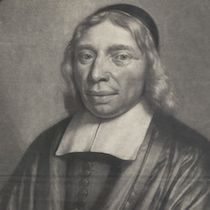
“Question: Will the Jewish nation always be a rejected nation, or will the entire nation yet come to repentance, believing and confessing that the Messiah has already come, and that Jesus is the Christ?
“Answer: When speaking of the conversion of the Jews, we understand this to refer to the entire nation, and not only to Judah and Benjamin who had returned from Babylon and lived in Canaan until the destruction of Jerusalem. Rather, it also refers to the ten tribes. These tribes neither remained together nor are they hidden in an unknown corner of the world, as the Jews fabricate. Instead, they partially intermingled with the eastern nations, forsaking the Jewish religion. Another part, having dispersed themselves among the nations of the earth, continued to adhere to their religion; whereas a very large multitude also returned to Canaan and intermingled with the other Jews. Anna, the prophetess, the daughter of Phanuel from the tribe of Aser, served God at Jerusalem in the temple (Luke 2:36).
“Furthermore, very many from the tribes of Judah, Benjamin, and Levi did not return from Babylon. Among those who did return were also very many who again left their native land due to internal disturbances, and thus were dispersed throughout the entire world among various nations, still maintaining the Jewish religion. James wrote to the “twelve tribes which are scattered abroad” (James 1:1). The dispersed Jews came from all manner of nations to Jerusalem on the feast days for the purpose of worship, as is to be observed in (Acts 2:5-11). After the destruction of Jerusalem, the entire Jewish nation was dispersed and no longer has a specific residence. We are speaking here of this nation without distinction, and we believe that it will acknowledge that Jesus is the Christ—the Messiah who was promised in the Old Testament and anticipated by the fathers. This is the general sentiment of the theologians of all ages—even Lutheran and papist theologians. There are, however, also those who doubt this, and some deny it. In order to confirm this matter, we shall not now say all that can be said about it. Rather, we shall only 1 take two proofs from the New Testament and give them a place of prominence, since they are not subject to any evasive arguments of substance. After having given a clear exegesis of them, the few proofs we shall present from the Old Testament will give us more clarity and steadfastness in this matter.”
Read the rest below (pdf p. 519, doc. p. 510; source)
Posted in Biblical Interpretation, Biblical Theology, Eschatology, Israel; Calling of & Mission to the Jews, Redemptive History | Leave a Comment »
As I am about to teach a seminary course in NT Theology this coming semester in our presbytery’s theological training program, I found this chapter in Heidegger choice. Here is yet another example of how classic, orthodox Reformed theology definitely assigned a role for what later would be designated “Biblical Theology,” or as I far prefer to call it, Economic Theology. As God has “spoken at sundry times and divers manners unto the fathers by the prophets,” it is then fully appropriate to enquire how God has revealed Himself in the various economies of His one, unified, eternal plan.
Posted in Biblical Theology, Redemptive History, Reformed Orthodoxy, Revelation | Leave a Comment »
The difference between the old and the new economy; superiority of the new over the old, the inferiority of the old. Distinctions within biblical language to reflect the manifold character of God’s revelation to us, while fundamentally one purpose and plan of God. Within God’s economy, there is unity in diversity. Further, some of the superior qualities of the new administration consist in a relatively greater degree of spirituality and perception of spiritual things and the eternal inheritance, above the more temporal attention of the old economy.
* * * * *
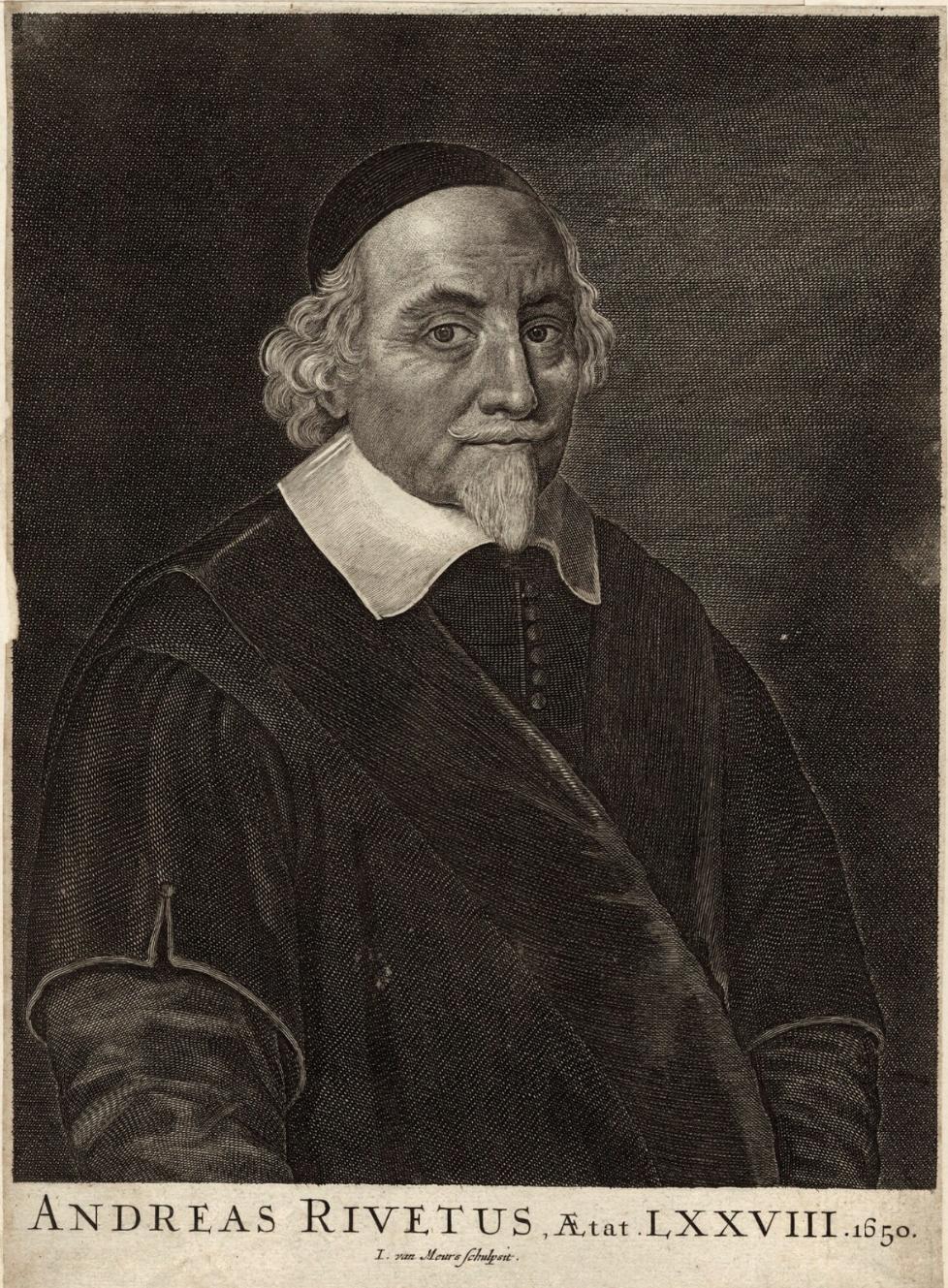
Moreover, they may be called the “old” and “new” testaments in a literal sense or a figurative one. And the words may be used with wide or narrow meaning. When the sense is literal, the word “old testament” stands for the Law, insofar as it was given to the Jewish people through Moses. It promised life to them on condition of perfect obedience, with the provision of a curse upon the transgressors, and it brought with it an unbearable burden of legal rituals and the yoke of a highly restrictive political order. For this reason it is called “the letter that kills,” “the dispensation of death and condemnation,” “bearing children for slavery, like Hagar” (2 Corinthians 3:6,7; Galatians 4:23, 24). Placed opposite to this is the “new testament” (in the strict sense), the teaching of spiritual grace and salvation fully revealed by the Son of God himself from the bosom of the Father and spread abroad by the apostles’ preaching. It promises righteousness without price, and life everlasting through and for the sake of Christ the testator unto all who believe in him through the grace that he will lavish on them abundantly.
Continue Reading »Posted in Biblical Interpretation, Biblical Theology, Covenant Theology, Redemptive History, Uncategorized | Leave a Comment »
Posted in Experimental Religion & the Cure of Souls, Holy Scripture, Practice of Piety | Leave a Comment »
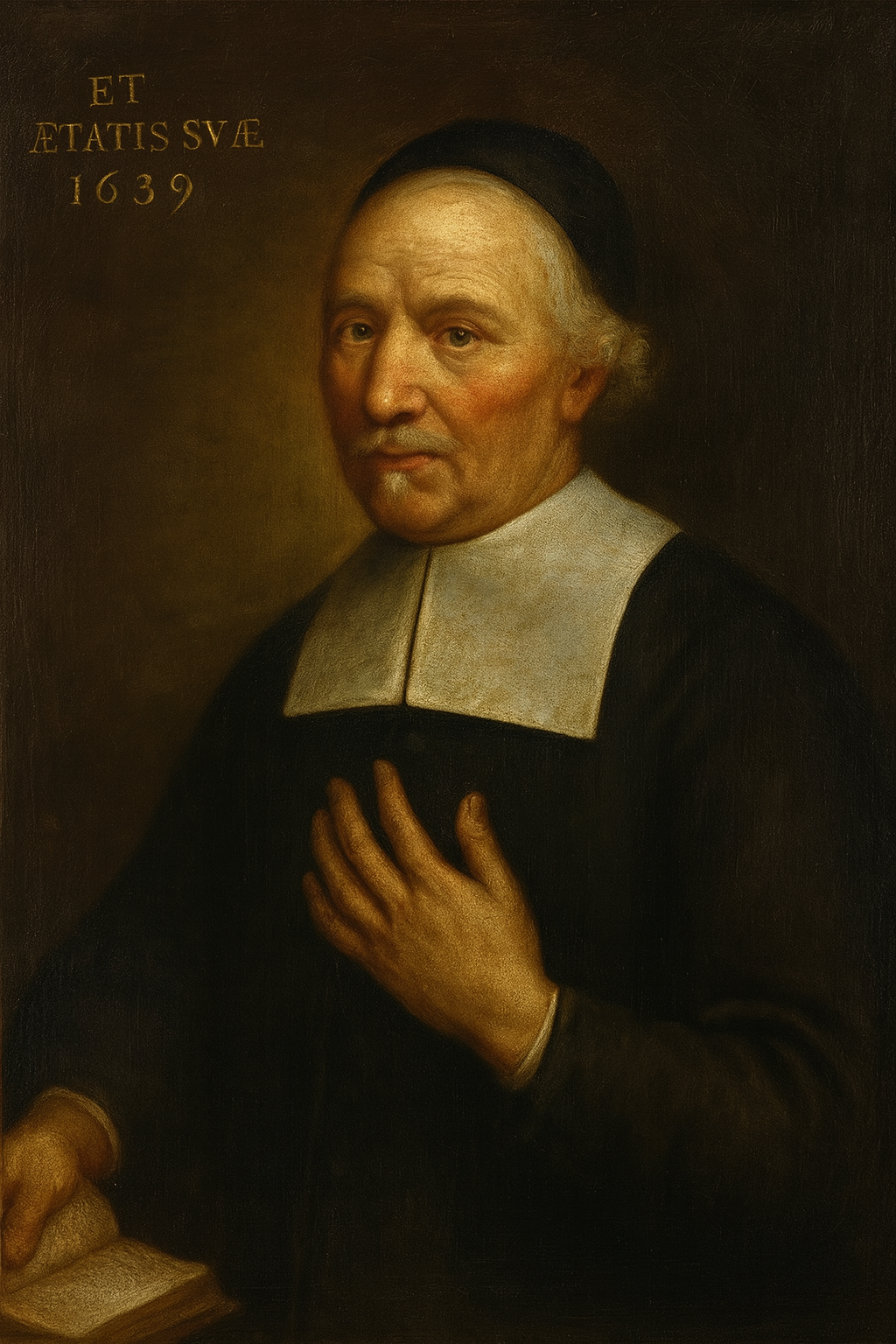
Where all, or the most considerable part of free Planters profess their desire and purpose of enjoying, and securing to themselves and their Posterity, the pure and peaceable enjoyment of the Ordinances of Christ in Church-fellowship with his People and have liberty to cast themselves into that Mold or Form of a Common-wealth, which shall appear to be best for them. Tending to prove the Expediency and Necessity in that case of entrusting free Burgesses which are members of Churches gathered amongst them according to Christ, with the power of Choosing from among themselves Magistrates, and men to whom the Managing of all Public Civil Affairs of Importance is to be committed. And to vindicate the same from an Imputation of an Under-Power upon the Churches of Christ, which hath been cast upon it through a Mistake of the true state of the Question.
Reverend Sir,
The Sparrow being now gone, and one days respite from public Labors on the Lords-day falling to me in course, I have sought out your Writing, and have reviewed it, and find (as I formerly expressed to your self) that the Question is mis-stated by you; and that the Arguments which you produce to prove that which is not denied, are (in reference to this Question) spent in vain, as arrows are when they fall wide of the Marks they should bit, though they strike in a White which the Archer is not called to shoot at.
The terms wherein you state the Question, are these:
Whether the Right and Power of Choosing Civil Magistrates belongs unto the Church of Christ?
To omit all critical Inquiries, in your thus stating the Question, I utterly dislike two things.
* * * * *
Read the rest here or view a facsimile of the original below. I have also recorded it in audio here. Also view all our audio resources at WPE Audio. This discourse is especially meaningful to me personally, since my ancestor, William Ives came over the Atlantic with John Davenport and eventually signed his name to the original town covenant of the New Haven Colony in Connecticut.
Posted in Constantine, Establishments, New England Puritanism, Two Kingdoms Theology | Leave a Comment »
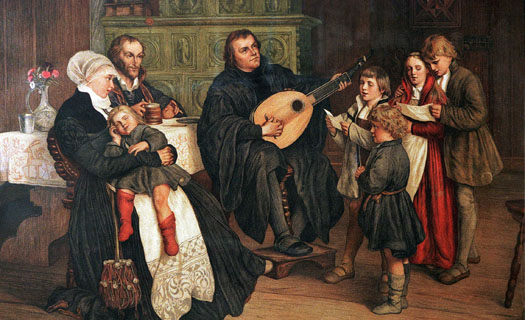
As Reformed people, we are deeply committed to the covenant. We have a solemn responsibility to our children—who after all are not ours, but the Lord’s. We as parents and as pastors have a sacred trust. As pastors, we require solemn vows of parents as they present their covenant children for holy baptism. As parents, we take those public vows in deep, humble gratitude for the manifold grace of God in ‘spreading His skirt over our little ones.’ With faith, we lay hold of the gracious promise, yet with a real trembling for the stewardship that is ours to raise them up in the “fear and admonition of the Lord.”
And yet, while our covenant-tradition is clothed with solemnity and gravitas, the lighter side of life shines through (or, it ought to!) as we endeavor to light the flame of faith in our children. There is a place for play; and, in fact, there is great promise in it. I’m increasingly convinced after twenty years of pastoring, twenty-five years of parenting, and now almost two years of grand-parenting, that one major ingredient of parenting and, yes, even pastoring, involves play. And I believe this is all the more vital in small, first- and second-generation Reformed and Presbyterian churches who lack the longevity of larger multi-generational churches. The margins are smaller and the risk of losing our children greater. Especially in our circles, the imperative to do all we lawfully can to create a home and church environment where our covenant children will naturally want to profess faith, commune, marry, bear children, and put down deep roots in our rootless world.
But whether your church is large or small and your subculture more fragile or more robust, these children are still ‘ours to lose.’ Yes, the Holy Spirit must regenerate. Enculturation is a barren womb without free and sovereign grace. But our responsibility, in giving and taking baptismal vows, is not just to catechize and keep good order in home and church. We may and must, if I may put it this way, “win” our children winsomely. And so I say, let us play.
Continue Reading »Posted in Culture, Family & Family Issues, Family Religion, Fatherhood, Moral Suasion, Motherhood & Childbearing, Paternalism & Patriarchy, Transgenerational Faith, WPE Editor | Leave a Comment »
Once again, good material from Timon Cline. The original address on which he comments is pretty interesting as well, though Timon rounds things off so as not to dismiss all legitimate interest by the commonwealth on the national birthrate.
Posted in Culture, Family & Family Issues, Motherhood & Childbearing, Political Theory & Theology | Leave a Comment »
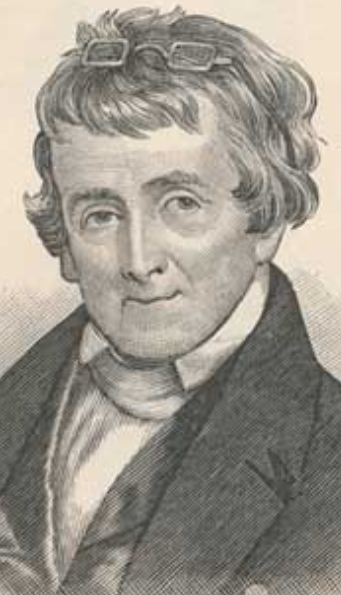
The following is included as one of several appendices to Princeton Seminary’s first president and American Presbyterian worthy, Archibald Alexander. Entitled “Counsels to Christian Mothers,” this piece is worth the cost of the book, and the book itself truly worth its weight in gold. This is definitely one of my all-time favorites, a rich exploration of Christian experience in all its varieties, complexities, trials and triumphs, and all from a confessionally Reformed viewpoint and drawn from the heart of a seasoned physician of souls. The Banner of Truth has been continuously publishing it for I don’t know how long, and for good reason. Also, if you’d like to hear a recording of it, I did that several years back (I have improved in quality since then, so fair warning!). For more audio resources, visit WPE Audio here.
* * * * * *
When I address myself to Christian mothers, I do not mean to intimate non-Christian mothers stand in no need of admonition. Alas! that in a Christian country there should be mothers who have nothing of the spirit of Christ! Young people often promise themselves that they will attend to true religion after they are married and settled in the world. How preposterous is this! It ought rather to be their resolution not to think of entering into a state involving such weighty responsibilities, and the exercise of so many virtues—until they have become the possessors of true religion! Without vital piety how is it possible for any woman rightly to fulfill the duties of a wife, and especially of a mother? I feel that no woman destitute of religion is fit to become a wife and mother. Only think of it—an impious mother! If it were not so common, the very expression would excite emotions similar to those which we experience when we hear of an impious minister.
I address Christian mothers, because from them alone can I expect a patient hearing. I address Christian mothers, because all mothers ought to be sincere Christians. Is there a person on earth, whose mind is so perverted by prejudice, as not to perceive a congruity between piety and this tender relation? It was formerly a current opinion, even among infidels that religion was an ornament and safeguard to a woman. I knew one distinguished man who had renounced all belief in the Christian religion himself, who encouraged it in his wife, and furnished her with all the necessary means of attending church; and when one of his friends complained to him, that his wife was becoming pious, which gave him great concern, he told him that he was a fool, for that nothing was more suitable and desirable than that a wife should be pious. Even infidels are constrained, like the demons of old, to give their testimony in favor of Christ. Many ungodly men desire to obtain wives of genuine piety, and few intelligent men in our country would be pleased with a female infidel. Such a character was so rare in Virginia forty years ago, when infidelity abounded among the higher classes of men, that when a certain lady was pointed out as the advocate of deistical opinions, it created a revulsion of feeling in almost every mind.
Here I take pleasure in saying that in no class of society anywhere have I found examples of more pure and elevated piety than among the ladies of Virginia. And I have reason to believe that these examples have rather been increased than diminished since I left my native State. It may, in an important sense, be said that the Commonwealth has been preserved from utter destruction by the prudence, purity and piety of Virginian mothers. They have been the salt which has arrested the progress of moral corruption in the mass of society. Accordingly there is no country in the world, perhaps, where mothers are so much respected by their children, and have so great an influence over them. Ask almost any young Virginian where he will look for the brightest examples of moral excellence, and his thoughts will turn at once to the character of pious females, and perhaps to his own mother, if she happens to be pious.
Continue Reading »Posted in Experimental Religion & the Cure of Souls, Family & Family Issues, Family Religion, Motherhood & Childbearing, Old Princeton, Pastoral Theology | Leave a Comment »
 West Port Experiment