The following quotes are from Andrew Bonar’s (1810-1892) Diary and Letters.
“We must continue in prayer if we are to get an outpouring of the Spirit. Christ says there are some things we shall not get, unless we pray and fast, yes, ‘prayer and fasting.’ We must control the flesh and abstain from whatever hinders direct fellowship with God.”
“It is considered by most these days to be a form of legalism but fasting is a spiritual practice that God honours and is commanded in scripture. Are we desperate enough for God to move in our lives? Sometimes this requires desperate measures that might require some sort of sacrifice.”
“God will not let me get the blessing without asking. Today I am setting my face to fast and pray for enlightenment and refreshing. Until I can get up to the measure of at least two hours in pure prayer every day, I shall not be contented. Meditation and reading besides.”
“How easy it is to give up and not persevere. I believe this is a big fault in my life, having not the desire and earnestness like Jacob to grab God in a sense and not let go until He blesses me.”
“We have not been men of prayer. The spirit of prayer has slumbered among us. The closet has been too little frequented and delighted in. We have allowed business, study or active labor to interfere with our closet-hours. And the feverish atmosphere in which both the church and the nation are enveloped has found its way into our prayer closets.”
“Why is there so little forethought in the laying out of time and employment, so as secure a large portion of each day for prayer? Why is there so much speaking, yet so little prayer? Why Is there so much running to and fro to meetings, conventions, fellowship gatherings and yet so little time for prayer’? Brethren, why so many meetings with our fellow men and so few meetings with God?”
“This is such and important aspect of our relationship to God. To set aside time not to read the bible, not to sing songs. But to just quietly seek God’s face alone in the private.”
“O brother, pray; in spite of Satan, pray; . . . rather neglect friends than not pray; rather fast, and lose breakfast, dinner, tea, and supper – and sleep too – than not pray. And we must not talk about prayer, we must pray in right earnest. The Lord is near. He comes softly while the virgins slumber.”
Posted in Experimental Religion & the Cure of Souls, Ordinary Means Ministry, Practice of Piety, Prayer, Prayer Meetings | Leave a Comment »
In this public lecture of the Scottish Reformation Society, I will be discussing Thomas Chalmers’ (1780-1847) defense of church establishments over against Adam Smith’s critique. Chalmers championed such an establishment as a “Great Home Mission.”‘ Yet is this a merely an academic question? Does Chalmers have something to offer is in modern, pluralistic America? You might be surprised. Join us Friday, October 18 at 2:30 p.m. Eastern-U.S. / 7:30 p.m. U.K. Watch through Facebook Live. More information below:
Posted in Church of Scotland, Constantine, Establishments, Parish in American Context, Parish Theory & Practice, Religious Marketplace, The Church in America, Thomas Chalmers | Leave a Comment »
Two more Spanish sermons preached at Iglesia Buenas Nuevas EHT. The first in Spanish only, the second in English and Spanish.
Posted in Reformed Parish Mission (RPM) Posts | Leave a Comment »
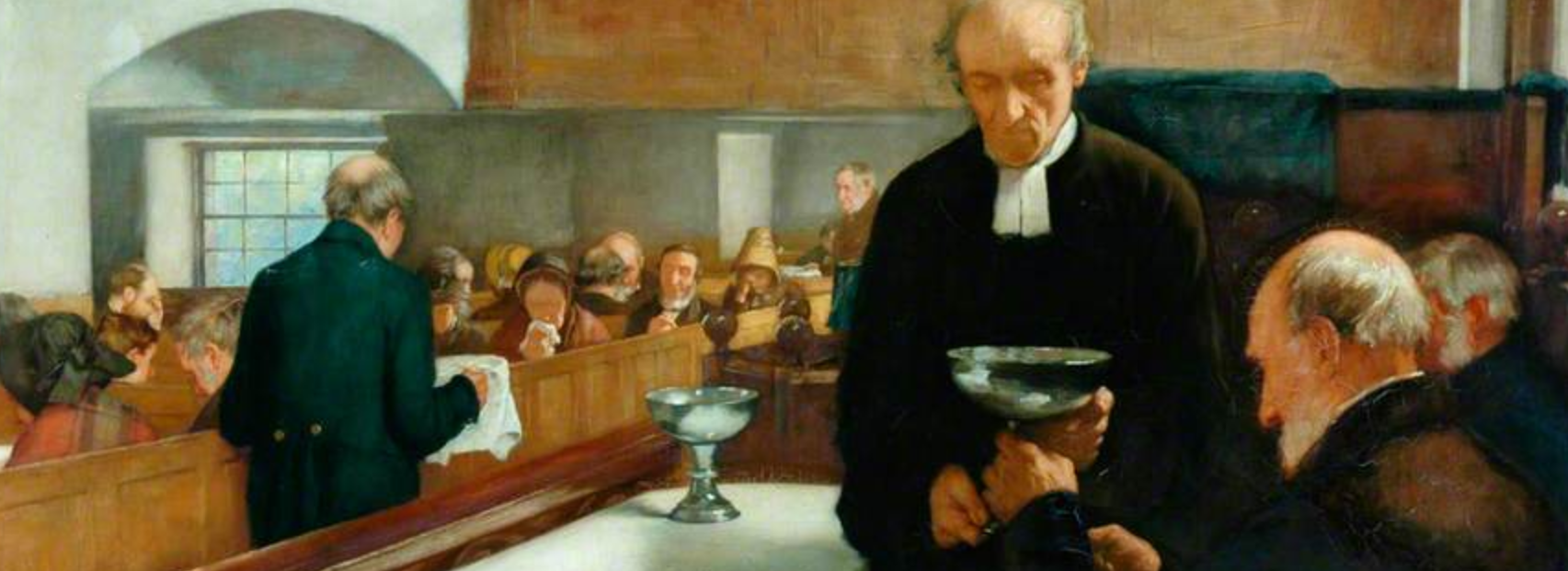
“This is their [Romanist] argument; whereof ye see their conclusion to be this: We get no other new thing in the sacrament than we do in the word, if there be no perception but spiritual. Ergo, the sacrament, is superfluous. We admit the antecedent to be true; we get no other thing, nor no new thing in the sacrament, but the same thing which we got in the word. I would have thee devise and imagine with thyself, what new thing thou wouldest have: let the heart of man devise, imagine, and wish; he durst never have thought to have such a thing as the Son of God; he durst never have presumed, to have pierced the clouds, to have ascended so high, as to have craved the Son of God in His flesh, to be the food of his soul. Having the Son of God, thou hast Him who is the heir of all things; who is King of heaven and earth; and in Him thou hast all things. What more then canst thou wish? What better thing canst thou wish ? He is equal with the Father, one in substance with the Father, true God, and true man, what more canst thou wish? Therefore, I say, we get no other thing in the sacrament than we had in the word: content thee with this. But suppose it be so; yet the sacrament is not superfluous. For wouldest thou understand what new thing thou obtainest, what other thing tbou gettest? I will tell thee. Suppose thou get that same thing which thou hadst in the word, yet thou gettest that same thing better. What is that better? Thou obtainest a greater and surer hold of that same thing in tire sacrament, than thou hadst by the hearing of the word. That same thing which thou possessedst by the hearing of the word, thou dost possess now more largely; He has larger bounds in thy soul by the receiving of the sacrament, than otherwise He could have by the hearing of the word only. Then, wilt thou ask what new thing we get? I say, we get this new thing : we get Christ better than we did before; we get the thing which we had, more fully, that is, with a surer apprehension than we had of it before; we get a greater hold of Christ now. For by the sacrament my faith is nourished, the bounds of my soul are enlarged: and so, whereas I had but a little hold of Christ before, as it were between my finger and my thumb, now I get Him in my whole hand; and still the more that my faith grows, the better hold I get of Christ Jesus. So the sacrament is very necessary, if it were no more but to get Christ better, and to get a closer apprehension of Him, by the Sacrament than we could have before.”
The following is an extremely profound passage from Robert Bruce’s magisterial treatise on the sacrament of the Lord’s Supper. Listen to this chapter in audio here. Those who may not be used to the older style may benefit from a modern rendition available here. Access more titles in the WPE Audio library.
Posted in Audio Resources, Church of Scotland, Sacraments, The Lord's Supper | Tagged baptism, christianity, church, jesus, Sacraments | Leave a Comment »
The Presbyterian Reformed Church (PRC) is an indigenous North American denomination whose roots are in the Scottish Reformation. We endeavour, by God’s grace, to keep to the Old Paths in the New World.
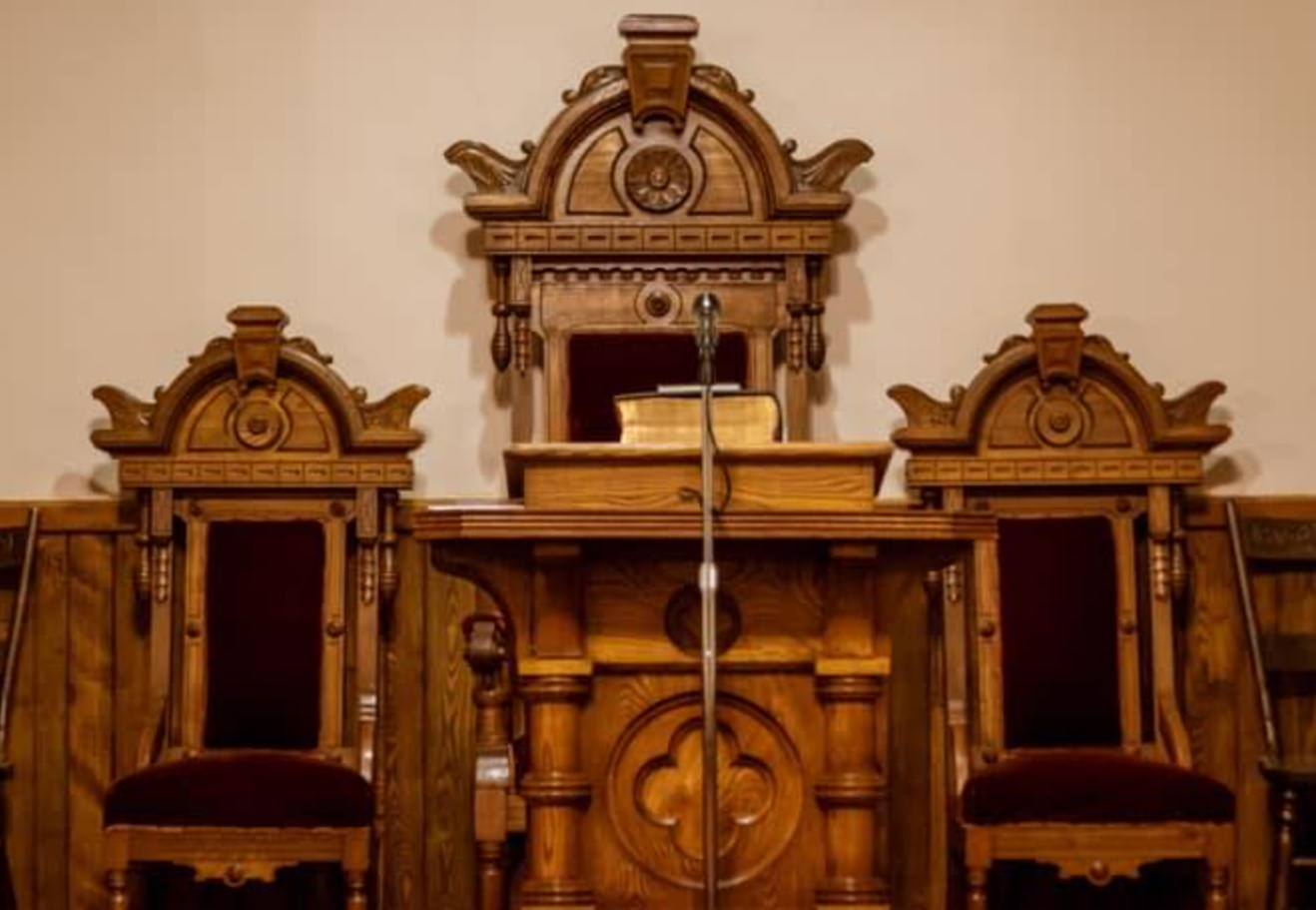
The church was formed in 1965 by the union of the Free Presbyterian Church of Ontario and the Bloor Street Presbyterian Church. The Free Presbyterian Church of Ontario was made up of the descendants of the Scottish settlers who had remained out of the unions which brought into being the Presbyterian Church in Canada (PCC) and who met in various communities throughout Southwestern Ontario. The origins of the Bloor Street Church were Scots-Irish immigrants from Ulster who settled in Toronto and were unhappy with the introduction of new worship practices in the PCC. By the 1960s, subsequent immigration from Scotland and family connections had united the congregations in doctrine and worship. It was time to unite them in government. That union was facilitated by Prof. John Murray of Westminster Theological Seminary.
Read more of this article by Rev. D. Douglas Gebbie at Presbyterian Picante.
Posted in Indigenous Principle, Presbyterian Reformed Church, Worship, True & False | Tagged bible, christianity, church, presbyterian, worship | Leave a Comment »
The following three articles by Frank DeVito at the Witherspoon Institute resonate with me rather deeply. He challenges conventional thinking in order to promote the rejuvenation not just of the nuclear family, but the extended family, and that inter-generationally in the localities where God has planted us. Well said, sir!
Posted in Family Religion, Locality & the Law of Residence, The Romance of Locality, Transgenerational Faith | Leave a Comment »
The article below by Rev. Donald Beaton is a very solid overview of the Marrow Controversy in early 18th century Scotland. I’m definitely going to follow up on some other primary sources that he relates with which I was unfamiliar. Access this and other articles from the Scottish Church History Society here.
Posted in Church of Scotland, Free Offer of the Gospel, The Secession Church, Thomas Boston | Leave a Comment »
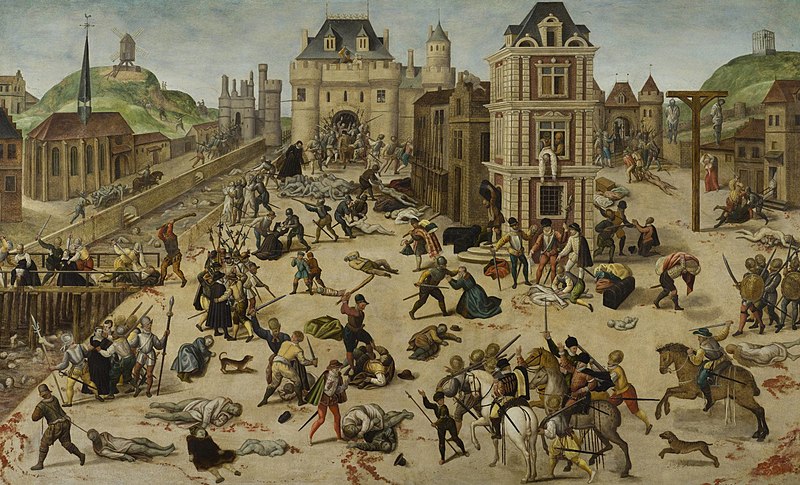
Why should we think about the St Bartholomew’s Day Massacre? What took place then was a long time ago, in a very different world. Most of society today will not have heard about [this] massacre. Of those that have, the majority will say that its significance is merely historical, and that today we are advancing in a new era that is leaving narrow-minded bigotry behind, and that focusing upon the evils of the past will simply perpetuate thoughtless sectarianism. Beside this, and much more significantly, there is the exhortation of Philippians 4:8: “whatsoever things are true, whatsoever things are honest, whatsoever things are just, whatsoever things are pure, whatsoever things are lovely, whatsoever things are of good report; if there be any virtue, and if there be any praise, think on these things.” The question that may therefore be legitimately asked, is, is it correct and is it helpful for us to focus upon this ugly and violent episode from the past?
In answer we must recognise that when scripture directs us to meditate and dwell on what is good, it does not forbid us from recognising and learning from what is not good. Rather, in scripture itself there are many horrific events, and we have a duty to notice and learn from them. It is very naïve to think that today’s world has progressed beyond such horrific violence. We must not turn away from the issues of our own day but be thoughtfully involved in addressing them, and there are important lessons to be learnt from this historic event.
Continue reading in the PDFs below. This article was written by the Rev. James MacInnes, of the Free Church of Scotland (Continuing) and published in the April-June and the July-September editions of the Bulwark, a publication of the Scottish Reformation Society.
Continue Reading »Posted in Protestantism & Romanism | Leave a Comment »
I thought I might share what I’ve been reading recently. In addition to my devotional and theological recordings, here are some books I’ve finished in recent days of personal interest. In our extremely digital age, we need to stay reading. Let us read good books; and if we read books that are not explicitly Christian, let us do so critically with an eye to Scripture as our absolute authority.

First, Nancy R. Pearcey’s The Toxic War on Masculinity: How Christianity Reconciles the Sexes. In a similar fashion to Carl Trueman’s The Rise and Triumph of the Modern Self, Nancy Pearce frames her book of cultural commentary around a “how did we get here?” question. For Trueman, it was “how did we ever get to the place where a man thinks he is a woman?” For Pearcey, it is “how did masculinity ever become ‘toxic?'” She engages in a historical and sociological inquiry that is quite insightful, from a thoughtful, Christian perspective. I especially found her explanation of the shift of men from cottage-industry and family-integrated work patterns to working outside the home in factories, etc., at the Industrial Revolution, and its negative impact on father-son relationships and family life in general. For a kind of teaser, listen to this interview on Issues, etc.
Continue Reading »Posted in Audio Resources, Culture, New England Puritanism, Recent Reading (Book Recommendations) | Leave a Comment »
 West Port Experiment