Found this quite insightful. Disturbing, to be sure; but also enriching to see the manifold grace of God’s Son who came “to destroy the works of the Devil.”

You read it right. There is actually a Christian religious establishment within the U.S. of A., and I imagine that it is completely free of whites. So for you R2K-types, assorted Anabaptists, and secular liberals, “put that in your pipe and smoke it!”
Posted in Establishments, Parish in American Context, The Church in America | Leave a Comment »
This author is evidently not orthodox, but some good history and analysis here nonetheless. Not sure what I think of his central thesis in the second, but certainly good grist for the mill.
Posted in Church of Scotland, Covenanters, Political Theory & Theology | Leave a Comment »
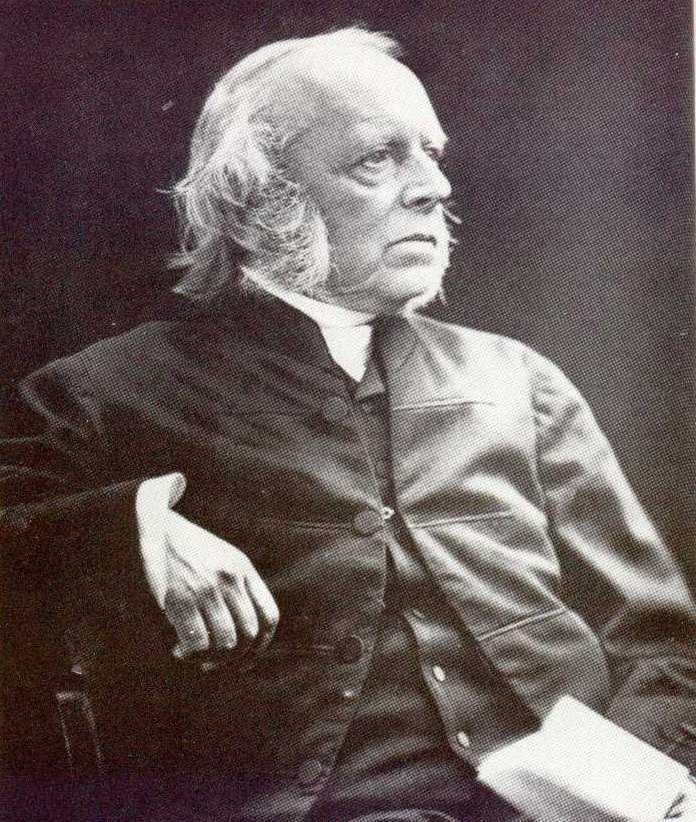
The article below on Andrew Bonar at Finnieston, Glasgow, was written by my friend Matthew Vogan and published in the Bulwark Magazine of the Scottish Reformation Society. The author relates the compelling story of Bonar’s evangelistic labor on the parish principle as taught and modeled by Thomas Chalmers.
Here are some sample extracts from the article:
Every afternoon from one o’clock till nearly five he would be found walking about his parish, visiting his people. He was well known on the streets of the district. He became a well-known figure in the area, and his friendly way of speaking and behaving endeared him to all, including children. Little children would run up to him as he walked and put their hand in his and receive a smile and gentle hand laid on the heard. One child called him “the minister with the laughing face.” Soon after arriving in the city, he spoke to a little girl in the street, addressing her by name. The child ran home to her mother with the delighted cry, “Mither, mither, he kens me.” [“Mother, mother, he knows me!”]
Continue Reading »
Posted in Free Church of Scotland, Locality & the Law of Residence, Missiology, Parish Theory & Practice, The Romance of Locality, Thomas Chalmers, Vignettes from the Old Parish Way | Tagged art, bible, christianity, horatius-bonar, music | Leave a Comment »
The following quotes are from Andrew Bonar’s (1810-1892) Diary and Letters.
“We must continue in prayer if we are to get an outpouring of the Spirit. Christ says there are some things we shall not get, unless we pray and fast, yes, ‘prayer and fasting.’ We must control the flesh and abstain from whatever hinders direct fellowship with God.”
“It is considered by most these days to be a form of legalism but fasting is a spiritual practice that God honours and is commanded in scripture. Are we desperate enough for God to move in our lives? Sometimes this requires desperate measures that might require some sort of sacrifice.”
“God will not let me get the blessing without asking. Today I am setting my face to fast and pray for enlightenment and refreshing. Until I can get up to the measure of at least two hours in pure prayer every day, I shall not be contented. Meditation and reading besides.”
“How easy it is to give up and not persevere. I believe this is a big fault in my life, having not the desire and earnestness like Jacob to grab God in a sense and not let go until He blesses me.”
“We have not been men of prayer. The spirit of prayer has slumbered among us. The closet has been too little frequented and delighted in. We have allowed business, study or active labor to interfere with our closet-hours. And the feverish atmosphere in which both the church and the nation are enveloped has found its way into our prayer closets.”
“Why is there so little forethought in the laying out of time and employment, so as secure a large portion of each day for prayer? Why is there so much speaking, yet so little prayer? Why Is there so much running to and fro to meetings, conventions, fellowship gatherings and yet so little time for prayer’? Brethren, why so many meetings with our fellow men and so few meetings with God?”
“This is such and important aspect of our relationship to God. To set aside time not to read the bible, not to sing songs. But to just quietly seek God’s face alone in the private.”
“O brother, pray; in spite of Satan, pray; . . . rather neglect friends than not pray; rather fast, and lose breakfast, dinner, tea, and supper – and sleep too – than not pray. And we must not talk about prayer, we must pray in right earnest. The Lord is near. He comes softly while the virgins slumber.”
Posted in Experimental Religion & the Cure of Souls, Ordinary Means Ministry, Practice of Piety, Prayer, Prayer Meetings | Leave a Comment »
In this public lecture of the Scottish Reformation Society, I will be discussing Thomas Chalmers’ (1780-1847) defense of church establishments over against Adam Smith’s critique. Chalmers championed such an establishment as a “Great Home Mission.”‘ Yet is this a merely an academic question? Does Chalmers have something to offer is in modern, pluralistic America? You might be surprised. Join us Friday, October 18 at 2:30 p.m. Eastern-U.S. / 7:30 p.m. U.K. Watch through Facebook Live. More information below:
Posted in Church of Scotland, Constantine, Establishments, Parish in American Context, Parish Theory & Practice, Religious Marketplace, The Church in America, Thomas Chalmers | Leave a Comment »
Two more Spanish sermons preached at Iglesia Buenas Nuevas EHT. The first in Spanish only, the second in English and Spanish.
Posted in Reformed Parish Mission (RPM) Posts | Leave a Comment »
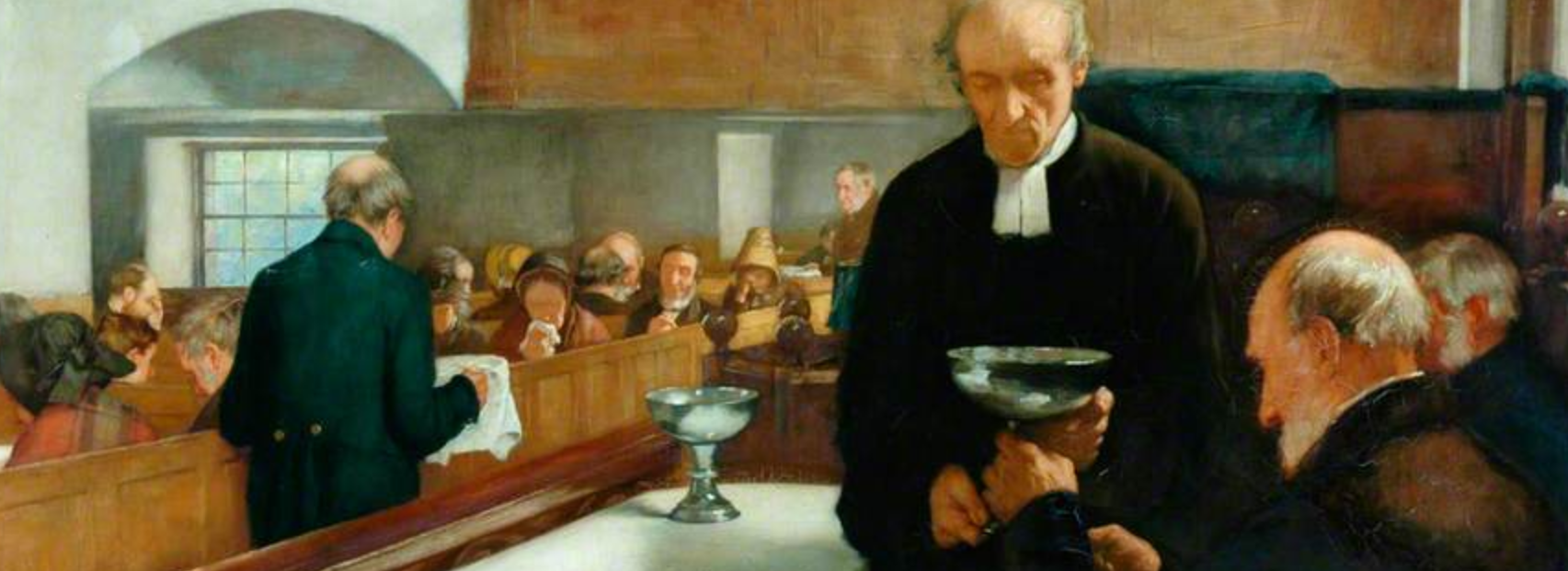
The following is an extremely profound passage from Robert Bruce’s magisterial treatise on the sacrament of the Lord’s Supper. Listen to the sermons here. Those who may not be used to the older style may benefit from a modern rendition available here. Access more titles in the WPE Audio library. (If you encounter a broken link, kindly drop me a note: michael@reformedparish.com.)
* * * *
“This is their [Romanist] argument; whereof ye see their conclusion to be this: We get no other new thing in the sacrament than we do in the word, if there be no perception but spiritual. Ergo, the sacrament, is superfluous. We admit the antecedent to be true; we get no other thing, nor no new thing in the sacrament, but the same thing which we got in the word. I would have thee devise and imagine with thyself, what new thing thou wouldest have: let the heart of man devise, imagine, and wish; he durst never have thought to have such a thing as the Son of God; he durst never have presumed, to have pierced the clouds, to have ascended so high, as to have craved the Son of God in His flesh, to be the food of his soul. Having the Son of God, thou hast Him who is the heir of all things; who is King of heaven and earth; and in Him thou hast all things. What more then canst thou wish? What better thing canst thou wish ? He is equal with the Father, one in substance with the Father, true God, and true man, what more canst thou wish? Therefore, I say, we get no other thing in the sacrament than we had in the word: content thee with this. But suppose it be so; yet the sacrament is not superfluous. For wouldest thou understand what new thing thou obtainest, what other thing tbou gettest? I will tell thee. Suppose thou get that same thing which thou hadst in the word, yet thou gettest that same thing better. What is that better? Thou obtainest a greater and surer hold of that same thing in tire sacrament, than thou hadst by the hearing of the word. That same thing which thou possessedst by the hearing of the word, thou dost possess now more largely; He has larger bounds in thy soul by the receiving of the sacrament, than otherwise He could have by the hearing of the word only. Then, wilt thou ask what new thing we get? I say, we get this new thing : we get Christ better than we did before; we get the thing which we had, more fully, that is, with a surer apprehension than we had of it before; we get a greater hold of Christ now. For by the sacrament my faith is nourished, the bounds of my soul are enlarged: and so, whereas I had but a little hold of Christ before, as it were between my finger and my thumb, now I get Him in my whole hand; and still the more that my faith grows, the better hold I get of Christ Jesus. So the sacrament is very necessary, if it were no more but to get Christ better, and to get a closer apprehension of Him, by the Sacrament than we could have before.”
Posted in Audio Resources, Church of Scotland, Sacraments, The Lord's Supper | Tagged baptism, christianity, church, jesus, Sacraments | Leave a Comment »
The Presbyterian Reformed Church (PRC) is an indigenous North American denomination whose roots are in the Scottish Reformation. We endeavour, by God’s grace, to keep to the Old Paths in the New World.
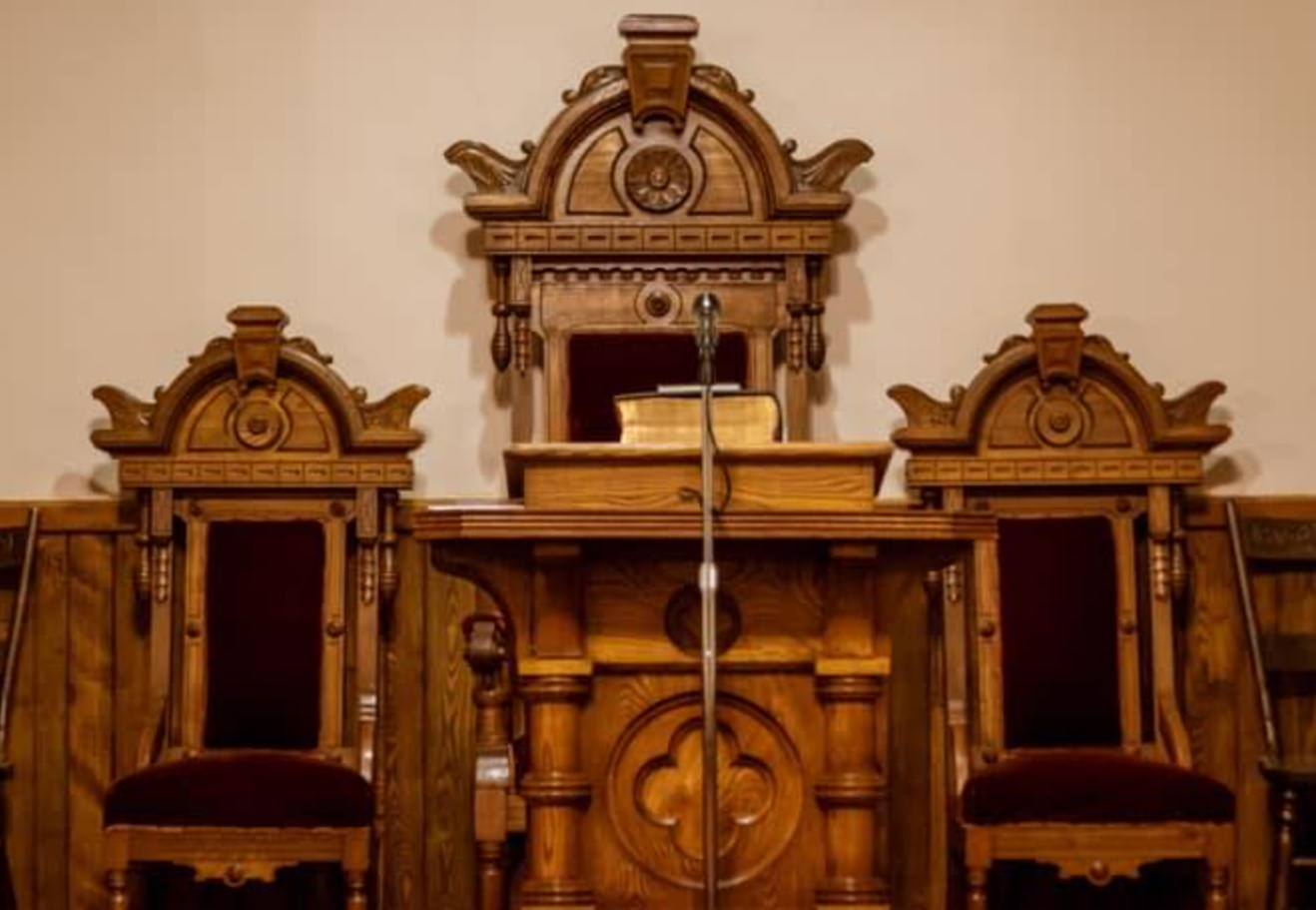
The church was formed in 1965 by the union of the Free Presbyterian Church of Ontario and the Bloor Street Presbyterian Church. The Free Presbyterian Church of Ontario was made up of the descendants of the Scottish settlers who had remained out of the unions which brought into being the Presbyterian Church in Canada (PCC) and who met in various communities throughout Southwestern Ontario. The origins of the Bloor Street Church were Scots-Irish immigrants from Ulster who settled in Toronto and were unhappy with the introduction of new worship practices in the PCC. By the 1960s, subsequent immigration from Scotland and family connections had united the congregations in doctrine and worship. It was time to unite them in government. That union was facilitated by Prof. John Murray of Westminster Theological Seminary.
Read more of this article by Rev. D. Douglas Gebbie at Presbyterian Picante.
Posted in Indigenous Principle, Presbyterian Reformed Church, Worship, True & False | Tagged bible, christianity, church, presbyterian, worship | Leave a Comment »
 West Port Experiment