Feeds:
Posts
Comments

Archive for the ‘Biblical Interpretation’ Category

Question: Will the Jewish nation always be a rejected nation, or will the entire nation yet come to repentance, believing and confessing that the Messiah has already come, and that Jesus is the Christ?

“Answer: When speaking of the conversion of the Jews, we understand this to refer to the entire nation, and not only to Judah and Benjamin who had returned from Babylon and lived in Canaan until the destruction of Jerusalem. Rather, it also refers to the ten tribes. These tribes neither remained together nor are they hidden in an unknown corner of the world, as the Jews fabricate. Instead, they partially intermingled with the eastern nations, forsaking the Jewish religion. Another part, having dispersed themselves among the nations of the earth, continued to adhere to their religion; whereas a very large multitude also returned to Canaan and intermingled with the other Jews. Anna, the prophetess, the daughter of Phanuel from the tribe of Aser, served God at Jerusalem in the temple (Luke 2:36).

“Furthermore, very many from the tribes of Judah, Benjamin, and Levi did not return from Babylon. Among those who did return were also very many who again left their native land due to internal disturbances, and thus were dispersed throughout the entire world among various nations, still maintaining the Jewish religion. James wrote to the “twelve tribes which are scattered abroad” (James 1:1). The dispersed Jews came from all manner of nations to Jerusalem on the feast days for the purpose of worship, as is to be observed in (Acts 2:5-11). After the destruction of Jerusalem, the entire Jewish nation was dispersed and no longer has a specific residence. We are speaking here of this nation without distinction, and we believe that it will acknowledge that Jesus is the Christ—the Messiah who was promised in the Old Testament and anticipated by the fathers. This is the general sentiment of the theologians of all ages—even Lutheran and papist theologians. There are, however, also those who doubt this, and some deny it. In order to confirm this matter, we shall not now say all that can be said about it. Rather, we shall only 1 take two proofs from the New Testament and give them a place of prominence, since they are not subject to any evasive arguments of substance. After having given a clear exegesis of them, the few proofs we shall present from the Old Testament will give us more clarity and steadfastness in this matter.”

Read the rest below (pdf p. 519, doc. p. 510; source)
Read Full Post »

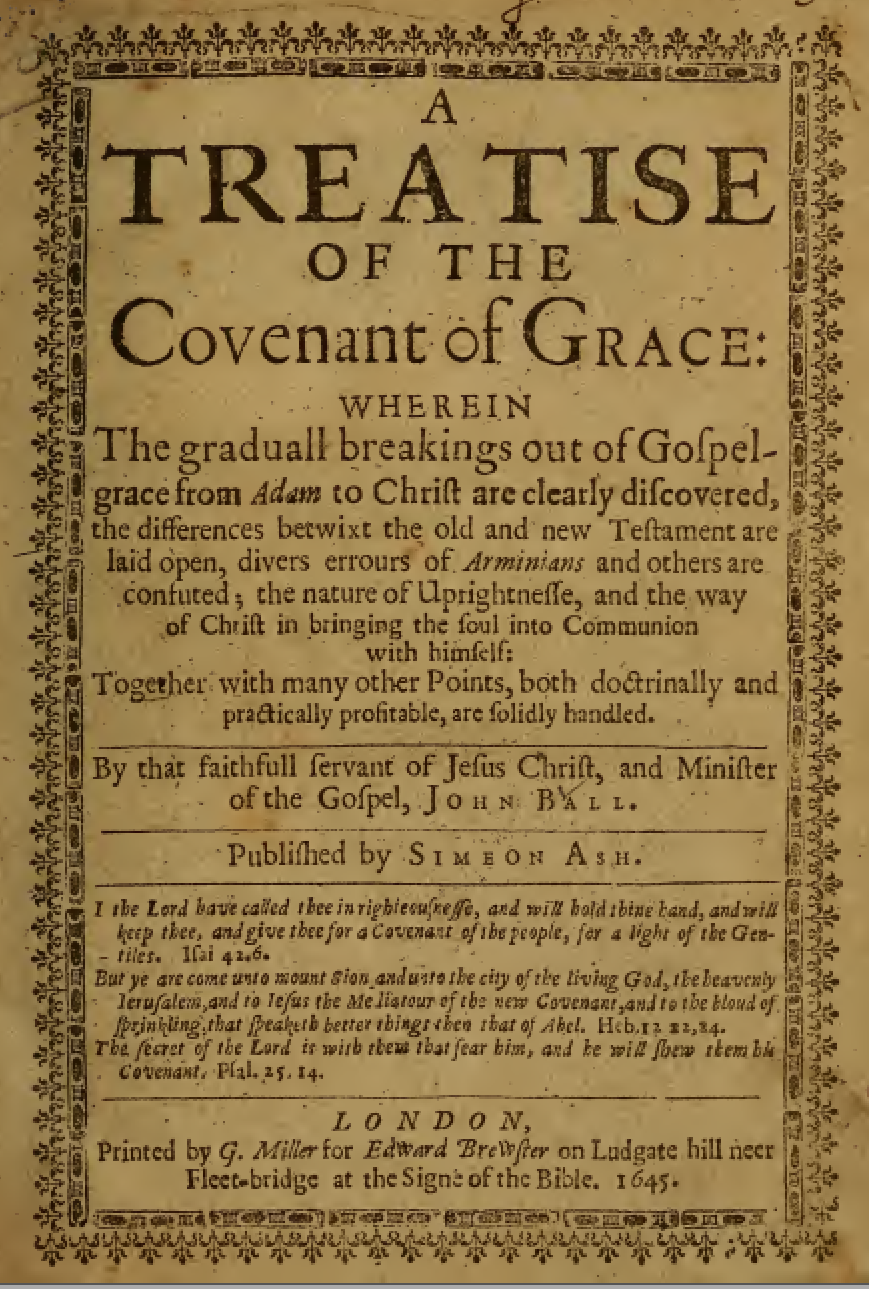
The difference between the old and the new economy; superiority of the new over the old, the inferiority of the old. Distinctions within biblical language to reflect the manifold character of God’s revelation to us, while fundamentally one purpose and plan of God. Within God’s economy, there is unity in diversity. Further, some of the superior qualities of the new administration consist in a relatively greater degree of spirituality and perception of spiritual things and the eternal inheritance, above the more temporal attention of the old economy.

* * * * *

Moreover, they may be called the “old” and “new” testaments in a literal sense or a figurative one. And the words may be used with wide or narrow meaning. When the sense is literal, the word “old testament” stands for the Law, insofar as it was given to the Jewish people through Moses. It promised life to them on condition of perfect obedience, with the provision of a curse upon the transgressors, and it brought with it an unbearable burden of legal rituals and the yoke of a highly restrictive political order. For this reason it is called “the letter that kills,” “the dispensation of death and condemnation,” “bearing children for slavery, like Hagar” (2 Corinthians 3:6,7; Galatians 4:23, 24). Placed opposite to this is the “new testament” (in the strict sense), the teaching of spiritual grace and salvation fully revealed by the Son of God himself from the bosom of the Father and spread abroad by the apostles’ preaching. It promises righteousness without price, and life everlasting through and for the sake of Christ the testator unto all who believe in him through the grace that he will lavish on them abundantly.

(more…)

Read Full Post »

Who were the Nephilim of Genesis 6? I have long defaulted to the traditional Protestant interpretation, that they were the product of the lawless blending of the Sethite line with the heathen. Given the analogy of faith, Matthew 22:30 appears to close that door for us rather firmly. The angels “neither marry nor are given in marriage.” And the thought of a mongrel tertium quid between humans and demons just opens a theological Pandora’s box in my mind.

Yet, I am open at least to a variant option. Meredith Kline advanced a unique interpretation of Genesis 6 and the “sons of God.” In the article appended below, Kline argues that these “sons of God” who married the “daughters of men” were princes of the earth (following Psalm 82), and/or heroic, quasi-legendary figures. Maybe even degenerate Sethites drunk on power and glory? In any case, if Kline is on to something, what if these “sons of God” made a Faustian bargain with demonic powers in order to advance their intellectual and physical prowess for even greater domination and glory? Then genetic alteration happens (or a kind of reversal of post-fall physical decline?) along the lines of the Gadarene demoniac, etc. Then these demonically ‘souped-up’ heroes procreate with reckless abandon. And thus you get the Nephilim-giants with demonic sexual influence—something that has been increasingly entertained within evangelicalism in more recent years, such as with Michael Heiser—yet without recourse to the problematic man-demon hybrid theory. 

And as always, standard caveats! I am hardly a “Klinian.”

Read Full Post »

Read Full Post »

Principal John Macleod (1872-1948) writes with a freshness and a force of thought that sadly is all too uncommon today. Listen to my latest recording of his sermon, “The Sure Mercies of David.” (View entire library here.) Here are a couple of worthy passages:

Nay, as Victor our Lord has overcome and is set down with the Father on His Throne. There as the Exalted Servant He is seated on the Throne of His Heavenly Father and on the throne of His father David. It is as David’s throne was the throne of the Lord over Israel that his Exalted Son sits upon it now. Having died death outright He lives with a life over which the shadow of death shall never fall. He dieth no more for He has borne and exhausted the curse. So as Lord of life and death He is the Resurrection and the Life. His rising from the dead was the step that went before His Ascension; and it was a step that brought with it in full detail every succeeding step of His glory as the Lord’s Exalted Servant.

With our Lord’s Resurrection and Ascension the Kingdom of God has come. Until He arose and went up it was a kingdom or order of things that was yet to come. This is the case no more. The fullness of the glory of the kingdom is in the course , of being unveiled. The fullness itself reaches unto the eternal ages.

Also, a delightful passage on the conversion of the Jews:

Israel shall return to the Lord their God and to David their King. When the set time comes the David of the New Testament will subdue them and bring them in. Then the natural branches shall come to their place in the old olive tree and it will be as it were life from the dead. Not only will it be life from the dead : to them it will be such life from the dead as a pining Church and perishing world need. It is for ~ur Lord Himself to bring about this glorious return. He will then make Jerusalem a praise in the earth; for He will pour on the house of David and on the inhabitants of Jerusalem His own Spirit, the token of His good will, as the Spirit of prayer, and they shall call on Him. They shall look on Him whom they pierced, and the world shall know the mourning of the brethren of the New Testament Joseph when He makes Himself known to them and gives them the kiss of peace. This thing will not be done in a corner. All the world shall hear of it.

Here is the original copy:

Read Full Post »

Below is an expanded and updated set of diagrams I’ve worked on to explain covenant theology in its various dimensions. The earlier version was posted here.

I ended up making three interrelated diagrams so as to avoid things becoming too convoluted. These should be pretty intuitive for the average Reformed office-bearer and the better-educated Reformed believer. (And note, ‘construct covenants’ is a term I’ve coined. If there is a more standard one of which I’m ignorant, by all means let me know.)

Read Full Post »

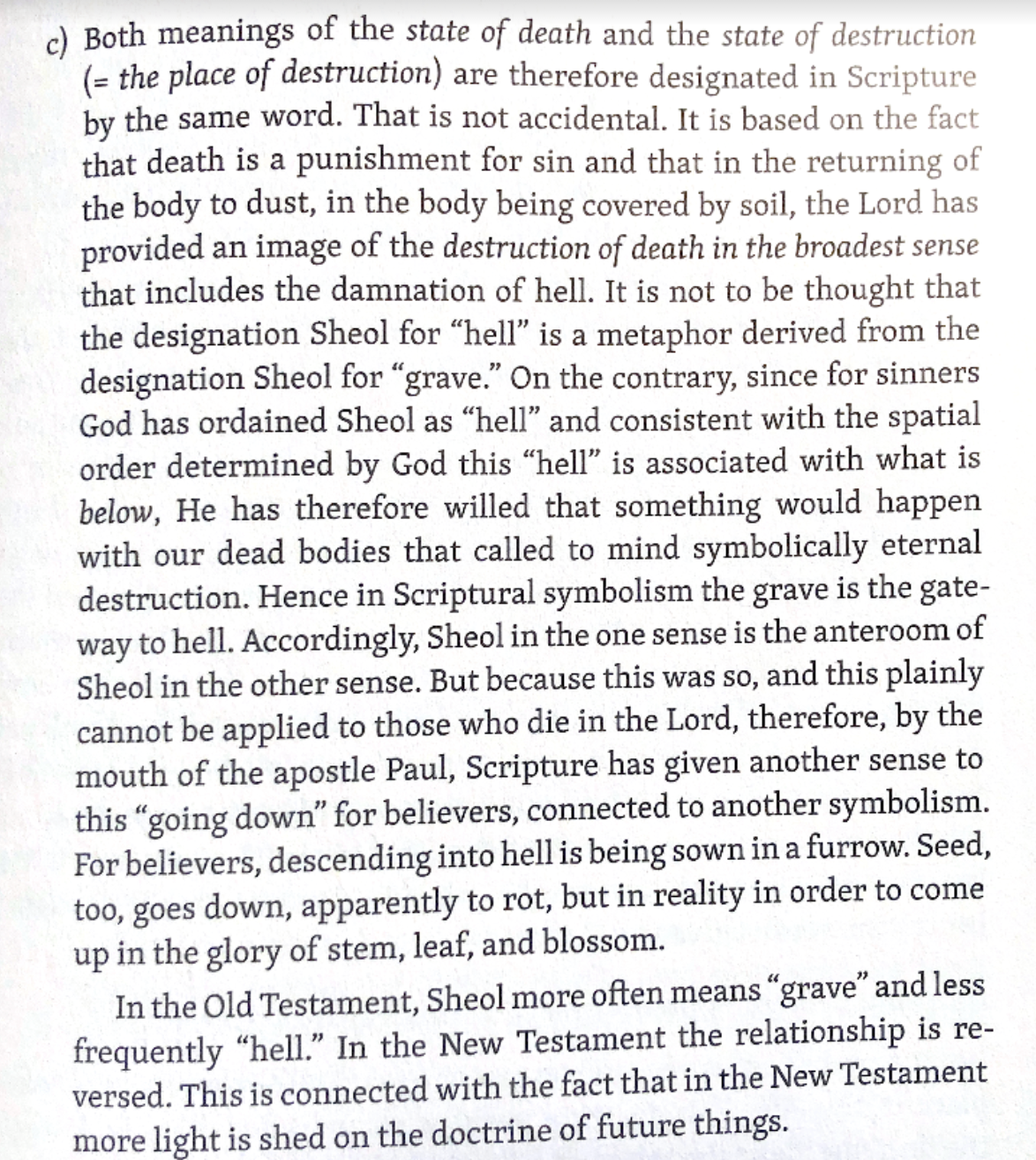
Geerhardus Vos, Reformed Dogmatics, vol. 5. “In Scripture symbolism the grave is the gateway to hell. Accordingly, Sheol in the one sense is the anteroom of Sheol in the other sense.”

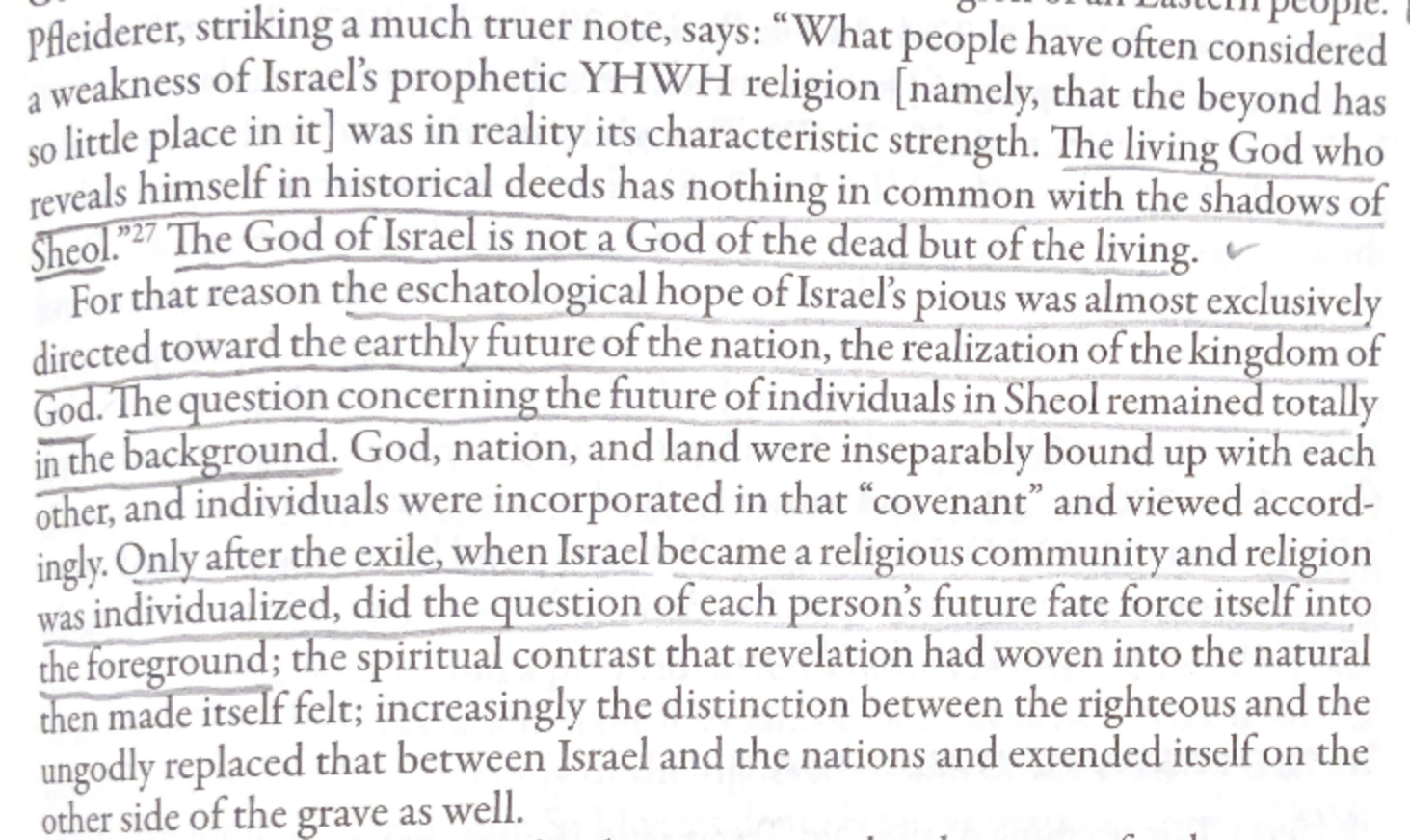
Herman Bavinck, Reformed Dogmatics, vol. 4

Read Full Post »

I could use some helpers, from near or far. Here’s the situation.

I’ve been doing a series in our second services on “Reformed Biblical Theology” (or Covenant Theology, if you like), tracing the one unfolding plan of God to save His people through Christ. The original purpose – beyond edifying our own folks locally – was to build a distance learning course for Westminster Theological Academy, our denomination’s program to train Liberian pastors and theological students. Since then, opportunities to use it among Spanish speakers have developed, both at home and abroad. A theological academy in Latin America has expressed interest in it, and now I’ve been approached by a Hispanic pastor here in Providence who is trying to get a Bible school off the ground.

Because my Spanish is not yet at the level where I can preach and teach in it, I need to utilize helpers. I’m considering a subscription to a transcription service to render my sermons/lectures into English manuscripts. Before they are translated into Spanish, I just need a volunteer (or more) to listen to the original audio, edit, and perfect the English manuscript. Then, I could a bilingual helper – fluent in English & Spanish – to translate the English manuscript into a Spanish one. We can then take it from there, whether reading and recording into audio, or utilizing for video subtitles.

To give you an idea of what you’d be working with, this sermon/lecture has been transcribed here.

Interested in helping? Drop me a note: mjives dot refparish at gmail dot com. Or, 401-484-8089.

Read Full Post »

[NOTE: The diagram below has since been expanded and reposted here on March 10, 2022.]

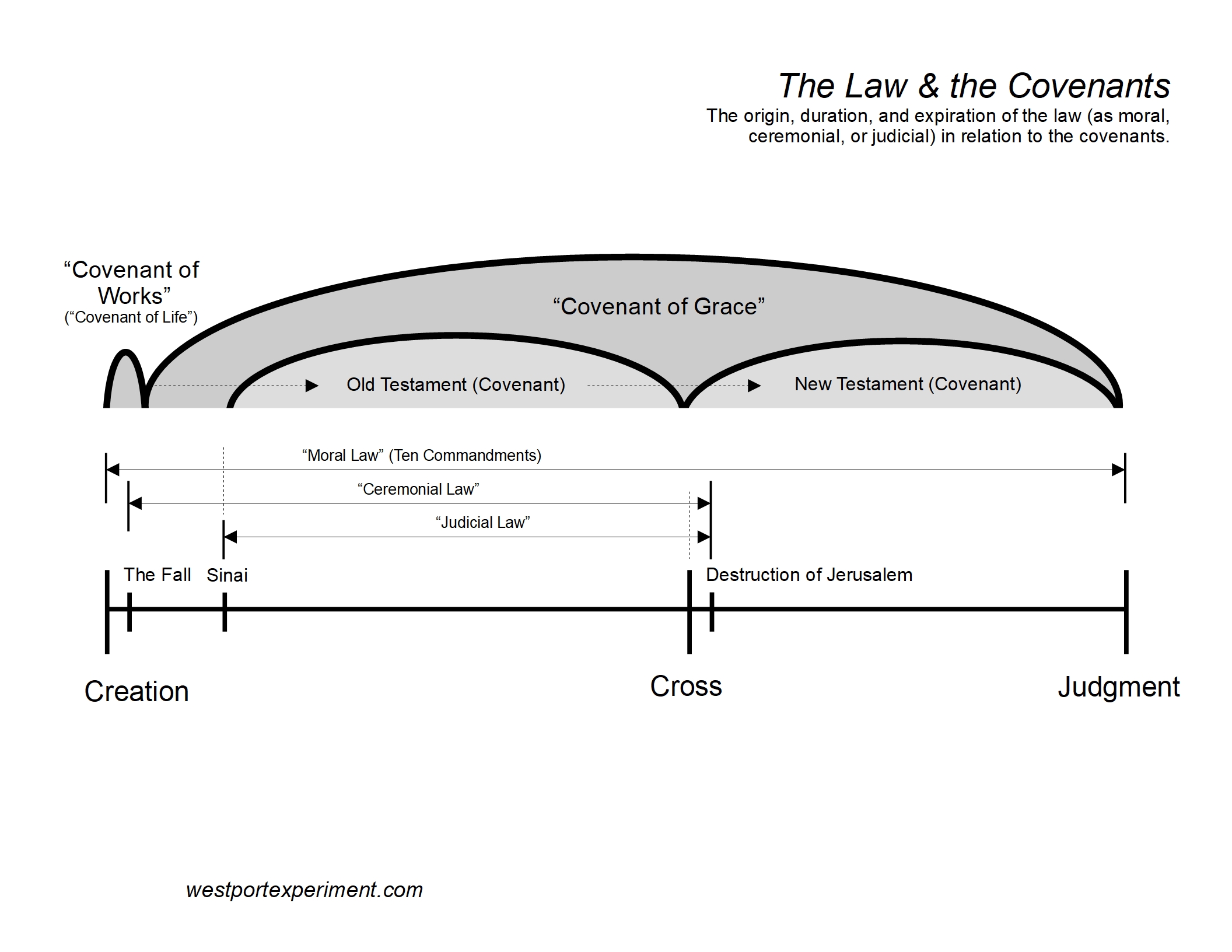
Here is something I designed for our catechism class to help young and old track with the main contours of Covenant Theology and its bearing on redemptive history. Comments below.

S Cat 020 The Covenants [CCat]

Much of this is self-explanatory for those with a working knowledge of Reformed doctrine. But a bit of clarification on my design. I added a dashed, horizontal line & arrow from Covenant of Works moving through the OT and NT dispensations to help reduce the impression that it is somehow a cipher after the Fall. I also configured the OT period to begin at Sinai (as technically it does), though canonically it usually embraces everything from Genesis to Malachi. Third, the dashed, vertical line above Sinai intersecting the horizontal lines of the Moral and Ceremonial law is intended to reflect the development and institutionalization of the latter and the explicit publication of the former. Last, the dashed and hard vertical lines at the cross represent the distinction between the definitive abolition of these laws at 33(-ish) A.D. and their actual, outward end with the destruction of the Temple and Jerusalem in 70 A.D.

I omitted the ‘biblical’ covenants (Noahic, Abrahamic, Davidic), leaving that for another day and another diagram.

And now you’ll need a chart to understand all that! Seriously, though, if you can help me perfect this further, I’m open. Just as long as you’re no Dispy, Hyper-Preterist, or any of the countless bunny trails from good old 1646 Federalism.

Read Full Post »

“We would appeal, in this connection – progressiveness – specially to the practical and practicable character of Old-Testament legislation. And thus we are led to assert that those very passages concerning polygamy and kindred themes (which have been made an occasion of gibe against the Scriptures) are themselves a most cogent argument for their divine origin. We Americans ought to know by this time that the best way to secure polygamy unharmed and enshrine it unconquerably under the protection of a nation is to write on the statute-books inoperative laws against it. The Bible was framed by too wise a statesman to fall into that error, and we who enjoy Christian homes to-day have to thank God for it. The unspeakable wisdom of dealing at that age, and under those circumstances, with polygamy, divorce, slavery by regulative laws, which in regulating discouraged, and in discouraging destroyed them, makes strongly for a superhuman origin of the legislation.”

– B. B. Warfield

Read Full Post »

Older Posts »