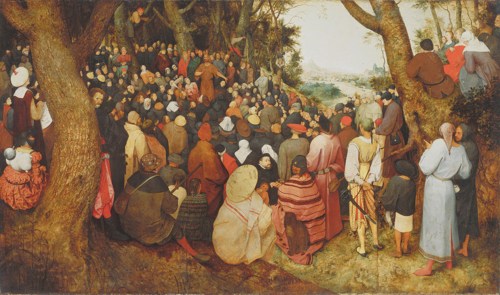
 The following comes from a report of the Committee of Local Evangelism in the OPC in which Professor John Murray played a major role prior to World War II. It was drawn from this source.
There is an acute problem that confronts the open-air preacher in our day and age. The great problem is to get and hold a sizeable audience. In Whitefield’s day the masses thronged to hear his message. This is not true today; the multitudes pass us by. What is the cause? What can be done to assist in the solution of the problem?
Various factors may be said to contribute to the listlessness of those whom we seek to reach with the gospel. There are the many attractive forms of pleasure. No age of ministers has had to compete with as many enticing modes of pleasure as has the minister of the twentieth century. It is reported of Moody that he looked with apprehension on the popularity of the bicycle, fearing its effect upon evangelistic meetings in America. The automobile, the radio, the moving picture, and television have done much to make the average open-air meeting appear unattractive. Another factor that has engendered a spirit of indifference to the open-air preacher is the attitude of the average educated person. He considers such a method as beneath his intellectual level and personal dignity. Even Wesley at first recoiled before the thought of open-air preaching for this reason. He knew that immediately he would be branded by many as an “ignorant and unlearned” man. But perhaps the most basic reason for the average American’s antipathy toward open-air preaching is that he has been educated, however unwittingly, into a prejudice against the Christian gospel. America’s antitheistic public school system and the deadening influence of modernism within the visible church have had their deadly effect upon the souls of men.
These difficulties, however, are not to be taken as valid reasons for not engaging in open-air preaching. God is sovereign, and has enabled His servants to devise methods whereby the problem of drawing a crowd has to a degree at least been overcome. We present at this point the recommendations that have come to us from ministers who have had some degree of success in obtaining a good hearing in open-air preaching. They are as follows:
Go where the people are, not where we hope they will come. In most places where we have churches, the spring and summer are the only times that weather will permit the holding of outdoor services. During these seasons the people will be found in public parks and squares, at seashore and mountain resorts, by places of public amusement, and outside factories during lunch hours. Recently provision has been made in England to have chaplains for defense industries. In at least one large industrial plant in America permission has been granted for the preaching of the gospel to the men during their lunch hour. These examples may be straws in the wind indicating a tendency to recognize the need and the worth of bringing the Word of God to the working men of our nation. Here may be an opportunity to reach the heads of families whose very souls are being crushed out of them by long hours and Sunday work. In every city and town there are areas where large numbers of under-privileged and spiritually neglected people can be found. These areas should be sought out and surveyed with a view to securing a commodious meeting place. Most important of all, pray for an open door.
Go in absolute confidence in the truth and power of the gospel and in complete reliance upon the Holy Spirit to bless. Only as the love of God is shed abroad in our hearts by the Holy Spirit can we proclaim boldly, convincingly, and winsomely the everlasting gospel. To this end, we need to pray that we might be filled with the Spirit. Nothing can draw and hold so well and so surely in an open-air service as the preaching of the Word in the power of the Spirit.
There are successful ways of gathering a good audience. One way is to have a nucleus of Christians to go with the minister. A crowd draws a crowd. When the passers-by observe that a goodly number are listening they will stop to satisfy at least their curiosity. From that point on you may depend upon the Word to elicit and maintain their interest. A method that has been used by some Roman Catholics with real success in drawing a crowd is the question and answer method. The minister seeks out a passer-by and requests him to ask questions from a specified distance. The minister then proceeds to answer the man’s questions. As others gather they, too, are requested to ask questions. When a sizeable group has been attracted by this method the minister may discourse on a subject of his choice.
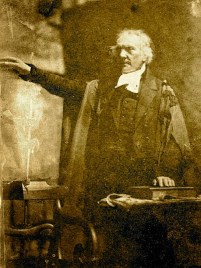 The following is a guest post by Dr. George Grant.
 If you’re looking for a short, accessible, and engaging introduction to the life of Thomas Chalmers (1780-1847), you should definitely pick up Sandy Finlayson’s
 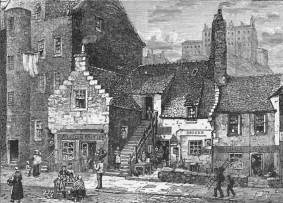 I recently gave a lecture (sermon?) on the fascinating and inspiring story of Thomas Chalmers’ West Port Experiment in the slums of Industrial Edinburgh, from 1844-1847. You can listen to it
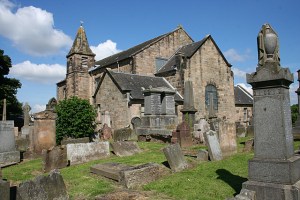
 West Port Experiment