Feeds:
Posts
Comments

Archive for the ‘Church of Scotland’ Category

download“And, I am sure, it is not much for our safety, that national and provincial fasts are so much neglected, when Providence so loudly calls us to the work of humiliation and prayer; when sin is arriving to so great a height, when clouds of wrath are gathering so fast; when all Europe is threatened with blood and confusion, and when destructive divisions and schisms are ready to break out among us at home; and O, do not these frightful appearances proclaim it to be a proper season for us to meet, and fast, and mourn, and see is we can weep our hearts into one lump, and, by our united prayers, prevail with God, for Christ’s sake, to ‘spare his people, and not give his heritage to reproach;’ or else, that he will prepare us to meet him, when coming in the way of his judgments? And, if judgment begin at the house of God, what shall be the end of these that obey not the gospel? O that God, in his mercy, may awaken us in time to think on these things!”

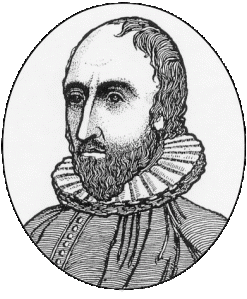
-John Willison of Dundee (1680-1750)


Read Full Post »

Here is a delightful vignette of old parish ‘missions,’ if you will, in 17th century Presbyterian Scotland.  The minister, William Guthrie (1620-1665), labored to be all things to all men, that he might gain some.

* * *

“After William Guthrie came to Fenwick, many of the people were so rude and barbarous, that they never attended upon divine worship, and knew not so much as the face of their pastor. To such, everything that respected religion was disagreeable; many refused to be visited or catechised by him; they would not even admit him into their houses. To such he sometimes went in the evening disguised in the character of a traveller, and sought lodging, which he could not even obtain without much entreaty, but, having obtained it, he would engage in some general amusing conversation at first, and then ask them how they liked their minister. When they told him that they did not go to church, he engaged them to go and take a trial; others he hired with money to go. When the time of family worship came, he desired to know if they made any, and if not, what reasons they had for it.

(more…)

Read Full Post »

download

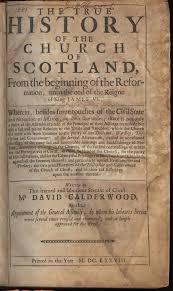
The following is a quote from David Calderwood’s (1575-1650) introduction to the First and Second Books of Discipline of the Church of Scotland (1560 and 1578 respectively).  Here, we have a find statement of sound, Christian historiography. It really goes to the heart of unbelief as applied to the doing of history in our modern, secular age.  “Let God arise, and His enemies be scattered!”

* * *

“Is the Lord changed, because he changes the manner of his working? God forbid. For although he declares not in our times who belongs to him by miraculous fire sent from heaven, as in the days of Elijah; the earth opens not her mouth, as in the days of Korah; he rains not showers of brimstone upon the Sodomites of this age; he turns not such as look back into pillars of salt to season others; neither is his favour manifested towards his own secret ones in earthly and visible blessings, so wonderfully as of old; yet the God of Israel is our God, and the God of the old testament is the God of the new, and better testament, having still a secret and equivalent providence most wisely disposed, and framed for the weal of his kirk, according to the diversity of the ages succeeding one after another. So that no wise heart perceiving the course thereof could wish another than the present, howsoever the folly of infidelity blinds men to affect the miracles, ease, and outward prosperity of former generations, and if these fail, to cast themselves headlong in desperation, defection, or atheism. Yea, because he works not as before, in their haste they conclude that he works not at all.”

Read Full Post »

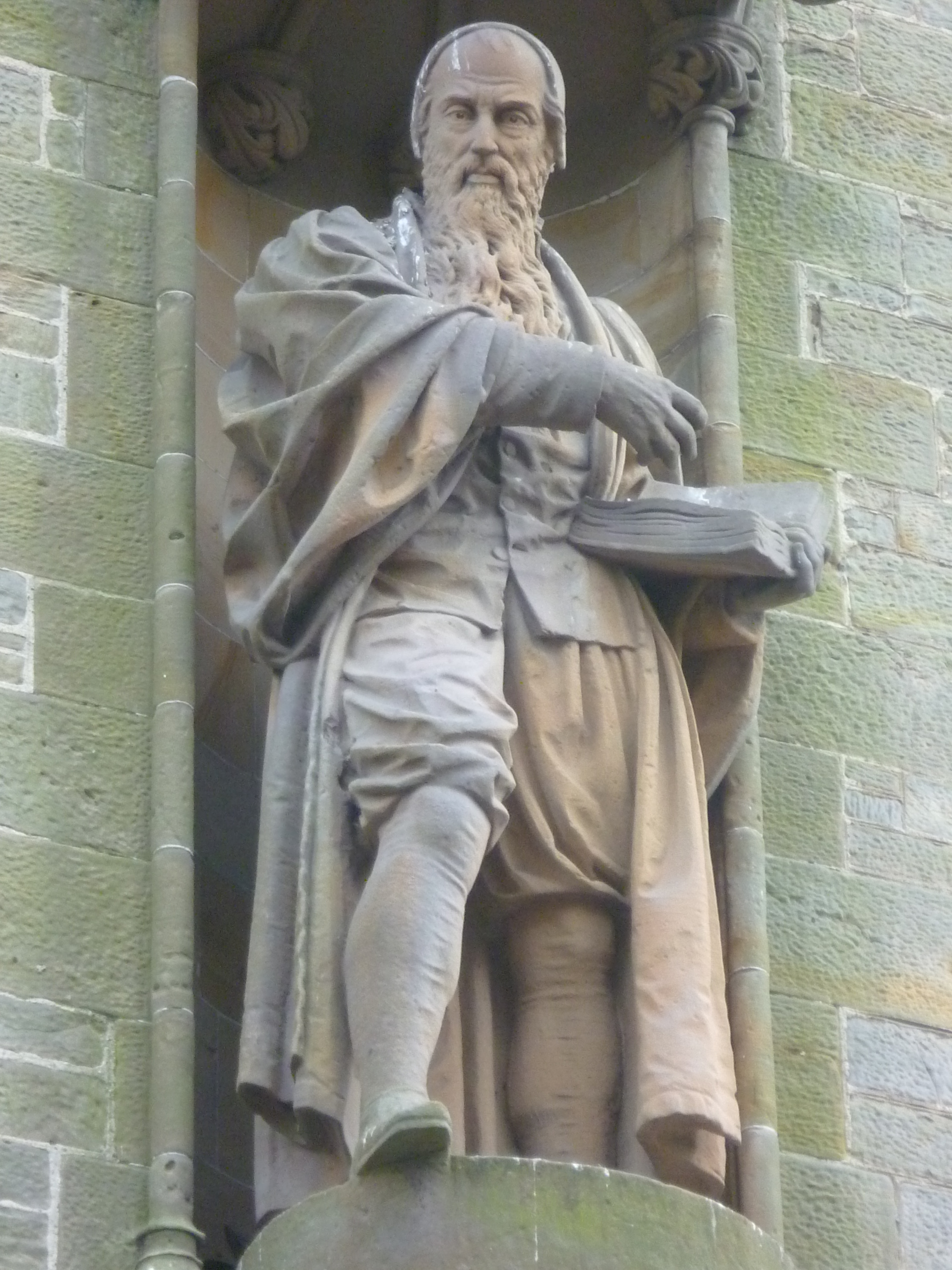
john_knox_statue_haddingtonThis is an extract from the First Book of Discipline of Scotland (1560). John Knox was one of the principal authors.  In these opening words, these godly reformers advocate total support of a godly preaching ministry throughout the realm and the total suppression of any preaching and worship not arising from the clear commandment of God.  While harsh to the modern ear, we must recall that God is a jealous God, prizing His instituted worship and passionately opposing all false religion.  Reformation must labor to cultivate pure worship root and branch and remove all false worship root and branch.  Or to use the imagery from the Books of the Kings, we must also take down the “high places,” the last holdouts and remnants of idolatry.

* * *

The first head of docrtine.

Seeing that Christ Iesus is he whom God the Father hath commanded onely to bee heard and followed of his sheepe, wee judge it necessary that his Gospell be truely and openly preached in every Church and Assembly of this realme, and that all doctrine repugnant to the same, be utterly repressed, as damnable to mans salvation.

The explication of the first head.

Lest that upon this generalitie ungodly men take occasion to cavill, this we adde for explication. By preaching of the Gospel we understand not onely the Scriptures of the new Testament, but also of the old, to wit, the Law, Prophets, & Histories, in which Christ Iesus is no lesse contained in figure, then we have him now expressed in veritie. And therefore with the Apostle we affirme, that all Scripture inspired of God is profitable to instruct, to reprove, and to exhort. In which bookes of old and new Testaments, we affirme that all thing necessary for the instruction of the Church, and to make the man of God perfect, is contained and sufficiently expressed.

By the contrary doctrine we understand whatsoever men by lawes, counsells, or constitutions, have imposed upon the consciences of men, without the expressed commandement of Gods word, such as be the vowes to chastitie, forswearing of marriage, binding of men and women to several and disguised apparrells, to the superstitious observation of fasting dayes, difference of meat for conscience sake, prayer for the dead, and keeping of holy dayes of certaine Saints commanded by man, such as be all those that the Papists have invented, as the feasts (as they terme them) of the Apostles, Martyrs, Virgines, of Christmasse, Circumcision, Epiphanie, Purification, and other fond [foolish] feastes of our Ladie: which things because in Gods Scriptures they neither have commandement nor assurance, we judge them utterly to be abolished from this Realme: affirming farther that the obstinate maintainers and teachers of such abhominations ought not to escape the punishment of the civill Magistrate.

Read Full Post »
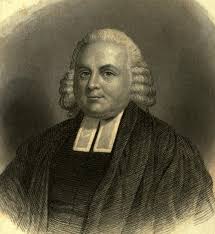
One of my personal heroes is Scottish Presbyterian minster, Aeneas Sage (1694-1774). I’m not quite sure if everything written about him is totally accurate; I get a whiff of the hagiographic if not the legendary in some of the stories.  Yet, something in my gut tells me it is too good and so must be true!  (Like a historian friend of mine quipped, ‘If it ain’t true, it should be!’)  Whatever the case, Aeneas Sage captivates me, for as a pastor he knew how to captivate an audience – in more ways that one.

(more…)

Read Full Post »

Here is a new site that looks rather promising.  It advocates a rediscovery and application of the precious truths and attainments of the first and second Scottish Reformations.

Read Full Post »

Here’s a really helpful introduction to Thomas Guthrie (1803-1873), a prominent minister in the Church of Scotland and later Free Church of Scotland and a champion of biblically sound poor relief.

Read Full Post »

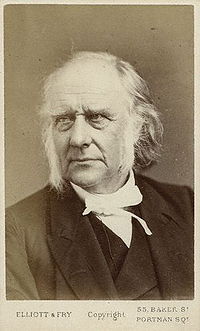
200px-ThomasGuthrie1870sHere is an excellent article on a contemporary of Thomas Chalmers, Thomas Guthrie.  Like Chalmers, Guthrie (1803-1873) had a heart beating for the good of the souls and bodies of those downtrodden in Industrial-Age Scotland.  He also embraced the parish plan of action.  ‘Let each select their own manageable field of Christian work. Let us embrace the whole city, and cover its nakedness, although, with different denominations at work, it should be robed, like Joseph, in a coat of many colours. Let our only rivalry be the holy one of who shall do most and succeed best in converting the wilderness into an Eden, and causing the deserts to blossom as the rose.’

The author of this article, Andy Murray, blogs at Ragged Theology.  Andy also tells me that he’s just published a Kindle version of Guthrie’s memorable The City: Its Sins and Sorrows.

Read Full Post »

Reformations are unsettling. They always involve a critique of the old order, a prophetic protest against wrong. And when those protests give way to action, things change. The Protestant Reformation of the 16th century was no different. So when it reached the shores of Scotland, there was quite a shaking up. [To read further, see full article here – starting at p. 9]


Read Full Post »

“Let there be no strife between us and you, for we are brethren (Gen. 13:7, 8): and is not the Canaanite and the Perizzite yet in the land?  O let it not be told in Gath, nor published in the streets of Ashkelon. Let it not be said, that there can be no unity in the Church without Prelacy.  Brethren I charge you by the roes and by the hinds of the field, that ye awake not nor stir up Jesus Christ till he please (Song. 2:7); for his rest is sweet and glorious with his well-beloved.  It shall be no grief of heart to you afterward, that you have pleased others as well as yourselves, and have stretched your principles for accommodation in church government, as well as in worship, and that for the Church’s peace and edification; and that the ears of our common enemies may tingle, when it shall be said, “The Churches of Christ in England have rest, and are edified, and walking in the fear of the Lord, and in the joy of the Holy Ghost are multiplied (Act 9:31).”  Alas how shall our divisions and contentions hinder the preaching and learning of Christ, and the edifying one another in love!  Is Christ divided? says the apostle.  There is but one Christ, yea the head and the body make one Christ, so that you cannot divide the body without dividing Christ.  Is there so much as a seam in all Christ’s garment?  Is it not woven throughout from the top to the bottom? Will you have one half of Israel to follow Tibni, and another half to follow Omri?  O brethren, we shall be one in heaven, let us pack up differences in this place of our pilgrimage, the best way we can. Nay, we will not despair of unity in this world. Hath not God promised to give us one heart and one way (Jer. 32:39, Ezek. 11:19)? and that Ephraim shall not envy Judah, and Judah shall not vex Ephraim, but they shall flee upon the shoulders of the Philistines toward the East, they shall spoil them of the East together (Isa. 11:13, 14)?  Has not the Mediator (whom the Father hears always) prayed that all his may be one?  Brethren, it is not impossible, pray for it, endeavor it, press hard toward the mark of accommodation. How much better is it that you be one with the other Reformed Churches, though somewhat straitened and bound up, than to be divided though at full liberty and elbow room? Better is a dry morsel and quietness therewith, than a house full of sacrifices with strife (Prov. 17:1).”

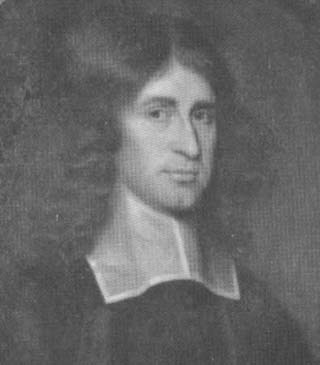
George Gillespie (1613-1648)

* * * *

Whole doctrine catholicity | “Who is she that looketh forth as the morning, fair as the moon, clear as the sun, and terrible as an army with banners” (Song 6:10)?


Read Full Post »

« Newer Posts - Older Posts »