I recently added a tremendous sermon by Thomas Halyburton (1674-1712), representing some of the best of the old, venerable Old Church of Scotland. Explore further recorded sermons at WPE Audio!
Dr. Beeke below gives an introduction to Haylburton, who was buried next to Samuel Rutherford:
Welcome to the “Chalmers Audio Library,” a collection of sermons, essays, and works by the great 19th century Scottish preacher and social reformer, Thomas Chalmers (1780-1847). These are presently being hosted on SermonAudio here.
Chalmers is regrettably a rather forgotten figure both in his own country and even within the confessional legacy to which he belonged, historic Presbyterianism. Yet in his day, he drew high praise for his churchmanship, his social vision and activity, and perhaps above all, his preaching.
There we were in the manse on Saturday night, in that sleepy little Canadian town. The minister’s wife was giving him a haircut before his Sabbath labors the next day. He was, well, idiosyncratic. The thin-framed parson had quite the shock of unmanageable white hair, much like Doc Brown. He sat there with some smock-like cloth draped around him, his helpmate-hairdresser poised with bowl of water and comb. Soon she set to taming the wild mane with the moistened comb. Water applied, it seemed as though his head had shrunk by half.
As she went to work with her clippers, the old minister told me about The Days of the Fathers in Ross-Shire, an old classic of the glory days of 18th and 19th century Highlands-Islands Presbyterianism. His eyes beamed, and he cackled with boyish delight as he retold his favorite story about Samsonesque Aeneas Sage and his rather unconventional missionary exploits. There was something about this all that strongly impressed me. There was something of greatness, a romance and even a mystique about that legacy that lingered about the place. The old Scots-Irish town, its church, manse, and, of course, this amusing old minister still retained something of the glow of the “years of the right hand of the Most High.”
Suffice it to say, this green goyim just had to find and read the book. And I did, again and again. And having been ‘bit,’ I’ve retold the story of Rev. Sage over and over to anyone who would listen. My children can probably repeat it verbatim … with a few eye rolls thrown in for good measure! And as an old bookish minister friend of mine would sometimes say, “And if it isn’t true, it should be!”
Just finished reading and recording it. You can access it here. I also post a wide variety of classical Reformed, Puritan, and Scottish Presbyterian sermons, articles, and books. I aim to fill gaps with relatively quality audio recordings, especially for the benefit of pastors and elders who work with thinner margins of time.
“As to the attendance of the people on the Sabbath ministrations of the missionary, you will doubtless find that they will give you very fair promises. They may all say they will go to church; but by many of them the promises will not be kept. In such circumstances, a very good plan, which I would recommend to you, would be this, — Let either the agent of the district, or some person on whom he can depend, after the hour at which the various churches go in, go to the district where the defaulters, — reside, and entering one of their houses, beg to be allowed to conduct a family exercise, to which the neighbours may be called in. Depend upon it, they will take it very well. They will of course feel themselves caught . . . but still they will tolerate you, and make their escape next Sabbath, by going to the place of worship. That’s one of a variety of doing the thing. It will bring them in contact with the gospel at any rate. The great matter is to get them into the habit of church-going.”
-Thomas Chalmers, 1844 lecture on the eve of the West Port Experiment
Should robust, confessional, reformed Christianity be the preserve only of white, middle and upper class folk? Chalmers didn’t think so, much less that the Gospel should be left to the demands of the religious marketplace. Another appeal for establishments, and especially aggressive, territorial missions.
Another addition to the Chalmers Audio Library. Sermon on Isa. 26:9, “For when thy judgments are in the earth, the inhabitants of the world will learn righteousness.” In this message on the occasion of the death of Princess Charlotte of Wales, Chalmers argues that such national calamities are God’s instruments to call the nation to learn righteousness. He takes the opportunity to rebuke the fashionable upper classes for whom religion is a mere occasional, token exercise, and makes a general appeal to support the spread of righteousness among the nation’s poor and neglected by way of an endowed, territorial system, worked by godly ministers.
In this 1816 charge to Thomas Chalmers’ newly elected elders, he winsomely appeals to them to ‘repair the breaches’ of the old system of spiritual, district visitation. Let the elders together with the ministers be once again the friends and spiritual patrons of all men, especially the poor. Ad urbem!
* * *
“I am well aware how widely the practice of our generation has diverged from the practice of our ancestors—how, within the limits of our Establishment, the lay office-bearers of the Church are fast renouncing the whole work of ministering from house to house in prayer and in exhortation and in the dispensation of spiritual comfort and advice among the sick or the disconsolate or the dying. On this subject I urge nothing upon you. I am aware that a reformation in this department can only be brought about by an influence of a more gentle and moral, and withal more effectual kind than that of authority; and I shall therefore only say that I know of almost nothing which would give me greater satisfaction than to see a connexion of this kind established between my elders and the population of those districts which are respectively assigned to them—that I know of nothing which would tell more effectually in the way of humanizing our families, than if so pure an intercourse were going on as an intercourse of piety between our men of reputable station on the one hand, and our men of labour and of poverty on the other,—I know of nothing which would serve more powerfully to bring and to harmonize into one firm system of social order the various classes of our community; I know not a finer exhibition, on the one hand, than the man of wealth acting the man of piety, and throwing the goodly adornment of Christian benevolence over the splendour of those civil distinctions which give a weight and a lustre to his name in society; I know not a more wholesome influence, on the other, than that which such a man must carry around him when he enters the habitations of the peasantry, and dignifies by his visits the people who occupy them, and talks with them as the heirs of one hope and of one immortality, and cheers by the united power of religion and of sympathy the very humblest of misfortune’s generation, and convinces them of a real and longing affection after their best interests, and leaves them with the impression that here at least is one man who is our friend, that here at least is one proof that we are not altogether destitute of consideration amongst our fellows, that here at least is one quarter on which our confidence may rest—ay, and amidst all the insignificance in which we lie buried from the observation of society, we are sure at least of one who, in the most exalted sense of the term, is ever ready to befriend us, and to look after us, and to care for us.”
“The Assembly, considering that the long-waited-for fruits of the Gospel, so mercifully planted and preserved in this land, and the reformation of ourselves and families, so solemnly vowed to God of late in our Covenant, cannot take effect except the knowledge and worship of God be caried from the pulpit to every family within each parish, hath, therefore, appointed that every minister, besides his paines on the Lord’s day, shall have weekly catechising of some part of the paroch, and not altogether cast over the examination of the people till a little before the communion. Also, that in every familie the worship of God be erected where it is not both morning and evening, and that the children and servants be catechised at home by the masters of the families, whereof account shall be taken by the minister and elders assisting him in the visitation of every family; and, lest they fail, that visitation of the severall kirks be seriously followed by every Presbyterie, for this end among others. The execution and successe whereof, being tried by the Synods, let it be represented to the next Generall Assembly.
-Acts of the General Assembly of the Church of Scotland, 1639
“As preachers, they were all remarkable. There are some who preach before their people, like actors on the stage, to display themselves and to please their audience. Not such were the self-denied preachers of Ross-shire. There are others who preach over their people. Studying for the highest, instead of doing so for the lowest, in intelligence, they elaborate learned treatises, which float like mist, when delivered, over the heads of their hearers. Not such were the earnest preachers of Ross-shire. There are some who preach past their people. Directing their praise or their censure to intangible abstractions, they never take aim at the views and the conduct of the individuals before them. They step carefully aside, lest their hearers should be struck by their shafts, and aim them at phantoms beyond them. Not such were the faithful preachers of Ross-shire. There are others who preach at their people, serving out in a sermon the gossip of the week, and seemingly possessed with the idea, that the transgressor can be scolded out of the ways of iniquity. Not such were the wise preachers of Ross-shire. There are some who preach towards their people. They aim well, but they are weak. Their eye is along the arrow towards the hearts of their hearers, but their arm is too feeble for sending it on to the mar. Superficial in their experience and in their knowledge, they reach not the cases of God’s people by their doctrine, and they strike with no vigour at the consciences of the ungodly. Not such were the powerful preachers of Ross-shire. There are others still, who preach along their congregation. Instead of standing with their bow in front of the rank, these archers take it in line, and, reducing their mark to an individual, never change the direction of their aim. Not such were the discriminating preachers of Ross-shire. But there are a few who preach to the people directly and seasonably the mind of God in His word, with authority, unction, wisdom, fervour, and love. Such as these last were the eminent preachers of Ross-shire.”
-John Kennedy of Dingwall, The Days of the Fathers in Ross-Shire, pp. 32-33
“Some Highland Evangelicals (in the 18th century) resorted to coercive tactics to compel people to hear their message. A mild example was Walter Ross’ confiscation of the cooking utensils in a fishing village that repeatedly emptied of its suspicious inhabitants when he approached. He returned the pots and pans after entertaining the villagers at a meal two days later. At that time they promised to receive his visits and to attend church.”
-Stephen A. Woodruff, The Pastoral Ministry in the Church of Scotland, p. 242


 Should robust, confessional, reformed Christianity be the preserve only of white, middle and upper class folk? Chalmers didn’t think so, much less that the Gospel should be left to the demands of the religious marketplace. Another appeal for establishments, and especially aggressive, territorial missions.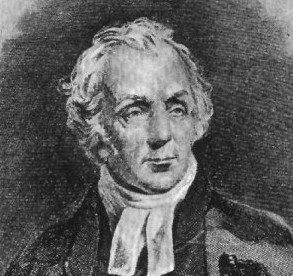
 “The Assembly, considering that the long-waited-for fruits of the Gospel, so mercifully planted and preserved in this land, and the reformation of ourselves and families, so solemnly vowed to God of late in our Covenant, cannot take effect except the knowledge and worship of God be caried from the pulpit to every family within each parish, hath, therefore, appointed that every minister, besides his paines on the Lord’s day, shall have weekly catechising of some part of the paroch, and not altogether cast over the examination of the people till a little before the communion. Also, that in every familie the worship of God be erected where it is not both morning and evening, and that the children and servants be catechised at home by the masters of the families, whereof account shall be taken by the minister and elders assisting him in the visitation of every family; and, lest they fail, that visitation of the severall kirks be seriously followed by every Presbyterie, for this end among others. The execution and successe whereof, being tried by the Synods, let it be represented to the next Generall Assembly.
 West Port Experiment
