The following is an article written in 1919 by Dr. Benjamin B. Warfield. Prof. Warfield was an orthodox theological heavyweight who taught at Princeton Theological Seminary in the early 20th century, until the institution tragically succumbed to theological liberalism in the late 1920s. He here addresses the question of Paul’s words prohibiting women to speak in the assemblies of the church. A digitized version can be accessed here.
Posts Tagged ‘christianity’
Warfield, “Paul on Women Speaking in the Church”
Posted in Church Order & Discipline, Feminism & Egalitarianism, Gender & Sexuality, Paternalism & Patriarchy, tagged 1-corinthians, bible, christianity, church, jesus on December 23, 2024| Leave a Comment »
Take church to them! ‘House-churching’ the heathen
Posted in Gospel Tactics, Missiology, Parish in American Context, Parish Theory & Practice, The Gospel & the Poor, Vignettes from the Old Parish Way, tagged bible, christianity, church, faith, jesus on December 16, 2024| Leave a Comment »
The following extract comes from Thomas Cochrane’s, Home Mission-work; Or, Twenty-five Years in a Mission Field (1873; pp. 51-52). Chalmers earlier advocated these exact same tactics years before. In my parish mission efforts, I’m already seeing the profound wisdom and insight of this policy. If they don’t yet come to church, then (assuming they let you in the door) bring church to them!

“In all Territorial districts there will be found many not only living in entire neglect of the sanctuary, but many of that number who will scarcely be persuaded by prayer and pains to avail themselves of the privilege To meet such cases, the devoted missionary will often be found to try and bridge over the difficulty by taking the church to them; sometimes, perhaps, even taking possession of the home of the neglectful, and making a church in their house. The effect of such little gatherings is often very blessed indeed. By these meetings there is not only opened a way for bringing the Gospel to the very homesteads of the careless and prayerless, but it is also, under GOD, a very fruitful source of augmenting the central gatherings.
“One of the most useful members of the Mission relates, as his own experience, how by this agency especially he was won to the public ordinances of the church. He was ill to gain over. Many months of prayerful effort were spent, but “by keeping at it,” with God’s blessing on the means, he was at last enlisted in the good cause ; and how useful he has been since in gaining others, the future only can reveal. How devoted he has been cannot be told.
“The services at these fireside gatherings should not, as a general rule, be lengthened above an hour, for many reasons. Mothers cannot conveniently give longer time from household duties. Short telling addresses at such meetings will ordinarily be most useful and acceptable. The grand object being to deal chiefly and closely with those who have not been accustomed to much serious thinking about religious subjects, anything fitted to weary and repel should be carefully avoided. How all-important to leave a good impression, and, by this short pithy service, to beget a thirst for the more extended, if not more formal, services of the house of God! It would not be an easy thing to say how many members of the church first found their footing towards the sanctuary through the influence of these district meetings. They will not only prove useful-almost essential-in the forming of a Territorial congregation, but will be of immense benefit after it has been formed, both as a means of dealing with the neglectful members of the congregation, and of reaching those beyond the pale of the church.”
Boston’s “Consent to the Covenant”
Posted in Church of Scotland, Church Order & Discipline, Covenant Theology, Terms of Communion, The Visible Church, Thomas Boston, tagged bible, christianity, church, faith, jesus on December 9, 2024| Leave a Comment »

Came upon this choice piece from Boston’s Memoirs. A series of questions put to a prospective communicant. The first question I find rather insightful—I’ve long tended to think that a working understanding of the Shorter Catechism is basically the cognitive side of Presbyterian terms of communion. Without reaching that bar, the session ought to delay that applicant and give further instruction (L. Cat. 173). Also, there is explicit submission to church discipline.
I am aware that Boston arguably had some “independent” aspects to his presbyterianism, and perhaps this reflects too much a likeness to the old Congregational “church covenants?” But whatever the case, I find this explicit consent and covenanting commendable:
“And if the Session be satisfied in this also, the party is to be put explicitly to consent to the Covenant (whereof he desires the seal), to be the Lord’s, live under Him, and serve Him all the days of his life, by answering expressly the following (or the like) questions: 1. Do you believe the doctrine of the Shorter Catechism of this Church, so far as you understand the same, to be the true doctrine agreeable to the Holy Scriptures, and resolve through grace to live and die in the profession of the same? 2. Do you consent to take God in Christ to be your God, the Father to be your Father, the Son to be your Saviour, and the Holy Ghost to be your Sanctifier; and that, renouncing the devil, the world and the flesh, you be the Lord’s for ever? 3. Do you consent to receive Christ, as He is offered in the gospel, for your Prophet, Priest and King; giving up yourself to Him, to be led and guided by His Word and Spirit; looking for salvation only through the obedience and death of Jesus Christ, who was crucified without the gates of Jerusalem; promising in His strength to endeavour to lead a holy life, to forsake every known sin, and to comply with every known duty? 4. Lastly, do you promise to subject yourself to exhortation, admonition, and rebuke, and the discipline of the Church, in case (which God forbid !) you fall into any scandalous sin?”
Memoirs, Appendix 3, § 10, p. 488.
“Of the Festivals of the Church, and Especially Christmas”
Posted in Audio Resources, New England Puritanism, Puritans & Puritanism, Sabbatarianism & the Church Calendar, Worship, True & False, tagged bible, christianity, christmas, faith, jesus on December 1, 2024| Leave a Comment »
Just finished recording part 2 of 2 of Daniel Cawdrey’s “Of the Festivals of the Church, and Especially Christmas.” Listen to the audio here. This is the third part of a larger work, attached below. The University of Michigan has digitized the text here.
Visit the complete WPE Audio library.
Cawdrey (1588–1664) was a member of the Westminster Assembly, which produced the Westminster Confession of Faith, as well as the Larger and Shorter Catechisms. Like the rest of the Puritans of England and New England, as well as the Presbyterians of Scotland, these godly men rejected all holy days of men’s devising based on what has become called the ‘regulative principle of worship,’ which requires us to have clear and undoubted certainty about the divine, scriptural origin of any worship practice, and that any worship falling short of this standard must be set aside.
The Puritans were not kill-joys or men of bigoted, narrow minds. Anyone who reads their sermons and devotional writings will find them to be the warmest lovers of God, of Christ, and of their fellow men. They were also as a rule generous, catholic-minded men who embraced all those who called upon the Lord in sincerity, even among those who might disagree with them. And above all, they were men who passionately wanted to please God, even if that went against the flow of the opinions of men. I offer these recordings in that spirit.
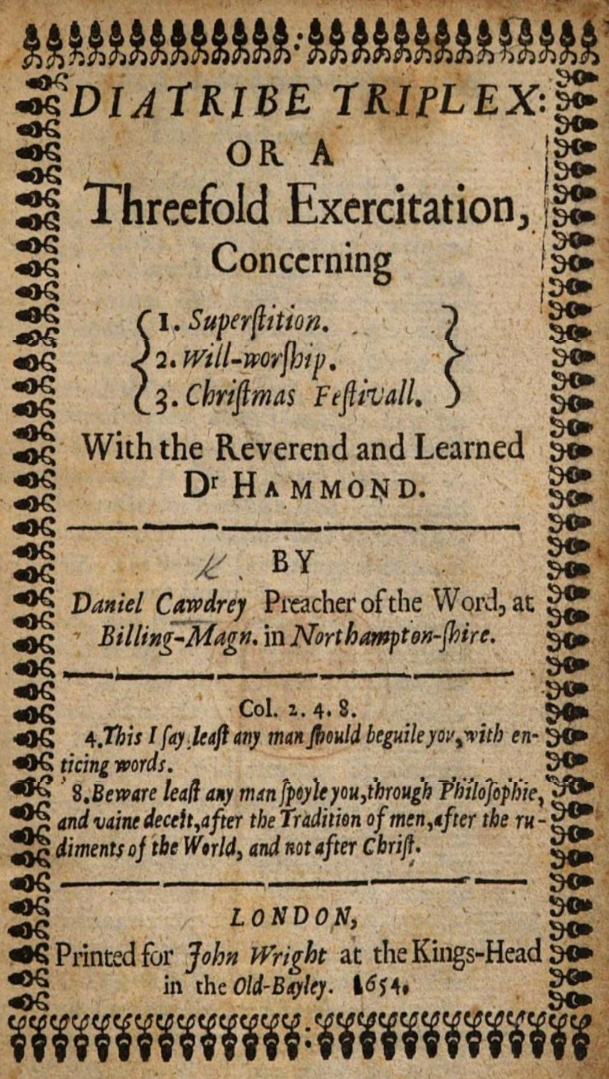
The following is a sample from Cawdrey, in particular on his contention that the observation of Christmas is ultimately hostile to the proper, apostolic practice of Lord’s day observance:
“[It is said that] The Birth of Christ, is a mercy of such excellent quality, that it can never be overvalued, &c. This is granted; But to Institute a day as Holy, without command of Christ, for an Annual commemoration of this, is above the power of any Church, and a Superstitious presumption: and [altogether] needless; considering that the Lord’s day, (which includes the commemoration, not only of his Birth, but his Resurrection, and the whole works of our Redemption by him) was instituted by himself, or his Apostles, by him authorized and inspired, for this very end; & comes [around] once in every week. To limit it therefore to one day in a year, to remember that Mercy, is not an exaltation, but a derogation from it. If this were done, on his own design[ated] Day, wee need not fixe another day.”
Friend, let appeal to you not to brush off this position. You may in the end disagree with it; by all means, search the Scriptures, and be a Berean. But none of us “have attained,” and we should always be willing to bring any of our views or practices to the touchstone of Scripture. Embracing this position would naturally involve sacrifices, hurt feelings, and misunderstandings. But I can assure you from close to 30 years of experience after becoming convinced, and after raising four children in these principles, it is well worth it. “Them that honor me, I will honor.” And you don’t have to be a Grinch! I’m not—and I keep up many, many friendships with dear brothers who aren’t persuaded.
But of course, they’ll understand sooner or later (1 Cor. 13:12)!
RPM: Why am I raising funds?
Posted in Reformed Parish Mission (RPM) Posts, tagged bible, christianity, church, god, theology on November 8, 2024| Leave a Comment »
My role under presbytery is twofold. First is a conventional, pastoral one. I join my elders in pastoring our local congregation in S. Jersey, and I preach on average 1 out of every 2 of our Lord’s day services throughout the year. We are blessed with edifying pulpit supply for the balance of the pastoral ministry. The congregation is able to support me to a certain degree.
Second, I have what may be called a ‘home mission’ function. In 2023, presbytery formally approved my raising of funds for Reformed Parish Mission under the oversight and with accountability to our denominational missions committee. My presbytery also has committed to a measure of monetary support, but has limited means to do more. Together, those means are less than half of what my family and I require.
While not the ideal from a Presbyterian point of view (such missionaries would receive their full support from their own denomination), practical considerations lead me to raise funds for myself in a fashion similar to independent evangelicals. I am too convinced of the worthiness of the cause to allow it to wither for lack of funding; and so I have overcome my natural inhibitions and actively solicit funds for Reformed Parish Mission from friends, family, and churches within and beyond the Presbyterian Reformed Church.
Please pray for me. And if you could contribute—or even commit to monthly support—I would be in your debt. The Lord bless you and yours.
Chalmers’ influence on the New York City Mission: Lebanon Chapel, 1870
Posted in Uncategorized, tagged bible, christianity, church, jesus, missions on October 29, 2024| Leave a Comment »

Chalmers’ parish mission theory made its way to the U.S. during his career and in the decades after his death in 1847. I had heard about such city missions inspired by the “territorial” method; and of course, I knew about his enthusiastic supporter of the West Port experiment, the New York philanthropist James Lenox. With a little free time, I did some poking around online and found one example: the Lebanon Chapel. Below is an 1878 report from that mission effort in the heart of New York City.
It bears all the marks of a convinced Chalmersian. We see the distinct and underscored prioritization of saving souls, above all efforts to ameliorate outward poverty. And there is also an absence of the individualistic-leaning and pietistic sort of American Christianity, but the old confessionally Reformed version that prizes the Visible (or as Kuyper eventually put it, the “Institutional”) Church with its outward and ordinary means of grace. Here’s a quote that could very easily have been written by the “Arch-Parson” himself:
(more…)Andrew Bonar at Finnieston
Posted in Free Church of Scotland, Locality & the Law of Residence, Missiology, Parish Theory & Practice, The Romance of Locality, Thomas Chalmers, Vignettes from the Old Parish Way, tagged art, bible, christianity, horatius-bonar, music on October 17, 2024| Leave a Comment »
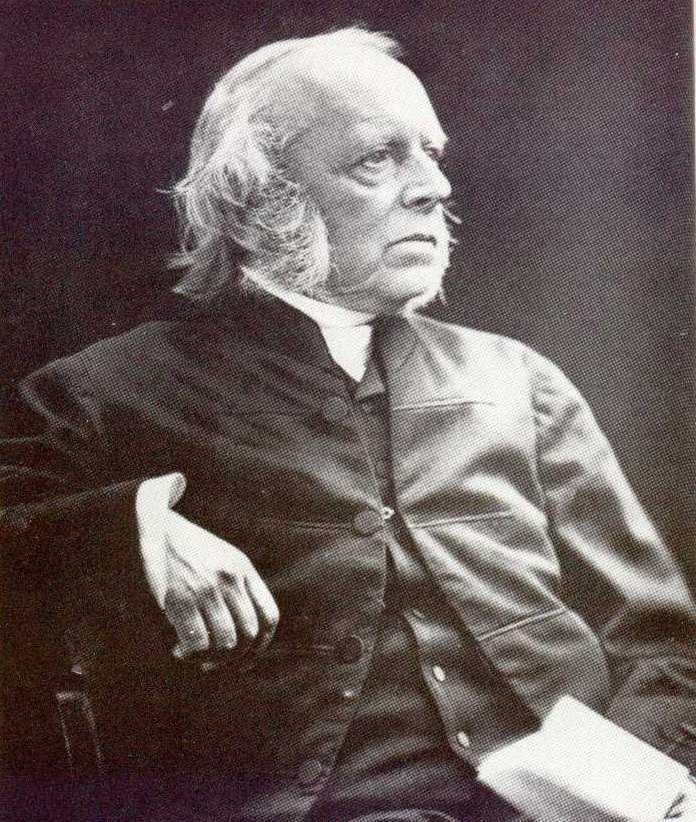
The article below on Andrew Bonar at Finnieston, Glasgow, was written by my friend Matthew Vogan and published in the Bulwark Magazine of the Scottish Reformation Society. The author relates the compelling story of Bonar’s evangelistic labor on the parish principle as taught and modeled by Thomas Chalmers.
Here are some sample extracts from the article:
Every afternoon from one o’clock till nearly five he would be found walking about his parish, visiting his people. He was well known on the streets of the district. He became a well-known figure in the area, and his friendly way of speaking and behaving endeared him to all, including children. Little children would run up to him as he walked and put their hand in his and receive a smile and gentle hand laid on the heard. One child called him “the minister with the laughing face.” Soon after arriving in the city, he spoke to a little girl in the street, addressing her by name. The child ran home to her mother with the delighted cry, “Mither, mither, he kens me.” [“Mother, mother, he knows me!”]
(more…)
Robert Bruce: What do we get in the Supper?
Posted in Audio Resources, Church of Scotland, Sacraments, The Lord's Supper, tagged baptism, christianity, church, jesus, Sacraments on October 8, 2024| Leave a Comment »
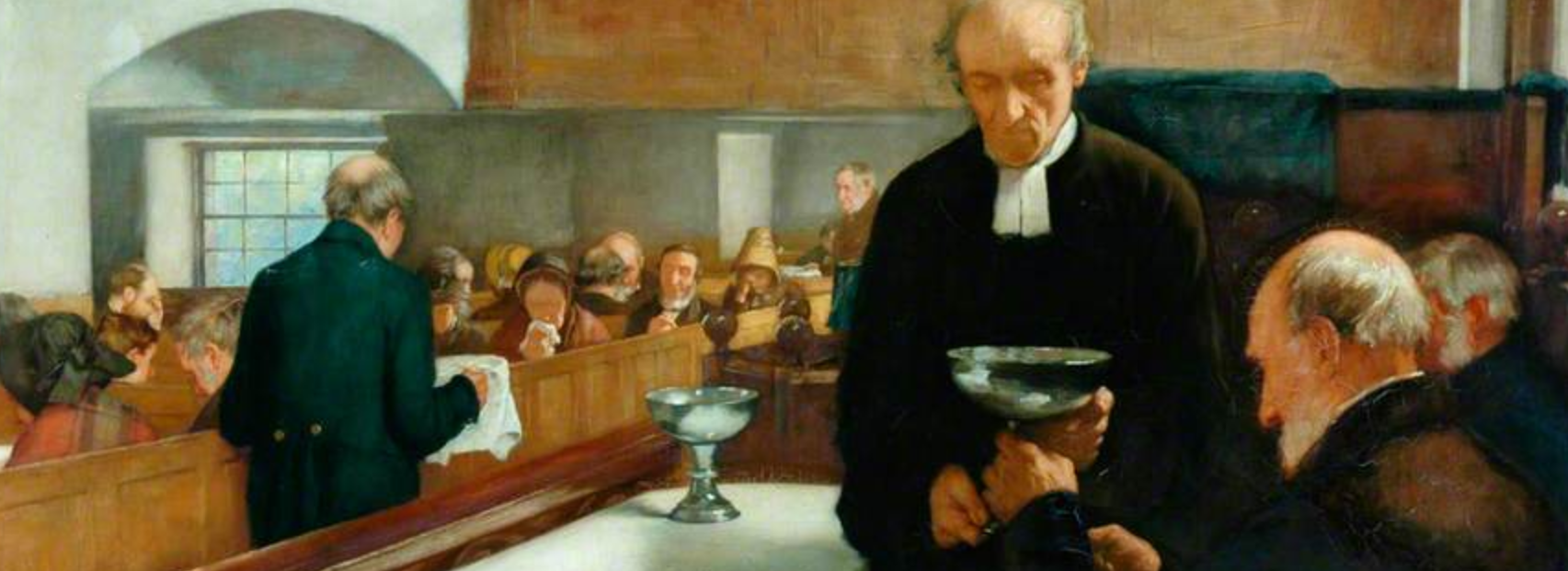
“This is their [Romanist] argument; whereof ye see their conclusion to be this: We get no other new thing in the sacrament than we do in the word, if there be no perception but spiritual. Ergo, the sacrament, is superfluous. We admit the antecedent to be true; we get no other thing, nor no new thing in the sacrament, but the same thing which we got in the word. I would have thee devise and imagine with thyself, what new thing thou wouldest have: let the heart of man devise, imagine, and wish; he durst never have thought to have such a thing as the Son of God; he durst never have presumed, to have pierced the clouds, to have ascended so high, as to have craved the Son of God in His flesh, to be the food of his soul. Having the Son of God, thou hast Him who is the heir of all things; who is King of heaven and earth; and in Him thou hast all things. What more then canst thou wish? What better thing canst thou wish ? He is equal with the Father, one in substance with the Father, true God, and true man, what more canst thou wish? Therefore, I say, we get no other thing in the sacrament than we had in the word: content thee with this. But suppose it be so; yet the sacrament is not superfluous. For wouldest thou understand what new thing thou obtainest, what other thing tbou gettest? I will tell thee. Suppose thou get that same thing which thou hadst in the word, yet thou gettest that same thing better. What is that better? Thou obtainest a greater and surer hold of that same thing in tire sacrament, than thou hadst by the hearing of the word. That same thing which thou possessedst by the hearing of the word, thou dost possess now more largely; He has larger bounds in thy soul by the receiving of the sacrament, than otherwise He could have by the hearing of the word only. Then, wilt thou ask what new thing we get? I say, we get this new thing : we get Christ better than we did before; we get the thing which we had, more fully, that is, with a surer apprehension than we had of it before; we get a greater hold of Christ now. For by the sacrament my faith is nourished, the bounds of my soul are enlarged: and so, whereas I had but a little hold of Christ before, as it were between my finger and my thumb, now I get Him in my whole hand; and still the more that my faith grows, the better hold I get of Christ Jesus. So the sacrament is very necessary, if it were no more but to get Christ better, and to get a closer apprehension of Him, by the Sacrament than we could have before.”
The following is an extremely profound passage from Robert Bruce’s magisterial treatise on the sacrament of the Lord’s Supper. Listen to this chapter in audio here. Those who may not be used to the older style may benefit from a modern rendition available here. Access more titles in the WPE Audio library.
A historical introduction to the Presbyterian Reformed Church
Posted in Indigenous Principle, Presbyterian Reformed Church, Worship, True & False, tagged bible, christianity, church, presbyterian, worship on October 7, 2024| Leave a Comment »
The Presbyterian Reformed Church (PRC) is an indigenous North American denomination whose roots are in the Scottish Reformation. We endeavour, by God’s grace, to keep to the Old Paths in the New World.
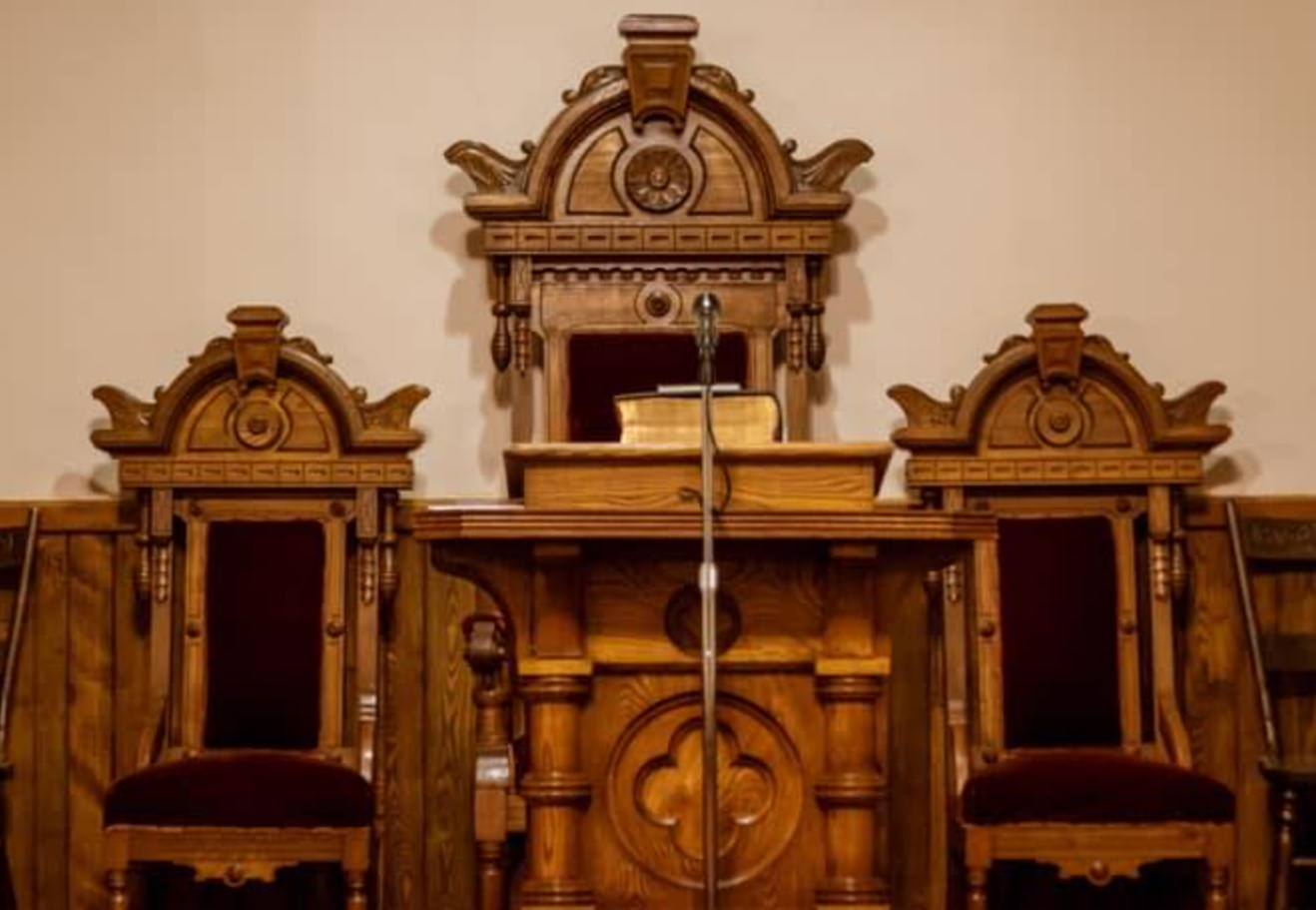
The church was formed in 1965 by the union of the Free Presbyterian Church of Ontario and the Bloor Street Presbyterian Church. The Free Presbyterian Church of Ontario was made up of the descendants of the Scottish settlers who had remained out of the unions which brought into being the Presbyterian Church in Canada (PCC) and who met in various communities throughout Southwestern Ontario. The origins of the Bloor Street Church were Scots-Irish immigrants from Ulster who settled in Toronto and were unhappy with the introduction of new worship practices in the PCC. By the 1960s, subsequent immigration from Scotland and family connections had united the congregations in doctrine and worship. It was time to unite them in government. That union was facilitated by Prof. John Murray of Westminster Theological Seminary.
Read more of this article by Rev. D. Douglas Gebbie at Presbyterian Picante.
Micro-presbyterians & church planting
Posted in Catholicity, Connectionalism & Conciliarism, Missiology, Parish in American Context, Parish Theory & Practice, Thomas Chalmers, WPE Editor, tagged bible, christianity, church, god, theology on July 20, 2024| 1 Comment »
Micro-presbyterians study hard to get things right. We dot our i’s and cross our t’s. And yet for all our learning, we can miss some pretty big things—in fact, some pretty big presbyterian things. Church-planting would definitely be one of them.
I speak from experience. For nearly the entirety of my 29-year Reformed career, I’ve been a ‘micro-presbyterian.’ I skipped the 1689 thing, past the (relatively) big-tent Reformed bodies, going straight into the Presbyterian Reformed Church, a very small psalm-singing body formed in 1965. I rather distaste the term ‘micro-presbyterian,’ especially with its connotations of over-scrupulosity and cantankerousness; and, the term may be a little dated. But in any case, God put me here, and I love my denomination. (And getting a gorgeous wife and elder’s daughter out of deal didn’t hurt either!).
I also think it has come a long way over the years. I feel that we have matured simultaneously, from a kind of cage-stage to something more balanced, stable, and seasoned. It has also helped, quite frankly, that we decided to join NAPARC some years back. Sure, it made us a pariah with many who might otherwise have sought us out. But often, those very types would never be happy in any case until they were safe in the embrace of an ecclesiastical micromanager or worshipping every Lord’s day in their own living-room.
I know we all have learned the hard way from many mistakes, missteps, and quite frankly, sins. “In many things, we offend all.” While we cannot deny the light that the Lord has graciously shown us, but embrace and follow on in it; while we cannot but press forward to the higher and better attainments of the First and Second Reformations and maintain them with diligence and zeal, we must also humbly acknowledge where we have mixed holy with unholy fire, and where we have in fact justified means by ends. Sometimes in our earnestness for truth we have cut corners; sometimes we’ve cut far more than just corners. But two wrongs do not make a right. And we may never “do evil that good may come.”
(more…) West Port Experiment