Feeds:
Posts
Comments

The following is an excerpt from John MacLeod’s Scottish Theology in Relation to Church History, a volume compiled from his lectures at Westminster Seminary in April of 1939.  The children of the Scottish Kirk, grateful for their catechism, rise up to call their mother blessed!

* * * *

“From the point of view of modern pedagogy as set forth by so many theorists, who aspire to rank as specialists in the subject, exception has been taken to the wisdom of the method taken by the Reformers in conveying instruction.  Their critics hold that it was neither wisdom nor sound educational method for them to frame careful statements of Christian truth to be learned by heart by those under their charge.  Now we may take it that our fathers never meant to satisfy themselves when a mere rote acquaintance with such statemetns was attained.  They aimed at the opening up of the form of sound words in which they set forth the truth of the Gospel.  And when what was committed to memory was opened up by loving teachers at the fireside or in the congregation, the good of having learned the letter of such statements, which were a valuable exhibition of the Faith, came out.  And, what was more, those who, in the immature years of childhood, had their minds stored with what at the time when they learned to repeat it might be beyond their reach had, in later years, when their powers came to a measure of ripeness, the chance of working in their mind what they once had learned only by rote.  They carried with them from childhood a treasure the good of which they had been long familiar.  Often have those who have gone through a course in catechistic training in their early days come to discover how useful this teaching is to them now that in later days they have come to feel the power of the truth.  They are like a mill with all its mechanism in order that waited for the turning on of the water that it might work.  Once the power is brought to bear upon them they learn to their profit the connections in which the various portions of divine truth stand to one another. And thus they start their new life of discipleship with valuable assets to their credit.  When bread is thus cast upon the waters it may be found when most needed – in after days.  There is this over and above the blessing that often attends at the time the opening up and explanation of these statements to the mind of the child.  For those who teach a Catechism are expected to open up its teaching and explain its meaning” (101-102).

For the previous installment, click here.  I include all of Paton’s comments reflecting his total abstinence views, though I do not share them.  They do provide an accurate picture of what some laborers in the city mission movement themselves endorsed. 

* * *

Great good resulted from this Total Abstinence work. Many adults took and kept the pledge, thereby greatly increasing the comfort and happiness of their homes. Many were led to attend the church on the Lord’s Day, who had formerly spent it in rioting and drinking. But, above all, it trained the young to fear the very name of intoxicating drink, and to hate and keep far away from everything that led to intemperance. From observation, at an early age I became convinced that mere Temperance Societies were a failure, and that Total Abstinence, by the grace of God, was the only sure preventive as well as remedy. What was temperance in one man was drunkenness in another ; and all the drunkards came not from those who practised total abstinence, but from those who practised or tried to practise temperance. I had seen temperance men drinking wine in the presence of others who drank to excess, and never could see how they felt clear of blame; and I had known ministers and others, once strong temperance advocates, fall through their “moderation ” and become drunkards. Therefore it has all my life appeared to me beyond dispute, in reference to intoxicants of every kind, that the only rational temperance is total abstinence from them as beverages, and the use of them only as drugs, and then only with extreme caution, as they are deceptive and deleterious poisons of the most debasing and demoralizing kind. I found also, that when I tried to reclaim a drunkard, or caution any one as to intemperate habits, one of the first questions was,— “Are you a pledged Abstainer yourself?” By being enabled to reply decidedly, ” Yes, I am,” the mouth of the objector was closed ; and that gave me a hundred-fold more influence with him than if I had had to confess that I was only “temperate.” For the good of others, and for the increase of their personal influence as the servants of Christ, I would plead with every Minister and Missionary, every officebearer and Sabbath school teacher, every one who wishes to work for the Lord Jesus in the family, the Church, and the world, to be a Total Abstainer from all intoxicating drinks.

I would add my testimony also against the use of tobacco, which injures and leads many astray, especially the very young, and which never can be required by any person in ordinary health. But I would not be understood to regard the evils that flow from it as deserving to be mentioned in comparison with the unutterable woes and miseries of intemperance. To be protected, however, from suspicion and from evil, all the followers of Jesus should, in self-denial (how small!) and consecration to His service, be pledged Abstainers from both of these selfish indulgences, which are certainly injurious to many, which are no ornament to any character, and which can be no help in well-doing. Praise God for the many who are now so pledged!  Happy day for poor Humanity, when all the Lord’s people adopt this self-denying ordinance for the good of the race !

Not boastfully, but gratefully, let me record that my Classes and Meetings were now attended by such numbers that they were amongst the largest and most successful that the City Mission had ever known ; and by God’s blessing I was enabled to develop them into a regular, warmly attached, and intelligent Congregation.  My work, however exacting, was full of joy to me. From five to six hundred people were in usual weekly attendance; consisting exclusively of poor working persons, and largely of the humbler class of mill-workers. So soon as their circumstances improved, they were constantly removing to more respectable and healthy localities, and got to be scattered over all the city. But wherever they went, I visited them regularly to prevent their falling away, and held by them till I got them interested in some Church near where they had gone to live. On my return, many years after, from the Foreign Mission field, there was scarcely a congregation in any part of the city where some one did not warmly salute me with the cry, ” Don’t you remember me ?” And then, after greetings, came the well-remembered name of one or other member of my old Bible Class.

Such toils left me but small time for private studies. The City Missionary was required to spend four hours daily in his work ; but often had I to spend double that time, day after day, in order to overtake what was laid upon me. About eight or ten of my most devoted young men, and double that number of young women, whom I had trained to become visitors and tract distributors, greatly strengthened my hands. Each of the young men by himself, and the young women two by two, had charge of a portion of a street, which was visited by them regularly twice every month. At a monthly meeting of all our Workers, reports were given in, changes were noted, and all matters brought under notice were attended to. Besides, if any note or message were left at my lodging, or any case of sickness or want reported, it was looked after by me without delay. Several Christian gentlemen, mill-owners and other employers in the Gallon, Mile-end, and Bridgeton of Glasgow, were so interested in my work that they kindly offered to give employment to every deserving person recommended by me, and that relieved much distress and greatly increased my influence for good.

Almost the only enemies I had were the keepers of Public-Houses, whose trade had been injured by my Total Abstinence Society. Besides the Saturday night meetings all the year round, we held, in summer evenings and on Saturday afternoons, Evangelistic and Total Abstinence services in the open air. We met in Thomson’s Lane, a short, broad street, not open for the traffic of conveyances, and admirably situated for our purposes. Our pulpit was formed by the top of an outside stair, leading to the second flat of a house in the middle of the lane. Prominent Christian workers took part with us in delivering addresses; an intimation through my classes usually secured good audiences; and the hearty singing of hymns by my Mission Choir gave zest and joy to the whole proceedings. Of other so-called ” attractions ” we had none, and needed none, save the sincere proclamation of the Good Tidings from God to men!

On one occasion, it becoming known that we had arranged for a special Saturday afternoon demonstration, a deputation of Publicans complained beforehand to the Captain of the Police that our meetings were interfering with their legitimate trade. He heard their complaints and promised to send officers to watch the meeting, prevent any disturbance, and take in charge all offenders, but declined to prohibit the meetings till he received their reports. The Captain, a pious Wesleyan, who was in full sympathy with us and our work, informed me of the complaints made and intimated that his men would be present, but I was just to conduct the meeting as usual, and he would guarantee that strict justice would be done. The Publicans, having announced amongst their sympathisers that the Police were to break up and prevent our meeting and take the conductors in charge, a very large crowd assembled, both friendly and unfriendly, for the Publicans and their hangers-on were there ” to see the fun,” and to help in baiting the Missionary. Punctually, I ascended the stone stair, accompanied by another Missionary who war also to deliver an address, and announced our opening hymn. As we sang, a company of Police appeared, and were quietly located here and there among the crowd, the Serjeant himself taking his post close by the platform, whence the whole assembly could be scanned. Our enemies were jubilant, and signals were passed betwixt them and their friends, as if the time had come to provoke a row. Before the hymn was finished, Captain Baker himself, to the infinite surprise of friend and foe alike, joined us on the platform, devoutly listened to all that was said, and waited till the close. The Publicans could not for very shame leave, while he was there at their suggestion and request, though they had wit enough to perceive that his presence had frustrated all their sinister plans. They had to heat our addresses and prayers and hymns ; they had to listen to the intimation of our future meetings. When all had quietly dispersed, the Captain warmly congratulated us on our large and well-conducted congregation, and hoped that great good would result from our efforts. This opposition, also, the Lord overruled to increase our influence, and to give point and publicity to our assaults upon the kingdom of Satan. Though disappointed thus, some of the Publicans resolved to have revenge. On the following Saturday evening, when a large meeting was being addressed in our Green Street Church, which had to be entered by a great iron gateway, a spirit merchant ran his van in front of the gate, so that the people could not leave the Church without its removal. Hearing this, I sent two of my young men to draw it aside and clear the way. The Publican, watching near by in league with two policemen, pounced upon the young men whenever they seized the shafts, and gave them in charge for removing his property. On hearing that the young men were being marched to the Police Office, I ran after them and asked what was their offence ? They replied that they were prisoners for injuring the spirit merchant’s property; and the officers tartly informed me that if I further interfered I would be taken too. I replied, that as the young men only did what was necessary, and at my request, I would go with them to the Office. The cry now went through the street, that the Publicans were sending the Missionary and his young men to the Police Office, and a huge mob rushed together to rescue us; but I earnestly entreated them not to raise disturbance, but allow us quietly to pass on. At the Office, it appeared as if the lieutenant on duty and the men under him were all in sympathy with the Publicans. He took down in writing all their allegations, but would not listen to us. At this stage a handsomely dressed and dignified gentleman came forward and said,—

” What bail is required ?” 

A few sharp words passed ; another, and apparently higher, officer entered, and took part in the colloquy. I could only hear’ the gentleman protest, in authoritative tones, the policemen having been quietly asked some questions.—

“I know this whole case, I will expose it to the bottom ; expect me here to stand by the Missionary and these young men on Monday morning.”

Before I could collect my wits to thank him, and before I quite understood what was going on, he had disappeared; and the superior officer turned to us and intimated in a very respectful manner that the charge had been withdrawn, and that I and my friends were at liberty. I never found out exactly who the gentleman was that befriended us; but from the manner in which he asserted himself and was listened to, I saw that he was well known in official quarters. From that day our work progressed without further open opposition, and many who had been slaves of intemperance were not only reformed, but became fervent workers in the Total Abstinence cause.

Following is the next installment of John G. Paton’s account of his experience with the Glasgow City Mission, an example of 19th century urban territorial missions.  For the previous one, click here.

* * * *

The kind cow-feeder had to inform us—and he did it with much genuine sorrow—that at a given date he would require the hay-loft, which was our place of meeting; and as no other suitable house or hall could be got, the poor people and I feared the extinction ofJohn G. Paton our work. On hearing this the ostlers and other servants of Menzies, the coach-hirer, who had extensive premises near our place of meeting, of their own accord asked and obtained liberty to clear out a hay-loft of theirs that was seldom in use, and resolved, at their own expense, to erect an outside wooden stair for the convenience of the people. This becoming known, and being much talked of, caused great joy in the district, arrested general attention, and increased the interest of our work. But I saw that, however generous, it could be at the best only another temporary arrangement, and that the premises might again at any moment be required. After prayer I therefore laid the whole case before my good and great-hearted friend, Thomas Binnie, Esq., Monteith Row, and he, after inquiring into all the circumstances, secured a good site for a Mission Hall in a piece of unoccupied ground near our old hay-loft, on which he proposed to build suitable premises at his own expense. At that very time; however, a commodious block of buildings, that had been Church, Schools, Manse, etc., came into the market Mr. Binnie persuaded Dr. Symington’s congregation, Great Hamilton Street, in connection with which my Mission was carried on, to purchase the whole property for Mission purposes. Its situation at the foot of Green Street gave it a control of the whole district where my work lay ; and so the Church was given to me in which to conduct all my meetings, while the other halls were adapted as Schools for poor girls and boys, where they were educated by a proper master, and were largely supplied with books, clothing, and even food, by the ladies of the congregation. The purchasing and using of these buildings for an evangelistic and educational Mission became a blessing — a very conspicuous blessing — to that district in the Calton of Glasgow ; and the blessing still perpetuates itself, not only in the old premises, now used for an Industrial School, but still more in the beautiful and spacious Mission Halls, erected immediately in front of the old, and consecrated to the work of the Lord in that poor and crowded and clamant portion of the city.

Availing myself of the increased facilities, my work was all re-organized. On Sabbath morning, at seven o’clock, I had one of the most deeply interesting and fruitful of all my Classes for the study of the Bible. It was attended by from seventy to a hundred of the very poorest young women and grown-up lads of the whole district.  They had nothing to put on except their ordinary work-day clothes,—all without bonnets some without shoes. Beautiful was it to mark how the poorest began to improve in personal appearance immediately after they came to our class ; how they gradually got shoes and one bit of clothing after another, to enable them to attend our other meetings- and then to go to church ; and, above all, how eagerly they sought to bring others with them, taking a deep personal interest in all the work of the Mission. Long after they themselves could appear in excellent dress, many of them still continued to attend in their working clothes, and to bring other and poorer girls with them to that morning class, and thereby helped to improve and elevate their companions.

My delight in that Bible Class was among the purest joys in all my life, and the results were amongst the most certain and precious of all my ministry. Yet it was not made successful without unceasing pains and prayers. What would my younger brethren in the Ministry, or in the Mission, think of starting out at six o’clock every Sunday morning, running from street to street for an hour, knocking at the doors and rousing the careless, and thus getting together, and keeping together, their Bible Class?  This was what I did at first; but, in course of time, a band of voluntary visitors belonging to the class took charge of all the irregulars, the indifferents, and the new-comers, and thereby not only relieved and assisted me, but vastly increased their own personal interest, and became warmly attached to each other. 

I had also a very large Bible Class—a sort of Bible-reading—on Monday night, attended by all, of both sexes and of any age, who cared to come or had any interest in the work. Wednesday evening, again, was devoted to a Prayer Meeting for all, and the attendance often more than half-filled the Church. There I usually took up some book of Holy Scripture, and read and lectured right through, practically expounding and applying it.  On Thursday I held a Communicants’ Class, intended for the more careful instruction of all who wished to become full members of the Church. Our constant text-book was “Patterson on the Shorter Catechism,” than which I have never seen a better compendium of the doctrines of Holy Scripture. Each being thus trained for a season, received from me, if found worthy, a letter to the minister of any Protestant Church which he or she inclined to join. In this way great numbers became active and useful communicants in the surrounding congregations, and eight young lads of humble circumstances educated themselves for the ministry of the Church,—most of them getting their first lessons in Latin and Greek from my very poor stock of the same! Friday evening was occupied with a Singing Class, teaching Church music, and practising for our Sabbath meetings. On Saturday evening we held our Total Abstinence meeting, at which the members themselves took a principal part, in readings, addresses, recitations, singing hymns, etc. . . .

Next

IMG_0228Some time back I was listening to a prominent Reformed speaker. He contended that while our confessions and catechisms were right and useful, yet we tend to freeze-dry them and rigidly force them into cultural contexts where they are not always immediately relevant. He  suggested that we need to be sensitive to the questions that the culture is asking in which we minister. Those questions may not be the same as those that have historically been asked.

Now, I don’t deny for a moment that each culture will come with its own set of questions, some of which we might consider ‘honest’ (cf. Acts 17:32). As stewards of the mysteries of God, we should wisely parcel out God’s truth to them, given their own particular histories, needs, and temptations. Further, the Reformed confessions and catechisms were certainly birthed in a context distinct in many ways from our own.  Particular issues of the day pressed on our forebearers, conditioning their confessions and catechisms accordingly. Like the men of Isachaar, they “understood the times” (1 Chron. 12:32) and spoke winsomely to their generation.

Continue Reading »

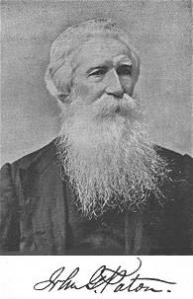
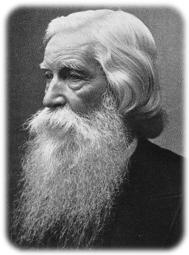
It has been some time since I’ve read the classic John G. Paton: Missionary to the New Hebrides (1898).  A truly amazing story of God’s work through a humble, Scottish Presbyterian missionary among the cannibals of Australasia.

But I had altogether forgotten the book’s recounting of his preparatory work in the Glasgow City Mission.  He had been an active district visitor in the famous mission work founded by David Nasmith and patterned largely on Thomas Chalmers’ mission principles of locality and aggression.  In the next few installments, we’ll offer some selections from Paton’s chapter on his experience with the Glasgow City Mission.  It should give us some firsthand insight into what 19th century district visitation among the urban poor looked like.  (And, by the by, I personally abstain from his teetotalism.)

* * * * *

Before undertaking the Maryhill school, I had applied to be taken on as an agent in the Glasgow City Mission ; and the night before I had to leave Maryhill, I received a letter from Rev. Thomas Caie, the superintendent of the said Mission, saying that the directors had kept their eyes on me ever since my application, and requesting, as they understood I was leaving the school, that I would appear before them the next morning, and have my qualifications for becoming a Missionary examined into. Praising God, I went off at once, passed the examination successfully, and was appointed to spend two hours that afternoon and the following Monday in visitation with two of the directors, calling at every house in a low district of the town, and conversing with all the characters encountered there on their eternal welfare. I had also to preach a ” trial” discourse in a Mission meeting, where a deputation of directors would be present, the following evening being Sunday ; and on Wednesday evening, they met again to hear their reports and to accept or reject me. All this had come upon me so unexpectedly, that I almost anticipated failure; but looking up for help I went through with it, and on the fifth day after leaving the school they called me before a meeting of directors, and informed me that I had passed my trials most successfully, and that the reports were so favourable that they had unanimously resolved to receive me at once as one of their City Missionaries. It was further explained that one of their number, Matthew Fairley, Esq., an elder in Dr. Symington’s congregation, had guaranteed the half of my salary for two years, the other half to be met by the resources of the Mission voluntarily contributed,—the whole salary at that time amounting to £40 per annum. The district allocated to me was one especially needful and trying, that had never been occupied, in and around the Green Street of Calton, and I was enjcined to enter upon my duties at once. After receiving many good and kind counsels from these good and kind men, one of them in prayer very solemnly dedicated me and my work to the Lord; and several of them were appointed to introduce me to my district, taking a day each by turns, and to assist me in making arrangements for the on-carrying of the work. Deeply solemnized with the responsibilities of my new office, I left that meeting praising God for all His undeserved mercies, and seeing most clearly His gracious hand in all the way by which He had led me, and the trials by which He had prepared me for the sphere of service, Man proposes—God disposes.

Most of these directors were men of God, adapted and qualified for this special work, and very helpful in counsel as they went with me from day to day, introducing me to my district, and seeing the character and position of the people dwelling there. Looking back upon these Mission experiences, I have ever felt that they were, to me and many others, a good and profitable training of students for the office of the Ministry, preparing us to deal with men of every shade of thought and of character, and try to lead them to the knowledge and service of the Lord Jesus. I found the district a very degraded one. Many families said they had never been visited by any minister; and many were lapsed professors of religion who had attended no church for ten, sixteen, or twenty years, and said they had never been called upon by any minister, nor by any Christian visitor. In it were congregated many avowed infidels, Romanists, and drunkards,—living together, and associated for evil, but apparently without any effective counteracting influence. In many of its closes and courts sin and vice walked about openly—naked and not ashamed.

We were expected to spend four hours daily in visiting from house to house, holding small prayer meetings amongst those visited, calling them together also in evening meetings, and trying by all means to do whatever good was possible amongst them. The only place in the whole district available for a Sabbath evening Evangelistic Service was a hay-loft, under which a cow-feeder kept a large number of cows, and which was reached by an outside rickety wooden stair. After nearly a year’s hard work, I had only six or seven non-church-goers, who had been led to attend regularly there, besides about the same number who met on a week evening in the groundfloor of a house kindly granted for the purpose by a poor and industrious but ill-used Irishwoman. She supported her family by keeping a little shop, and selling coals. Her husband was a powerful man —a good worker, but a hard drinker, and, like too many others addicted to intemperance, he abused and beat her, and pawned and drank everything he could get hold of. She, amid many prayers and tears, bore everything patiently, and strove to bring up her only daughter in the fear of God. We exerted, by God’s blessing, a good influence upon him through our meetings. He became a total abstainer, gave up his evil ways, and attended church regularly with his wife. As his interest increased, he tried to bring others also to the meeting, and urged them to become abstainers. His wife became a centre of help and of good influence I all the district, as she kindly invited all and welcomed them to the meeting in her house, and my work grew every day more hopeful.

Seeing, however, that one year’s hard work showed sach small results, the directors proposed to remove me to another district, as in their estimation the nonchurch-goers in Green Street were unassailable by ordinary means. I pleaded for six months’ longer trial, as I had gained the confidence of many of the poor people there, and had an invincible faith that the good seed sown would soon bear blessed fruit.  To this the directors kindly agreed. At our next meeting I informed those present that, if we could not draw out more of the non-church-goers to attend the services, I should be removed to another part of the city. Each one there and then agreed to bring another to our next meeting. Both our meetings at once doubled their attendance. My interest in them and their interest in me now grew apace, and, for fear I might be taken away from them, they made another effort, and again doubled our attendance. Henceforth meeting and class were both too large for any house that was available for us in the whole of our district.  We instituted a Bible Class, a Singing Class, a Communicants’ Class, and a Total Abstinence Society; and, in addition to the usual meetings, we opened two prayer meetings specially for the Calton division of the Glasgow Police—one at a suitable hour for the men on day duty, and another for those on night duty. The men got up a Mutual Improvement Society and Singing Class also amongst themselves, weekly, on another evening. My work now occupied every evening in the week; and I had two meetings every Sabbath. By God’s blessing they all prospered, and gave evidence of such fruits as showed that the Lord was working there for good by our humble instrumentality.

[Next post]

 Here is an intriguing exchange among the Westminster Divines on the subject of how to catechize from the published minutes.  O, to have been a fly on the wall! 

Rutherford ‘—on objections—(l.) It is said the Apostles did not use such a way. I think they did. “Is then the Law of God of none effect ?” is a sort of sample question from the Apostolic Catechism. (2.) It takes away the proper work of the minister. Denied. ‘There is as much art in catechising as in anything in the world. It may be doubted, whether every minister do understand the most dextrous way of doing it.’  Marshall hesitated a little about adhering, too formally, to the bare question-and-answer method of the Catechism.’  Bridge: ‘ Two ends of catechising: increase of knowledge and test of knowledge. For the first there must be explication of the terms of divinity—redemption, etc., must be first explained. For the test of their knowledge it is better that answers should be made by sentences than by aye and no.’  Gillespie: ‘This is a profitable discourse, which is the best way of catechising. I like the form—capital questions by themselves, and particular questions by aye and no. When we were lately in Scotland, we had occasion to speak of this way, and showed them the example of it, and they all liked it very well.’  Dr. Gouge: ‘Ministers are physicians; they must observe the patient.’ Herle : ‘I would have aye and no to be expressed, but not distinct. It should be the first word of the answer.’ Seaman: ‘There are two things before us: about a catechism, and about catechising. It is a little too much to prescribe to the minister this form or that.’ Reynolds: ‘We all agree that way which is most for ingenerating knowledge is to most to be used—but I do not see that this way before us is the best.” Delmy: ‘A catechism is for propounding knowledge in the most familiar manner, and to find out the measure of the knowledge of the party. The experience of the Reformed churches is to be considered.’ Palmer : ‘You must consider others as well as children.’ “

Here’s a very insightful passage from George Herbert on effective catechizing.  I think it illustrates many things – especially the extemporaneous and evangelistic side of catechizing.  It is not as though rote memorization of form catechisms has no place.  It certainly does with the baptized children of the church.  Yet it is only one dimension of the churchly discipline of catechizing.  The duty of catechizing extends to all those who require saving knowledge, those whom we would call the ‘unconverted.’  In such cases, skill and versatility in asking questions is no less necessary than when dealing with covenant children:

… the Parson once demanded after other questions about man’s misery; since man is so miserable, what is to be done?  And the answerer could not tell; He asked him again, what he would do, if he were in a ditch?   This familiar illustration made the answer so plaine, that he was even ashamed of his ignorance; for he could not but say, he would hast[e] out of it as fast as he could.  Then he proceeded to ask, whether he could get out of the ditch alone, or whether he needed a helper, and who was that helper (The Living Temple, p. 257).

Isn’t good personal evangelism nothing other than effective catechizing?

From the diary of Sir Michael Connal, evangelical Presbyterian merchant in Glasgow:

“November 6 [1838].—Visited two poor women, as a member of the Stirlingshire Charitable Society ; one a Mrs. Buchanan, a poor object, five children.just out of scarlet fever, three stairs up in a back land in the High Street; dreadful poverty, suffocating smell, rags, filth ; these sights should make me more and more active in doing good. I feel more and more satisfied with my position in providence ; may I improve it aright, devoting mind and body to the pursuit so far as is consistent with Christian light and love. May I be blessed in my mental pursuits as enlarging and strengthening my mind.”

March 12 [1844].—How various my employments often in the evening. Visited a Roman Catholic dying of consumption. Attempted to speak, but was put off with many excuses. Took up a missal and read a few verses of the 51 st Psalm.”

“October 28 [1844].—On Monday evening called round upon various families in my district. I was interested in one family especially. How much real elegance and politeness and decorum there is in a family under the influence of religion, however poor.”

January 13 [1846].— . . . On New Year’s Day went to call in the Spoutmouth on the woman Mackay; found that she had died that morning. Got a lesson not to speak harshly to those whom I visited. Was much pleased with the affection of the Roman Catholic woman, with whom she lived, for the deceased.”

October 2 [1847].—I have had much pleasure in visiting through my district. How much contentment, how much happiness, with very little of this world.”

April 5 [1848].—Went through my district; found the people glad to see me.”

October 10 [1850].— . . . I have been pressed in spirit to purchase the Dovehill Church. I think that schools could be opened there to advantage. I do think that it is my duty to turn to the next great means of the elevation of that district of the city in the institution of a school. . . . I know that it will cost me labour and trouble, but I have undertaken the adventure knowing that I have many opportunities to accomplish successfully now what I may not have at a future time. I pity the cold selfishness of some so-called Christians. Nothing but earnestness will do. Devotedness of purpose is the characteristic of Rome; why not of Protestants ?

One of the reasons Chalmers advocated territorial city missions was to reunite the classes, particularly by the clergy’s concentrated evangelistic efforts in the slums.  It was ultimately a missionary policy, yet it had distinct advantages for the social fabric.  Here’s an interesting quote that helps illumine Chalmers’ rationale for the parish plan in urban context:

In a provincial capital, the great mass of the population are retained in kindly and immediate dependence on the wealthy residenters of the place. . . [which] brings the two extreme orders of society into that sort of relationship, which is highly favourable to the general blandness and tranquillity of the whole population. In a manufacturing town, on the other hand, the poor and the wealthy stand more disjoined from each other.  It is true they often meet, but they meet more on an arena of contest, than on a field where the patronage and custom of the one party are met by the gratitude and goodwill of the other (Thomas Chalmers, Christian and Civic Economy of Large Towns, Glasgow, 1821, p. 51).

As the clergy and benevolent Christian volunteers adopt mission districts in the cities and thoroughly work them, the net effect should be a re-harmonization of the upper- and middle-classes with the working class.

May the Lord imprint these truths, so well expressed by Charles Bridges, on the heart of every Gospel minister:

“The book of God is indeed the living voice of the Spirit. To be intent therefore upon the study of it, must result in a clear apprehension of the mind of God. Hence the maxim—’ Bonus textuarius, bonus Theologus.’ Most beautifully does Witsius set out the value of this primary Ministerial qualification—” mighty in the Scriptures.” ‘ Let the Theologian ascend from the lower school of natural study, to the higher department of Scripture, and, sitting at the feet of God as his teacher, learn from his mouth the hidden Old Dutch Family Bible (from flickr.com)mysteries of salvation, which ” eye hath not seen, nor ear heard; which none of the princes of this world knew;” which the most accurate reason cannot search out; which the heavenly chorus of angels, though always beholding the face of God, ” desire to look into.” In the hidden book of Scripture, and no where else, are opened the secrets of the more sacred wisdom. Whatever is not drawn from them—whatever is not built upon them—whatever does not most exactly accord with them—however it may recommend itself by the appearance of the most sublime wisdom, or rest upon ancient tradition, consent of learned men, or the weight of plausible argument—is vain, futile, and, in short, a very lie. ” To the law and to the testimony. If any one speak not according to this word, it is because there is no light in them.” Let the Theologian delight in these sacred oracles: let him exercise himself in them day and night; let him meditate on them; let him live in them ; let him derive all his wisdom from them; let him compare all his thoughts with them; let him embrace nothing in religion which he does not find here. Let him not bind his faith to a man— not to a Prophet—not to an Apostle—not even to an Angel himself, as if the dictum of either man or angel were to be the rule of faith. Let his whole ground of faith be in God alone. For it is a Divine, not a human faith, which we learn and teach; so pure that it can rest upon no ground but the authority of God, who is never false, and never can deceive. The attentive study of the Scriptures has a sort of constraining power. It fills the mind with the most splendid form of heavenly truth, which it teaches with purity, solidity, certainty, and without the least mixture of error. It soothes the mind with an inexpressible sweetness; it satisfies the sacred hunger and thirst for knowledge with flowing rivers of honey and butter; it penetrates into the innermost heart with irresistible influence; it imprints its own testimony so firmly upon the mind, that the believing soul rests upon it with the same security, as if it had been carried up into the third heaven, and heard it from God’s own mouth; it touches all the affections, and breathes the sweetest fragrance of holiness upon the pious reader, even though he may not perhaps comprehend the full extent of his reading. We can scarcely say, how strongly we are opposed to that preposterous method of study, which, alas ! too much prevails among us—of forming our views of Divine things from human writings, and afterwards supporting them by Scripture authorities, the result either of our own inquiry, or adduced by others too rashly, and without further examination or bearing upon the subject; when we ought to draw our views of Divine truths immediately from the Scriptures themselves, and to make no other use of human writings, than as indices marking those places in the chief points of Theology, from which we may be instructed in the mind of the Lord.’ This exquisite Master of Theology proceeds in the same strain to remark the importance of the Student giving himself up to the inward teaching of the Holy Spirit, as the only mean of obtaining a spiritual and saving acquaintance with the rule of faith; ‘ it being needful that he that is a disciple of Scripture should also be a disciple of the Spirit’ (Bridges, The Christian Ministry, pp. 58-60).