Feeds:
Posts
Comments

Richard Baxter, celebrated author of The Reformed Pastor, realized the strategic importance of shepherding heads of households.  If men are won to the Gospel and growing in it, then the work of a pastor is multiplied exponentially.  But if we neglect this high calling, then the church will hemhorrage its children, no matter how many hip twenty-something youth pastors we use to stanch the flow.

We must have a special eye upon families, to see that they are well ordered, and the duties of each relation performed. The life of religion, and the welfare and glory of both the Church and the State, depend much on family government and duty. If we suffer the neglect of this, we shall undo all. What are we like to do ourselves to the reforming of a congregation, if all the work be cast on us alone; and masters of families neglect that necessary duty of their own, by which they are bound to help us?  If any good be begun by the ministry in any soul, a careless, prayerless, worldly family is like to stifle it, or very much hinder it; whereas, if you could but get the rulers of families to do their duty, to take up the work where you left it, and help it on, what abundance of good might be done! I beseech you, therefore, if you desire the reformation and welfare of your people, do all you can to promote family religion (Richard Baxter, The Reformed Pastor, p. 91).

Chapter 25 – Of Catechizing and of Comforting and Visiting the Sick

YOUTH TO BE INSTRUCTED IN GODLINESS. The Lord enjoined his ancient people to exercise the greatest care that young people, even from infancy, be properly instructed. Moreover, he expressly commanded in his law that they should teach them, and that the mysteries of the sacraments should be explained. Now since it is well known from the writings of the Evangelists and apostles that God has no less concern for the youth of his new people, when he openly testifies and says: “Let the children come to me; for to such belongs the kingdom of heaven” (Mark 10:14), the pastors of the churches act most wisely when they early and carefully caetchize the youth, laying the first grounds of faith, and faithfully teaching the rudiments of our religion by expounding the Ten Commandments, the Apostles’ Creed, the Lord’s Prayer, and the doctrine of the sacraments, with other such principles and chief heads of our religion.  Here let the Church show her faith and diligence in bringing the children to be catechized, desirous and glad to have her children well instructed.

THE VISITATION OF THE SICK. Since men are never exposed to more grievous temptations than when they are harassed by infirmities, are sick and are weakened by diseases of both soul and body, surely it is never more fitting for pastors of churches to watch more carefully for the welfare of their flocks than in such diseases and infirmities. Therefore let them visit the sick soon, and let them be called in good time by the sick, if the circumstance itself would have required it. Let them comfort and confirm them in the true faith, and then arm them against the dangerous suggestions of Satan. They should also hold prayer for the sick in the home and, if need be, prayers should also be made for the sick in the public meeting; and they should see that they happily depart this life. We said above that we do not approve of the popish visitation of the sick with extreme unction because it is absurd and is not approved by canonical Scriptures.

Here’s a wonderful tonic from Dr. Luther for young preachers.  “Let the righteous smite me; it shall be a kindness” (Psa. 141:5)!

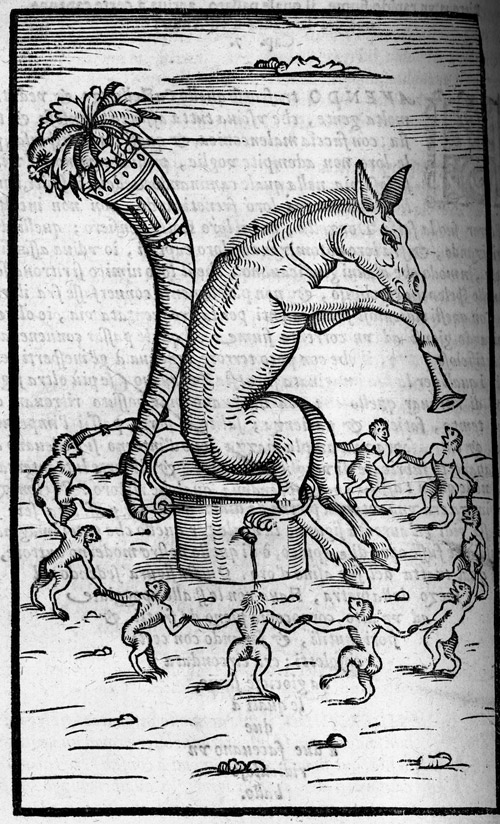
If, however, you feel and are inclined to think you have made it, flattering yourself with your own little books, teaching, or writing, because you have done it beautifully and preached excellently; if you are highly pleased when someone praises you in the presence of others; if you perhaps look for praise, and would sulk or quit what you are doing if you did not get it-if you are of that stripe, dear friend, then take yourself by the ears, and if you do this in the right way you will find a beautiful pair of big, long, shaggy donkey ears. Then do not spare any expense! Decorate them with golden bells, so that people will be able to hear you wherever you go, point their fingers at you, and say, “See, See! There goes that clever beast, who can write such exquisite books and preach so remarkably well.”  That very moment you will be blessed and blessed beyond measure in the kingdom of heaven. Yes, in that heaven where hellfire is ready for the devil and his angels.

Thomas Chalmers (1780-1847) records the following about an invitation he had accepted to preach.  In the passage, he relates his growing revulsion as he learned of the details planned for the event.  It’s amusing, yet sobering – especially since it’s so contemporary!

* * * * *

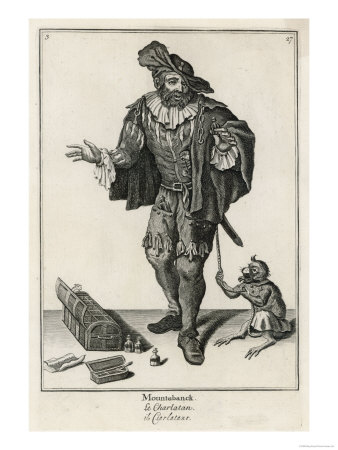
“They have got the sermon into the newspaper, and on reading the advertisement I was well-nigh overset by the style of it. They are going to have a grand musical concert along with the sermon, to which the best amateurs and performers of the neighborhood are to lend their services. This is all put down in their gaudy manifesto, and to me it is most ineffably disgusting. You know that I am to be very guarded; but I could not perfectly disguise my antipathies to this part of the arrangement. I asked Mr. Grant if I might take the paper with me for the amusement of my Scottish friends. He asked if I disliked music. I said that I liked music, but disliked all charlatanry. Thus far I went; and it was perhaps too far, but this is really making it a theatrical performance, and me one of the performers. But let me be patient; I am jaded and overdone, and reserve my further writing till Monday. . .

When I went to the great preaching hall, I found that there was just this practicing before an immense assemblage, on which I called out, in the distinct hearing of those about me, that there was an air of charlatanry about the whole affair, and that I did not like it at all. I would stay no longer in that place, and went along with them to the committee-room, where there were about twenty managers and others. I said that I had come from a great distance on their account, and had therefore purchased the privilege of telling them plain things; that they should have consulted me ere they had made their arrangements—that I was quite revolted by the quackery of their advertisement—that they had made me feel myself to be one of the performers in a theatrical exhibition—that what they had done stood in the same relation to what they ought to have done, that an advertisement of Dr. Solomon’s did to the respectable doings of the regular faculty, &c., &c. I was firm and mild withal—they confused, and awkward, and in difficulties. I said, that still I would preach, but that I thought it right to state what I felt” (Memoirs 2:41).

Small groups are immensely popular in evangelical circles these days, and increasingly commonplace in Reformed communions.  I’m not sure how much of this is due to the influence of New Calvinism or whether it’s due to old-guard Reformed folk warming up to broader evangelicalism.  Maybe both.  Regardless of the source, it’s definitely a popular construct.   Some would even argue that it’s a staple for ordinary church life.

I’ve been back and forth on small groups for some time.  In my more skeptical moments, the following concerns have come to mind.

First, in classic Reformed ecclesiology – which in my judgment is radically biblical – where do small groups fit?   They are not the public assembly, where the believers of a local communion “come together” to observe the corporate worship of God (Acts 14:27, 1 Cor. 11:17, 18, 20, 33, 34; 14:23, 26).   And you can’t assign them to the private (Mat. 6:6, 14:23) or family devotion categories (Gen. 18:19, Deut. 6:4-9), since you can’t have a small group with one person or just one family.   So if they are not in the three, traditional categories of worship/means of grace ministry (WCF 21.6), what place should they have?

I suppose an argument could be made that we can get them in the door by the body life argument.  Small groups could be seen as a manifestation of koinonia, our sharing in the common life of the Spirit.  Isn’t that Reformed?  “Saints by profession are bound to maintain an holy fellowship and communion in the worship of God, and in performing such other spiritual services as tend to their mutual edification” (WCF 26.2).   Well, I admit coming together for the Lord’s day services is not all there is to church fellowship.  There is much to be done on a smaller scale and with more intimacy.  Fine and good.  “They that feared the Lord spoke often one with another, and a book of remembrance was written before him for them that feared the LORD, and that thought upon his name” (Mal. 3:16).  But when informal, spiritual conversations transition into small groups, something changes.  It is formalized, it requires organization, structure, and facilitation if not leadership.  In short, it becomes programmatic.   So if it is programmatic, where does it fit in the apostolic program?   Is it a component of the ‘ordinary means?’

Second, there is the collective wisdom of our Reformed forbears.  While I’m no expert in 16th and 17th century church history, it does appear that the Westminster Divines discouraged small groups from having a normative place in the life of God’s people.  In fact, they appear to have been suspicious of them.  “Whatsoever have been the effects and fruits of meetings of persons of divers families in the times of corruption or trouble, (in which cases many things are commendable, which otherwise are not tolerable,) yet, when God hath blessed us with peace and purity of the gospel, such meetings of persons of divers families (except in cases mentioned in these Directions) are to be disapproved, as tending to the hinderance of the religious exercise of each family by itself, to the prejudice of the publick ministry, to the rending of the families of particular congregations, and (in progress of time) of the whole kirk. Besides many offences which may come thereby, to the hardening of the hearts of carnal men, and grief of the godly” (Directory for Family Worship, Section 7).

Third, there is the obvious susceptibility of small groups to the influence of egalitarianism, feminism, and a host of other -isms.  Clearly they are more vulnerable; and what is more, I have to wonder whether they are not in some ways the product of these extra-biblical spirits of the age.

So I ask the question – or to be more frank, I raise the doubt.   For now, at least.

See also “More on My Allergy to Small Groups

Real realpolitik

John Knox, the great Scottish Reformer, was definitely no adept in worldly-wisdom.  His positions were always unbending and uncompromising.  He despised subtlety, and spoke always with the greatest of candor.  He obviously had little interested in making friends and influencing people; that is, unless by influence one means shameless, hard-hitting argument!

When Queen Mary came to Scotland in 1561 to take the throne, she was of a mind to assert her royal prerogatives in everything – religion included.  An ardent Romanist from her youth, she decided to make a clear, bold statement at the outset.  She would have a mass celebrated in the chapel of the Holyrood house, something forbidden by the Protestant magistracy at the time.

Not surprisingly, Knox was outspoken against the celebration.  There could be no accommodation, no middle ground.  “One mass,” proclaimed Knox,  “was more fearful unto him than if ten thousand armed enemies were landed in any part of the realm, of purpose to suppress the whole religion.”

One mass, Master Knox?  One private mass, as a concession to the rightful heir of the throne?  And that one mass should be of more dire consequence than a foreign invasion?  Not only is this intolerant, but it’s unreasonable!  Don’t you realize that to get what you want, you’ve got to give?

Knox responds to the naysayers.  The mass issue is a non-negotiable, for “in our God there is strength to resist and confound multitudes, if we unfeignedly depend upon Him, of which we have had experience; but when we join hands with idolatry, it is no doubt but both God’s presence and defence will leave us; and what shall then become of us?”

What the calculators of this world can’t grasp is that he was more practical than them all!  His explanation here reveals the deepest sagacic insight.  Why?  Because, thought Knox, you must factor God into every equation.  Giving in to Queen Mary on one little point may have been expedient on the earthly plane in the short-run, but by doing so it would alienate the One whose favor is absolutely indispensable.  You don’t want to mess with the ‘wrong man’ (or woman, in Mary’s case), but it’s far worse to mess with the ‘wrong God!’

Knox had learned his other-worldly wisdom at the feet of Wisdom incarnate.  He, the Logos, the Light that lightens every man entering the world had said, “Whosoever shall seek to save his life shall lose it; and whosoever shall lose his life shall preserve it” (Lu. 17:33).  To make it in this world and in the next, you must think counter-culturally, counter-intuitively.  But be assured, this is the best way!

In deference to the One who “knows all things,” Knox shunned statescraft.  But in doing so, he became the true patron and friend of the nation.  If only we had eyes to see what Master Knox saw!  If we would close our eyes and heed true Wisdom, we would walk the safest and most expedient course.  And we would assign much less weight to earthly factors, which to the eye of the flesh loom so large.

The following extract comes from Thomas Chalmers: A Biographical Study, by James Dodds (1870).  In it, he recounts a lesser known story from the career of Thomas Chalmers.  While not an effort on par with his earlier St. John’s and his later West Port Experiments (he was teaching divinity at the University of Edinburgh at this time) the Water of Leith story nonetheless exhibits his ardent commitment to territorial or parochial urban mission.  Not to mention his readiness to roll up his sleeves!

* * * *

HALMERS, in 1833-4, was residing in Forres Street, Edinburgh, not far from the line of the Great North Road by Queensferry.  In his walks out to the country in that direction, he would often cross the lofty and spacious Dean Bridge, then newly erected,—the latest wonder in Edinburgh, —spanning the ravine through which, far below, foams the Water of Leith, turbid and brawling, and laden with pollution.  From this elevation he would look down upon the village of the Water of Leith, — almost sunk out of sight and sound of the world, though within a few hundred paces of the metropolis, — antiquated and decayed; cooped within steep narrow precipices; with tall gaunt chimneys, untenanted and crumbling granaries, rough dirty streets, miserable hovels into which ‘every element of heaven may enter;’ with scarce any sign of life or action, except two or three lounging figures, the noise and froth of mill-wheels, the grunting of pigs, and the squalling of children without childhood.  This abject and neglected place had made itself very notorious, in the late visitation of cholera, by its extreme ignorance and violence.  Yet in many ways it had a quaint, old-fashioned, half-savage charm.  To the antiquarian, this village was a curious relic of the past, lying close to, yet with a kind of repulsion hiding itself from, the encroaching pomp of the New Town of Edinburgh.  To the painter or poet it had strange bits of ancient masonwork; and it had frothing pools, and steep banks clustered all over with wild vegetation, and aspects of a rude primitive life. Chalmers was not insensible to the associations of the past; for, was he not born and brought up amongst the old decayed towns of the East of Fife?  He had also the artist’s eye for quaint and out-of-the-way nooks, either of nature or of human habitation.  But these lighter moods, though neither scorned nor abjured, were in his mind always subordinated to the sentiment of Christian benevolence.  Looking, then, from the height of the Dean Bridge, he might feel, ‘How antique!  how it carries one back to the time when Mary Stuart rode her palfrey across that now toppling old bridge in her excursions to the Highlands!’  Or, ‘ How quaint and picturesque these straggling houses, in the deep ravine, with the babbling brook running through the midst!’  But his uppermost feeling would be, ‘What a spot, as if scooped out by nature, and thrown aside by man, to plant a Territorial Church, with all its reclaiming and purifying influences!’

And in the Water of Leith he resolved to show to the world a new model of that Territorial system, which he had begun in St. John’s of Glasgow.

On a survey, it was found that the inhabitants were 1356 in number, but of these only 143 had sittings in any place of worship.  There was a meeting-house of some denomination in or near the village, but only five of the inhabitants had sittings; it was attended almost entirely by persons coming from a distance, outside the territory of the Water of Leith.  Chalmers, assisted by the liberal friends who never failed him, determined to raise here a territorial church, specially devoted to the inhabitants of the Water of Leith.  A missionary began his labours amongst them in 1833.  He visited from house to house, made the acquaintance of the people, was courteously received by them, conversed with them, visited the sick, was with them in the hour of affliction and death, was their daily counsellor and friend.  He invited them to come to meetings, where he addressed them—in fact, preached to them.  His audience became more and more numerous; he had to seek out places of meeting larger and larger; at last he resorted to an old maltgranary, where, with great packing, some 400 people could attend.  A church was then erected by subscription, which was opened in May 1836. The sittings were about 1000, and at a moderate charge, and offered in preference to the inhabitants.  Soon after the opening, about 700 of the sittings were taken, and almost entirely by inhabitants. It was a true territorial church.

Chalmers officiated at the opening, and dwelt paternally upon the effect of its territorial character.

‘Instead of leaving this church to fill as it may from all parts of the town, we first hold out the seats that we have to dispose of, at such prices as we can afford, to its own parish families. . . . Our fond wish for Edinburgh and its environs is that, district after district, new churches may arise, and old ones be thrown open to their own parish families, till not one house remains which has not within its walls some stated worshipper in one or other of our Christian assemblies; and not one individual can be pointed to, however humble and unknown, who has not some man of God for his personal acquaintance, some Christian minister for his counsellor and friend.’

This new and eminently successful model of Territorialism, coupled with his long teachings, the private exertions at the very same time of his old Glasgow friends, and also the religious darkness and fearful profligacy especially of the large towns, were at length stirring the Church of Scotland from its culpable neglect. . . 

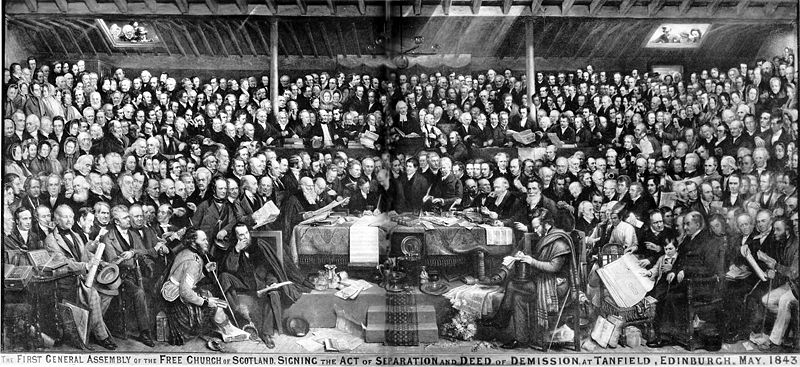
By the 1830s, the Church of Scotland was in the midst of a true evangelical revival.  Yet with the revival came conflict.  Increasingly, the State transgressed into the sphere of the established Church.  Its interference called into question the very spiritual independence of the institution that John Knox and others had helped consolidate under Christ’s ultimate authority. 

Thomas Chalmers, the premier Scottish preacher of the day, threw his full weight on the side of the evangelicals.  In temporal matters, the Church was to be subject to the State.  But not one inch of ground should be given on matters spiritual.  Christ is Head of the Church, and His law is higher than the law of the land.  His servants must at the end of the day obey God rather than man.

In Chalmers’ Memoirs, we read the following words about the dire consequences for compromise.  Speaking of the State’s intrusion in spiritual things, he writes, “Why, this would be lording it over us with a vengeance!  It would be making us swallow the whole principle; and the Church of Scotland, bereft of all moral weight, might henceforth be cast a useless and degraded thing into the bottom of the sea” (Memoirs 4:139).  In short, pragmatism leads to cultural irrelevance.

Though writing in a very different context, his words ring true today.  If the Church should indulge in pragmatism, then it not only breaks allegiance to Christ, but so debases itself as to be contemptible even to the wicked.   “If the salt loses its saltiness, how shall it be made flavorful?  Is it then good for nothing, but to be cast out and trampled under men’s feet.”

These selections from Boston’s Memoirs come from his ministry in the parish of Ettrick, having accepted that charge in 1707 after his labors in Simprin.  To read the previous post, click here.

Observe the rigors of Boston’s parish ministry.  The strains on his physical constitution in his commitment to parish catechesis remind one of David Brainerd’s hardships with the Delaware Indians.

We also note in these passages a strong sense of ministerial responsibility for the youth.  Several of these ‘diets’ of catechizing were especially for the youth.  Obviously, these were hardly ‘youth groups’ in the modern sense; yet they were gatherings of youth nonetheless.  Also in this pastoral vein we see how Boston’s catechesis often involved practical exhortations.  This wasn’t merely a discipline to inform minds, but to change hearts.

In one instance, Boston distinctly notes that he adjusted his particular practice by observing the useful method of a colleague in the ministry.  This ministerial duty ever needs reassessment and retooling for maximal usefulness, and we should not be ashamed to observe how others do it better than we.

Last, these diets of catechizing appear to have been set for places outside the parish kirk, as in his manse, or throughout the parish at suitable gathering-places.  The man of God, though ‘settled within his bounds,’ is ever itinerant.  He must “preach publicly and from house to house.”   The churchly calling of catechesis engages the mind; but it is worth noting that it first goes to the minds that need engaging!

* * * *

1709

“Twice a-year I catechised the parish, having no diet but one at the church; and once a-year I visited their families. The former was usually begun about the end of October, the latter about the end of April, or beginning of May. This was my ordinary course all along, save that of some few late years; through my wife’s extraordinary sickness in the spring, and the decay of my own strength, I have not got the visiting of families performed as before; neither have I hope of it any more, though I still aim at something of that kind yearly.  But I bless God, that when I had ability, I was helped to lay it out that way. Thus the winter-season was the time wherein I did most of my work in the parish.  Meanwhile that also was the season wherein I did most in my closet.  Being twelve miles distant from the presbytery-seat, I attended it not in the winter; but when I attended it, I ordinarily went away and returned the same day, being loath to lose two or three days on it” (227-28).

1729

“On Tuesday, 11th November, I finished the memorial concerning personal and family fasting, begun 5th August, and consisting of 149 pages; and laid it before the Lord for acceptance through Jesus Christ, and a blessing thereupon.  Having had a severe cold these two days, and been in a sweat Tuesday’s night, I was in doubt whether to keep the appointed diet of catechising at Calcrabank on the Wednesday, or not: but I was determined to go, through one’s coming to me that morning from the parish of Yarrow, with a line, to get his child baptized there.  So I went off, and my cold was no worse.  But being come home again that night, I was seized with a severe fit of the gravel; in which, vomiting up at length some blackish matter, I was deeply impressed with a view of the loathsomeness of this body, bearing the image of the earthly first Adam, and what it must come to by means of death, till it be reduced to dust again; out of which it is to be reformed after the image of the heavenly man, the second Adam, far removed for ever from that corrupt constitution.  The day had been very bad; and this season I have not hitherto had one good day on that occasion; but I have had a sort of pleasure and satisfaction in enduring these little hardships, for my Master and His work’s sake” (426-27).
3rd January.—I found myself fail mightily, in managing the diets of catechising this season; especially the two last diets. Considering the loss sustained by the people, through my inability to speak, and apply to it, it has been very heavy to me.  But this day the Lord pitied, and helped me therein again; the which is the more welcome, that now I begin this work also, the catechising of those of the younger sort, which is carried on together with the public catechising of the parish; not daring as yet to ease myself of that accessory piece of my work” (435-36).

1730

“It had been my manner of a long time, besides the catechising of the parish already mentioned, to have diets of catechising those of the younger sort; and they met in the kirk, sometimes in my house. What time I began this course I do not remember, but I think it has been early; for I learnt it from Mr. Charles Gordon minister of Askirk, whom I found so employed in his house when I went at a time to visit him; and he died, at furthest, in the year 1710.  By this course I got several young people of both sexes, trained up to a good measure of knowledge; some of whom unto this day are solid and knowing Christians; but it suffered some interruptions. The time I found fittest for it on their part, was from January to the beginning of May; and the whole youth of the parish, who were disposed, and had access to wait on, came together and were welcome; as were others also, who inclined to hear. The intimation of their first diet was made from the pulpit; and then from time to time I set and signified to them their next diet; ordinarily they met once a fourtnight; sometimes once in 20 days only; sometimes once a week, as occasion required.  Several times these meetings were closed with warm exhortation to practical religion; the which I sometime used also in the diets of catechising the parish.  Thus this accessory work fell in the time when ordinarily I was weakest; and of late years that my frailty notably increased, I wanted not inclination sometimes to give it over.  But that I might the better comport with it, I did some years ago cause make a portable iron grate, in which I had a fire in the kirk to sit at on these occasions.  This year, after I had once and again found my self fail mightily in diets for the parish, thro’ bodily inability, the time of beginning this course was returning; and the Lord pitied and helped again in another diet for the parish.  So I was encouraged, and began that course again at the ordinary time, not daring as yet to give it over; and thro’ the mercy of God, it was got carried on as usual.

“This winter I did more at night than of a long time before, having ordinarily written something, for a while, after six o’clock at night. And on the 17th day of March, I had completed the catechising of the parish for the second time. This was a kind disposal of Providence: for about the same time began a breach of my health, which made me the heaviest spring I had ever felt” (437-38).

1731

“It pleased the Lord, for my trial, to make the entry on that work difficult; and the progress has, through several interruptions, been small to the writing hereof; whatever He minds to do about it. On the morrow I catechised at Buccleugh. I continued about three hours in that exercise without my spirits or strength failing ; which is the more sweet, and filled my heart with thankfulness, that in the morning I had, in consideration of my weakness, prayed for pity. I was minded next day to have spent some time in prayer for assistance in the aforesaid work: but being called out of my bed that night, to visit a sick person supposed to be a-dying, I found in the morning that I was not in case for it. So I applied myself to writing of letters, which at length I was obliged also to give over. Being seized with a colic, I behoved to take my bed that night: and rising on the Friday, I was obliged to take bed again, where I was fixed till the Saturday morning. Then the pain was removed; but I was unfit for business, save writing of letters. But though the Lord’s day was so bad that few came to church, it was a good day to me, in delivering the Lord’s word, weak and crazy as I was. I admired the indulgence of my gracious Master, in timing the trial so as not to mar my public work; and in that I had as much studied the preceding week, as fully served that Sabbath; so that as I was not able, so I did not need to study. He is a good Master to me: and I kissed that rod” (452).

“On Tuesday, 1st December, I spent some time in prayer, with fasting, chiefly for two causes—1. The work on the Hebrew text; and therein I found a pinching sense of need carrying me to that exercise, my hope of success being in the Lord alone; 2. For my younger son, who the day before had gone towards Edinburgh, to attend the school of divinity only. I reviewed my whole life, made confession, and renewed my acceptance of the covenant, as that time twelve months before: and then I made my supplications on these accounts and some other, particularly the affair at London as to the MSS., concerning which there was still a deep silence; and came away with hope, rolling them on the Lord. On the morrow I catechised at Calcrabank. I had a singular satisfaction in that little journey, while I observed how Providence taught me, trying me and delivering me. It being a very hard frost, it was dangerous riding; and my horses being both away to Edinburgh with my son, I was mounted on a beast that would hardly stir under me. At the second ford above Hopehouse, I was quite stopped, the ford being frozen, and the horse not able to make the brae where the water was open.  Alighting therefore to take the hillside, the bridle slipped off, and my horse got away homeward, and I pursued.  But kind Providence had a well-inclined lad coming down on the other side of the water, who coming through to my help, catched unhorse, led him on, and I walked on foot once and again.  Coming home, I was cast under night; but the lad staid, and came along with me, and led my horse again, while I walked with some uneasiness, by means of my boots, and otherwise.  Meanwhile it was some moonlight: and I had a pleasure in that trial, beholding how my God took notice of me, even in my little matters, and how He balanced them for me!  ‘Lord, what is man that Thou takest knowledge of him! or the son of man, that Thou makest account of him!’ After all, having only got two falls, perfectly harmless, while walking, I came home safe; and found not the least ill effect of this adventure, save some weariness in my legs on the morrow after.  And I got what I could spend of the next day, on the beloved study: but still Providence kept me on trial, as to time for it” (453).

“But holy Providence had designed a piece of new trial for me that I was not aware of.  When I came home from Maxton, I was told one had advised blistering, and putting a pea in my leg, for my sore knee, and had left me a blistering plaister for that end.  The plaister was applied on the Friday’s night.  On the Sabbath night the pea was put in; and thro’ pain I slept none that night.  The pain continuing, the pea was taken out again on the Tuesday; and on the morrow after, I had my first diet of catechising at Chapplehop. After taking away the pea the hole quickly closed; but there grew upon it a hard callous substance and withal the leg was inflamed. This created thoughts of heart, and the sore knee was forgotten.  On the Monday after I wrote for a surgeon; who returned me answer, he apprehended no danger and sent me an ointment to apply.  Expecting some benefit by the ointment, I wrote him on the morrow, he needed not to come till again called.  But finding the ointment quite ineffectual as to the substance aforesaid, I was sorry I had prevented his coming up…”

“Meanwhile the catechising of the parish was interrupted  and I sat in the pulpit when I preached.  But my soul rejoiced to observe, how my gracious God and Master still timed the hardest of my trouble, so as it had been designed, that it should be over before the Sabbath should return.  But with this trouble of my leg there was joined sore eyes, occasioned by my sitting in the bed writing, in the sunlight, on the Tuesday before the surgeon came: so that, for some nights, leg and eyes were to be buckled up with their respective applications at once; and one night a dint of the toothache joined them.  The callous substance was got away by degrees; and on 7th November at night, what day I had intimated from the pulpit a diet of catechising again, the sore appeared closed” (469-71).

“I observed the diet of catechising aforesaid: but the day was so very bad that few came to it, being at Kirkhop.  The week following I had another at Buccleugh. Considering my frailty, the season, and how Providence had, by the above-mentioned trial, carried me by the time I thought fittest for the utmost corners of the parish, I laid the matter before the Lord.  And rising early in the morning, I got a good seasonable day, visited a sick man by the way, had a full allowance of strength for my work of catechising, without failing of my spirits, and got home again with daylight. This merciful conduct of Providence was big in my eyes” (472).
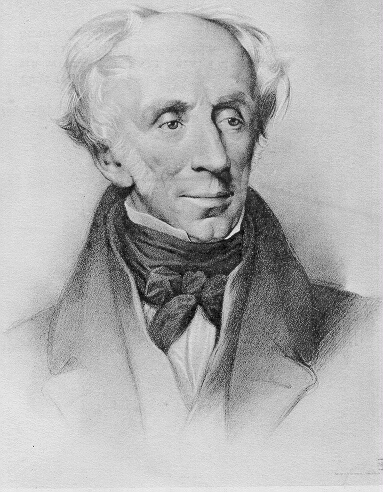
“The sounder part of the Scottish nation know what good their ancestors derived from their Church, and feel how deeply the living generation is indebted to it. . . . Visionary notions have in all ages been afloat upon the subject of best providing for the clergy; notions which have been sincerely entertained by good men, with a view to the improvement of that order, and eagerly caught at and dwelt upon by the designing, for its degradation and disparagement. Some are beguiled by what they call the Voluntary system, not seeing (what stares one in the face at the very threshold) that they who stand in most need of religious instruction are unconscious of the want, and therefore cannot reasonably be expected to make any sacrifices in order to supply it. Will the licentious, the sensual, and the depraved, take from the means of their gratifications and pursuits, to support a discipline that cannot advance without uprooting the trees that bear the fruit which they devour so greedily?  Will they pay the price of that seed whose harvest is to be reaped in an invisible world?  A Voluntary system for the religious exigencies of a people numerous and circumstanced as we are! Not more absurd would it be to expect that a knot of boys should draw upon the pittance of their pocket-money to build schools, or out of the abundance of their discretion be able to select fit masters to teach and keep them in order! Some, who clearly perceive the incompetence and folly of such a scheme for the agricultural part of the people, nevertheless think it feasible in large towns, where the rich might subscribe for the religious instruction of the poor. Alas! they know little of the thick darkness that spreads over the streets and alleys of our large towns. The parish of Lambeth, a few years since, contained not mora than one church, and three or four small proprietary chapels, while Dissenting chapels, of every denomination, were still more scantily found there; yet the inhabitants of the parish amounted at that time to upwards of 50,000. Were the parish church and the chapels of the Establishment existing there an impediment to the spread of the Gospel among that mass of people?  Who shall dare to say so?  But if any one, in the face of the fact which has just been stated, and in opposition to authentic reports to the same effect from various other quarters, should still contend that a Voluntary system is sufficient for the spread and maintenance of religion, we would ask, What kind of religion?  Wherein would it differ, among the many, from deplorable fanaticism?

“For the preservation of the Church Establishment, all men, whether they belong to it or not, could they perceive their own interest, would be strenuous; but how inadequate are its provisions for the needs of the country!  and how much is it to be regretted that, while its zealous friends yield to alarms on account of the hostility of Dissent, they should so much overrate the danger to be apprehended from that quarter, and almost overlook the fact that hundreds of thousands of our fellow-countrymen, though formally and nominally of the Church of England, never enter her places of worship, neither have they communication with her ministers!  This deplorable state of things was partly produced by a decay of zeal among the rich and influential, and partly by a want of due expansive power in the constitution of the Establishment as regulated by law.  Private benefactors in their efforts to build and endow churches have been frustrated, or too much impeded, by legal obstacles; these, where they are unreasonable or unfitted for the times, ought to be removed; and, keeping clear of intolerance and injustice, means should be taken to render the presence and powers of the Church commensurate with the wants of a shifting and still increasing population” (Poetical Works of William Wordsworth, 606, 607).