 A. C. Cheyne (1924-2006), a recognized Scottish Church History scholar summarizes the central ideas inherent in Chalmers’ “territorial parish.” It was a “manageably small area housing a community of some two thousand souls who lived, worked and worshipped together, with a church and a school at its center and a minister and a kirk session to attend to both its spiritual and its temporal necessities: here, he argued, was the basic – he would even have said the redemptive – unit of Scottish society. Here was the means of national regeneration.” In my reading of Chalmers, I would suggest that he would say the preaching of the Gospel was the means. Yet, he certainly saw the territorial parish as the most efficient vehicle for getting that Gospel preaching to every man, woman, and child.
Posted in Parish Theory & Practice, The Romance of Locality, Thomas Chalmers | Leave a Comment »
Call me a curmudgeon. Or an arch-conservative, allergic to all things new. And I will freely admit that I romanticize earlier days, fully aware that they were never so rosy as I fancy them. But I am just not ready to jump on the small (‘cell’) groups bandwagon like so many other Reformed folks. I have already raised some questions on the subject in a previous post. I really do question how ecclesiologically Reformed it is after all.
But here’s another thing that makes me nervous of them. I fear that they detract from a robust pulpit ministry, from Lord’s day to Lord’s day. In some circles, cell groups aim to provide meaningful biblical study for preachers who want their Sunday services to be ‘seeker sensitive.’ In my judgment, that makes cell groups a crutch for an impotent ministry.
 Related, it seems that they are now being touted (or maybe I’m just noticing it) as suitable vehicles for ‘missional’ outreach. Unbelievers need a ‘safe’ place to be welcomed, where they will not feel judged. So we can win them over to church, with all its trappings, through the back door. Now, I am all for loving unbelievers and making them feel loved. But what about public preaching as a means of grace? What of God’s choice of the foolishness of preaching? What of the scandal of the cross? And does that scandal come in bold face through the small groups, or is it in the fine print on page 236?
Why are Reformed people enthusiastic about this? Am I off, or is this broad evangelicalism, low churchism, or even anti-churchism sneaking in under the radar?
Posted in Articles, Gospel Proclamation, Ordinary Means Ministry, Preaching, Theology of Community | Leave a Comment »
 “There is a deed or Grant of Christ made to Sinners, in the free Offer and Call of the Gospel . . . Tis true indeed, the eternal Destination, the Purchase and Application of Redemption is peculiar only to the Elect; but the Revelation, Gift and Offer is common to all hearers of the Gospel, insomuch as the great Mr Rutherford expresses it, the Reprobate have as fair a revealed Warrant to believe, as the Elect have. Every man has an Offer of Christ brought to his Door who lives within the Compass of the joyful Sound, and this Offer comes as close to him, as if he were pointed out by Name. So that none have reason to say, The Call and Offer is not to me, I am not warranted to embrace Christ . . . We have God’s commission to preach this Gospel, and to make offer of this Christ to every creature sprung of Adam, Mark xvi.15, and the event of the Publication of this Gospel among sinners follows in the next Words, He that believeth this Gospel shall be saved, he that believeth not shall be damned.”
–Ebenezer Erskine (1680-1754)
Posted in Church of Scotland, Experimental Religion & the Cure of Souls, Gospel Proclamation | 1 Comment »

James Bannerman (1807-1868), one of the “Disruption Worthies,” wrote a comprehensive two-volume work on the Presbyterian doctrine of the Church, The Church of Christ. It is a definitive treatment of the subject and really ought to be on the shelf of every Reformed minister, if not of every Reformed head of household.
The following quote comes from a selection in the first volume on the subject of the necessity of a friendly connection between the Church and State. One of the reasons is that the State cannot be altogether neutral to the universal claims of the of the Kingdom of God within its boundaries. While the Church does not have a right to interfere in the sphere of civil government, yet it demands audience from king and people of all lands. Her warrant comes from none less than the Most High:
[The Church’s] first principle and first duty is that of aggression. The ministers of the Gospel claim it as a right to go into every nation, however fenced around and guarded from intrusion, and to demand an entrance in the name of Him who sent them, even although the magistrate should bid them depart from his coasts. Further still, the messengers of the Cross arrogate to themselves thee title to enter into every human dwelling where a sinner is to be found, – seeking admittance in the name of the Saviour of sinners, that they may negotiate with the inhabitant in behalf of their Master, however sternly the door may be closed against them by jealousy of their errand, or hatred to their cause.
It has been the eloquent boast of freedom in our country, that every man’s house is his castle; and that, be it but a straw-built shed, open to every breath of heaven, yet fenced about by the protection and the sanction of law, there even ‘the king cannot and dare not enter.’ But where the king cannot enter, there the missionary of Christ claims to be admitted; and, with a higher warrant in his hand than that of human law, bids the gates be lifted up, that with the Gospel he may enter in” (The Church of Christ, 1:142).
Too often we fail to appreciate this authoritative dimension to missions. While the servant of the Lord must not strive, but be patient with all men, yet he is not go to into the world hat-in-hand. Mission forbids timidity, for we have been sent by the King of kings. No, we should not force entry, for the weapons of our warfare are not carnal. Yet alternately, we should not so ‘respect’ the boundaries of men when our Lord counts it no trespass. It is His claim after all, the deed and grant of His Father. And the warrant is in our hand.
So let us go. Aggressively.
Posted in Christ & the Church, Establishments, Missiology, Parish Theory & Practice, Two Kingdoms Theology, Visitation Evangelism | Leave a Comment »
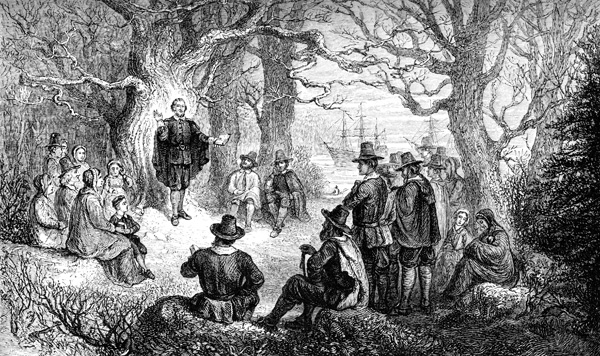 The practice of Reformed catechesis is quite counter-cultural. Having given it a little thought, a few reasons come to mind. 1. Catechesis is an authoritative discipline. It deals not with opinions, but with dogma. Not with suggestions, but with commandments. Not tips and hints, but with divinely mandated means of grace. 2. Catechesis is churchly in orientation. It is by the church and for the church. It presumes that membership in the Visible Church – nothing less than the Kingdom of God on earth – is a high privilege, and involves serious preparation. 3. Catechesis is rigorously intellectual. While seeking to reach those of the smallest capacities, even the “little ones” without offending them, it yet pushes everyone under its influence to think and think deeply. 4. Catechesis is thoroughly covenantal. It has always had the next generation of the church in view, preparing baptized children to lay hold of the promise that is their birthright (Acts 2:39). While catechesis leaves regeneration to the sovereignty of the Spirit, it does not leave children to cut their own religious path. It cuts the path for them. We do not blush to say that in catechism, the church indoctrinates its children. 5. Catechesis is catholic. By catholic, I mean that it does not deal with secondary matters, much less the novel, but with the faith once delivered to the saints. The things “most surely believed among us” (Luke 1:1). It is not provincial, pedaling its own idiosyncratic theology (African theology, feminist theology, etc.), but it holds forth what unifies all true believers in all ages. There is “one body, and one Spirit . . . one Lord, one faith, one baptism, one God and Father of all” (Eph. 4:4-6). 6. Catechesis is confessional. Contra biblicism, catechesis affirms that the Spirit leads his Church into all truth, and that the Church has a responsibility to articulate that truth using its own words. Further, it delimits what we must believe from what we must not – heresy. 7. Catechesis is biblical. “To the law and to the testimony.” If one seriously studies the great catechisms of the Reformation, one will be confronted not only with lengthy footnoted proof texts undergirding each proposition. He will also see how their very language is shaped by the Scriptures. Not surprisingly, then, catechesis is rejected precisely because men will not receive the Word of God.
Posted in Articles, Care for the Youth, Catechesis, Ordinary Means Ministry, WPE Editor | Leave a Comment »
 The Church frequently gets its axiology – its theory of value – dead wrong. To value is fundamentally human. It is instinctive and inescapable, a testament to the fact that man is the offspring of God. But when the Church fails to discern between the values of “the present evil world” and her Lord, it has just plain sold the farm. A Church that doesn’t defend its axiological borders (God’s rather) has in effect seceded to the enemy. And so she comes under Christ’s condemnation, “Ye are they which justify yourselves before men; but God knoweth your hearts: for that which is highly esteemed among men is abomination in the sight of God” (Luke 16:15).
Posted in Ministerial Fidelity, The Sacred Ministry, The Social Status of the Church, The Visible Church, Two Kingdoms Theology | 7 Comments »
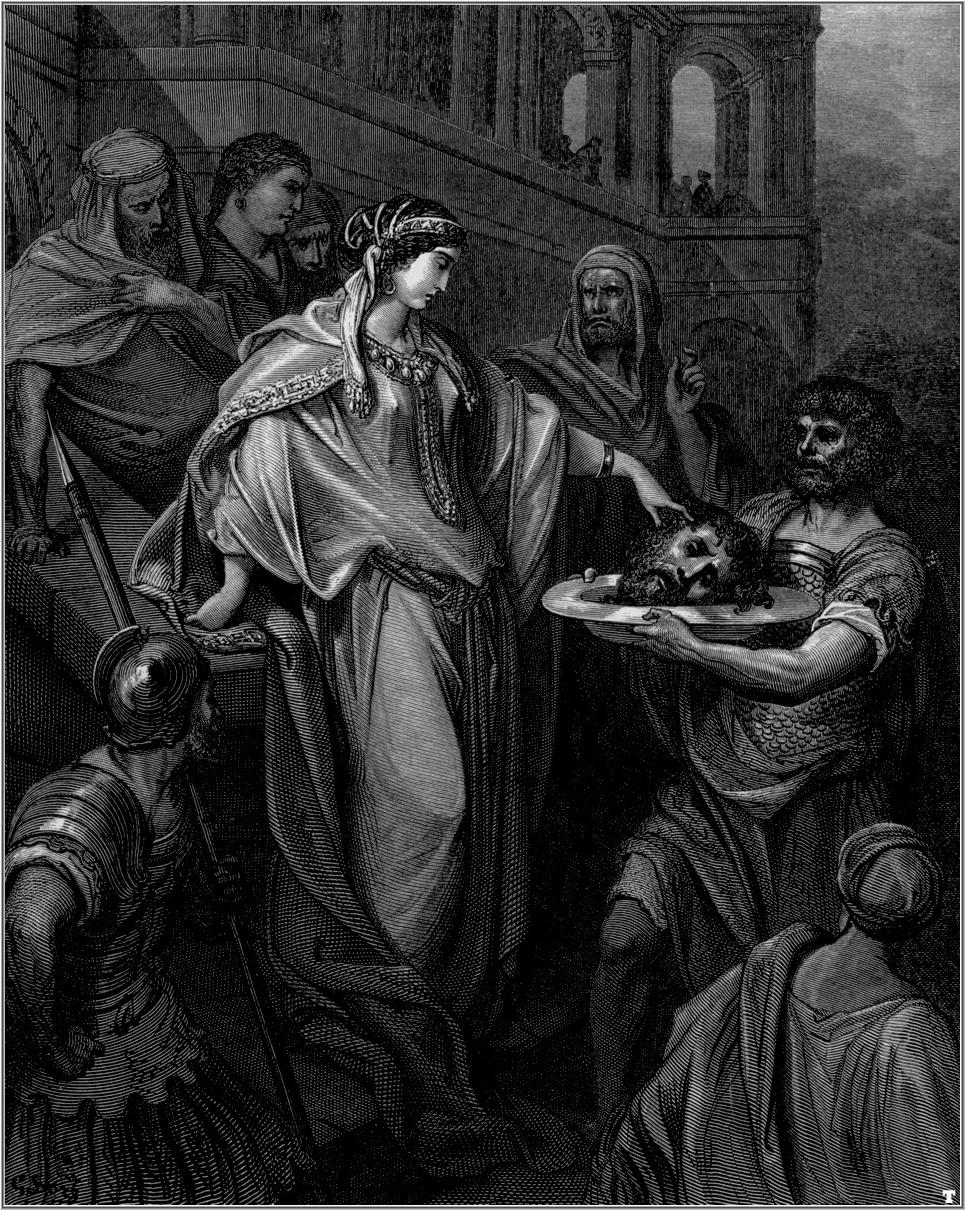 Thomas Chalmers (1780-1847) may have been in favor of religious establishments. (Bravo!) But he was hardly for a sycophant ministry beholden to the state, much less a political party:
“It appears to us that a Christian minister cannot keep himself in the true path of consistency at all, without refusing to each of the parties all right of appropriation. . . He who cares for neither [of two rivaling political parties] is the only independent man; and to him only belongs the privilege of crossing and re-crossing their factious line of demarcation, just as he feels himself impelled by the high, paramount, and subordinating principles of the Christianity which he professes. . . But turning away from the beggarly elements of such a competition as this, let us remark, that on the one hand, a religious administration will never take offence at a minister who renders a pertinent reproof to any set of men, even though they should happen to be their own agents or their own underlings; and that, on the other hand, a minister who is actuated by the true spirit of his office, will never so pervert or so prostitute his functions, as to descend to the humble arena of partisanship. He is the faithful steward of such things as are profitable for reproof and for doctrine, and for correction, and for instruction in righteousness” (Collected Works 11:34-36).
Now, this is anything but a call for the clergy remain aloof from all things political. Instead, it holds out the high principle of ministerial allegiance to heaven, which may make the man of God unpopular or put him on a collision course with the powers that be – whoever they be. This was the legacy of Knox, the bold gadfly of Queen Mary. This was the costly legacy of the John the Baptist and of so many of the prophets who preceded him. May God grant us a double portion of their spirit. And so let us stay out of anyone’s pocket – except God’s.
Posted in The Sacred Ministry, Thomas Chalmers, Two Kingdoms Theology | Leave a Comment »
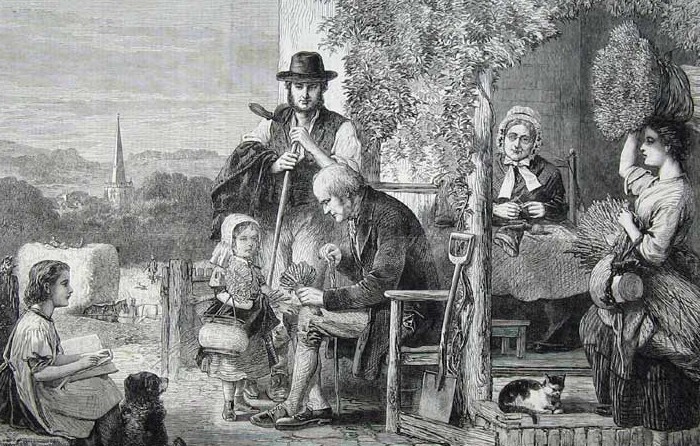 The architects of the Reformed Churches in the 16th century were trans-generational thinkers. As those who rediscovered Covenant Theology, this should be expected. In reading the First Book of Discipline (1560), one will encounter explicit and repeated concern for future generations as justification for church policy decisions. For “the profite of the posterity to come.” Like good fathers, they wanted what was best for their bairns, and their bairns’ bairns as well!
Does this paternal, trans-generational concern shape the way we ‘do church’? Is what we do in doctrine, worship, and government really in the best interests of the rising generations, or is it more candy to placate the over-indulged? Are we correcting and cultivating, or just coddling?
Posted in Articles, Care for the Youth, Church of Scotland, Covenant Theology, John Knox, The Visible Church | Leave a Comment »
 I’m certainly not well-versed in the current Reformed debates on the two kingdoms. But what I have read in some quarters has given me the impression that the two kingdoms, church and state, ought to be as two ships passing in the night. Each are on their own charted courses and should steer quite (quite!) clear of each other.
Now, this may be a position held in modern confessionally Reformed circles. And it may have a pedigree going back to early 18th century American Presbyterianism. But if my impression approximates to reality, then the position of some can hardly be advanced as classically reformed. It may employ Melville’s famous terminology of the two kingdoms, but not the substance.
In my recent reading of the First and Second Books of Discipline (1560 and 1578 respectively) drafted by the architects of Presbyterianism, it is clear that the two kingdoms were to be distinct. They ought not intrude on each other’s territory. But note how they envisaged the ideal relationship, as recorded in the opening sections of the Second Book of Discipline:
10. The civil power should command the spiritual to exercise and do their office according to the word of God. The spiritual rulers should require the Christian magistrate to minister justice and punish vice, and to maintain the liberty and quietness of the kirk within their bounds.
11. The magistrate commands external things for external peace and quietness amongst the subjects; the minister handles external things only for conscience cause.
12. The magistrate handles external things only, and actions done before men; but the spiritual ruler judges both inward affections and external actions, in respect of conscience, by the word of God.
13. The civil magistrate craves and gets obedience by the sword and other external means, but the ministry by the spiritual sword and spiritual means.
14. The magistrate neither ought to preach, minister the sacraments, nor execute the censures of the kirk, nor yet prescribe any rule how it should be done, but command the ministers to observe the rule commanded in the word, and punish the transgressors by civil means. The ministers exercise not the civil jurisdiction, but teach the magistrate how it should be exercised according to the word.
15. The magistrate ought to assist, maintain, and fortify the jurisdiction of the kirk. The ministers should assist their princes in all things agreeable to the word, provided they neglect not their own charge by involving themselves in civil affairs.
Hardly did the Scottish Reformers admit the “Am I my brother’s keeper?” principle in their concept of the two kingdoms. No, Cain ought not intermeddle in Abel’s affairs. But neither should he ignore him as though he had relationship whatsoever. The civil magistrate was to have a concern and exert his influence in the Kirk circa sacris. So likewise the Kirk had a prophetic mantle to tell the civil magistrate how he ought to rule the people!
Posted in Articles, Audio Resources, Church of Scotland, Two Kingdoms Theology | Leave a Comment »
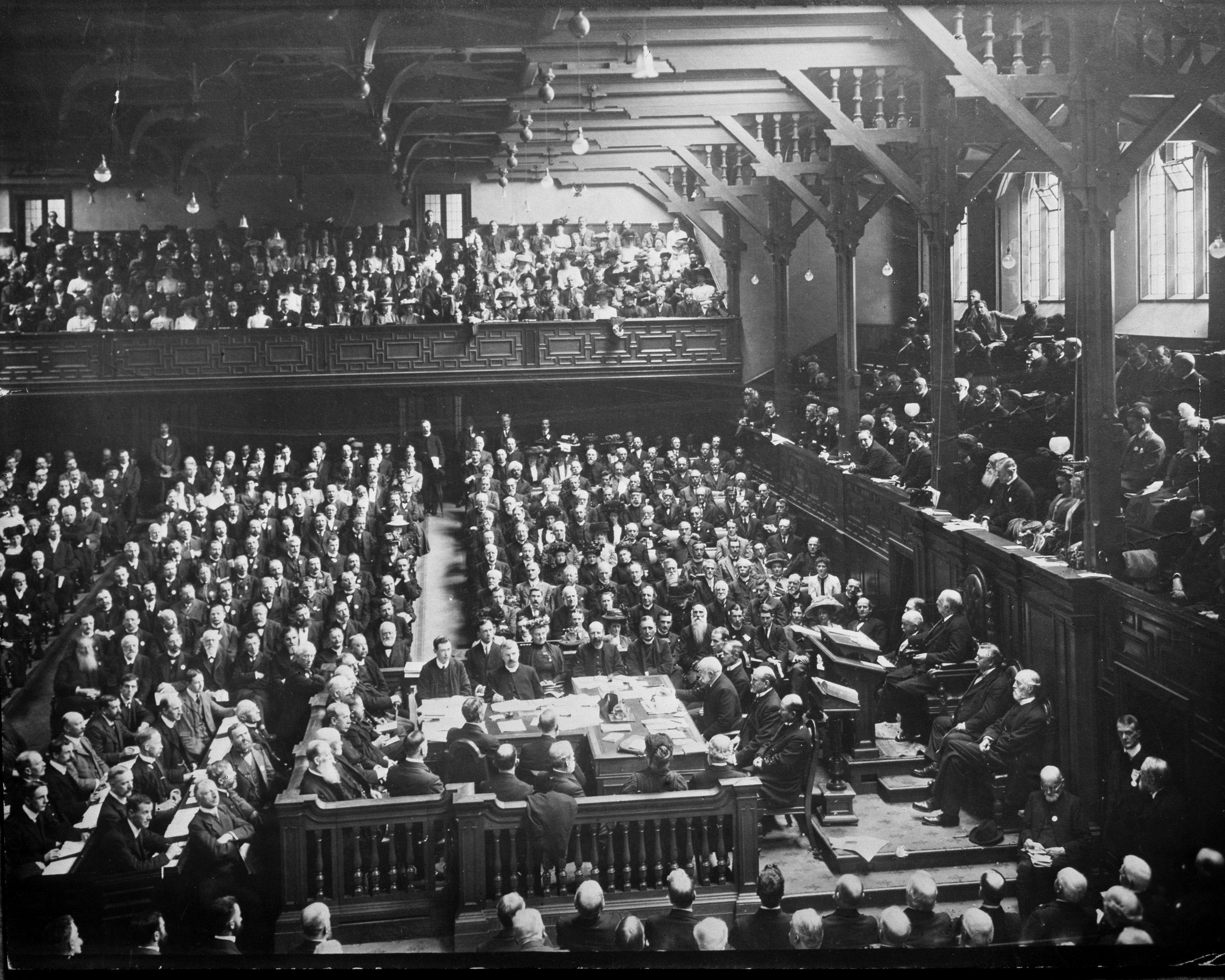 More often than not, we identify Presbyterianism as a form of church government. But recently, it occurred to me that a preacher’s exercise of looking at good commentaries after he has done his own firsthand exegesis is also an exercise in Presbyterianism. It is a golden mean between exegetical Independency and Episcopacy. Exegetical Independency says ‘no’ to the fruits of other men’s labors and an unequivocal ‘yes’ to one’s own. It is idosyncratic, and in too many instances just plain idiotic. On the other extreme, there is exegetical Episcopacy. It makes too much of the gifts of some, becoming slavishly subservient to them. The preacher who rushes to the commentaries before digesting God’s Word himself buries his talent in a napkin and exalts others to a lordly status – even over Scripture. As in church government, so in exegesis. Presbyterianism is the golden mean.
Posted in Articles, Preaching, The Visible Church | 1 Comment »
 West Port Experiment