Feeds:
Posts
Comments

Is the Gospel preacher practical?  The man who gives himself to prayer and the ministry of the Word, who delegates to others the lesser ministry of waiting on tables – is such a man a blessing or a bane to the  Church and society?  Perhaps in the short-term, it may seem that way.  But when we take a step back and view aright the man of God who sacredly devotes the lion share of his time to the ‘closet’ labors of his study, we will see him not only as highly practical.  He will emerge as the best doer of good to His fellow men.

The following extracts from Alexander’s Thoughts on Preaching explore this mystery with profound insight.

* * *

§ 74. To do gimagesood to men, is the great work of life; to make them true Christians is the greatest good we can do them. Every investigation brings us round to this point. Begin here, and you are like one who strikes water from a rock on the summits of the mountains; it flows down over all the intervening tracts to the very base. If we could make each man love his neighbour, we should make a happy world. The true method is to begin with ourselves, and so to extend the circle to all around us. It should be perpetually in our minds.

§ 75. Beneficence.—There are two great classes of philanthropists, namely, those who devise plans of beneficence, and those who execute them. If we cannot be among the latter, perhaps we may be among the former. Invention is more creative than execution. Watt has done more for mechanics than a thousand steam-engine makers. The devisers of good may again be divided into those who devise particular plans, such as this or that association or mode of operation, and those who discover and make known great principles. The latter are the rarer and the most important. Hence a man who never stirs out of his study may be a great philanthropist, if he employs himself in discovering from the study of the Scriptures and the study of human nature, those laws which originate and condition all effectual endeavours for human good.
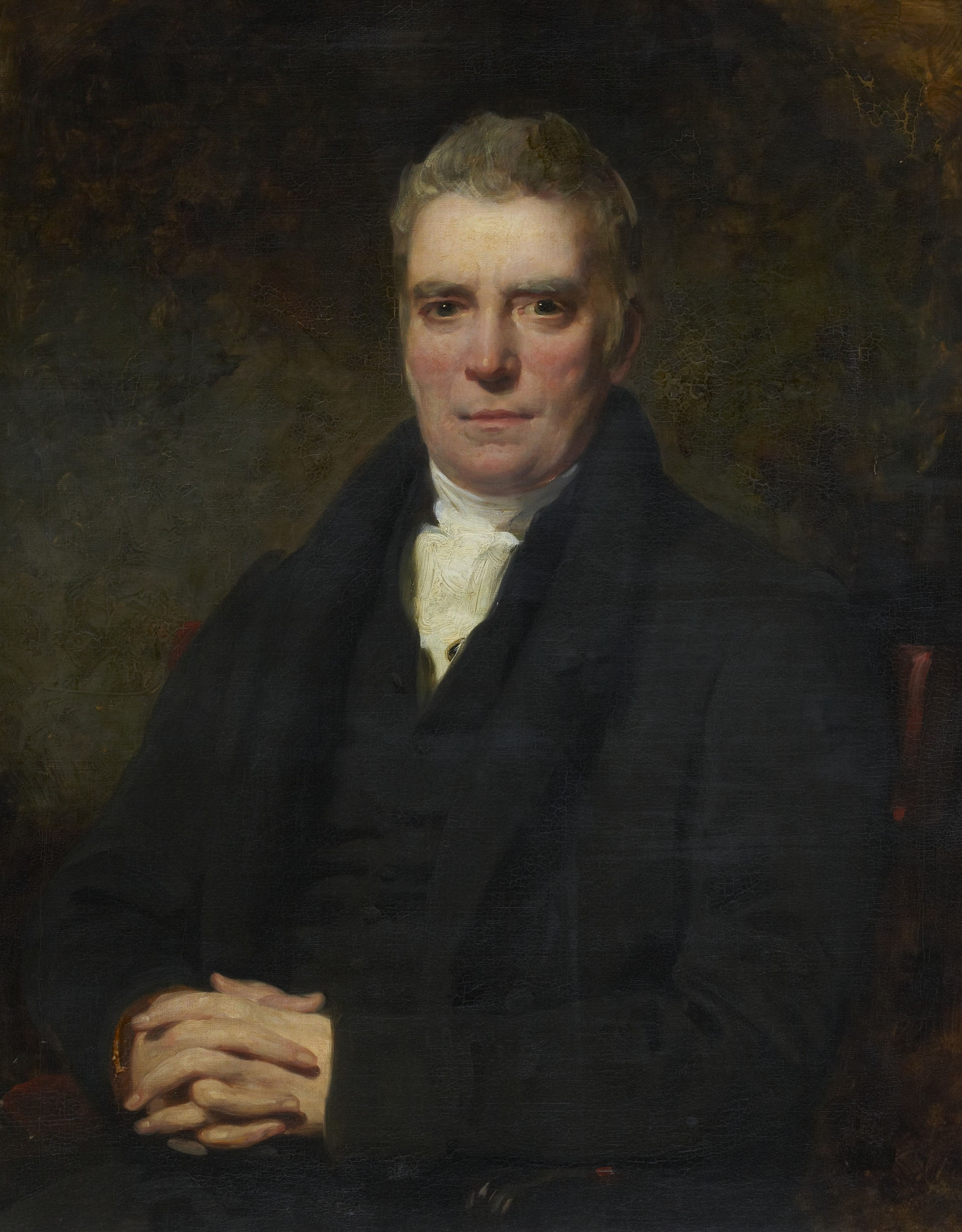
A pure and true unity within the Visible Church seems a pipe dream to many.  And yet, as Thomas M’Crie (1772-1835) reminds us below, such a work is nothing with God.  If Omnipotence can devise and execute a plan of higher reconciliation, what obstacle can he face for a lower?

Call to your minds the amazing plan, conceived by “wisdom dwelling with prudence,” for reconciling the world to himself, and for repairing and closing up the wide and tremendous breach opened by the apostasy of man from his Maker.  Survey this ” wisdom of God in a mystery,” as it is now unfolded by the Gospel. Consider the disposition of its parts, the perfect adaptation of the means to the end, and the nice adjustment of each of these means to the rest. See how it tends to vindicate the authority of the divine law, to assert the honour of the supreme lawgiver, and to stamp heaven’s broadest, blackest brand of infamy on sin, at the same time that it provides a way of escape and salvation to the rebellious sinner. See those attributes of Deity, whose claims were apparently conflicting and irreconcilable, harmonising and conspiring together to promote the gracious design, reflecting lustre upon one another, mingling their rays and concentrating their lights, until at last they burst forth in one united blaze of glories more effulgent and overwhelming than is to be seen in all the other works of God. See “mercy and truth meeting together; righteousness and peace kissing each other; truth springing out of the earth, and righteousness looking down from heaven.”  Surely the God of Peace, who has displayed such “manifold wisdom” in restoring us to His favour by Christ Jesus, can be at no loss to reconcile His followers, and to terminate their minor differences, in such a way as shall be fully consistent with the claims of truth and holiness.

* * *

Whole doctrine catholicity | “Who is she that looketh forth as the morning, fair as the moon, clear as the sun, and terrible as an army with banners” (Song 6:10)?

“High Church Presbyterianism will not do.  Give a taste for the sacerdotal, and people will quickly betake themselves where they will get the genuine article, – the old wine of the Apocalyptic  ‘woman,’ with pith and body in it, and a flavour all its own.”

-James Walker (1821-91)

Had the following been written by anyone other than Thomas Chalmers (1780-1847), it might be taken as a specimen of pietistic escapism.  But coming from one known for his lifelong advocacy for political reform and his busy, personal involvement in caring for the poor of Industrializing Britain, it is anything but.  It’s not an unhealthy other-worldliness, by any means.  It’s a reality check.  And a very necessary reminder for us in the weeks running up to the election.

* * *

“There is a delusion that attaches to much of moral and much of political speculation. The purpose of both is to ameliorate the condition of humanity, and to rear the permanent and substantial fabric of a better society than that which now encompasses our globe. It is, indeed, a soothing perspective for the eye of the philanthropist to dwell upon, when he looks onward to fancied scenes of bliss and perfection in the ages that are to come —and while he pictures to himself as the fruit of his enlightened labours in the philosophy of public affairs, that there shall then be love in every heart, and plenty in every habitation, it is scarcely to be wondered at, that he should kindle in the thought of all this goodly munificence, as if it bore upon it somewhat of the worth and greatness of immortality. But apart from religion – and how poor is the amount of all that the mere cosmopolite can do for our species!  And even though, without its aid, he should he able to perfect the temporal economy of nations, never can he perpetuate beyond a few flying years, to a single individual of this vast assemblage, any portion of the bliss or the glory that he thinks to have provided for them. It is death which brings down the worth and computation of his high-blown enterprise, that though established over the whole earth, and weathering the lapse of many centuries, can only gild in brighter and more beauteous characters than before, the fantastic day of each ephemeral generation. It is the gospel of Jesus Christ through which life and immortality are brought to light—it is this alone that can furnish the friend of humanity with solid and enduring materials – and never can he stand on a vantage ground where the mockeries of the grave do not reach him, till labouring and devising for the Christianity of his fellows, he helps to extend an interest that shall survive the wreck of every death-bed; and which, instead of being swept into annihilation, will be ushered to everlasting day, by that trumpet, at whose sound, our world, with all the pomp and all the promise of its many institutions, shall utterly pass away” (Collected Works 16:214).

A powerful plea from J. Gresham Machen (1881-1937) for a return to meaningful pre-membership instruction to recall the “paper currency” back to a “gold standard.”  This extract comes from his work, What is Faith?

* * *

At this point, a question may perhaps be asked. We have said that saving faith is acceptance of Christ, not merely in general, but as He is offered to us in the gospel. How much, then, of the gospel, it may be asked, does a man need to accept in order that he may be saved; what, to put it baldly, are the minimum doctrinal requirements in order that a man may be a Christian? That is a question which, in one form or another, I am often asked; but it is also a question which I have never answered, and which I have not the slightest intention of answering now. Indeed it is a question which I think no human being can answer. Who can presume to say for certain what is the condition of another man’s soul; who can presume to say whether the other man’s attitude toward Christ, which he can express but badly in words, is an attitude of saving faith or not? This is one of the things which must surely be left to God.

Continue Reading »

“Let there be no strife between us and you, for we are brethren (Gen. 13:7, 8): and is not the Canaanite and the Perizzite yet in the land?  O let it not be told in Gath, nor published in the streets of Ashkelon. Let it not be said, that there can be no unity in the Church without Prelacy.  Brethren I charge you by the roes and by the hinds of the field, that ye awake not nor stir up Jesus Christ till he please (Song. 2:7); for his rest is sweet and glorious with his well-beloved.  It shall be no grief of heart to you afterward, that you have pleased others as well as yourselves, and have stretched your principles for accommodation in church government, as well as in worship, and that for the Church’s peace and edification; and that the ears of our common enemies may tingle, when it shall be said, “The Churches of Christ in England have rest, and are edified, and walking in the fear of the Lord, and in the joy of the Holy Ghost are multiplied (Act 9:31).”  Alas how shall our divisions and contentions hinder the preaching and learning of Christ, and the edifying one another in love!  Is Christ divided? says the apostle.  There is but one Christ, yea the head and the body make one Christ, so that you cannot divide the body without dividing Christ.  Is there so much as a seam in all Christ’s garment?  Is it not woven throughout from the top to the bottom? Will you have one half of Israel to follow Tibni, and another half to follow Omri?  O brethren, we shall be one in heaven, let us pack up differences in this place of our pilgrimage, the best way we can. Nay, we will not despair of unity in this world. Hath not God promised to give us one heart and one way (Jer. 32:39, Ezek. 11:19)? and that Ephraim shall not envy Judah, and Judah shall not vex Ephraim, but they shall flee upon the shoulders of the Philistines toward the East, they shall spoil them of the East together (Isa. 11:13, 14)?  Has not the Mediator (whom the Father hears always) prayed that all his may be one?  Brethren, it is not impossible, pray for it, endeavor it, press hard toward the mark of accommodation. How much better is it that you be one with the other Reformed Churches, though somewhat straitened and bound up, than to be divided though at full liberty and elbow room? Better is a dry morsel and quietness therewith, than a house full of sacrifices with strife (Prov. 17:1).”

George Gillespie (1613-1648)

* * * *

Whole doctrine catholicity | “Who is she that looketh forth as the morning, fair as the moon, clear as the sun, and terrible as an army with banners” (Song 6:10)?


In the following quote, Thomas Chalmers (1780-1847) is urging that the Church of Scotland in his day stick to its parish principles, that is, attaching a church to a district, charging its minister to evangelize it, and giving preference to its residents in seating during the services.  A church should be a local, or a ‘territorial’ church.  It should not operate on the law of supply and demand, thus drawing any and all irrespective of residence.  When it does, as Chalmers here points out, it occasions the worst in those who are already religious, fostering a culture of religious fastidiousness – and church-hopping.

Without a territorial arrangement, the “population” of the parish “might still abide in a state of unmoved heathenism; and the chapel congregation, instead of being formed or recruited out of their families, will be drawn very much at the expense of previous congregations, from that class of the community whose habits of church-going are not only already established, but may be said to have been refined into fastidiousness; to whom change is luxury, and who, ever agog on the impulse of novelty, are, in fact, the deadliest adversaries of that territorial system, wherein the great strength of our establishment lies” (Collected Works 16:184).

Again, Chalmers exposes the commercialization of religion that has only grown from embryo to full monster.

A masterful and balanced statement from William Young on the duty of self-examination before partaking of the Lord’s Supper:

“Self-examination, conducted according to the directions of Scripture, is a profitable exercise in preparation for the Lord’s Supper. The phantom of morbid introspection is the invention of that proud presumption that fails to distinguish between the precious and the vile. Surely on our American scene, the danger of unhealthy preoccupation with the abominations in our deceitful hearts, to the neglect of the remedy provided in the gospel, is very slight in comparison with the externalism and formality with which presumptuous sinners, puffed up with their imaginations of ‘blessed assurance,’ eat and drink damnation to themselves. Evangelical hypocrites are the natural product on the one hand of Arminian evangelism and on the other of Kuyperian Hyper-Covenantism, opposed to one another as these two errors are. A spurious assurance may arise either from confidence in a ‘decision for Christ’ made by the act of one’s ‘free will,’ or from the presumption that mistakes an external relation to the covenant of grace for a living relation to Christ, the only Mediator of the covenant. Such self-deception can be destroyed, and a well-grounded assurance of grace and salvation be established in the soul, only by way of serious and thorough self-examination.

“The critics of this wholesome exercise often misconstrue its purpose. Self-examination does not aim at the production of doubts and fears, leaving the troubled soul in a state of perpetual uncertainty as to its being in a state of grace. A faithful declaration of the demands of the law and of the deceitfulness of the human heart will, no doubt, give occasion for doubts and fears. But the truth is not the cause of the condition of the soul, arising from the suggestions of Satan and the weakness of the flesh. Self-examination as to whether one is in the faith is designed in fact to bring weak believers to the knowledge that Christ is in them and that they are not reprobates. To this end the Scripture has enumerated an abundance of marks of grace, especially those found in the First Epistle of John.

“In preparation for partaking of the Lord’s Supper, self-examination is in order both as to one’s state and as to one’s frame. If in applying the marks of grace, one finds that the great change has not taken place, then one’s first duty is to come to Christ to receive pardon and cleansing by His blood and only after that, to come to the table in obedience to the command, ‘This do in remembrance of me.’  If the happy result of self-examination is a well grounded assurance, then one may with confidence and thanksgiving enjoy a blessed communion with Christ and one’s fellow Christians. And weak believers may have to be reminded that the Savior’s gracious invitation is also a commandment, and that there is guilt in unworthy refusing as well as unworthy partaking. The assured believer is not called on to doubt as to the soundness of his faith, but may find comfort in seeing his title clear to mansions in the sky, only on the ground of the Redeemer’s merits. At the same time inquiry as to his frame leads him to see both the fruit of the Spirit and the sinful imperfection of his graces, and thus serves to foster spiritual growth in repentance, faith, hope, love, humility and every grace.”

“If a poor child be capable of being thus transformed, how it should move the heart of a city philanthropist, when he thinks of the amazing extent of raw material, for this moral and spiritual manufacture that is on every side of him—when he thinks, that in going forth on some Christian enterprise among a population, he is, in truth, walking among the rudiments of a state that is to be everlasting—that out of the most loathsome and unseemly abodes, a glory can be extracted, which will weather all the storms, and all the vicissitudes of this world’s history—that in the filth and raggedness of a hovel, that is to be found, on which all the worth of heaven, as well as all the endurance of heaven, can be imprinted—that he is, in a word, dealing in embryo with the elements of a great and future empire, which is to rise, indestructible and eternal, on the ruins of all that is earthly, and every member of which shall be a king and a priest for evermore.”

– Thomas Chalmers (1780-1847)

J. W. Alexander (1804-1859) gives the following powerful observation in Thoughts on Preaching.   If we would learn how to preach, we must not start with Homiletics.  We must return ever and again “to the one thing needful.”  He writes,

The great reason why we have so little good preaching is that we have so little piety. To be eloquent one must be in earnest; he must not only act as if he were in earnest, or try to be in earnest, but be in earnest, or he cannot be effective.

We have loud and vehement, we have smooth and graceful, we have splendid and elaborate preaching, but very little that is earnest. One man who so feels for the souls of his hearers as to be ready to weep over them—will assuredly make himself
felt. . .  We must aim therefore at high degrees of warmth in our religious exercises, if we would produce an impression upon the public mind. . .

Without any increase of our numbers, the very men we now have, if actuated with burning zeal for God, might work a mighty reformation in our country.