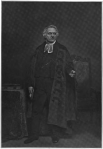
 The following are the words of exhortation Dr. Thomas Chalmers gave to his ruling elders upon their induction to office to the newly formed St. John’s parish in Glasgow, in 1819. These men were installed not simply to attend to the communicant and baptized membership, but each was assigned a small district of contiguous households within the parish. They were thus ordained as missionaries to all within the limits of their assignment, visiting each house in turn, seeking lost sheep. The address below highlights the tension frequently stressed by Chalmers – the obligation diligently to use all lawful means to reclaim the unsaved and at the same time to look alone to the Mighty Spirit to bring it all to pass.
* * *
“The whole habit and tendency of my thoughts on the subject of Christian usefulness incline me to attach a far higher importance to your relationship with the parish of St. John’s than to your relationship with the Church, and I do honestly believe, that never till the rights of parishes come to be better respected, never till the attention of ministers and elders be more restricted to the population of a given local territory, never till God put it into the hearts of men to go forth among our heathen at home with the same zeal and enthusiasm which are expected of missionaries who go abroad, will there be any thing like a revival of religion throughout the mass of our city families, or a reclaiming of them from those sad habits of alienation from God and from goodness into which the vast majority of them have fallen.
“There is one circumstance of encouragement which you will soon in the course of your movements through the districts that arc assigned to you be enabled to verify by your own experience. All the householders, with scarcely one exception, and whatever be their character in respect of Christianity, will welcome you with the utmost cordiality and courteousness. There is something in the very presence of one human being when he comes with the feelings and the desires of friendship, which serves to conciliate and to subdue another human being. Bear an honest regard to the people, and the people will, in spite of themselves, bear you an honest regard back again. This is what may be called an open door for you in the first instance, and the effect of frequent intercourse between the higher and lower orders of life in tranquilizing the general spirit of a community, and softening their malignant antipathies which else might ferment and fester and break out into. open violence, and consolidating something like a system of brotherhood through a mighty aggregate of human beings, this I say would confer a civil blessing on the establishment of an eldership that is altogether incalculable.
“But it must be remarked, on the other hand, that so wide and universal a welcome from the families may lead at the outset to a most delusive anticipation. A civil comes more easily and readily than a Christian effect. You are not to infer, because the good will of the people can be so immediately carried, that the conversion of the people will therefore speedily follow in its train. There is much of what is constitutionally attractive among men distinct and apart from any religious tendencies; and there is none who sets himself in good earnest to the working of a Christian effect, that will not soon feel himself engaged in a business where aids and instruments are necessary that are altogether superhuman. You will, in particular, be struck with the obstinate and determinate stand which the manhood of the population will make to all your proofs and all your earnestness. In sad proof of the progressive hardening of conscience will it be seen how arduous if not how impossible it is, with all the arts and resources of Christian philanthropy, to make any sensible advances on those who have been suffered to ascend from boyhood without the Word and without the ordinances.
“It is this which has shut up so many adventurers on the field of Christian usefulness, both at home and abroad, to the melancholy conclusion, that the grown-up generation are to be given up in despair, and that the hope of brighter and better days all lies with the capabilities of the young; and I certainly do recommend, among the foremost objects of your attention, the encouragement of those religious schools which may be situated within the limits of your respective localities, and for the discouragements which you will experience in the obstinacy and immovableness of many parents, you will often meet with a cheering compensation in the
promise and docility of their children.
“At the same time, I would never give up any human being in despair. Forget not the affirmation of the missionary Eliot, that it was in the power of pains and of prayers to do any thing. We are apt to confide in the efficacy and wisdom of our own arrangements—to set up a framework of skillful contrivance, and think that so good an apparatus will surely be productive of something—to please ourselves with parochial constitutions, and be quite sanguine that on the strength of elderships and deaconships, and a machinery of schools and agents, and moralizing processes, some great and immediate effect is to follow. But we may just as well think that a system of aqueducts will irrigate and fertilize the country without rain, as think that any human economy will Christianize a parish without the living water of the Spirit—without the dew df heaven descending upon the human administrators, and following them in their various movements through the houses and families under their superintendence. Still it is right to have a parochial constitution, just as it is right to have aqueducts. But the supply of the essential influence cometh from above. God will put to shame the proud confidence of man in the efficacy of his own wisdom, and He will have all the glory of all the spiritual good that is done in the world, and your piety will, therefore, work a tenfold mightier effect than your talents, in the cause you have undertaken; and your pains without your prayers will positively do nothing in this way, though it must be confessed that prayers without pains are just as unproductive, and that because they must be such prayers of insincerity as can not rise with acceptance to heaven. It is the union of both which best promises an apostolical effect to your truly apostolical office; and with theso few simple remarks do I commend you to Him who alone can bles3 you in this laudable undertaking, and give comfort and efficacy to the various duties that are involved with it.”
 “Now the specific business which we would like to put into the hands of a Christian minister is, not that he should fill his church any how – that he may do by the superior attractiveness of his preaching, at the expense of previous congregations, and without any movement in advance on the practical heathenism of the community: But what we want is, to place his church in the middle of such a territory as we have now specified and to lay upon him a task, for the accomplishment of which we should allow him to the labour and preference of a whole lifetime; not to fill his church any how, but to fill this church out of that district. We should give him the charge over head, of one and all of its families; and tell him, that, instead of seeking hearers from without, he should so shape and regulate his movements, that, as far as possible, his church-room might all be taken up by hearers from within. It is this peculiar relation between his church, and its contiguous households, all placed within certain geographical limits, that distinguishes him from the others as a territorial minister.”


 It’s Christmas Eve, and we’re among the very precious few nowadays who aren’t doing anything special. Though we are committed Christians, we don’t observe this holiday – though we love and embrace all sincere Christians who celebrate the God who entered our world of sin and misery through a virgin’s womb. Yet, unlike the masses both of saints and seculars, for us this is just another Monday. And tomorrow is just another Tuesday.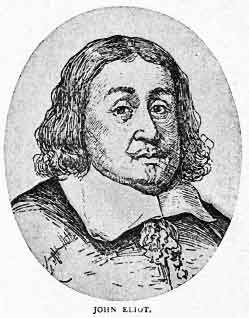
 West Port Experiment