The gospel is a discovery of a blessed contrivance that God has laid down for the salvation of sinners, for providing them a blessed supply of all [their] defects. There was from eternity a happy contrivance framed for providing sinful man with a garment, a robe of righteousness, that the shame of his nakedness may not appear; and for preparing eyesalve to him, to cure his natural folly and blindness; and riches to him, that he may have a sufficient stock to live upon in time and for eternity, even riches of grace, and riches of glory, the unsearchable riches of Christ…. There ensues the heart’s cleaving to this contrivance, even to the whole of it, with universal satisfaction, being fully content with it in all its parts, and preferring it to all other ways; nay, not only so, but counting them loss and dung, so it may have an interest in this way and method of God’s contriving. This is that acting of saving faith that gives a sure title to Christ and all his purchase
“As preachers, they were all remarkable. There are some who preach before their people, like actors on the stage, to display themselves and to please their audience. Not such were the self-denied preachers of Ross-shire. There are others who preach over their people. Studying for the highest, instead of doing so for the lowest, in intelligence, they elaborate learned treatises, which float like mist, when delivered, over the heads of their hearers. Not such were the earnest preachers of Ross-shire. There are some who preach past their people. Directing their praise or their censure to intangible abstractions, they never take aim at the views and the conduct of the individuals before them. They step carefully aside, lest their hearers should be struck by their shafts, and aim them at phantoms beyond them. Not such were the faithful preachers of Ross-shire. There are others who preach at their people, serving out in a sermon the gossip of the week, and seemingly possessed with the idea, that the transgressor can be scolded out of the ways of iniquity. Not such were the wise preachers of Ross-shire. There are some who preach towards their people. They aim well, but they are weak. Their eye is along the arrow towards the hearts of their hearers, but their arm is too feeble for sending it on to the mar. Superficial in their experience and in their knowledge, they reach not the cases of God’s people by their doctrine, and they strike with no vigour at the consciences of the ungodly. Not such were the powerful preachers of Ross-shire. There are others still, who preach along their congregation. Instead of standing with their bow in front of the rank, these archers take it in line, and, reducing their mark to an individual, never change the direction of their aim. Not such were the discriminating preachers of Ross-shire. But there are a few who preach to the people directly and seasonably the mind of God in His word, with authority, unction, wisdom, fervour, and love. Such as these last were the eminent preachers of Ross-shire.”
-John Kennedy of Dingwall, The Days of the Fathers in Ross-Shire, pp. 32-33
“When I am preaching, I see Dr. Jonas sitting there, and Oecolampadius, and Melanchthon, and I say to myself, ‘Those learned doctors know enough already; so I need not trouble about them. I shall fire at the poor people in the aisles.’”
“February 15th, 1813. — I know not a more serious drawback to mixed society than the exclusion of all conversation about the one thing needful ; and it comes to be a seriousquestion, How are you to get the better of it? Are you to lift your testimony against it? This zeal would prompt; but we are also called to walk in wisdom toward those that are without. There must be a way of introducing the topic, so as to make a useful impression, so as to conciliate prejudice, so as to win, if possible, rather than repel. I confess it is to me a thing beset with many difficulties, and I fear thatan unmanly shame may have some share in it. It is certainly wrong to disguise it from others that you look uponeternity as your uppermost concern. Disguise this, and you add the sanction of your example to their exclusive indulgence in the frivolities of time — you add to the multitude of stumbling-blocks or offenses which lie in the way of others. It is delightful that there is a promise annexed to the prayer for wisdom; and I know not a more delicate subject for the application of wisdom than the one I am now insisting on.”
“He would bend over the pulpit,” said one of [Thomas Chalmers’] old hearers, “and press us to take the gift, as if he held it that moment in his hand, and would not be satisfied till every one of us had got possession of it. And often when the sermon was over, and the psalm was sung, and he rose to pronounce the blessing, he would break out afresh with some new entreaty, unwilling to let us go until he had made one more effort to persuade us to accept of it.”
In this video, I share about my efforts to evangelize and promote the Reformed faith in Rhode Island and especially in a multi-ethnic, working class area of Providence (read more here). At the end, I make an appeal for help.
I can be reached at 515-783-5637 or by e-mail at mjives dot refparish at gmail dot com.
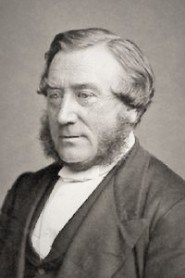
When I came to Rhode Island almost fourteen years ago, I inherited a small congregation, mostly of first generation Reformed folk. Because the core of them had become Reformed in the late 70s and early 80s, and because of the sound, faithful teaching of their minister, the congregation was solid and well-established. When I arrived, I was eager to evangelize and had been swayed by Thomas Chalmers’ (1780-1847) to attempt outreach on the parish principle. But there really was no residential neighborhood to speak of near the church building, and all of our folks traveled at least 15 or more minutes from various points of the state. While it certainly has accommodated our members, it has put me at some disadvantage to implement my parish vision. But there is no paradise this side of glory, so I do not complain. My attitude has been to work with what I’ve been given and trust the Lord to bless in His way and His time.
I began with a district in walking distance of my residence in Cranston, Rhode Island and approximately a 15-20 minute drive north of the church. When we moved to a different rental, I began working in that area. There, I had some greater success in making decent contacts. One lady came to church for a short time; and we rented a hall right in the neighborhood a few times with some small success. Continue Reading »
A fine quote by Charles Spurgeon. Chalmers could not have said it better! –
“Brethren, let us hunt up destitute localities, and see that no district is left without the means of grace. This applies not only to London, but also to villages, hamlets, and little groups of cottages. Heathenism hides away among the lone places, as well as in the crowded slums of our mammoth cities. May every piece of ground be rained upon by gospel influences!”
Thomas was in some respects a forerunner of Protestantism. Can contemporary Romanists make such a claim, relativizing tradition and exalting the authority of Scripture? Methinks not:
“Nevertheless, sacred doctrine makes use of these authorities as extrinsic and probable arguments; but properly uses the authority of the canonical Scriptures as an incontrovertible proof, and the authority of the doctors of the Church as one that may properly be used, yet merely as probable. For our faith rests upon the revelation made to the apostles and prophets who wrote the canonical books, and not on the revelations (if any such there are) made to other doctors. Hence Augustine says (Epis. ad Hieron. xix, 1): “Only those books of Scripture which are called canonical have I learned to hold in such honor as to believe their authors have not erred in any way in writing them. But other authors I so read as not to deem everything in their works to be true, merely on account of their having so thought and written, whatever may have been their holiness and learning.”


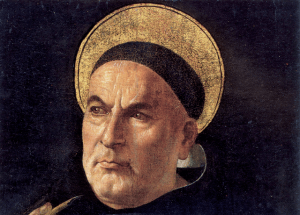 Thomas was in some respects a forerunner of Protestantism. Can contemporary Romanists make such a claim, relativizing tradition and exalting the authority of Scripture? Methinks not:
 West Port Experiment