“It must now be obvious to all of you, that it is not enough that you give money, and add your name to the contributions of charity. You must give it with judgment. You must give your time and your attention. You must descend to the trouble of examination. You must rise from the repose of contemplation, and make yourself acquainted with the object of your benevolent exercises. Will he husband your charity with care, or will he squander it away in idleness and dissipation?”
“To give money, is not to do all the work and labour of benevolence. You must go to the poor man’s sick bed. You must lend your hand to the work of assistance. You must examine his accounts. You must try to recover those debts which are due to his family. You must try to recover those wages which are detained by the injustice or the rapacity of his master. You must employ your mediation with his superiors. You must represent to them the necessities of his situation. You must solicit their assistance, and awaken their feelings to the tale of his calamity. This is benevolence in its plain, and sober, and substantial reality; though eloquence may have withheld its imagery, and poetry may have denied its graces and its embellishments. This is true and unsophisticated goodness” (Chalmers, Works, 11:302-4).
[image]


![S Cat 049-052 Sorting Worship [CCat]](https://westportexperiment.com/wp-content/uploads/2020/08/s-cat-049-052-sorting-worship-ccat-2.jpg)

 We often say (and rightly so) that the church building is not the church. After the advent of Christ, true worship was untethered to a sacred site. And yet, while the structure of a Christian congregation possess no inherent sacredness, it is the theater where the drama of eternal things is played out. Chalmers put it this way: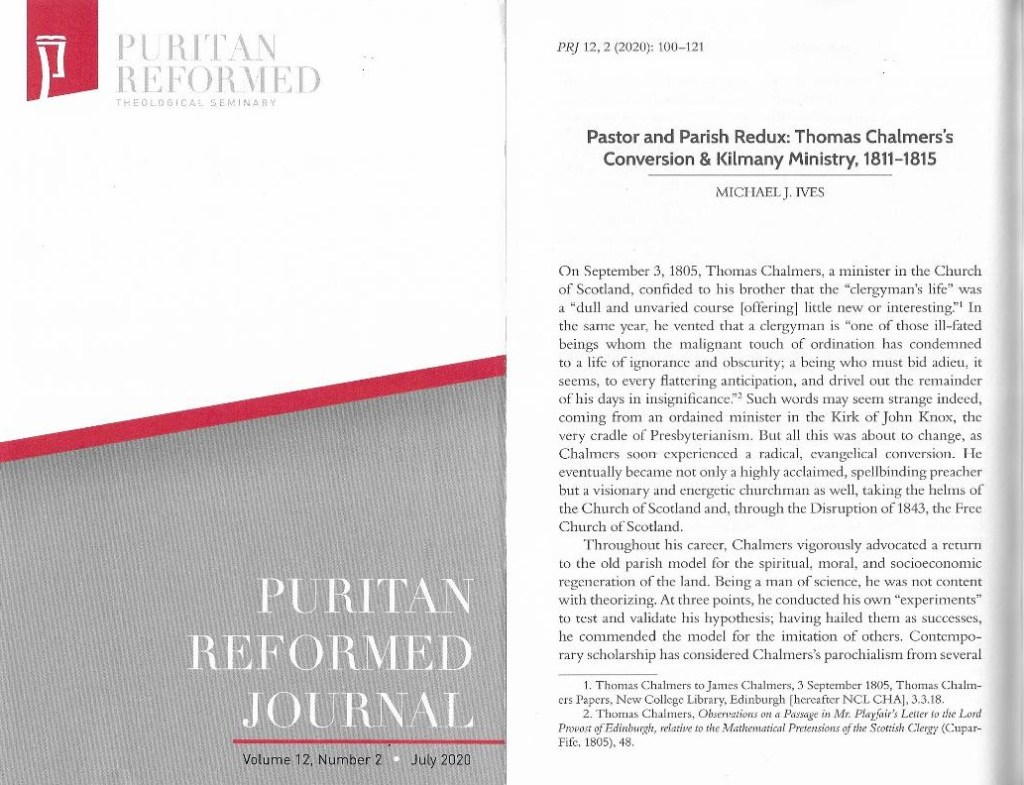
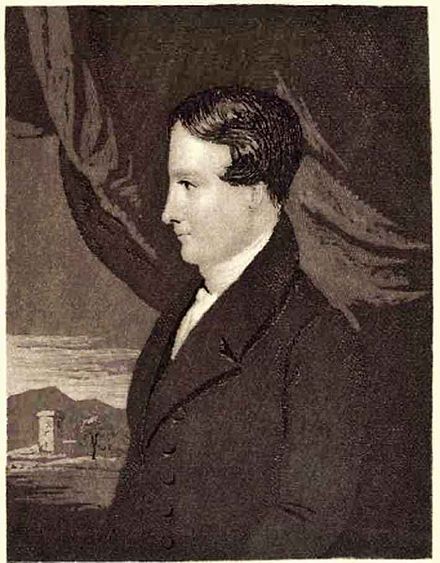 “No person can be a child of God without living in secret prayer; and no community of Christians can be in a lively condition without unity in prayer. In Daniel’s time you see how it was. (Dan. ii. 17, 18.) You see what Jesus said to his disciples on it (Mat. xviii. 19), and what a sweet promise of his presence and a gracious answer he connects with meeting for prayer. You see how it will be in the latter day (Zech. vii. 21), when meetings for prayer, or, at least, concerts for prayer, shall be held by different towns. One great rule in holding them is, that they be really meetings of disciples. If four or five of you, that know the Lord, would meet together regularly, you will find that far more profitable than a meeting open to all. In an open meeting you are apt to become teachers, and to be proud. In a secret meeting you feel all on a level, poor and needy, seeking water. If a young man, acquainted with any of you, becomes concerned about his soul, or a lively Christian is visiting any of you, these may be admitted; but do not make your meeting more open.
  West Port Experiment
