Feeds:
Posts
Comments

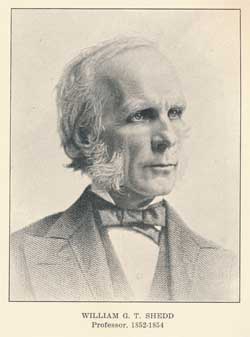
Just finished recording the lengthy chapter “The Biblical Argument” in W. G. T. Shedd’s theological treatise, The Doctrine of Endless Punishment. Truly the definitive modern work on the subject. Listen to them here. Among other insightful and profound passages is the following on the apocalyptic, revelatory nature of death:

“. . . in Scripture death is represented as the deciding epoch in a man’s existence. It is the boundary between the two Biblical aeons, or worlds. Until man dies, he is in ‘this world’ (ho nun aion); after death, he is in ‘the future world’ (aion ho mellon). The common understanding of the teaching of Scripture is, that men are in ‘time,’ so long as they live, but when they die, they enter ‘eternity.’ ‘It is appointed unto men once to die, but after that judgment,’ Heb. 9:27. This teaches that prior to death man’s destiny is not decided, he being not yet sentenced; but after death his destiny is settled. When he dies, the ‘private judgment,’ that is, the immediate personal consciousness either of penitence or impenitence, occurs. Every human spirit, in that supreme moment when it ‘returns to God who gave it,’ knows by direct self-consciousness whether it is a child or an enemy of God, in temper and disposition; whether it is humble and contrite, or proud, hard, and impenitent; whether it welcomes or rejects the Divine mercy in Christ. The article of death is an event in human existence which strips off all disguises, and shows the person what he really is in moral character. He knows ‘as he is known,’ and in this flashing light passes a sentence upon himself that is accurate. This ‘private judgment’ at death, is reaffirmed in the ‘general judgment’ of the last day.”

In recent months, we have begun a monthly livestream broadcast on the 2nd Lord’s day evening of each month at 7:00 p.m., especially to reach Spanish speakers in my parish and beyond. The Morales family has joined us, and Pr. Luis Morales has been translating for me. So grateful for his labors and his fellowship in the Kingdom-building.

God willing, I hope to take him out in the parish to visit my more receptive Spanish-speaking contacts, in the hopes of getting them to come to our regular services where we now have translation facilities. My hope and prayer ultimately is to see the Spanish side of my parish mission blossom, folks attending the our regular services, and our monthly bilingual meeting expanding and moving to the next level of usefulness. Again, the Reformed faith is a heritage too rich and full to be confined to white middle-class churches. So, all you Westminsterians and Three-Formers, let us take this to the city. ¡Vámanos!

To watch more of these broadcast messages, visit here. And learn more about RPM here.

The following is the text of a new leaflet introducing visitors to our worship practice.

Out of the Ordinary

Our worship practice is certainly a very different experience for many who visit us. We are certainly not your conventional evangelical church; and in many ways, we may stand out from even other modern Reformed and Presbyterian churches. To some, this worship is unique, even quaint; to others it may seem strange, overly solemn, and even off-putting.

One thing is for sure: we don’t worship this way to conform to trends, much less to attract those who already know what they want in a church. While our practice is very historic—this once was, after all, the universal practice among Reformed churches in Puritan New England, and other Reformed Churches in continental Europe—that’s not the reason either. The church, after all, is the house of God, not a museum! And just because something is ancient does not make it biblical.

Continue Reading »

Somehow I was voted into it. Last year, on December 24 no less, I was invited by Les Lanphere to debate Rev. Joseph Spurgeon on the lawfulness of Christmas. (Other platforms.) Joseph was for, while I was against; and Les did a great job of moderating. I thought it went really well, and I came away feeling that I did a service to this unpopular position. I also endeavored to be as charitable as possible. Perhaps I overshot things by being so affable; but I’d rather fall into that error than the other way, lest folks think that being against Christmas is somehow a function of a grumpy predisposition. After all, I consider myself the merriest neo-Puritan I know. Ask my kids!

The 1676 Project?

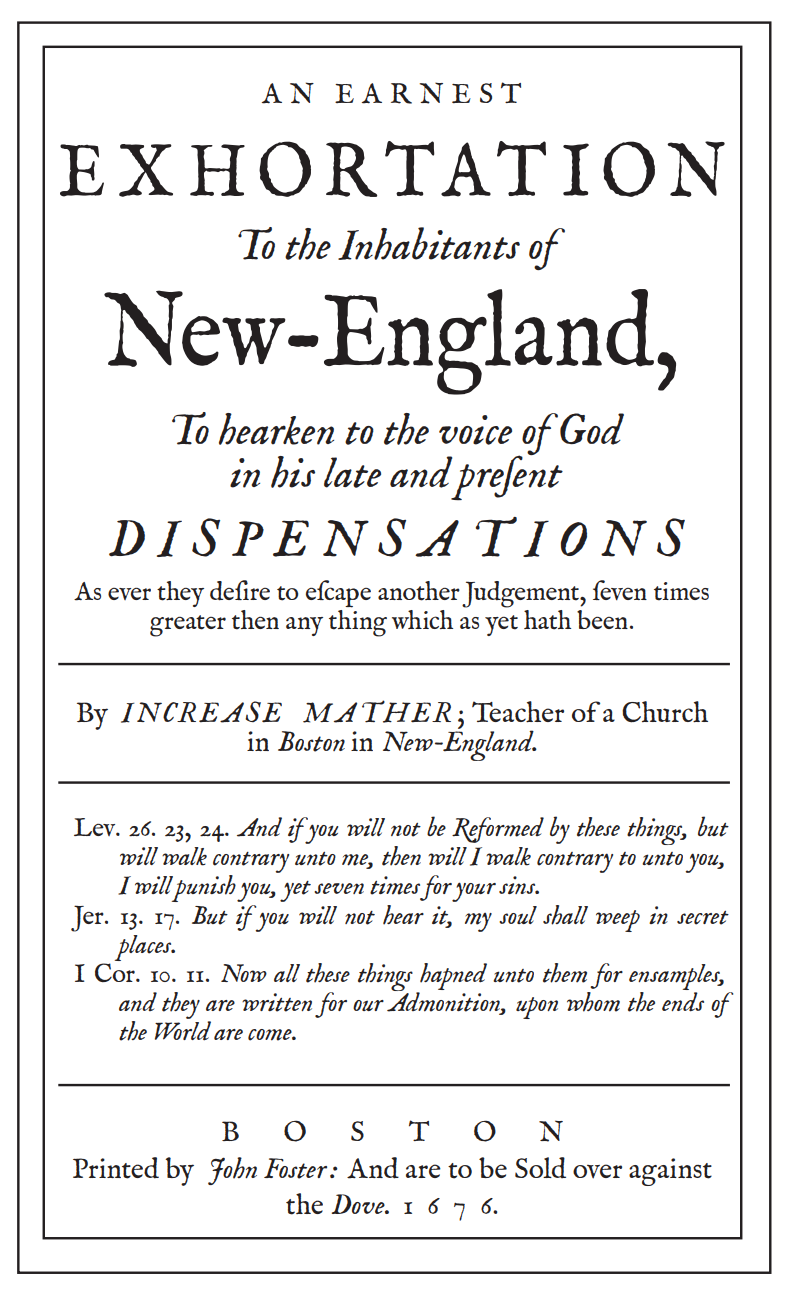
In light of the ‘National Day of Mourning’ tomorrow, I find New England Puritan Increase Mather’s sermon here such an illuminating and worthy rejoinder. As the King Philip’s War (1675-1678) raged, natives attacking English settlements, he leads his contemporaries to probe the source. And it’s no hateful rant against the Indians! (Listen here; read here.)

Mather indicts the English settler’s provocations of the natives, including land-greed, which may well have contributed to the war. For these and other offenses, Mather takes off the gloves and summons his peers to repentance. But more, he rebukes them for growing cold and even in some cases becoming hostile to the explicit missionary intentions of the New England Fathers. How many had become prejudicial to these poor souls!

Definitely a cause for mourning, as the bodies piled up and the houses burned in 1676. But a far cry from the mourning of the modern “1619 Project” types who have swung from the one extreme of myopic idealization and historical whitewashing, to the other extreme of tarring and feathering everything that is European. The truth, as they say, is often in the middle.

I mourn today for all the wrongs my ancestors have done to those who lived before us — though hardly all of them, or even the majority. I further mourn for our national apostasy and covenant-breaking with God and His Son, Jesus Christ, and grieve for the judgments we are even now experiencing, one of which is a generation that has been taught to reject and abhor all things past, including the Pearl of Great Price that our ancestors brought with them to the New World.

But tomorrow I’m going to give thanks and remember the Pilgrim Fathers, and Squanto, and Massasoit, the fair treaties that were honored, and John Eliot’s work among the Massachusetts, and their Praying Villages, the myriad of other blessings we now enjoy in civil society where the rule of law prevails, and above all, the freedom to worship God according to His Word. God knows the New World was no native paradise before 1619.

For more audio resources from our Reformed heritage, visit WPE Audio.

Next Meeting: Thursday, November 18, 2021 @ 4:00 p.m. EST

“A Charge to New Elders at the Tron Kirk, Glasgow” (1816)

AUDIO / TEXT

For some background reading on this period of Chalmers’ ministry, here are selections from James Dodd’s, Thomas Chalmers: A Biographical Study (1870). And for more about this study, see here.

A few updates from the parish mission since last time. I’ve had a couple of tag-alongs, even since Anderson’s internship over the summer. First, I was able to take Mason Chase and his wife, Christina, to take a short visit of the S. Providence parish. Mason is a theological student in our Des Moines congregation. Then just this weekend, James Hoffman from our New Jersey church plant, who is also interested in the ministry, stayed with our family.

Yesterday, we headed into Providence, hoping to get an invite inside from a more receptive contact due to the rain. We finally connected with “Henry,” a Liberian contact whom I hadn’t seen for quite some time–though I had stayed in touch with him occasionally by text. James and I learned about some harrowing medical emergences that both he and his wife experienced. Several months back, he took his wife, “Caroline” to the hospital with serious intestinal issues. After more than a day of waiting in the ER without any word, he brought her home, fully expecting that she was on the verge of death. Thankfully, he got her to another hospital, where she was cared for and in time revived.

After catching up, we read God’s Word. I took up the parable in Matthew 20 of the workers hired for the same wage at different hours of the day. From there, I challenged Henry and his wife with the sovereign reality of grace that ‘makes no sense’ to fallen men. “Many are called, but few are chosen.” He seemed to be tracking quite well with it. Sadly, we learned that he has been mixed up with Mormons. I warned him of the pernicious falsehoods of that system and appealed to him to return to church. Please pray that God would work in his heart.

Continue Reading »

I paused from my morning series on the Gospel of Luke to preach a topical sermon on the subject of witchcraft. I seek to answer from the Scriptures whether witchcraft is real and whether it is a real threat in the modern day.

Watch the message here.

Following the sermon, we had a youth discussion time, in which we watched the this video that illustrates the allure of contemporary ‘neo-paganism’ and then discussed it critically from Scripture.

While the sermon was not primarily an expose of Halloween, I have preached directly as well as written on that topic in the past.

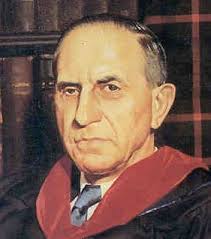
The following is a series of messages given to lay out the distinctives of the Presbyterian Reformed Church, a denomination organized through the instrumentality of Professor John Murray in 1965, committed to the principles of historic Scottish Presbyterianism in doctrine, worship, government, and discipline, as enshrined in the original Westminster Confession of Faith (1646).

For a historical sketch of our beginnings, see here.

(Note: The title “Our Testimony” is merely thematic, and does not refer to a supplementary ecclesiastical document besides the Westminster Standards as is done among Reformed Presbyterian brethren.)

Original Series

Our Testimony, Part 1: Psalm Singing

Our Testimony, Part 2: Instruments in Worship

Our Testimony, Part 3: Presbyterianism

Our Testimony, Part 4: Holy Days, True & False

Our Testimony, Part 5: Confessionalism

Our Testimony, Part 6: Experimental Religion

Our Testimony, Part 7: The Free Offer of the Gospel

Our Testimony, Part 8: Religious Establishments #1

Our Testimony, Part 8: Religious Establishments #2

Our Testimony, Part 9: Head Coverings

Our Testimony, Part 10: Liberty of Conscience

Our Testimony, Part 11: Our Communion Practice

Our Testimony, Part 12: Frequency of Communion

Additional Messages

One Table, One Cup, One Bread

The following are quotes from Thomas Chalmers (1780-1847) who was passionate about relieving the poor and above all, bringing them the glad tidings of the Gospel.

* * * *

“Such is the peculiar adaptation of the Gospel to the poor, that it may be felt in the full force of its most powerful evidence by the simplest of its hearers” (Chalmers, Works 6:256).

“The proper work of an establishment . . . is to reclaim and christianize the common people” (Chalmers, Works 18:206).

“In respect of immortality, the great and the small ones of the earth stand on an equal eminence” (Chalmers, Works 6:288).

“Yet I must say I liked the Irish part of my parishioners. They received me always with the utmost cordiality, and very often attended my household ministrations, although Catholics” (Chalmers, Works 16:243).

“The main impulse of [the parish minister’s] benevolence, lies in furnishing the poor with the means of enjoying that bread of life which came down from heaven, and in introducing them to the knowledge of those Scriptures which are the power of God unto salvation to every one who believeth” (Chalmers, Works 11:290).

“There is none we think of correct moral taste, and whose heart is in its right place, that will not rejoice in such a spectacle, as far more pleasing in itself, and, if only universal in our churches, far more indicative of a healthful state of the community, than the wretched system of the present day, when the gospel is literally sold to the highest bidders among the rich, and not preached to the poor” (Chalmers, Works 11:381).

* * * *

And some longer quotes:

“Now the great aim of our ministry is to win souls; and the soul of a poor man consists of precisely the same elements with the soul of a rich. They both labour under the same disease, and they both stand in need of the same treatment. The physician who administers to their bodies brings forward the same application to the same malady; and the physician who is singly intent on the cure of their souls will hold up to both the same peace-speaking blood, and the same sanctifying Spirit, and will preach to both in the same name, because the only name given under heaven whereby men can be saved” (Chalmers, Works 11:356).

“It was saying more for the common people of Judea that they heard the Saviour gladly, than for the Scribes and Pharisees who heard him with envy, prejudice, and opposition; and it is saying more for the common people of this country, that they hear the doctrine of Christ gladly, than for those learned who call that doctrine foolishness, for those men of taste who call it fanaticism, for those men of this world who call it a methodistical reverie, for those men of fashion and fine sentiment who shrink from the peculiarities of our faith, with all the disgust of irritated pride and offended delicacy” (Chalmers, Works 11:358).

“If a poor child be capable of being thus transformed, how it should move the heart of a city philanthropist, when he thinks of the amazing extent of raw material, for this moral and spiritual manufacture that is on every side of him—when he thinks, that in going forth on some Christian enterprise among a population, he is in truth, walking among the rudiments of a state that is to be everlasting—that out of their most loathsome and unseemly abodes, a glory can be extracted, which will weather all the storms, and all the vicissitudes of this world’s history—that, in the filth and raggedness of a hovel, that is to be found, on which all the worth of heaven, as well as all the endurance of heaven can be imprinted—that he is, in a word, dealing in embryo with the elements of a great and future empire, which is to rise, indestructible and eternal, on the ruins of all that is earthly, and every member of which shall be a king and a priest for evermore” (Chalmers, Works 6:260).

“It was not thus with the ancients of our Church when spoiled of her endowments by the rapacity of the Crown, and of those nobles who formed the all-powerful aristocracy of that generation. True there was but the population of a million in these days; but whole tracts of country were rifled by the hand of violence of their ecclesiastical patrimony, and no means were left for the Christian education of the people who would have sunk into a state of moral barbarism but for the efforts of so many patriots as courageous and enlightened as the world ever saw,—the fathers and founders of the Kirk of Scotland. The territory had been desolated of its provision both for churches and schools; but they went forth upon it notwithstanding, and chalked out their parishes, and planted their stations for the ministry of the word, and without the visible means of sustenance or support, laboured both with the Church’s plat, and the Church’s polity, till the God in whom they trusted overthrew the counsels of their adversaries, and forced out of their sacrilegious hands a hardwon maintenance for an order of men whom now it is the fashion to stigmatize, but who have ever proved, throughout all the periods of our bygone history, and have now the opportunity of proving still, that they are the best friends of the poor man and of the labourer” (Chalmers, Works 18:289).

“To give money, is not to do all the work and labour of benevolence. You must go to the poor man’s sick bed. You must lend your hand to the work of assistance. You must examine his accounts. You must try to recover those debts which are due to his family. You must try to recover those wages which are detained by the injustice or the rapacity of his master. You must employ your mediation with his superiors. You must represent to them the necessities of his situation. You must solicit their assistance, and awaken their feelings to the tale of his calamity. This is benevolence in its plain, and sober, and substantial reality; though eloquence may have withheld its imagery, and poetry may have denied its graces and its embellishments. This is true and unsophisticated goodness” (Chalmers, Works 11:303-4)

[image source]