“The LORD openeth the eyes of the blind: the LORD raiseth them that are bowed down: the LORD loveth the righteous: the LORD preserveth the strangers; he relieveth the fatherless and widow: but the way of the wicked he turneth upside down” (Psalm 146:8-10).
“Fatima” once again reached out today. Apparently, her nephew and only immediate family in the U.S. changed his mind about having her come out to live with him in Ohio. While it would have been sad to see her go, I cannot help but see this somewhat as a blessing in disguise for her. While we are but “unprofitable servants,” we are the only devout Christians in her life and have shown her an abundance of care for her outward affairs and especially for her soul.
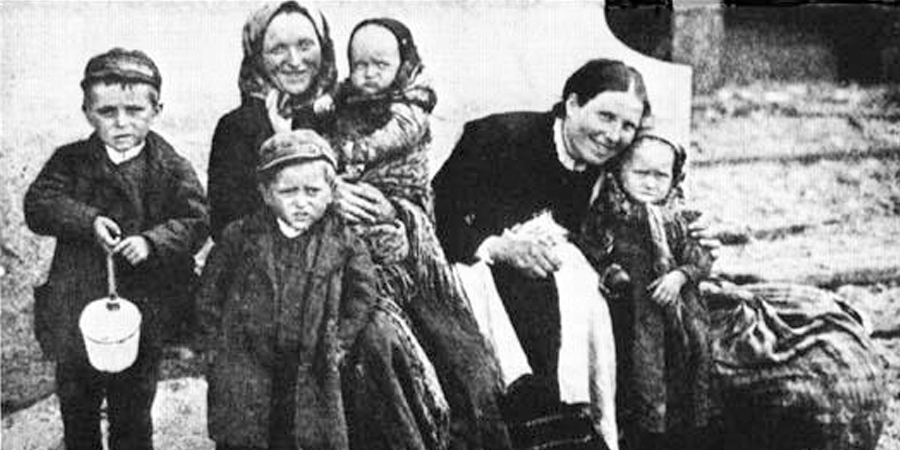
“Chalmers’ method was simple, systematic, spiritual, and unadorned. It was concerned with reaching souls rather than building brands; it sought them out. A gathered team of committed individuals connected with their local community and the lives of individuals through visitation and interaction. Such a method has massive challenges in a society where community has disintegrated but that is not to say it is impossible. No doubt something resembling it is bearing fruit in some communities.”
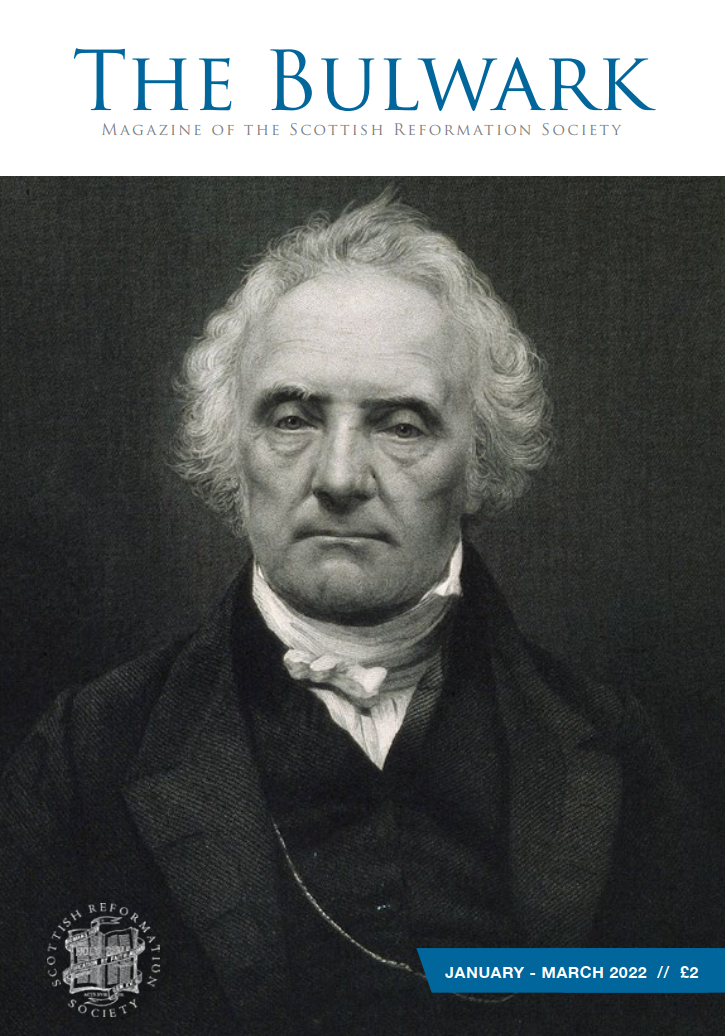
In this article below, my good friend Matthew Vogan recounts the old national vision of our Scottish Presbyterian forbears like Thomas Chalmers, who maintained confessional fidelity while also aggressively engaged in home missions. Does anyone among the theological heirs of Chalmers have such a national vision? Or even more pointedly, does anyone care?
Well, I for one deeply believe that they do care. And that they have the almighty Spirit of God dwelling in them and resting upon them. Nothing can defeat the sword of the Lord and of Gideon, nothing can stop these ‘sons of oil,’ for it is “not by might, nor by power, but by [His] Spirit, saith the LORD.” They will hear their charge, and they will go, shaking off all inhibitions and possessing the good land that rightly belongs them–and much more, to the Heir of all!
(There. That’s the closest this stodgy Presbyterian will ever get to ‘naming and claiming!’)
* * * *
This article is found in The Bulwark, popular magazine published by the Scottish Reformation Society. To read it more easily, you will likely need to download and rotate view.
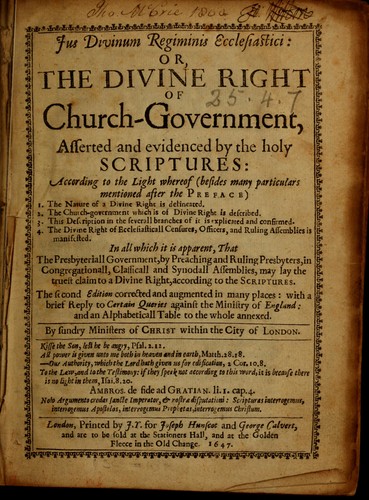
Listen to this classic work of Presbyterian church government written by London divines at the time of the Westminster Assembly. But fair warning: not for the faint of heart! But if you’re a thinker and would like to learn as you go, let me do the reading for you. [Project in progress.]
“Arguably the best biblical defenses of presbyterian ecclesiology and explanations of its polity were produced in the seventeenth century. Among these, none has a reputation better than an English work with the Latin title Jus Divinum Regiminis Ecclesiastici, with the English subtitle The Divine Right of Church Government. In three successive editions, two of which were penned during the time that the Westminster Assembly met, ‘sundry’ London ministers laid out their case. In the first part of the book they demonstrate that there is a government of the church established and revealed by God. In the second part of the book they describe that government, explain its benefits to God’s people, and further develop the biblical and theological justifications for presbyterianism.
“Chris Coldwell’s new edition of this classic work will prove a most welcome addition to the Presbyterian minister’s or even church member’s bookshelf. The entire book was addressed to people who were not yet persuaded regarding the merits of presbyterian church government. It hardly needs to be said that such an audience has only expanded in the Christian world and that many people could benefit from understanding a principled form of church government rather than ones where leaders (or members) make it up as they go along. This critical edition is almost a third longer than earlier abridged versions. It offers David Noe’s translations of Latin material and a thoughtful introduction. The edition also evidences Coldwell’s careful editorial work and successful sleuthing, in some cases solving puzzles that have stumped historians for centuries. Editor, subscribers, and publisher are to be thanked for this invaluable scholarly contribution.”
— Chad Van Dixhoorn, editor of The Minutes and Papers of the Westminster Assembly 1643–1652
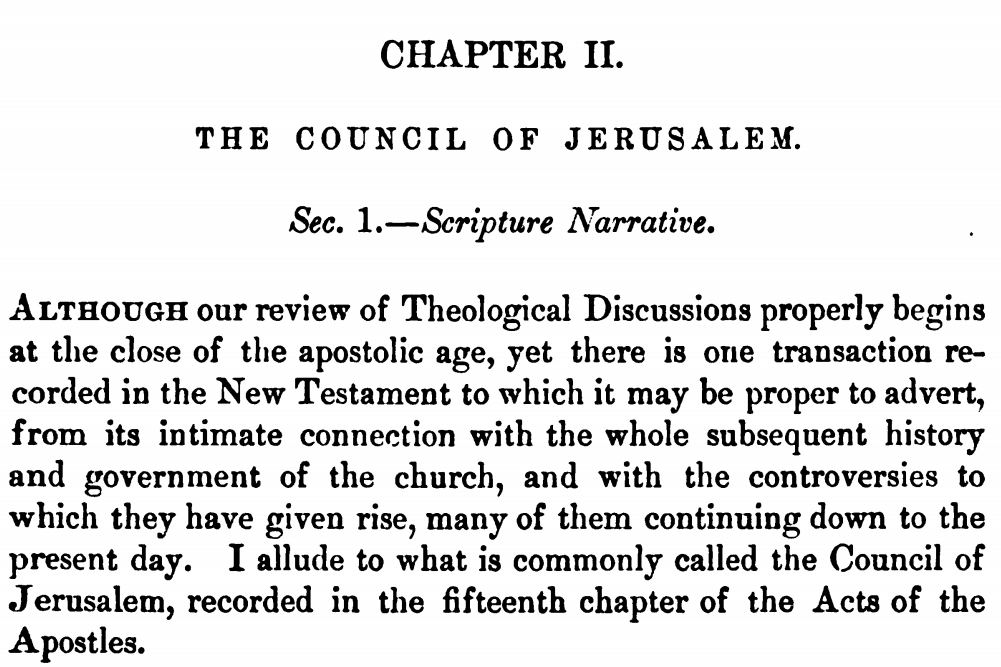
Read the entire chapter from William Cunningham’s Historical Theology: A Review of the Principal Discussions in the Christian Church Since the Apostolic Age (1863). Or, listen to the audio here.
Years back, my heart got large for missions — especially urban missions to those on the ‘other side of the tracks.’ At about the same time, I became Reformed (a high octane, old school Presbyterian no less!), putting me in a a sub-subset of a subset. My life and ministry has ever since lived somewhat in the frontiers the unlikely and the implausible. A straightlaced, tall gringo Presbyterian goes out among immigrants, trying to evangelize in broken Spanish and recruit sinners to the “outward and ordinary means” in a humble, little Reformed church 15 minutes to the south. And to sing Psalms. Without musical accompaniment. In English.
I admit that there are all kinds of problems with this model, from a human perspective. But it is actually more plausible than one might think. Yet before I deal with the plausibles, let me first set forth some principles.
The first principle is principle! Principle precedes the practical. We must first determine whether something should be done before we decide whether or not we think it is practical. We ought to go out and bring the Gospel to all. None excluded. Politics quite aside, we may and must not discriminate based on sex, ethnicity, gender, or for that matter even sexual ‘preference.’ By the mandate of our King, we must go and tell them. Yes, as Calvinists, we know that not every “all” means “all.” But “every creature” does in fact mean “every creature.” Even if they don’t look like us, eat like us, or even use our language. It doesn’t matter whether they ‘have papers’ or not, vote Democrat or not. How they got here and whether they should by law be here, is a separate issue for a different discussion (and full disclosure: I lean quite “red” when it comes to immigration policy!). But that they are here means they are here for us to evangelize. And not just gripe about and avoid them as much as possible.
The first installment of my series on the distinctives of the Presbyterian Reformed Church, or the old Scottish Presbyterian doctrine, worship, government, and discipline. Below is a very lightly edited transcript (special thanks to sister Susan!).
* * * *
Psalm 78:5 – Our Testimony, Part 1: Psalm Singing
Turn with me to Psalm 78 and verse 5, in which we read the words, For he [that is the Lord] established a testimony in Jacob, and appointed a law in Israel, which he commanded our fathers, that they should make them known to their children…
The Seventy-eighth Psalm opens with the words that concern the passing along, the faithful passing along, of the fear of the Lord, the right worship of God, the doctrine that had been revealed to the people of God from one generation to another. It is, as we have not too terribly long ago considered, the way of the Lord to deal through generations. Yes, he saves individuals, and there is none who are saved but individuals; and yet individuals find themselves planted by the hand of God, more oftentimes than not, within families. Indeed, we are all children of fathers and mothers, and so it pleases the Lord that, by and large, within his church there should be families, one generation succeeding the other.
Well, it was commanded Abraham that he should teach his children in the ways of the Lord and the Lord said, I know Abraham that he will command his children after him that they may keep the way of the Lord, that God might fulfill his promise that he had for them. Joshua, that courageous and valiant man, he had become old and gray-headed, and he stood before the congregation at a crossroads, when one generation was to succeed the other and he charged them: If the Lord be God then serve him, or if these other gods of the nations, if they be true, then go your ways, but as for me and my house, we will serve the LORD.
Well, Psalm 78 is a psalm in which these themes are captured, the concept of the receiving of the the truth, and passing that along to the next generation. We have a responsibility – fathers, mothers, brothers, sisters in Jesus Christ, to hold onto what God has given us; in the words of Psalm 78:5, that testimony, that witness to the truth, and to pass it along to the next generation – which means two things: We must maintain what we have received, and not let it slip though our fingers, not grow lax and careless, and we must then impart them to the next generation, that they may be faithful in the Lord.
So, I’ve begun another season in my two parish districts. It’s been pretty interesting so far — definitely a Spring forward!
The very first day back in the S. Providence parish, the very first multi-family house, I was welcomed into the apartment of a retirement-age woman, “Ximena” (not real name). She was morbidly obese and quite home-bound; I normally don’t accept offers to come inside to visit a single woman without my wife, but this I figured was safe enough. The poor woman had quite a tale of woe; and she was rather anxious about various individuals in her life plotting her harm. Then, she confided her fears about paranormal activity. Clearly, this poor woman needs Jesus, the Liberator from all our sins and miseries, real or contrived. I read to her from the Gospels about this blessed Deliverer. She claims to be a Christian and even demonstrated a certain Bible knowledge that would point to a greater exposure to evangelical Christianity. But whatever her case, she was clearly very lonely and would easily welcome anyone to care for her soul. If you would like to be a part of that, reader, let me know. A Christian couple or mature Christian woman would be ideal.
“Thus, then, it is that God is saving the world—the world, mind you, and not merely some individuals out of the world—by a process which involves not supplanting but reformation, re-creation. We look for new heavens and a new earth, it is true; but these new heavens and new earth are not another heaven and another earth, but the old heaven and old earth renewed; or, as the Scriptures phrase it, “regenerated.” For not the individual merely, but the fabric of the world itself, is to be regenerated in that “regeneration when the Son of man shall sit on the throne of his glory” (Matt. 19:28). During the process, there may be much that is discarded. But when the process is completed, then also shall be completed the task which the Son of Man has taken upon himself, and the “world” shall be saved—this wicked world of sinful men transformed into a world of righteousness.”
“Surely, we shall not wish to measure the saving work of God by what has been already accomplished in these unripe days in which our lot is cast. The sands of time have not yet run out. And before us stretch, not merely the reaches of the ages, but the infinitely resourceful reaches of the promise of God. Are not the saints to inherit the earth? Is not the re-created earth theirs? Are not the kingdoms of the world to become the kingdom of God? Is not the knowledge of the glory of God to cover the earth as the waters cover the sea? Shall not the day dawn when no man need say to his neighbor, “Know the Lord,” for all shall know him from the least unto the greatest?”
I try to avoid promoting my own sermons very often. But after giving a short, three-part series on the doctrine of hell, I continued with a second short series on the subject of biblical, Reformed church growth, something very near my heart. Specifically, I spoke from Matthew 16:18 about building up the church from within by training up, winning over, and thus retaining our baptized, covenant children. We must promote and encourage Christian child-bearing and so helping populate the (visible) Kingdom through these “federally holy” sinners, a mission field in its own right. (More on that subject here.) Then, I laid out in the final messages a call and battleplan for aggressive, local and regional missions. As Prof. Murray said when personally engaging in church-planting in New England, we must “go where the people are, not where you hope they will come.”
I have been serving in New England and now New Jersey for 18+ years. Let us pray earnestly and labor believingly for the extension of confessional Presbyterianism here in our northeastern “Samaria.” It may be spiritually ‘rocky soil,’ but God can create sons of Abraham from these stones. He did it before! If things go from bad to worse, a strategic retreat is possible. But let us not give up the Messiah’s ground without a fight! And who knows? Perhaps the Lord will make this “desert to blossom as the rose” again, and restore the pure worship of our godly Puritan forbears.
Do you live in the northeast—in New England, New York, or New Jersey? Are you committed to the old paths of the Puritans and Presbyterians? Do you long for a Third Great Awakening today? Would you be interested in hosting special meeting in your area? Please get in touch with me at 515-783-5637 or michael@reformedparish.com. [Note, 7/25/24: we would seek to do so in a collaborative way with area NAPARC and other more faithful churches, where possible.]
And if you don’t live in the northeast, would you pray for us? And maybe even consider joining us, if Providence opens a door?
XIV. The rest of God, from the work of the creation, was a type of a far more glorious rest of God from the work of the glorification of the whole universe. When God had created the first world, so as to be a commodious habitation for man during his probation, and an illustrious theatre of the perfections of the Creator; he took pleasure in this his work, and rested with delight. For he bestowed upon it all the perfection which was requisite to complete that state. But he had resolved, one day, to produce a far more perfect universe, and, by dissolving the elements by fire, to raise a new heaven and a new earth, as it were, out of the ashes of the old: which new world, being blessed with his immutable happiness, was to be a far more august habitation for his glorified creatures; in which, as in the last display of his perfections, he was for ever to rest with the greatest complacency. And besides, as God, according to his infinite wisdom, so wisely connects all his actions, that the preceding have a certain respect to the following; in like manner, since that rest of God after the creation was less complete than that other, when God shall have concluded the whole, and which is to be followed by no other labour or toil; it is proper to consider that first rest of God as a type, and a kind of prelude of that other, which is more perfect. In fine, because it tends to man’s greatest happiness, that the whole universe be thus glorified, and himself in the universe, that God may altogether rest in him, as having now obtained his last degree of perfection, he is said “to enter into the rest of God,” Heb. 4:10.



 West Port Experiment