Just published another article on Thomas Chalmers. This is also a fantastic journal, and well worth the low cost to purchase. Get your copy here. For past articles I’ve written on Chalmers, visit the ‘About’ page and scroll to the bottom.
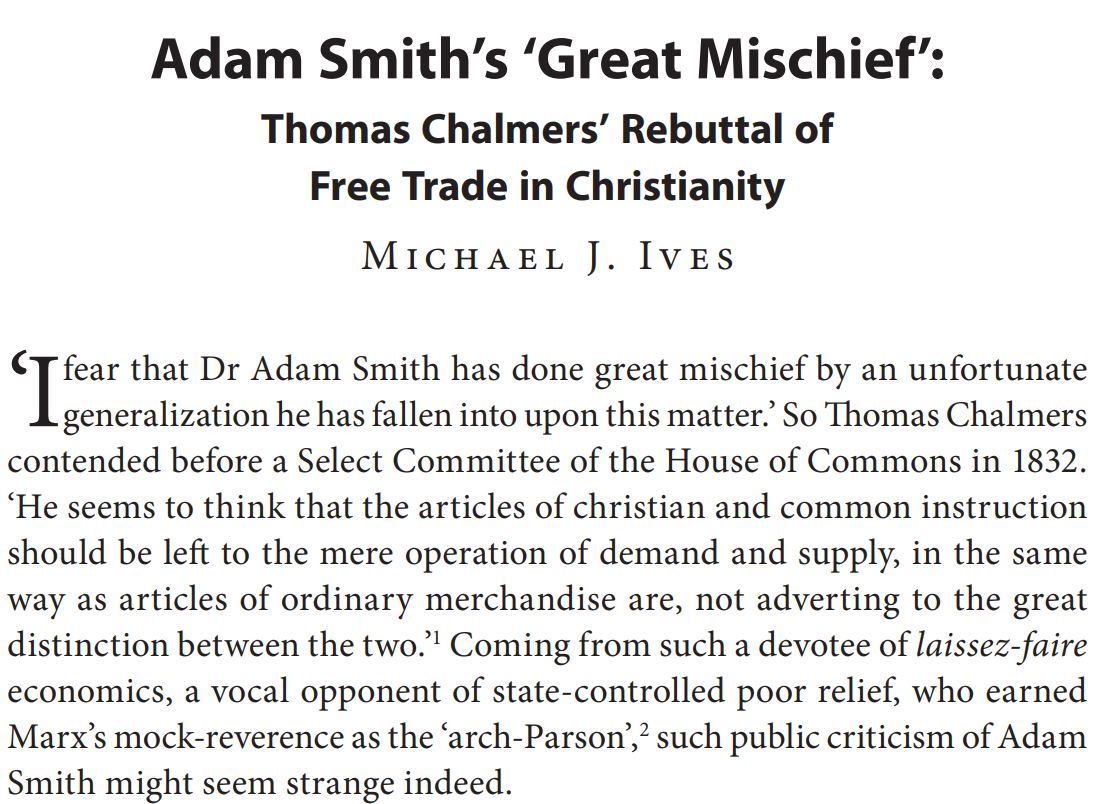
Just published another article on Thomas Chalmers. This is also a fantastic journal, and well worth the low cost to purchase. Get your copy here. For past articles I’ve written on Chalmers, visit the ‘About’ page and scroll to the bottom.
Posted in Articles, Commerce & Christianity, Establishments, Thomas Chalmers, WPE Editor | Leave a Comment »
Years back, Prof. John Murray’s letter to a friend on the question of ladies wearing head-coverings in public worship was very helpful to me. In particular, he helped me see that 1 Corinthians 11:6 in particular will make no sense at all on the thesis that Paul wanted women simply to wear long hair in church. But if the long-hair “covering” of v. 15 is all that Paul meant for women being “covered” in vv. 5-6, then what does verse 6 even mean?
To help make this as clear as possible for others, I decided to make a little chart here below. Also feel free to read a transcript of a sermon I gave on the subject here.
* * * * * * *
Interested in receiving occasional notifications of new West Port Experiment posts? Sign up at the top right, under “Email Subscription.”
Posted in Church Order & Discipline, Culture, Presbyterian Reformed Church, Theological Diagrams, Worship, True & False | Leave a Comment »
Just completed recording Thomas Halyburton’s “A Christian’s Belief Under Troubles: Two Sermons After the Death of a Friend.” Access this three-part series and other titles here. View my full audio library here. (And please drop me a note if any link fails: michael at reformedparish dot com).
The following introduction is taken from the James Begg Society.
* * * *
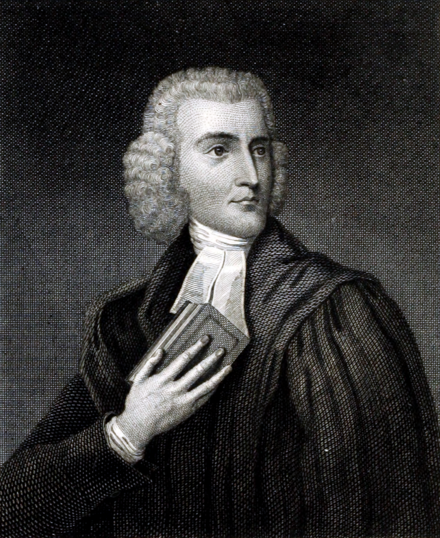
THOMAS Halyburton (1674-1712) was born into a family of Scottish Covenanters. His Father, Rev. George Halyburton, was a minister in the Reformed Church of Scotland until his ejection in 1662. Twenty years later George was denounced by the Privy Council of Scotland for holding “conventicles” (church services in the open air, unauthorised by the established church and outlawed by the government in those days). After his father’s death, young Thomas’s family (mother and sister) fled to Rotterdam in order to avoid the fierce persecution which was carried on against the Covenanters, where Thomas had his early education in the school of Erasmus. Following the Revolution, he returned to Scotland and continued his education.
After a period of inner struggle with the philosophy of Deism, God sovereignly and graciously enlighened Thomas’s soul, and gave him saving faith in the Lord Jesus Christ. He became committed to the same Reformed Christian religion as his father, and followed in his footsteps as a minister of the gospel. On completing theological training, Thomas was licenced to preach in the Church of Scotland by Queen Anne, and ordained to the ministry of the church in Ceres, Fife. The church was part of the presbytery of Kirkcaldy.
After faithfully pastoring the church in Ceres for ten years, Rev. Dr. Halyburton became Professor of Theology at St. Leonard’s College in St. Andrews.
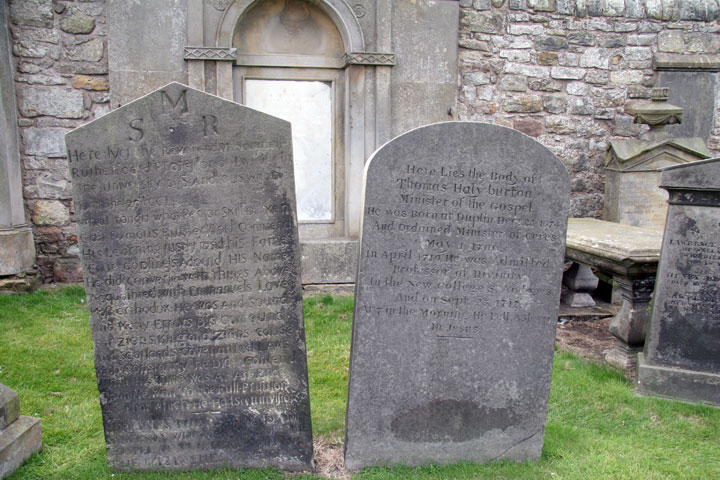
He died two years later at the age of 38, following an illness. At his request, his body was buried in St. Andrews next to his favourite Christian minister, Rev. Dr. Samuel Rutherford.
Thomas Halyburton’s theological and apologetic writings are marked by a distinctive thoroughness. The surviving scripts of his sermons show him to have been richly theological, deeply experimental (i.e. dealing with the experiences of the soul) and very practical — a master of the classic Puritan style of preaching.
* * * *
Have you been blessed by these recordings? Could you possibly help with a one-time gift, or perhaps a monthly recurring donation of $2, $3, or $5? Donations can be made here. Please earmark your contribution in the notes “WPE Audio,” as it will be processed through the Reformed Parish Mission. Donations will offset the monthly SermonAudio expenses; and any excess will go towards supporting my efforts to bring the Reformed faith to the working class, immigrant, and Hispanic populations here in the U.S.
Posted in Audio Resources, Church of Scotland, Experimental Religion & the Cure of Souls, Faith & Saving Faith, Practice of Piety, Vital Godliness | Leave a Comment »
Friends, this next update is a major one for me. In addition to taking a new call in South Jersey and so expanding the urban mission efforts of our presbytery, I’m making a major appeal for regular support so that I can increasingly dedicate myself to this cause full-time.
Could you please help with a monthly recurring donation of any amount, however small? Even a $10/month commitment would be a blessing. Or a one-time gift of any amount. But above all, please pray for the Lord’s blessings in our transition and the expansion of the work in the urban Northeast.
Finally, a special ‘thank you’ to those who are already supporting. Your part is so vital; may the Lord bless you for it!
Posted in Reformed Parish Mission (RPM) Posts | Leave a Comment »
A tremendous, two-part treatment that anyone identifying with historic Presbyterian should read by my friend, Matthew Vogan.
* * * *
Whole doctrine catholicity | “Who is she that looketh forth as the morning, fair as the moon, clear as the sun, and terrible as an army with banners” (Song 6:10)?
Posted in Catholicity, Church of Scotland, Connectionalism & Conciliarism, Ecclesiology, Establishments, Separatism & Schism, The Visible Church | Leave a Comment »
Community is dead. R.I.P. This short article by Dr. Carl Trueman laments the evaporation of community–at least in the West–and of its historically Christian nexus, the Church. He then offers a strategic prescription in the rediscovery of hospitality, no doubt in the spirit of Rosaria Butterfield. I couldn’t agree more. If we are embodied souls living in real places with zip codes and GPS coordinates, we as Christians need to love our neighbors in very tangible ways for their salvation — and as a happy byproduct, recreate community.
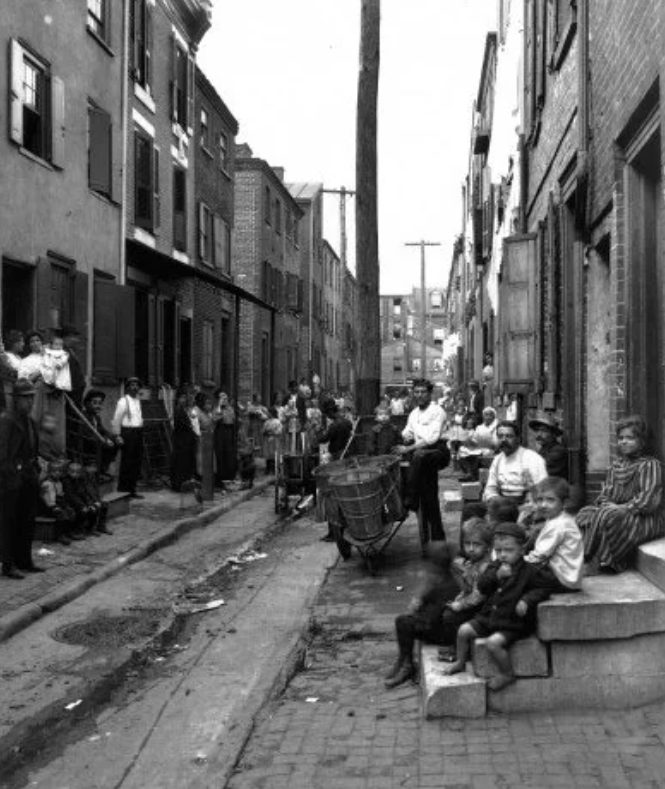
But I think this malady requires more than one prescription. Thomas Chalmers (1780-1847), the pioneer of the Free Church of Scotland in which Trueman spent many years, was even in his day deeply troubled at the disintegration of then-modern community. The Industrial Revolution had forced masses of country folk into the slums of Britain’s factory-choked cities. It grieved him to his core that these people were living in grinding poverty and were completely falling through the cracks of the Church of Scotland’s traditional spiritual care, forming a bloated underclass of unchurched “home heathen.” And the mechanized web of misery only strengthened its grip by the complete and utter absence of community. His assessment is surprisingly contemporary: “As the matter stands, juxtaposition forms no security whatever for acquaintanceship—insomuch that the members of distinct households might live for years under the same roof, unknowing and unknown to each other.”
Continue Reading »Posted in Free Church of Scotland, Missiology, Moral Suasion, Parish in American Context, Parish Theory & Practice, Parochial Strategy, Social Byproduct, Social Issues, The Gospel & the Poor, Theology of Community, Theology of Place, Thomas Chalmers | 1 Comment »
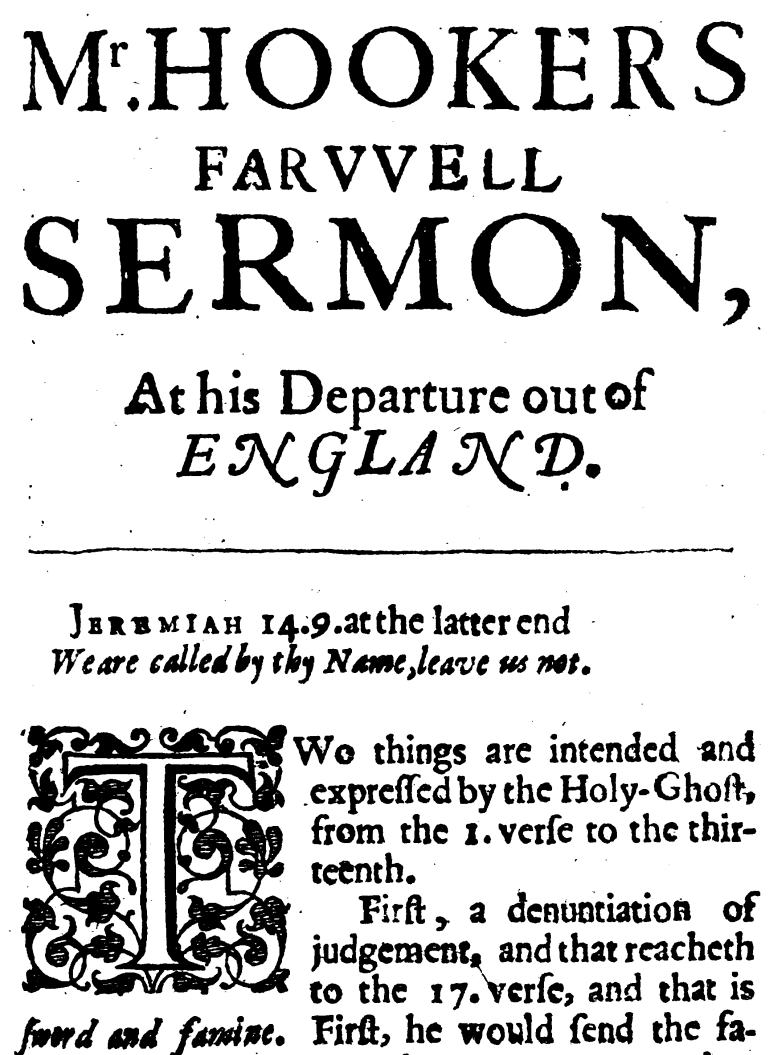
“Englands sinnes have been great, yea and their mercies great. England hath been a mirror of mercy, yet God may leave us, and make us a mirrour of his justice. Looke how he spake to the people in Ier. 7. that bragged of the Temple of the Lord, Sacrifices and offerings: And what may not God which destroyed Shilo, destroy thee O England? Goe to Bohemia, from thence to the Palatinate, and so to Denmarke. Imagine you were there, what shall you see, nothing else but as Travellers say, Churches made heaps of stones, and those Bethels wherin Gods name was called upon, are made defiled Temples for Satan and superstition to raigne in? You cannot goe two or three steps, but you shall see the heads of dead men, goe a little further, and you shall see their hearts picked out by the fowles of the ayre, whereupon you are ready to conclude that Tilly hath been there: Those Churches are become desolate, and why not England? Goe into the Cities and Townes, and there you shall see many compassed about with the chaines of captivity, and every man bemoaning himselfe. Doe but cast your eyes abroad, and there you shall see poore fatherlesse children sending forth their breaches, with feare, crying to their poore helplesse mothers. Step but a little farther, and you shall see the sad wife bemoaning her husband, and that is her misery, that she cannot dye soone enough; and withall she makes funerall Sermons of her children within her selfe, for that the Spaniard may get her little ones, and bring them up in Popery and superstition; and then she weeps and considers with her selfe: If my husband be dead, it is well, happily he is upon the racke, or put to some cruell tortures, and then she makes funerall Sermons, and dyes a hundred times before she can dye. Cast your eyes afar off, set your soules in their soules stead, and imagine it were your owne condition, why may not England be thus, who knowes but it may be my wife, when he heares of some in torments? Ah! Brethren, be not high minded, but feare, as we have this bounty on the one side, so may we have this severity on the other; therefore prancke not up your selves with foolish imaginations, as who dare come to England, the Spaniards have enough, the French are too weake: Be not deceived, who thought Ierusalem the Lady of Kingdomes, whither the Tribes went to worship, should become a heap of stones, a vagabond people, and why not England? Learne therefore to heare and feare, God can be a God without England, doe not say there are many Christians in it, can God be beholding to you for your Religion? No surely, for rather then he will maintaine such as professe his Name and hate him, he will raise up of these stones children unto Abraham; He will rather goe to the Turks, and say you are my people, and I will be your God. But will you let God goe, England? Why are you so content to let him goe? Oh! lay hold on him, yea hang on him, and say thou shalt not goe. Doe you thinke that Rome will part with her religion, and forsake her gods? nay, an hundred would rather lose their lives. Will you let God goe? Oh England plead with your God! and let him not depart. You should onely part with your rebellions, he will not part with you. Leave us not. We see the Church is very importunate to keep God with them still, they lay hold on God with words of argument.”
From Thomas Hooker’s, “The Danger of Desertion” (1641)
Posted in New England Puritanism, Puritans & Puritanism, The Church in America | Leave a Comment »
[A letter by Professor John Murray]
Badbea, Bonar Bridge, Ardgay, Ross-shire IV2 43AR, Scotland
16 November 1973
Mr. V. Connors
Presbytery Clerk
Evangelical Presbyterian Church
Australia
Dear Mr. Connors,
I am in receipt of your letter of the 8th. I very deeply appreciate your request even though I may not be able to provide any definitive advice on the questions asked. Allow me to give my judgement on the second question first.
If the Presbytery becomes convinced that a head covering for women belongs to the decorum governing the conduct of women in the worship of God, then I think Presbytery should declare accordingly. I would not suppose it necessary expressly to legislate. I think it would be enough to make a resolution for the instruction and guidance of ministers, sessions, and people. A higher judicatory has both right and duty to offer to those under its jurisdiction, guidance respecting divine obligation. This has been recognised in Reformed Churches throughout the world.
Your main question turns, of course, on the interpretation of I Corinthians 11:2-16. Permit me to offer some of my reflections in order.
1. Since Paul appeals to the order of creation (vss. 3b, vss. 7ff.), it is totally indefensible to suppose that what is in view and enjoined had only local or temporary relevance. The ordinance of creation is universally and perpetually applicable, as also are the implications for conduct arising therefrom.
2. I am convinced that a head covering is definitely in view forbidden for the man (vss. 4, & 7) and enjoined for the woman (vss. 5, 6, 15). In the case of the woman the covering is not simply her long hair. This supposition would make nonsense of verse 6. For the thought there is, that if she does not have a covering she might as well be shorn or shaven, a supposition without any force whatever if the hair covering is deemed sufficient. In this connection it is not proper to interpret verse 15b as meaning that the hair was given the woman to take the place of the head covering in view of verses 5, 6. The Greek of verse 15 is surely the Greek of equivalence as used quite often in the New Testament, and so the Greek can be rendered: “the hair is given to her for a covering.” This is within the scope of the particular argument of verses 14, 15 and does not interfere with the demand for the additional covering contemplated in verses 5, 6, 13. Verses 14 and 15 adduce a consideration from the order of nature in support of that which is enjoined earlier in the passage but is not itself tantamount to it. In other words, the long hair is an indication from “nature” of the differentiation between men and women, and so the head covering required (vss. 5, 6, 13) is in line with what “nature” teaches.
Continue Reading »Posted in John Murray, Worship, True & False | Leave a Comment »
I’ve noticed on my dashboard a couple of older posts getting a more hits after my latest one, “Micro-presbyterians and church-planting.” Perhaps a brief clarification is in order just in case any should view these as somehow contradictory of the spirit and practice I have just advocated. It certainly would be a “fly in the ointment” if others should actually be confused by them.
In each of these posts, I’ve added clarifying language (here and here) that I could have easily included at the time, had I thought it necessary. In any case, my conscience is perfectly clear that I have never to my knowledge participated in any outreach or church-planting effort remotely out of step with my recent article, and I would be happy to offer pastoral references outside the PRC should any wish to confirm.
In all likelihood, this is nothing. So disregard if this does not apply—but feel free to share if it does.
God bless!
–The management (such as it is)
Posted in Catholicity, Missiology, Parish in American Context, WPE Editor | Leave a Comment »
 West Port Experiment