This was a particularly good episode. It just so happened that I had picked up Anselm’s masterpiece on penal substitutionary atonement, Cur Deus Homo? (Why the God-man?) There is definitely more light from the “Dark Ages” than is often supposed. Protestantism rejected a lot from the Medieval Church; but it retained a lot both from it and the Patristic era.
Posted in Historical Theology, Medieval Church, Protestantism & Romanism, The Visible Church | Leave a Comment »
A false dichotomy, if one is to take James Durham seriously:

“Never, never did men run to quench fire in a city, lest all should be destroyed, with more diligence than men ought to bestir themselves to quench this [sin of schism] in the church; never did mariners use more speed to stop a leak in a ship, lest all should be drowned, than ministers especially, and all Christian men should haste to stop this beginning of the breaking in of these waters of strife, lest thereby the whole church be overwhelmed. And if the many evils which follow thereupon, the many commands whereby union is pressed, yea, the many entreaties and obtestations whereby the Holy Ghost does so frequently urge this upon all, as a thing most acceptable to him and profitable to us; if, I say, these and many other such considerations have not weight to convince of the necessity of this duty to prevent or heal a breach [emphasis mine], we cannot tell what can prevail with men that profess reverence to the great and dreadful name of God, conscience of duty, and respect to the edification of the church and to their own peace at the appearance of the Lord in the great day, wherein the peace-makers shall be blessed, for they shall be called the children of God?”
Read more about the Scottish doctrine of visible church union and the sin of schism in MacPherson’s classic below. And an audio recording of that particular chapter can be accessed here.
Whole doctrine catholicity | “Who is she that looketh forth as the morning, fair as the moon, clear as the sun, and terrible as an army with banners” (Song 6:10)?
Continue Reading »Posted in Audio Resources, Catholicity, Church of Scotland, Connectionalism & Conciliarism, Free Church of Scotland, Separatism & Schism, The Visible Church | Tagged books, durham, reading, writing | Leave a Comment »
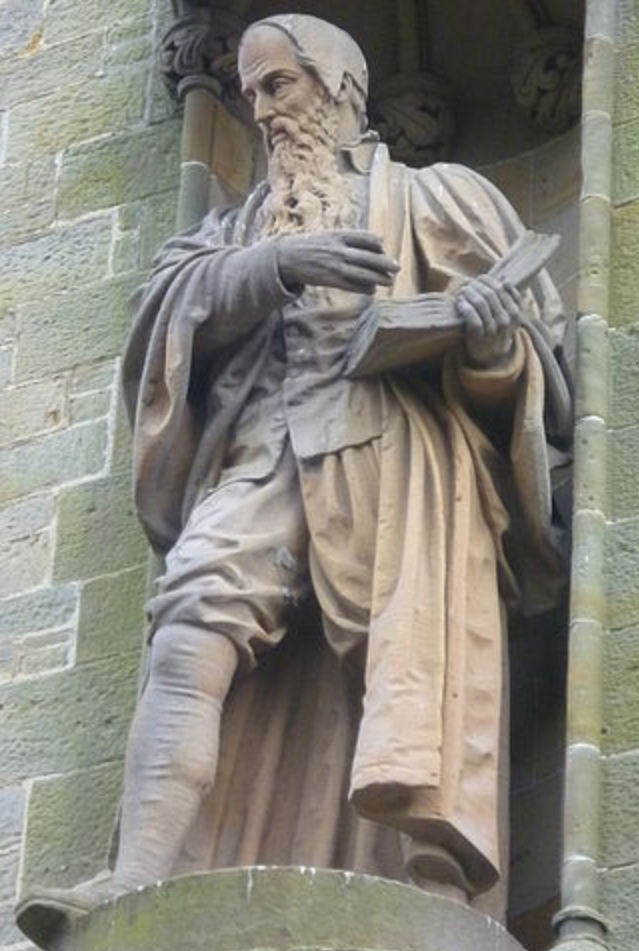
It is said that John Knox prayed, “Give me Scotland, or I die.” In 1560, God gave him Scotland. The purpose of this submission is to examine what he and his colleagues did with her and initiate a discussion on what lessons we might learn for today.
To achieve our purpose, we shall first examine the mission strategy which Knox and his colleagues set out in The First Book of Discipline.
Second, we shall examine what the Reformers sought to do in the light of Presbyterian principles. Now, the object of our scrutiny is the Reformation in Scotland, and that, in fairness, requires a Scottish approach. We are not looking at Knox and company’s mission strategy for precedents which we might apply analogously to the pattern of English Common Law, but for principles which we might reapply in each situation while being informed by examples of previous applications.
Third, we shall describe how the principles and practices of the Scottish Reformation might be reapplied in mission situations today. As we have said, this is a discussion. This third section will not be a list of modern mission solutions but of resource maximizing suggestions. This will not require thinking outside of the box: our commitment to Scripture forbids that. This will involve rethinking our perception of the box’s dimensions and utilizing the extra space.
This article was written by the Rev. D. Douglas Gebbie and published by the Haddington House Journal in 2008. To read the rest, click here.
Posted in Church of Scotland, Gospel Proclamation, John Knox, Missiology | Leave a Comment »

Last year, I met a rather tall, older African-American fellow when first making my way through my Woodbine parish. He was sitting outside just relaxing in his yard. I struck up a conversation with him, and we easily talked for 45 minutes. He was originally from Philly (an hour away), had some trouble with the law years back and even did some hard time. As for his spiritual state, it was pretty clear that he was trusting in his good works to stand before God—and I in turn warned him not to do so, as they are filthy rags, and that we must flee to Christ for salvation. We’ll call him “Darius.”
Since then, I’ve returned to visit—that time learning that he did not live in the large house I had assumed was his, but in a trailer out back (I think on the graces of his family inside). We read the Bible and prayed, and I eventually got him and his girlfriend, “Sarah,” to church. They fell right in.
Sadly, Darius is no longer living there, for whatever reason. He called me out of the blue recently and shared that he is living 30 minutes away in Rio Grande, temporarily in a motel. He is a rather gentle giant, from all I can tell from the outside; but perhaps there is more to the story. Hard to say. In any case, he is on government assistance and must vacate this motel in 13 days from today. He is on Medicare and so has means to pay rent, however limited. He is asking for a place, any place, to stay—including another trailer. I cannot vouch for him beyond what I’ve shared here, but I have evidence that he’s been a hard worker in the past, and he has always struck me as easy-going.
If you live in S. Jersey and have a lead to share, I’m sure he would welcome it. I would be happy to relay any opportunities for him. But either way, please pray for Darius, that the Lord would give him a safe and stable place to stay. And pray for me as I endeavor to draw Him to the Savior. Rev. Allay, a local OPC minister friend of mine who lives close to Rio Grande, will be joining me Saturday for another visit.
Contact me if you have any leads or opportunities at mjives dot refparish at gmail dot com, or by cell at 515-783-5637.
Posted in Reformed Parish Mission (RPM) Posts, WPE Editor | Leave a Comment »
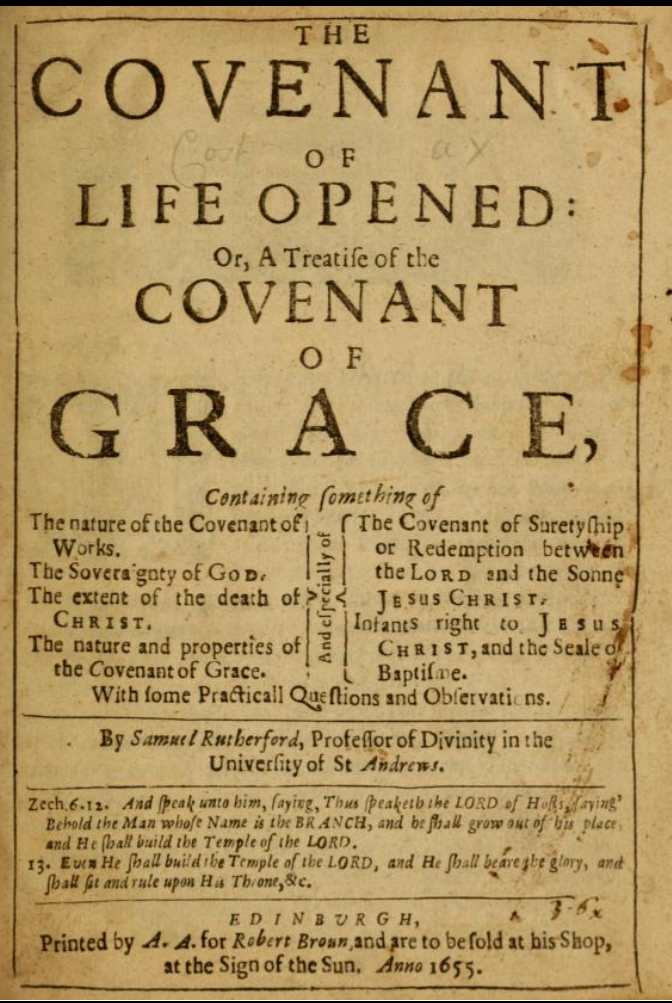
“Christ is a drawing and an uniting Spirit; then all that are in Christ should be united. Certainly the divisions now in Britain cannot be of God. The wolf and the good Shepherd are contrary in this; the good Shepherd loves to have the flock gathered in one, and to save them, that they may find pasture, and the flock may be saved: the wolf scatters the flock; or if the wolf would have the flock gathered together, it is that they may be destroyed. Then it would be considered, if a bloody intention of war between two protestant kingdoms, for carnal ends, and upon forced and groundless jealousies, be from an uniting Spirit, and not rather from him, who was a murderer from the beginning.”
For a good, one-chapter introduction to the historic Scottish Presbyterian views of visible Church union or ‘catholicity,’ have a listen to “Church Unity & the Sin of Schism,” by John Macpherson, in his Doctrine of the Church in Scottish Theology.
* * * *
Whole doctrine catholicity | “Who is she that looketh forth as the morning, fair as the moon, clear as the sun, and terrible as an army with banners” (Song 6:10)?
Posted in Catholicity, Communion of the Saints, Connectionalism & Conciliarism, Samuel Rutherford, Separatism & Schism, The Visible Church | Leave a Comment »
Below is was my first attempt to preach in Spanish without live translation. I used Spanish-translated manuscript of a previously preached English sermon and practiced a lot beforehand. It has been a blessing serve Pr. Muñoz’s church in Egg Harbor Township, and I look forward to further opportunities. They are definitely growing in their understanding and practice of Reformation principles.
Posted in Reformed Parish Mission (RPM) Posts | 1 Comment »
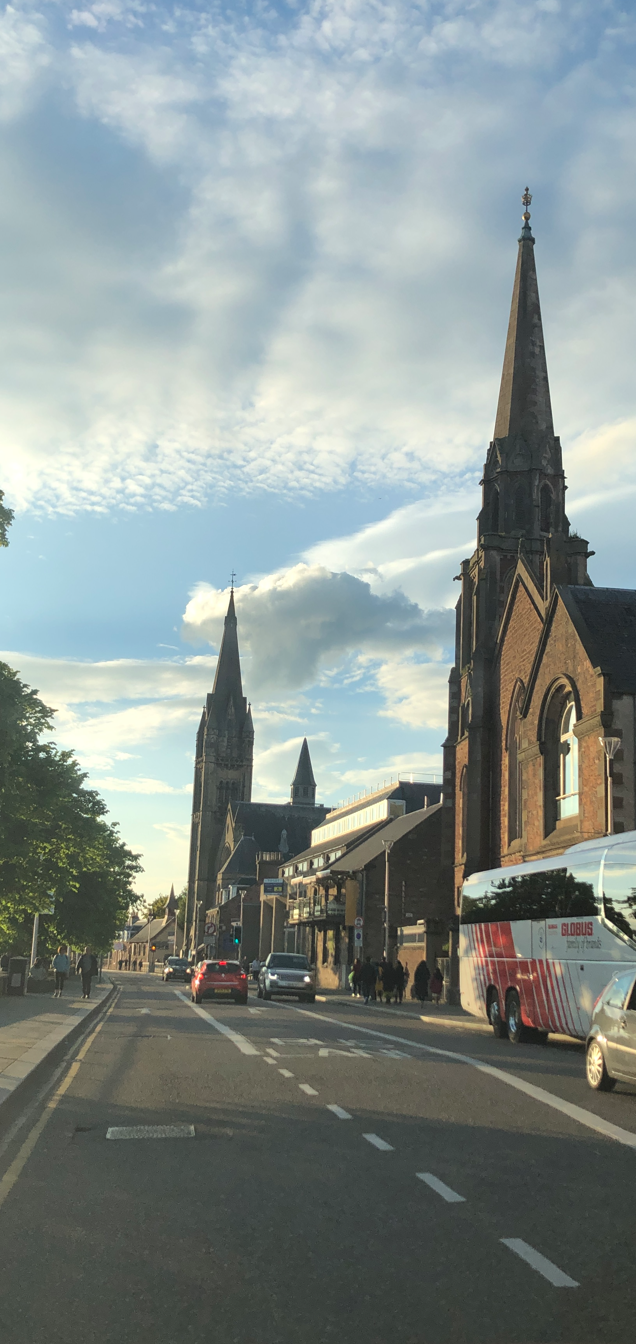
Micro-presbyterians study hard to get things right. We dot our i’s and cross our t’s. And yet for all our learning, we can miss some pretty big things—in fact, some pretty big presbyterian things. Church-planting would definitely be one of them.
I speak from experience. For nearly the entirety of my 29-year Reformed career, I’ve been a ‘micro-presbyterian.’ I skipped the 1689 thing, past the (relatively) big-tent Reformed bodies, going straight into the Presbyterian Reformed Church, a very small psalm-singing body formed in 1965. I rather distaste the term ‘micro-presbyterian,’ especially with its connotations of over-scrupulosity and cantankerousness; and, the term may be a little dated. But in any case, God put me here, and I love my denomination. (And getting a gorgeous wife and elder’s daughter out of deal didn’t hurt either!).
I also think it has come a long way over the years. I feel that we have matured simultaneously, from a kind of cage-stage to something more balanced, stable, and seasoned. It has also helped, quite frankly, that we decided to join NAPARC some years back. Sure, it made us a pariah with many who might otherwise have sought us out. But often, those very types would never be happy in any case until they were safe in the embrace of an ecclesiastical micromanager or worshipping every Lord’s day in their own living-room.
I know we all have learned the hard way from many mistakes, missteps, and quite frankly, sins. “In many things, we offend all.” While we cannot deny the light that the Lord has graciously shown us, but embrace and follow on in it; while we cannot but press forward to the higher and better attainments of the First and Second Reformations and maintain them with diligence and zeal, we must also humbly acknowledge where we have mixed holy with unholy fire, and where we have in fact justified means by ends. Sometimes in our earnestness for truth we have cut corners; sometimes we’ve cut far more than just corners. But two wrongs do not make a right. And we may never “do evil that good may come.”
Continue Reading »Posted in Catholicity, Connectionalism & Conciliarism, Missiology, Parish in American Context, Parish Theory & Practice, Thomas Chalmers, WPE Editor | Tagged bible, christianity, church, god, theology | 1 Comment »
“I wish to communicate what to me is the most joyful event of my life. I have been intent for thirty years on the completion of a territorial experiment, and I have now to bless God for the consummation of it.” Thus Thomas Chalmers wrote to an American supporter of his West Port experiment in 1847, the final year of his life.
Read the entire story below. This is a modified portion from an earlier journal article, adapted for a broader audience. It was published in The Messenger, the denominational publication of the Free Reformed Churches. The entire magazine can be accessed here.
Posted in Articles, Parish Theory & Practice, Thomas Chalmers, West Port experiment, WPE Editor | Leave a Comment »
[I thought I’d blogify a short FB post.]
My daughter, Geneva, and I were discussing this recent chatter (bilge) of kinism among confessional Presbyterian types. She rather perceptively observed that there is a total confusion of race and culture here.
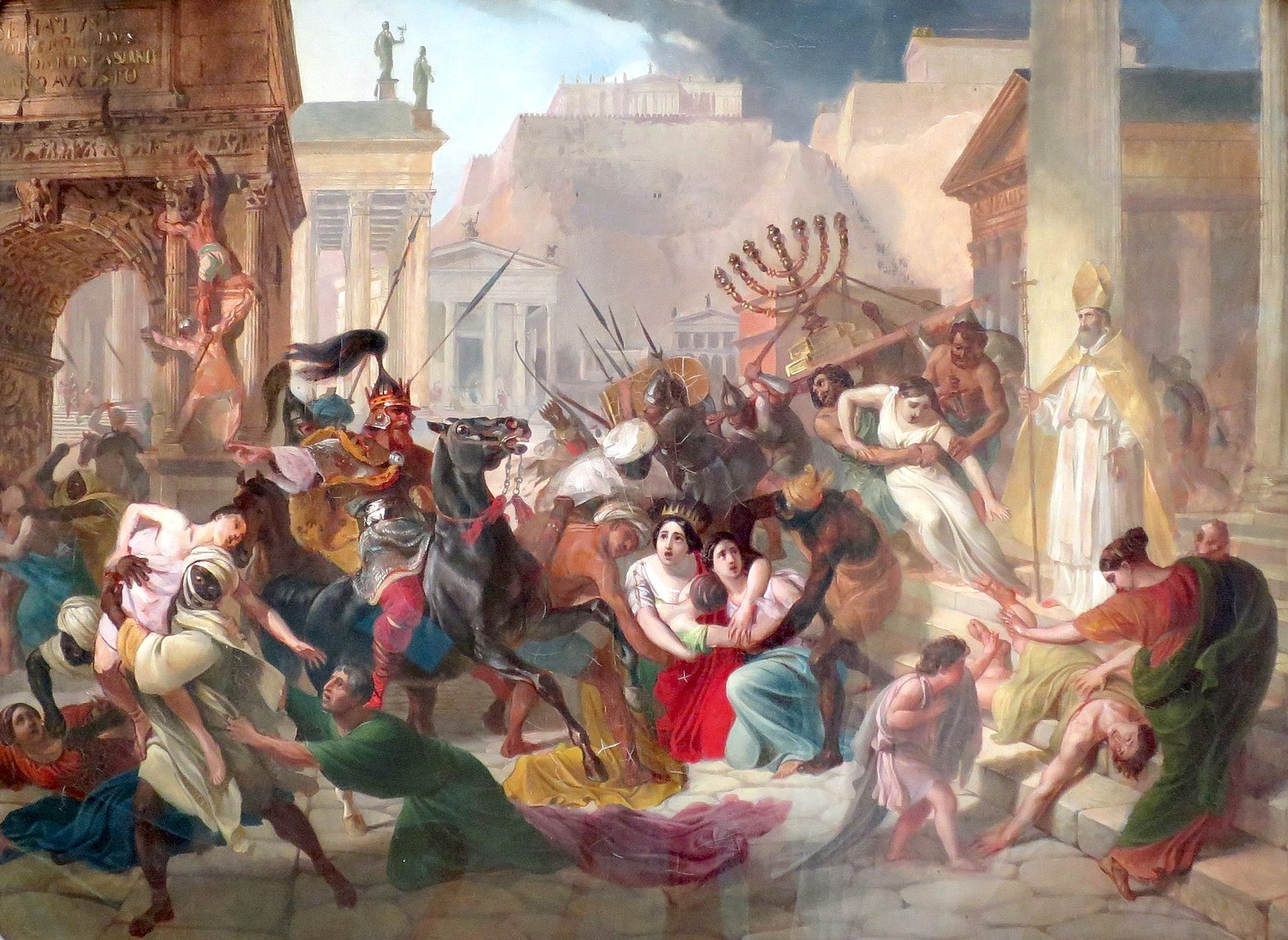
It is claimed that as the swarms of immigrants who pour through our porous border, “our people” are threatened. So does “our people” include Gavin Newsom and Joe Biden? I’m the first to bewail the dreadful non-enforcement of the U.S. border. But I share much more culture with many blacks and Latinos and find them more my people than many a white liberal. What is this supposed pristine white culture that is in jeopardy? And let’s not forget that the Vandals and Visigoths who toppled the Roman Empire became the genesis of Medieval Christendom. The “City of God” is my people.
Posted in Articles, Catholicity, Christendom, Culture, Medieval Church, The Church in America, WPE Editor | Leave a Comment »
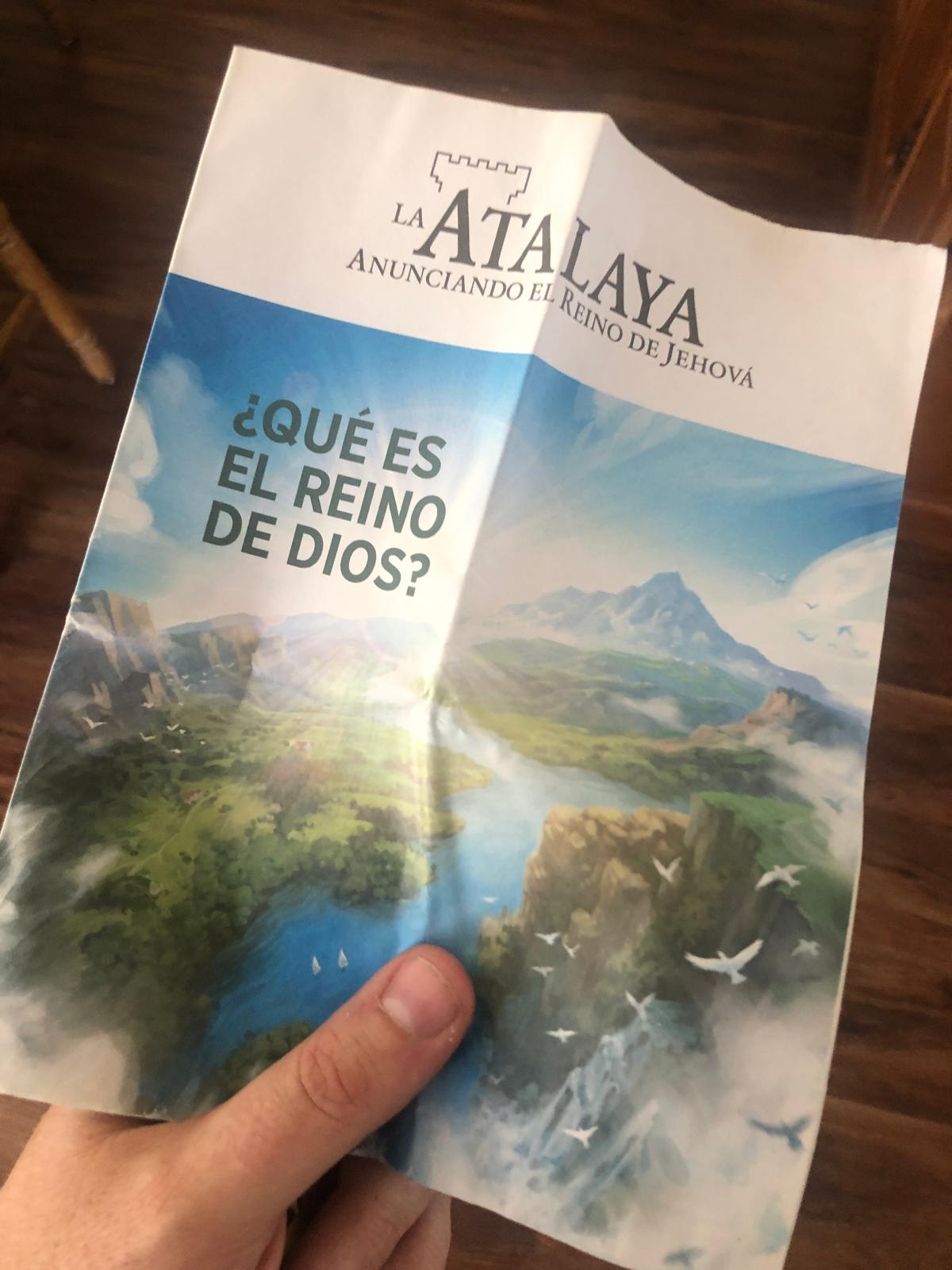
More “shoe on the other foot” last Saturday. I was out with a new friend from Reformation Bible College, Yiourgos, canvassing for our special evangelistic meetings in Vineland. As I was moving down the street, I noticed three nicely-dressed Hispanic people getting out of their car. Had a hunch, and sure enough—they were “Testigos de Jehová” (Jehovah’s Witnesses).
As usual, very polite. And they knew their Bibles. The Watchtower had trained their drones well! With my precarious Spanish, I went to the Philippians 2 usage of Isaiah 45. The language that Paul used and applied to Jesus, “that every knee would bow” and “every tongue would confess,” was the very same language that Isaiah clearly referred to Jehovah! The Jehovah of Isaiah 45 gave to Jesus, according to Paul in Philippians, “the name that is above every name.” And what is that name, Jehovah gave to Jesus? None other than “Jehovah!”
I tracked with only parts of their response. My Spanish comprehension can be shaky; and the wife seemed to be especially zealous, probably accelerating her speech. I recall resonating with her use of Matthew 28:18-20, which God giving Jesus “all authority in heaven and earth.” We Trinitarians do not dispute the subordination of Jesus according to his human nature and in His person and office as Mediator. But clearly, I’ll have to unpack that more in a further conversation. Truly, “great is the mystery of godliness!”
Continue Reading »Posted in Abuse, Manipulation, Cults, Cultishness, Heresy, Reformed Parish Mission (RPM) Posts, WPE Editor | Tagged bible, christianity, faith, god, jesus | Leave a Comment »
 West Port Experiment