Standard caveats, Rom. 12:9.

I’ve been meditating on these most mysterious and weighty words of our Lord in John 17:3, “As thou hast given him power over all flesh, that he should give eternal life to as many as thou hast given him.” Here is indication of the Father’s donation authority and right of Christ, as God-man, to dispense salvation to the elect out of the world over which He has been given all authority. Found this passage from Manton especially illuminating in light of it:
“There is no entrance into this kingdom but by coming into the kingdom of Christ. Besides the kingdom which belongeth to Father, Son, and Holy Ghost, one true and only God, there is the kingdom of Christ considered as mediator; a new right of empire and sovereignty over the creature, not destructive of the former,but accumulative, as superadded to it, that the government of God might be the more comfortable and beneficial to us in our lapsed estate.” Read the rest below.
Posted in Christ Jesus, Mediator, Mediatorial Kingship, The Kingdom of God, Vox Patrum | Leave a Comment »
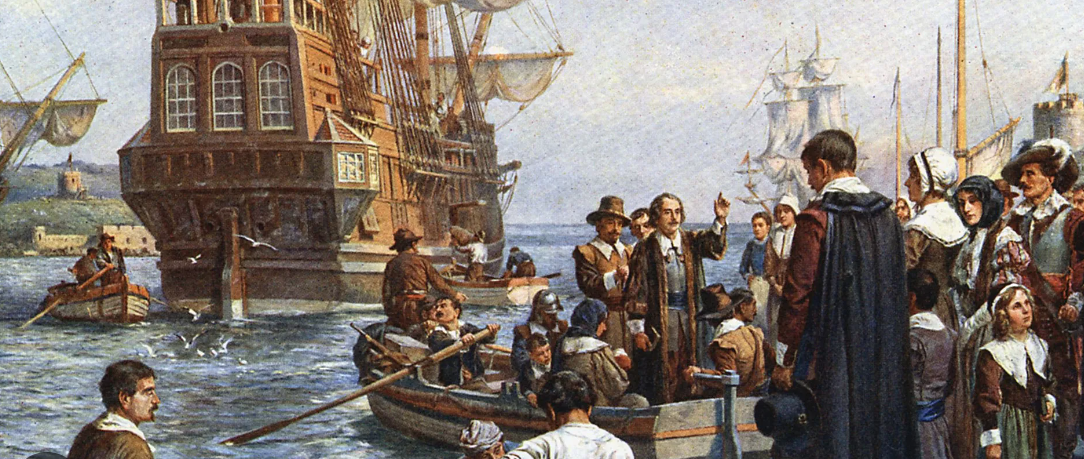
John Cotton gives an extremely helpful list of biblical considerations for the Christian who is trying to decide whether or not to move. This is taken from “God’s Promise to His Plantations” (1630). I’ve left the archaic formatting in place.
* * * * *
Quest. But how shall I know whether God hath appointed me such a place, if I be well where I am, what may warrant my removeall?
Answ. There be foure or five good things, for procurement of any of which I may remove. Secondly, there be some evill things, for avoiding of any of which wee may transplant our selves. Thirdly, if withall we find some speciall providence of God concurring in either of both concerning our selves, and applying general grounds of removall to our personall estate.
First, wee may remove for the gaining of knowledge. Our Saviour commends it in the Queene of the south, that she came from the utmost parts of the earth to heare the wisdom of Solomon: Matth. 12. 42. And surely with him she might have continued for the same end, if her personall calling had not recalled her home.
Secondly, some remove and travaile for merchandize and gaine-sake; Daily bread may be sought from farre, Prov. 31. 14. Yea our Saviour approveth travaile for Merchants, Matth. 13. 45, 46. when hee compareth a Christian to a Merchantman seeking pearles: For he never fetcheth a comparison from any unlawful thing to illustrate a thing lawfull. The comparison from the unjust Steward, and from the Theefe in the night, is not taken from the injustice of the one, or the theft of the other; but from the wisdome of the one, and the sodainnesse of the other; which in themselves are not unlawfull.
To read further, see below. To access the entire sermon and an audio recording, click here.
Posted in Audio Resources, Conscience & Casuistry, New England Puritanism, Puritans & Puritanism | Leave a Comment »

Chalmers’ parish mission theory made its way to the U.S. during his career and in the decades after his death in 1847. I had heard about such city missions inspired by the “territorial” method; and of course, I knew about his enthusiastic supporter of the West Port experiment, the New York philanthropist James Lenox. With a little free time, I did some poking around online and found one example: the Lebanon Chapel. Below is an 1878 report from that mission effort in the heart of New York City.
It bears all the marks of a convinced Chalmersian. We see the distinct and underscored prioritization of saving souls, above all efforts to ameliorate outward poverty. And there is also an absence of the individualistic-leaning and pietistic sort of American Christianity, but the old confessionally Reformed version that prizes the Visible (or as Kuyper eventually put it, the “Institutional”) Church with its outward and ordinary means of grace. Here’s a quote that could very easily have been written by the “Arch-Parson” himself:
Continue Reading »Posted in Uncategorized | Tagged bible, christianity, church, jesus, missions | Leave a Comment »
Here is the latest quarterly update. If you missed the last one from February, you can read it here. Also, as a part of my home mission labors under my presbytery, I am free to take pulpit supply opportunities one Lord’s day per month on average. This enables me to supplement our support income with honoraria and, as opportunity allows, raise awareness of Reformed Parish Mission. If you have or know of any opportunities, feel free to drop me a note at michael@reformedparish.com. (Bio & online sermons here.)
Posted in Parish in American Context, Parish Theory & Practice, Reformed Parish Mission (RPM) Posts | Leave a Comment »
Silence the critics . . . have them over for dinner! A good article by Carl Trueman:
Princeton professor Robert P. George recently drew my attention to a trivial but emblematic incident in which a flight attendant wished a passenger a “blessed” night. Unfortunately, the recipient of these kind words was a member of America’s progressive officer class who responded with predictable outrage. Clara Jeffery, editor of the progressive magazine Mother Jones, was so traumatized by this verbal assault, she took to X to express her splenetic indignation at the “creeping Christian nationalism” this unwanted benediction displayed.
She has since deleted the post and been both derided and defended online. While Prof. George saw in the tantrum yet more evidence of progressive condescension and scorn for the working class, others have resorted to the incantatory clichés of critical theory that magically render superfluous the need for thoughtful engagement with anything outside of the acceptable progressive frame of reference. One simply cannot dialogue with such people because any attempt to do so is regarded as a manipulative (even if unwitting) attempt to reinforce the values of an intrinsically unjust system. “Shut up and listen!” is the progressive default response.
Posted in Common Grace, Culture, Hospitality | Leave a Comment »
Found this quite insightful. Disturbing, to be sure; but also enriching to see the manifold grace of God’s Son who came “to destroy the works of the Devil.”
Posted in Secularization, Spiritual Warfare; the Occult, Worship, True & False | Leave a Comment »

You read it right. There is actually a Christian religious establishment within the U.S. of A., and I imagine that it is completely free of whites. So for you R2K-types, assorted Anabaptists, and secular liberals, “put that in your pipe and smoke it!”
Posted in Establishments, Parish in American Context, The Church in America | Leave a Comment »
This author is evidently not orthodox, but some good history and analysis here nonetheless. Not sure what I think of his central thesis in the second, but certainly good grist for the mill.
Posted in Church of Scotland, Covenanters, Political Theory & Theology | Leave a Comment »
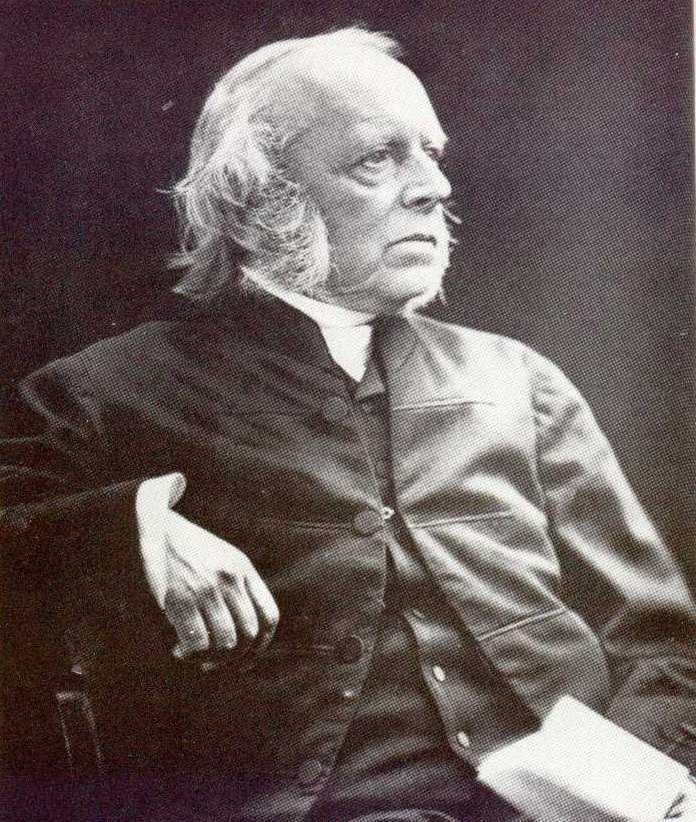
The article below on Andrew Bonar at Finnieston, Glasgow, was written by my friend Matthew Vogan and published in the Bulwark Magazine of the Scottish Reformation Society. The author relates the compelling story of Bonar’s evangelistic labor on the parish principle as taught and modeled by Thomas Chalmers.
Here are some sample extracts from the article:
Every afternoon from one o’clock till nearly five he would be found walking about his parish, visiting his people. He was well known on the streets of the district. He became a well-known figure in the area, and his friendly way of speaking and behaving endeared him to all, including children. Little children would run up to him as he walked and put their hand in his and receive a smile and gentle hand laid on the heard. One child called him “the minister with the laughing face.” Soon after arriving in the city, he spoke to a little girl in the street, addressing her by name. The child ran home to her mother with the delighted cry, “Mither, mither, he kens me.” [“Mother, mother, he knows me!”]
Continue Reading »
Posted in Free Church of Scotland, Locality & the Law of Residence, Missiology, Parish Theory & Practice, The Romance of Locality, Thomas Chalmers, Vignettes from the Old Parish Way | Tagged art, bible, christianity, horatius-bonar, music | Leave a Comment »
 West Port Experiment