Feeds:
Posts
Comments

Archive for the ‘Visitation Evangelism’ Category

The following passage comes from the Memoirs of James Fraser of Brea (1639-1698). In it, we hear the heartbeat of a true fisher of men, a pastor-evangelist that all pastors should strive to be. Also, note that he urged the duty of the minister going beyond the four walls of the church into the “highways and hedges” to speak to the lost.  This is the good old parish way—ministerial house to house evangelistic labor in a fixed, geographical district. Would to God it may be recovered! (Italics below mine.)

* * * *

God did not send me to baptise, but to preach. But that which I was called to was, to testify for God, to hold forth his name and ways to the dark world, and to deliver poor captives of Satan, and bring them to the glorious liberty of the sons of God: this was I to make: my only employment, to give myself to, and therein to be diligent, taking all occasions; and to be plain, full and free in this charge. I was called to enter in hot war with the world and sinners, to fight by my testimony against them for God. . .

He is [in addition to public preaching] to execute his commission by exhortation, private and occasional instruction, whether for reproof, comfort, or in formation and direction. And this is it which I suppose I was most called unto, viz. to take all occasions with all persons in private discourse, to make the name of Christ known, and to do them good, and to do this as my only work; and to do it boldly, and faithfully and fully: and this to do is very hard in a right and effectual manner; to do this is harder than to preach publickly; and, to be strengthened, directed and encouraged in this, is that for which I ought to live near in a dependence on Christ, without whom we can do nothing, and of whom is all our sufficiency. In preaching there are a great many whom we can not reach, and there are many to whom we have no occasion to preach publickly; we may thus preach always, and speak more succesfully than in publick, where the greatest part of hearers do not understand the minister tho’ he speak never so plainly. This likewise we are called unto this day, seeing we are by force incapacitate: but oh how is this neglected! were ministers faithful in this, we should quickly see a change in affairs; but, alas, with grief of heart I speak it, it is in this thing that I challenge myself most of any, it is in this that I have most come short, and I suppose it may be so with others too. The Apostles went from house to house.

Read Full Post »

Here is a delightful vignette of old parish ‘missions,’ if you will, in 17th century Presbyterian Scotland.  The minister, William Guthrie (1620-1665), labored to be all things to all men, that he might gain some.

* * *

“After William Guthrie came to Fenwick, many of the people were so rude and barbarous, that they never attended upon divine worship, and knew not so much as the face of their pastor. To such, everything that respected religion was disagreeable; many refused to be visited or catechised by him; they would not even admit him into their houses. To such he sometimes went in the evening disguised in the character of a traveller, and sought lodging, which he could not even obtain without much entreaty, but, having obtained it, he would engage in some general amusing conversation at first, and then ask them how they liked their minister. When they told him that they did not go to church, he engaged them to go and take a trial; others he hired with money to go. When the time of family worship came, he desired to know if they made any, and if not, what reasons they had for it.

(more…)

Read Full Post »

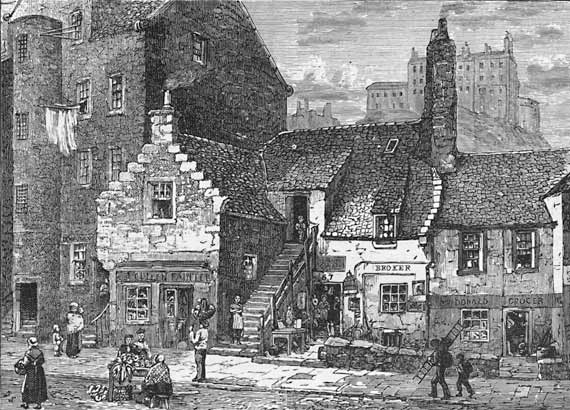
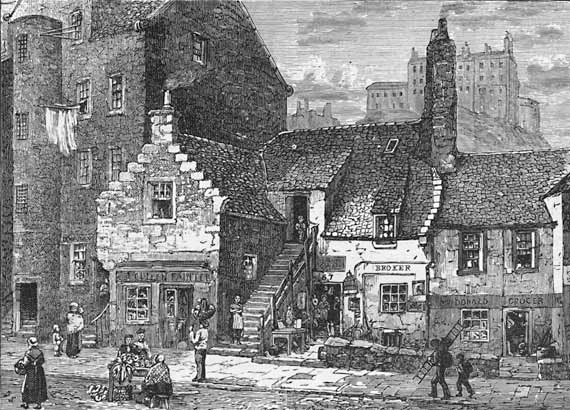
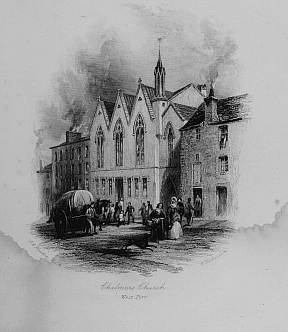
0_engraving_-_one_2_224_west_portI recently gave a lecture (sermon?) on the fascinating and inspiring story of Thomas Chalmers’ West Port Experiment in the slums of Industrial Edinburgh, from 1844-1847.  You can listen to it hereAd urbem!


Read Full Post »

The following is an article that appeared in the ARBCA Quarterly Update, Feburary 2012, by the Rev. David Campbell, on Thomas Chalmers’ famous West Port Experiment of the mid-1840’s.  (British punctuation retained! Proper.)

* * * *

“The Most Joyful Event of My Life”

So Dr. Thomas Chalmers describes it in a letter to his friend, Mr. Lennox, of New York City. Explaining, he says, “I have been intent for thirty years on the completion of a territorial experiment, and I have now to bless God for the consummation of it. Our church was opened on the 19th of February…I presided myself, on Sabbath last, over its first sacrament. There were 132 communicants, and 100 of them from the West Port.”

0_engraving_-_one_2_224_west_portAnyone know where the West Port is? When I was a student in Edinburgh in the mid 1980s I occasionally walked through it as I made my way to the Free Church College. I recollect it as decent enough, just a little run-down and nondescript. It was very different in the early 1840s. Back then it was one of the worst districts in the city, notorious as the scene of the Burke & Hare murders, and infested with beggars, thieves, and prostitutes. The following will give you a sense for just how bad it was:

“When Mr. Tasker, the minister of the West Port, made his first visits to some of the filthiest closes, it was no uncommon thing for him to find twenty to thirty men, women, and children, huddled together in one putrid dwelling, lying indiscriminately on the floor…Upon one occasion he entered a tenement with from twelve to twenty apartments, where every human being, man and woman, were so drunk they could not hear their own squalid infants crying in vain to them for food…He went once to a funeral, and found the assembled company all so drunk around the corpse, that he had to go and beg some sober neighbours to come and carry the coffin to the grave.”

It was this poor and depraved district that Dr. Chalmers selected for his “territorial experiment”. As the term is his so also will be the explanation: “The very essence of our scheme lies in the thorough operation of what we have called the territorial principle. We limit our attention to a single district or locality, itself split into sub-districts, having each a Christian agent attached to it; so that not a home or family which might not be frequently and habitually visited by one having the charge of not more, if possible, than twenty households.”

Chalmers believed this to be the only effective way of evangelising the degraded and over-crowded districts of major towns and cities, and for years he had been eager to demonstrate what, with the divine blessing, could be achieved. With its 411 families and 2000 inhabitants, its poverty and depravity, the West Port of Edinburgh was an ideal place for the attempt. It was a work, he admitted, “greatly too much for my declining strength” (he was then almost 65). But he threw himself into it heart and soul – and with wonderful results.

The first step was the opening of a school. Almost three-quarters of West Port children were growing up without any education at all. So successful, however, were the district visitors in persuading parents to take advantage of the provision (even though it wasn’t free), that when the school opened on 11th November 1844 there were 64 day students and 57 evening students. In the course of the first year the numbers grew to 250. Most of them were from the West Port.

The school was located in an old tanning-loft. In the same place, on Sunday morning the 22nd of December 1844, public worship was held for the first time. It was a far from attractive location: “The interior was bare and dilapidated; the walls coarse and unplastered, pierced her and there with little, dingy, unsightly windows; the roof low and scantily slated, scarcely affording decent shelter; the floor decayed, uneven, and shaking at every tread.”

Dr Chalmers’ son-in-law and future biographer, William Hanna, was present at the evening service. “When we looked round and saw that the whole fruit of the advices, and requests, and entreaties which for many previous weeks had been brought to bear upon all the families by the visitors, was the presence of about a dozen adults, and those mostly old women, we confess to strong misgivings as to the result.” In April 1845, however, Chalmers secured the help of William Tasker, later the West Port minister, and attendance grew under his ministry.

Dr. Chalmers himself, as health permitted, met with the district visitors once a week for discussion, encouragement, counsel, and prayer. He also habitually attended the Sunday services, sometimes as a preacher, often as a hearer. An eyewitness records that “when he was a hearer only, one would see him near the pulpit, in a crowd of deaf old women, who were meanly clothed, but who followed the services with unflagging attention and interest. His eye was upon every one of them, to anticipate their wishes and difficulties. He would help one old woman to find out the text; he would take hold of the Psalm-book of another, hand to hand, and join her in the song of praise. Any one looking at him could see that he was in a state of supreme enjoyment; he could not be happier out of heaven.”

The West Port was deeply upon his heart. In prayers that only came to light after his death we hear requests like this: “Moving fearlessly onward, may I at length obtain such possession of the West Port, as that the gospel of Jesus Christ shall have the moral ascendancy over a goodly number of its families”. “O that I were enabled to pull down the strongholds of sin and of Satan which are there”. “Do thou plentifully endow him [Mr. Tasker] with the graces and gifts of the Apostle Paul. May he have many souls for his hire”. “O may he not only be himself saved, but may he be the instrument of salvation to many.”

On Friday 19th February 1847, the West Port Church was formally opened by Dr. Chalmers. On the 25th of April, as we noted in the opening paragraph, Chalmers presided at the Lord’s Supper. On the following Monday he wrote to William Tasker: “I have got now the desire of my heart – the church is finished, the schools are flourishing, our ecclesiastical machinery is about complete, and all in good working order. God has indeed heard my prayer, and I could now lay down my head in peace and die.” And thirty-five days later that is exactly what he did.

It was feared that that the work would founder with him gone. It did not. Three hundred seats had been let when the church opened and attendance continued to grow steadily. By 1879 the membership was in excess of eleven hundred. By 1896 the number of communicants was upwards of 1300. Also, and almost from the beginning, through the educating of the children, through the efforts of the visitors, and through the public preaching of God’s word, the district itself began to visibly change for the better. It was all a magnificent monument not just to Chalmers’ labours and prayers, but to his faith. He loved the maxim of John Eliot, missionary to native Americans, that “prayer and pains can do anything”. He used to quote it often. And be believed it.

Read Full Post »

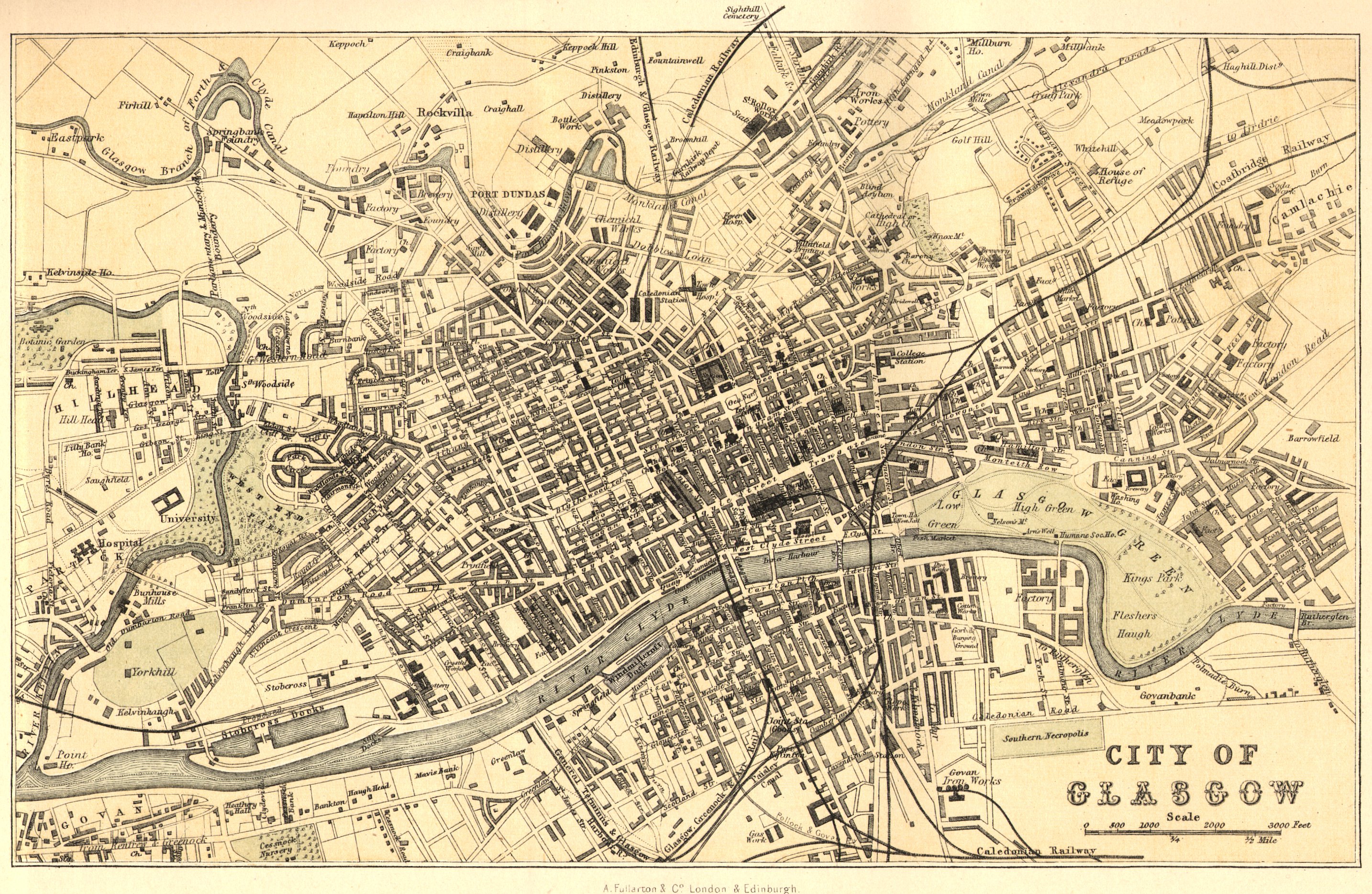
Glasgow_map_1878“Now the specific business which we would like to put into the hands of a Christian minister is, not that he should fill his church any how – that he may do by the superior attractiveness of his preaching, at the expense of previous congregations, and without any movement in advance on the practical heathenism of the community: But what we want is, to place his church in the middle of such a territory as we have now specified and to lay upon him a task, for the accomplishment of which we should allow him to the labour and preference of a whole lifetime; not to fill his church any how, but to fill this church out of that district. We should give him the charge over head, of one and all of its families; and tell him, that, instead of seeking hearers from without, he should so shape and regulate his movements, that, as far as possible, his church-room might all be taken up by hearers from within. It is this peculiar relation between his church, and its contiguous households, all placed within certain geographical limits, that distinguishes him from the others as a territorial minister.”

– Thomas Chalmers

Read Full Post »

Chalmers standingThe following are the words of exhortation Dr. Thomas Chalmers gave to his ruling elders upon their induction to office to the newly formed St. John’s parish in Glasgow, in 1819.  These men were installed not simply to attend to the communicant and baptized membership, but each was assigned a small district of contiguous households  within the parish.  They were thus ordained as missionaries to all within the limits of their assignment, visiting each house in turn, seeking lost sheep.  The address below highlights the tension frequently stressed by Chalmers – the obligation diligently to use all lawful means to reclaim the unsaved and at the same time to look alone to the Mighty Spirit to bring it all to pass.

* * *

“The whole habit and tendency of my thoughts on the subject of Christian usefulness incline me to attach a far higher importance to your relationship with the parish of St. John’s than to your relationship with the Church, and I do honestly believe, that never till the rights of parishes come to be better respected, never till the attention of ministers and elders be more restricted to the population of a given local territory, never till God put it into the hearts of men to go forth among our heathen at home with the same zeal and enthusiasm which are expected of missionaries who go abroad, will there be any thing like a revival of religion throughout the mass of our city families, or a reclaiming of them from those sad habits of alienation from God and from goodness into which the vast majority of them have fallen.

“There is one circumstance of encouragement which you will soon in the course of your movements through the districts that arc assigned to you be enabled to verify by your own experience. All the householders, with scarcely one exception, and whatever be their character in respect of Christianity, will welcome you with the utmost cordiality and courteousness. There is something in the very presence of one human being when he comes with the feelings and the desires of friendship, which serves to conciliate and to subdue another human being. Bear an honest regard to the people, and the people will, in spite of themselves, bear you an honest regard back again. This is what may be called an open door for you in the first instance, and the effect of frequent intercourse between the higher and lower orders of life in tranquilizing the general spirit of a community, and softening their malignant antipathies which else might ferment and fester and break out into. open violence, and consolidating something like a system of brotherhood through a mighty aggregate of human beings, this I say would confer a civil blessing on the establishment of an eldership that is altogether incalculable.

“But it must be remarked, on the other hand, that so wide and universal a welcome from the families may lead at the outset to a most delusive anticipation. A civil comes more easily and readily than a Christian effect. You are not to infer, because the good will of the people can be so immediately carried, that the conversion of the people will therefore speedily follow in its train. There is much of what is constitutionally attractive among men distinct and apart from any religious tendencies; and there is none who sets himself in good earnest to the working of a Christian effect, that will not soon feel himself engaged in a business where aids and instruments are necessary that are altogether superhuman. You will, in particular, be struck with the obstinate and determinate stand which the manhood of the population will make to all your proofs and all your earnestness. In sad proof of the progressive hardening of conscience will it be seen how arduous if not how impossible it is, with all the arts and resources of Christian philanthropy, to make any sensible advances on those who have been suffered to ascend from boyhood without the Word and without the ordinances.

“It is this which has shut up so many adventurers on the field of Christian usefulness, both at home and abroad, to the melancholy conclusion, that the grown-up generation are to be given up in despair, and that the hope of brighter and better days all lies with the capabilities of the young; and I certainly do recommend, among the foremost objects of your attention, the encouragement of those religious schools which may be situated within the limits of your respective localities, and for the discouragements which you will experience in the obstinacy and immovableness of many parents, you will often meet with a cheering compensation in the

promise and docility of their children.

“At the same time, I would never give up any human being in despair. Forget not the affirmation of the missionary Eliot, that it was in the power of pains and of prayers to do any thing. We are apt to confide in the efficacy and wisdom of our own arrangements—to set up a framework of skillful contrivance, and think that so good an apparatus will surely be productive of something—to please ourselves with parochial constitutions, and be quite sanguine that on the strength of elderships and deaconships, and a machinery of schools and agents, and moralizing processes, some great and immediate effect is to follow. But we may just as well think that a system of aqueducts will irrigate and fertilize the country without rain, as think that any human economy will Christianize a parish without the living water of the Spirit—without the dew df heaven descending upon the human administrators, and following them in their various movements through the houses and families under their superintendence. Still it is right to have a parochial constitution, just as it is right to have aqueducts. But the supply of the essential influence cometh from above. God will put to shame the proud confidence of man in the efficacy of his own wisdom, and He will have all the glory of all the spiritual good that is done in the world, and your piety will, therefore, work a tenfold mightier effect than your talents, in the cause you have undertaken; and your pains without your prayers will positively do nothing in this way, though it must be confessed that prayers without pains are just as unproductive, and that because they must be such prayers of insincerity as can not rise with acceptance to heaven. It is the union of both which best promises an apostolical effect to your truly apostolical office; and with theso few simple remarks do I commend you to Him who alone can bles3 you in this laudable undertaking, and give comfort and efficacy to the various duties that are involved with it.”

Read Full Post »

“If a poor child be capable of being thus transformed, how it should move the heart of a city philanthropist, when he thinks of the amazing extent of raw material, for this moral and spiritual manufacture that is on every side of him—when he thinks, that in going forth on some Christian enterprise among a population, he is, in truth, walking among the rudiments of a state that is to be everlasting—that out of the most loathsome and unseemly abodes, a glory can be extracted, which will weather all the storms, and all the vicissitudes of this world’s history—that in the filth and raggedness of a hovel, that is to be found, on which all the worth of heaven, as well as all the endurance of heaven, can be imprinted—that he is, in a word, dealing in embryo with the elements of a great and future empire, which is to rise, indestructible and eternal, on the ruins of all that is earthly, and every member of which shall be a king and a priest for evermore.”

– Thomas Chalmers (1780-1847)

Read Full Post »

James Bannerman (1807-1868), one of the “Disruption Worthies,” wrote a comprehensive two-volume work on the Presbyterian doctrine of the Church, The Church of Christ.  It is a definitive treatment of the subject and really ought to be on the shelf of every Reformed minister, if not of every Reformed head of household.

The following quote comes from a selection in the first volume on the subject of the necessity of a friendly connection between the Church and State.  One of the reasons is that the State cannot be altogether neutral to the universal claims of the of the Kingdom of God within its boundaries.  While the Church does not have a right to interfere in the sphere of civil government, yet it demands audience from king and people of all lands.  Her warrant comes from none less than the Most High:

[The Church’s] first principle and first duty is that of aggression. The ministers of the Gospel claim it as a right to go into every nation, however fenced around and guarded from intrusion, and to demand an entrance in the name of Him who sent them, even although the magistrate should bid them depart from his coasts. Further still, the messengers of the Cross arrogate to themselves thee title to enter into every human dwelling where a sinner is to be found, – seeking admittance in the name of the Saviour of sinners, that they may negotiate with the inhabitant in behalf of their Master, however sternly the door may be closed against them by jealousy of their errand, or hatred to their cause.

It has been the eloquent boast of freedom in our country, that every man’s house is his castle; and that, be it but a straw-built shed, open to every breath of heaven, yet fenced about by the protection and the sanction of law, there even ‘the king cannot and dare not enter.’  But where the king cannot enter, there the missionary of Christ claims to be admitted; and, with a higher warrant in his hand than that of human law, bids the gates be lifted up, that with the Gospel he may enter in” (The Church of Christ, 1:142).

Too often we fail to appreciate this authoritative dimension to missions.  While the servant of the Lord must not strive, but be patient with all men, yet he is not go to into the world hat-in-hand.  Mission forbids timidity, for we have been sent by the King of kings.   No, we should not force entry, for the weapons of our warfare are not carnal.  Yet alternately, we should not so ‘respect’ the boundaries of men when our Lord counts it no trespass.  It is His claim after all, the deed and grant of His Father.  And the warrant is in our hand.

So let us go.  Aggressively.

Read Full Post »

The following essay by A. T. Pierson, successor to Charles Spurgeon at the Metropolitan Tabernacle, is a nice little overview of Dr. Chalmers’ heroic Christian labors among the urban poor.  Before wading into Pierson, two observations from the essay. 

While I’m very familiar with the old West Port story, one of Pierson’s statements raised yet another angle on territorial outreach that I hadn’t considered in awhile.  The old, Reformed territorial plan helps reduce evangelistic recidivism. 

Second, I’m reminded of how Chalmers’ care for the unchurched aimed to ‘elevate’ that culture, if you will, into the culture of the Church.  Here’s a positive model for modern Reformed missions.  Cultural sensitivity, o.k.  But faithful mission ultimately means the inculturation (reformation?) of the outsider.  That may seem patronizing; but then again, so is mission.  For more on that, read on!

* * * *

DR. THOMAS CHALMERS AND THE  UNCHURCHED MASSES.

By A. T. Pierson, D.D. (Presbyterian), Philadelphia.

Dr. Thomas Chalmers is a name especially worthy of a permanent record, as one of the men who led the way in the practical solution of that great problem of our civilization: How to deal with the masses in our great cities.

At his sixty-fifth year we find this greatest of Scotchmen on fire with all his youthful ardor, in this mission to the masses in Edinburgh, in which, as in Ephesus, the gold, silver, and precious stones of the sacred fanes and palaces were in strong contrast to the wood, hay, stubble of the huts and hovels of the poor. With sublime devotion Chalmers at this advanced age, when most men retire from active and arduous toil, entered upon the most difficult experiment of his life, that he might demonstrate by a practical example what can be done for the poor and neglected districts in a great metropolis.

The West Port, in the “old town” of Edinburgh, was the home of a population, whose condition may be described by two words, poverty and misery.  He undertook to redeem this heathen district by the Gospel, planting in it schools and a church for the people, and organizing Christian disciples into a band of voluntary visitors.  The name “territorial system” was attached to the plan as he worked it, and has passed into history under that sonorous title.

In St. John’s parish, Glasgow, he had already proved the power of visitation and organization.  Within his parochial limits he found 2,161 families, 845 of them without any seats in a place of worship.  He assigned to each visitor about fifty families.  Applications for relief were dealt with systematically, and so carefully yet thoroughly that not a case either of scandalous allowance or scandalous neglect was ever made known against him and his visitors.  There was a severe scrutiny to find out the fact and the causes of poverty, to remove necessary want and remedy unnecessary want by removing its cause.  The bureau of intelligence made imposture and trickery hopeless, especially on a second attempt.  And not only was poverty relieved, but at a cost which is amazingly small.  While in other parishes of Glasgow it averaged £200 to every 1,000 of the population, and in many parishes of England it averaged a pound for every inhabitant, in St. John’s it was but thirty pounds for 1,000 people!

It was an illustration of heroism in these latter days, when a man passed threescore years, whose public career both with his pen and tongue had made him everywhere famous, gave up his latter days to elevate the physical, mental, moral and spiritual condition of a squalid population in an obscure part of the modern Athens.  His theory was that about 400 families constituted a manageable town parish, and that for every such territorial district there ought to be a church and a school, as near as may be, free to all.  This district in West Port contained about this number of families, which were subdivided into twenty “proportions,” each containing some twenty families.

A careful census, taken by visiting, revealed that of 411 families forty-five were attached to some Protestant church, seventy were Roman Catholics, and 296 had no church connection.  Out of a gross population of 2,000, 1,500 went to no place of worship; and of 411 children of school age, 290 were growing up entirely in ignorance.  It is a curious fact that these 411 families averaged one child each of appropriate age for school; and that of these 411 children there were about as many growing up untaught as there were families without church connection.  This careful compilation of statistics revealed that the proportion of ignorance and of non-attendance at church correspond almost exactly; in other words, families that attend a place of worship commonly send children to school, and the reverse.

Another fact unveiled by this effort at city evangelization was that about one fourth of the inhabitants of this territory were paupers, receiving out-door relief, and one-fourth were habitual, professional beggars, tramps, thieves, and riff-raff.

Here was a field indeed for an experiment as to what the Church could do in her mission among the masses. Chalmers was hungry for such an opportunity; it stirred all his Scotch blood.  So he set his visitors at work.  But he did not himself stand aloof.  Down into the “wynds” and alleys and “closes” of West Port he went; he presided at their meetings, counselled them sympathetically, identified himself with the whole plan in its formation and execution, while his own contagious enthusiasm and infectious energy gave stimulus to the most fainthearted.  He loved to preach to these people, not less than to the most elegant audiences of the capital, or the elect students of the university.  He would mount into a loft to meet a hundred of the poorest, as gladly as ascend the pulpit of the most fashionable cathedral church, crowded with the elite of the world’s metropolis.  And those ragged boys and girls hung on his words with characteristic admiration.

Two years of toil, with the aid of Rev. W. Tasker, enabled Dr. Chalmers to open a new free church in this district; the Lord’s Supper was administered, and out of 132 communicants one hundred were trophies of the work done by him and his helpers in that obscure district. With a prophetic forecast Chalmers saw in this success the presage of greater possibilities, and a practical solution of the problem of city evangelization; and hence he confessed it was the joy of his life, and the answer to many prayers.

The plan pursued by Dr. Chalmers was not at all like the modern evangelistic services, an effort spasmodic if not sporadic, preaching for a few weeks in some church edifice or public hall or tabernacle, and then passing into some other locality, leaving to others to gather up results and make them permanent.  From the most promising beginnings of the sort, how often have we been compelled to mourn that so small harvests have been ultimately gleaned!  He organized systematic work that looked to lasting results.  The plowman and the sower of seed bore his sickle and watched for the signs of harvest.  And whenever the germs of a divine life appeared, they were nurtured, cherished, guarded, and converts were added to the Church, set at work, kept under fostering care, and not left to scatter, wander at will, or relapse into neglect.

As to his mode of dealing with pauperism, the sagacious Chalmers saw that while a ministry of love to the poor, sick, helpless, was a first necessity, it would be unwise and hurtful to their best interests to encourage them to depend on charity. The Church must not be an asylum in which indolence and incompetence and improvidence should take refuge. The poorest must be educated to maintain, not to sacrifice, self-respect, and must be compelled to form and maintain habits of self-help, industry, economy, thrift. Instead of clothing the poor with the half-worn garments of the better classes, he would have them taught to save money worse than wasted on tobacco, drink and vicious indulgence, and buy their own garments.  And the results of this wise policy were seen in the gradual and rapid improvement in appearance of the attendance at church—rags gave way to respectable raiment, and it was not the castoff clothing of their betters, either.

Chalmers had no less an ambition than to ameliorate and finally abolish pauperism; and his success in St. John’s parish, Glasgow, had proven that he was master of the situation; and no one can tell what results might have followed but for the poor law, enacted in 1845, which, by the admission of a statutory right to public relief, encourages improvidence, weakens family ties among the poor, conduces to a morbid satisfaction with a state of dependence, and thus sows the seed of the very pauperism it professes to relieve and reduce.

[Taken from The Pulpit Treasury: An Evangelical Monthly, Vol. 5, 1887-88]

Read Full Post »

The following is an extract from Thomas Chalmers’ personal notes from house to house visitation in his first parish of Kilmany, with comment by William Hanna, editor of his Memoirs.  It well illustrates the Scottish Reformed legacy of the spiritual care for all souls in a defined geographical area as well as the ancillary custom of pastoral journaling.  Here are the records of a true, spiritual physician.

A few specifics are worthy of special observation.  Note the frequent entreaties raised to the Lord, reminiscent of another memoir-writer, Nehemiah (Neh. 2:4, 5:19, 6:14, 13:14, 22, 29, 31).  Here is one devoting himself to the ministry of the Word and prayer.  We also should observe amid these ‘ejaculatory’ prayers an ongoing willingness to engage in self-criticism.  May we too rest in the Lord for whom we labor, and not in our labors themselves.  They are fraught with sin and imperfection – “but our sufficiency is of God” (2 Cor. 3:5). 

Last, Hanna includes an overview of Chalmers’ practice of catechizing, in the well-worn path of the old Church of Scotland practice.  His method was evidently very gracious and dialogical, yet it clearly honored the high authority vested in the Catechism’s biblical doctrines.  Firmness in confession, pastoral finesse in method.  A delicate balance indeed!

* * * *

“February 15th, 1813.—Visited Mrs. B., who is unwell, and prayed. Let me preach Christ in all simplicity, and let me have a peculiar eye on others. I spoke of looking unto Jesus, and deriving thence all our delight and confidence. O God, give me wisdom and truth in this household part of my duty.

“February 21st.— Visited at Dalyell Lodge. They are in great affliction for the death of a child. I prayed with them. O God, make me wise and faithful, and withal affectionate in my management of these cases. I fear that something of the sternness of systematic orthodoxy adheres to me. Let me give up all sternness; but let me never give up the only name by which men can be saved, or the necessity of forsaking all to follow Him, whether as a Saviour or a Prince.

“March 25th.— Visited a young man in consumption. The call not very pleasant; but this is of no consequence. O my God, direct me how to do him good.

“June 2d.— Mr. ——— sent for me in prospect of death; a man of profligate and profane habits, who resents my calling him an unworthy sinner, and who spoke in loud and confident strains of his faith in Christ, and that it would save him. O God, give me wisdom in these matters to declare the whole of thy counsel for the salvation of men. I represented to him the necessity of being born again, of being humbled under a sense of his sins, of repenting and turning from them. O may I turn it to my own case. If faith in Christ is so unsuitable from his mouth because he still loves sin, and is unhumbled because of it, should not the conviction be forced upon me that I labor myself under the same unsuitableness?  O my God, give me a walk suitable to my profession, and may the power of Christ rest upon me.

“June 4th.— Visited Mr  — again. Found him worse, but displeased at my method of administering to his spiritual wants. He said that it was most unfortunate that he had sent for me; talked of my having inspired him with gloomy images, but seemed quite determined to buoy himself up in Antinomian security.  He did not ask me to pray. I said a little to him, and told him that I should be ready to attend him whenever he sent for me.

“August 9th.— Miss — under religious concern. O my God, send her help from Thy sanctuary. Give me wisdom for these cases.  Let me not heal the wound slightly; and, oh, while I administer comfort in Christ, may it be a comfort according to godliness. She complains of the prevalence of sin. Let me not abate her sense of its sinful ness. Let me preach Christ in all his entireness, as one that came to atone for the guilt of sin, and to redeem from its power.

“March 15th, 1814.—Poor Mr. Bonthron, I think, is dying. I saw him and prayed, after a good deal of false delicacy. O my God, give me to be pure of his blood, and to bear with effect upon his conscience. Work faith in him with power. I have little to record in the way of encouragement. He does not seem alarmed himself about the state of his health, and, I fear, has not a sufficient alarm upon more serious grounds. It is a difficult and heavy task for me; and when I think of my having to give an account of the souls committed to me, well may I say, Who is sufficient for these things?

“March 23d.— Mr. Bonthron was able to be out, and drank tea with us. I broke the subject of eternity with him. He acquiesces; you carry his assent always along with you, but you feel as if you have no point of resistance, and are making no impression.

“March 26th and 27th.—Prayed each of these days with Mr. Bonthron. I did not feel that any thing like deep or saving impression was made. O Lord, enable me to be faithful!

“April 3d.—Visited John Bonthron.

“April 5th.—Prayed with more enlargement with John than usual. I see no agitations of remorse; but should this prevent me from preaching Christ in His freeness?  The whole truth is the way to prevent abuses.

“April 6th and 8th Visited Mr. Bonthron.

“April 9th.—Read and commented on a passage of the Bible to John. This I find a very practicable, and I trust effectual way of bringing home the truth to him.”

The next day was the Sabbath, on the morning of which a message was brought to the manse that Mr. Bonthron was worse. While the people were assembling for worship, Mr. Chalmers went to see him once more, and, surrounded by as many as the room could admit, he prayed fervently at his bedside. No trace remains of another visit.

Prosecuting his earlier practice of visiting and examining in alternate years, he commenced a visitation of his parish in 1813, which, instead of being finished in a fortnight, was spread over the whole year. As many families as could conveniently be assembled in one apartment were in the first instance visited in their own dwellings, where, without any religious exercise, a free and cordial conversation, longer or shorter as the case required, informed him as to the condition of the different households. When they afterward met together, he read the Scriptures, prayed, and exhorted, making at times the most familiar remarks, using very simple yet memorable illustrations. “I have a very lively recollection,” says Mr. Robert Edie, “of the intense earnestness of his addresses on occasions of visitation in my father’s house, when he would unconsciously move forward on his chair to the very margin of it, in his anxiety to impart to the family and servants the impressions of eternal things that so filled his own soul.”  “It would take a great book,” said he, beginning his address to one of these household congregations, “to contain the names of all the individuals that have ever lived, from the days of Adam down to the present hour; but there is one name that takes in the whole of them—that name is sinner: and here is a message from God to every one that bears that name, ‘ The blood of Jesus Christ, His Son, cleanseth us from all sin.'” Wishing to tell them what kind of faith God would have them to cherish, and what kind of fear, and how it was that, instead of hindering each other, the right fear and the right faith worked into each other’s hands, he said, “It is just as if you threw out a rope to a drowning man. Faith is the hold he takes of it. It is fear which makes him grasp it with all his might; and the greater his fear, the firmer his hold.” Again, to illustrate what the Spirit did with the Word: “This book, the Bible, is like a wide and beautiful landscape, seen afar off, dim and confused; but a good telescope will bring it near, and spread out all its rocks, and trees, and flowers, and verdant fields, and winding rivers at one’s very feet. That telescope is the Spirit’s teaching.”

His own records of one or two of these visitations are instructive:

“February 18th, 1813.—Visited at Bogtown, Hawkhill, and East Kinneir. No distinct observation of any of them being impressed with what I said. At East Kinneir I gave intimation that if any labored under difficulties, or were anxious for advice upon spiritual and divine subjects, I am at all times in readiness to help them. Neglected this intimation at Hawkhill, but let me observe this ever after.

” February 16th.— A diet of visitation at ——. Had intimate conversation only with M. W. I thought the —— a little impressed with my exhortation about family worship, and the care of watching over the souls of their children. I should like to understand if —— has family worship.

” March 9th.—Visited at ——. The children present.  This I think highly proper, and let me study a suitable and impressive address to them in all time coming.

“May 19th.— Visited at ——. I am not sure if Icould perceive any thing like salutary impression among them; but I do not know, and perhaps I am too apt to be discouraged. C. S. and J. P. the most promising. O my God, give me to grow in the knowledge and observation of the fruits of the Spirit and of His work upon the hearts of sinners.

“August 9th—Visited at Hill Cairney. Resigned myself to the suggestions of the moment, at least did not adhere to the plan of discourse that I had hitherto adopted. I perceived an influence to go along with it. O my God, may this influence increase more and more. I commit the success to Thee.”

In examining his parish he divided it into districts, arranging it so that the inhabitants of each district could be accommodated in some neighboring barn or school-house. On the preceding Sabbath all were summoned to attend, when it was frequently announced that the lecture then delivered would form the subject of remark and catechizing. Generally, however, the Shorter Catechism was used as the basis of the examination. Old and young, male and female, were required to stand up in their turn, and not only to give the answer as it stood in the Catechism, but to show, by their replies to other questions, whether they fully understood that answer. What in many hands might have been a formidable operation, was made light by the manner of the examiner. When no reply was given, he hastened to take all the blame upon himself. “I am sure,” he would say, “I have been most unfortunate in putting the question in that particular way,” and then would change its form.  He was never satisfied till an answer of some kind or other was obtained. The attendance on these examinations was universal, and the interest taken in them very great. They informed the minister of the amount of religious knowledge possessed by his people, and he could often use them as convenient opportunities of exposing any bad practice which had been introduced, or was prevailing in any particular part of his parish. Examining thus at a farm-house, one of the plowmen was called up. The question in order was, “Which is the eighth commandment?”  ” But what is stealing?”  “Taking what belongs to another, and using it as if it were your own.”  “Would it be stealing, then, in you to take your master’s oats or hay, contrary to his orders, and give it to his horses?”  This was one of the many ways in which he sought to instill into the minds of his people a high sense of justice and truth, even in the minutest transactions of life.

“November 30, 1813.—Examined at . J. W. and B. T. both in tears.  The former came out to me agitated and under impression.

“January 20th, 1814.—Had a day of examination, and felt more of the presence and unction of the Spirit than usual.

“January 21st—Had a day of examination. Made a simple commitment of myself to God in Christ before entering into the house.

“February 8th—Examined, and have to bless God for force and freeness.  D. absenting himself from all ordinances. Let me be fearless at least in my general address, and give me prudence and resolution, O Lord, in the business of particularly addressing individuals.  I pray that God may send home the message with power to the people’s hearts.

“February 23d.—Examined ——. A very general seriousness and attention. B. and his wife still, I fear, very much behind.

“April 5th.—Examined at P.  I can see something like a general seriousness, but no decided marks in any individual.

“March 8th.— Examined at S.   The man P. B. deficient in knowledge, and even incapable of reading; the father of a family too.  I receive a good account of ——. Oh! that they may be added to the number of such as shall be saved.

“July 2d.—Examined with more enlargement and seriousness.  I feel as if there was an intelligence and good spirit among the people. O God, satisfy me with success; but I commit all to Thee.

“July 27th—Examined at ——. The family afraid of examination, I think, and they sent me into a room by myself among the servants. This I liked not; but, O God, keep me from all personal feeling on the occasion. I brought it on myself by my own accommodating speeches. I have too much of the fear of man about me. Never felt more dull and barren. I feel my dependence on God. I pray for a more earnest desire after the Christianity of my parish, and, oh may that desire be accomplished. O God, fit a poor, dark, ignorant, and wandering creature for being a minister of Thy word!  Uphold me by Thy free Spirit, and then will I teach transgressors Thy ways.”

The family here referred to was that of a farmer recently settled in the parish, and who, unfamiliar with the practice of examination, felt at the first a not unnatural reluctance to be subjected to it. On his return to the manse, Mr. Chalmers jotted down the preceding impressive notice of his reception and its result. In the afternoon of the same day he went back to the family; told them that, as they had not come to him in the morning, he had just come to them in the evening to go over the exercise with themselves. The frank and open kindness of the act won their instant compliance, and brought its own reward.

Read Full Post »

« Newer Posts - Older Posts »