
Unless otherwise noted here prior to the event, the lecture will be livestreamed here:
Posted in Free Church of Scotland, Locality & the Law of Residence, Parish Theory & Practice, The Gospel & the Poor, Theology of Community, Theology Proper, Thomas Chalmers, Vignettes from the Old Parish Way, Visitation Evangelism, West Port experiment on April 27, 2023| 2 Comments »
Unless otherwise noted here prior to the event, the lecture will be livestreamed here:
Posted in Articles, Audio Resources, Contemporary Parochialism, Covenant Theology, Experimental Religion & the Cure of Souls, Family Religion, Fatherhood, Gospel Proclamation, Gospel Tactics, John Murray, New England Puritanism, Parish in American Context, Parochial Strategy, Pastoral Theology, The Kingdom of God, Visitation Evangelism on April 26, 2022| Leave a Comment »
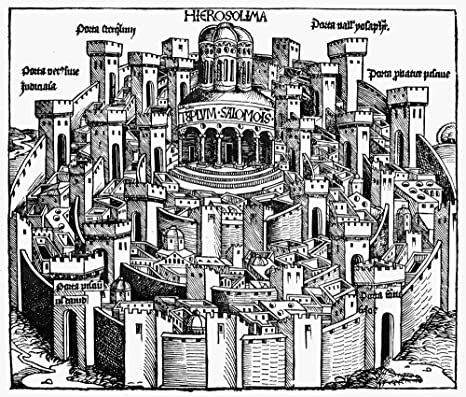
I try to avoid promoting my own sermons very often. But after giving a short, three-part series on the doctrine of hell, I continued with a second short series on the subject of biblical, Reformed church growth, something very near my heart. Specifically, I spoke from Matthew 16:18 about building up the church from within by training up, winning over, and thus retaining our baptized, covenant children. We must promote and encourage Christian child-bearing and so helping populate the (visible) Kingdom through these “federally holy” sinners, a mission field in its own right. (More on that subject here.) Then, I laid out in the final messages a call and battleplan for aggressive, local and regional missions. As Prof. Murray said when personally engaging in church-planting in New England, we must “go where the people are, not where you hope they will come.”
I have been serving in New England and now New Jersey for 18+ years. Let us pray earnestly and labor believingly for the extension of confessional Presbyterianism here in our northeastern “Samaria.” It may be spiritually ‘rocky soil,’ but God can create sons of Abraham from these stones. He did it before! If things go from bad to worse, a strategic retreat is possible. But let us not give up the Messiah’s ground without a fight! And who knows? Perhaps the Lord will make this “desert to blossom as the rose” again, and restore the pure worship of our godly Puritan forbears.
Do you live in the northeast—in New England, New York, or New Jersey? Are you committed to the old paths of the Puritans and Presbyterians? Do you long for a Third Great Awakening today? Would you be interested in hosting special meeting in your area? Please get in touch with me at 515-783-5637 or michael@reformedparish.com. [Note, 7/25/24: we would seek to do so in a collaborative way with area NAPARC and other more faithful churches, where possible.]
And if you don’t live in the northeast, would you pray for us? And maybe even consider joining us, if Providence opens a door?
Posted in Family Religion, Gospel Tactics, Locality & the Law of Residence, Moral Suasion, Parish Theory & Practice, Parochial Strategy, The Gospel & the Poor, The Romance of Locality, Thomas Chalmers, Visitation Evangelism on October 9, 2020| Leave a Comment »
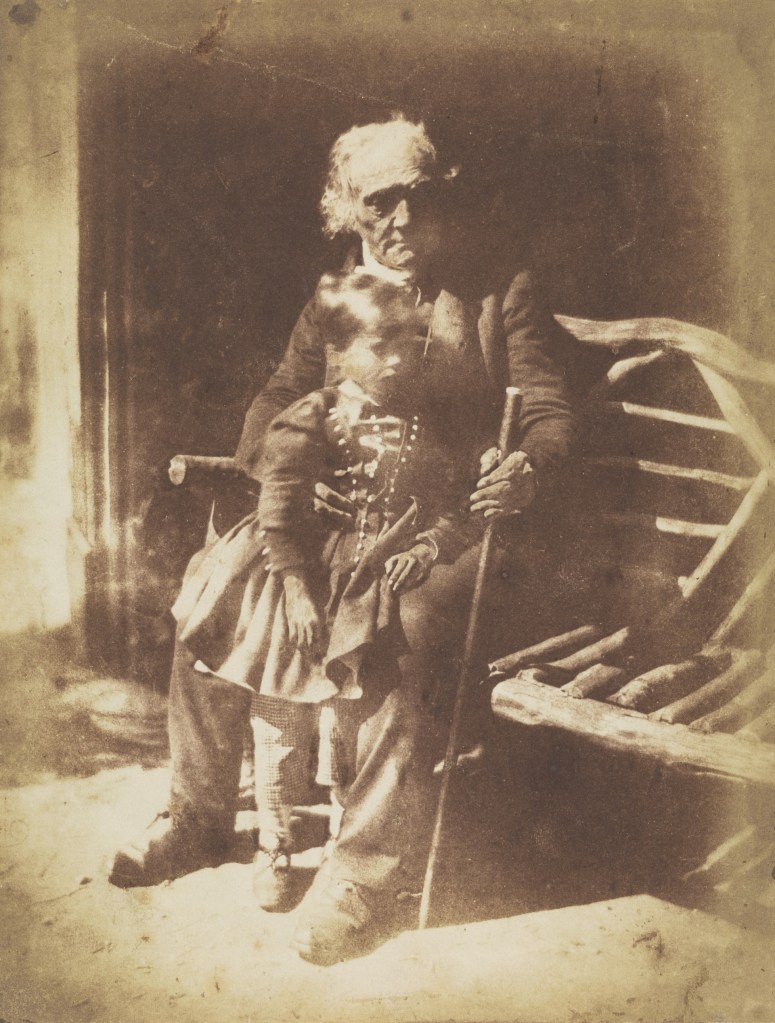
“There is one lesson that we need not teach, for experience has already taught it, and that is, the kindly influence which the mere presence of a human being has upon his fellows. Let the attention bestowed upon another, be the genuine emanation of good-will, and there is only one thing more to make it irresistible. The readiest way of finding access to a man’s heart, is to go into his house; and there to perform the deed of kindness, or to acquit ourselves of the wonted and the looked for acknowledgment. By putting ourselves under the roof of a poor neighbour, we in a manner put ourselves under his protection—we render him for the time our superior—we throw our reception on his generosity, and we may be assured that it is a confidence which will almost never fail us. If Christianity be the errand on which the movement is made, it will open the door of every family; and even the profane and the profligate will come to recognise the worth of that principle, which prompts the unwearied assiduity of such services. By every circuit which is made amongst them, there is attained a higher vantage-ground of moral and spiritual influence; and, in spite of all that has been said of the ferocity of a city population, in such rounds of visitation there is none of it to be met with, even among the lowest receptacles of human worthlessness. This is the home walk in which is earned, if not a proud, at least a peaceful popularity—the popularity of the heart—the greetings of men, who, touched even by the cheapest and easiest services of kindness, have nothing to give but their wishes of kindness back again; but, in giving these, have crowned such pious attentions with the only popularity that is worth the aspiring after—the popularity that is won in the bosom of families, and at the side of death-beds.”
Thomas Chalmers, Collected Works, 14:49-50
Posted in Articles, Christian Life & Experience, Church of Scotland, Experimental Religion & the Cure of Souls, Free Church of Scotland, Highlands & Islands, Ministerial Fidelity, Pastoral Theology, Practice of Piety, Preaching, Sabbatarianism & the Church Calendar, The Lord's Supper, The Sacred Ministry, The Social Status of the Church, Visitation Evangelism, Vital Godliness on September 9, 2020| Leave a Comment »
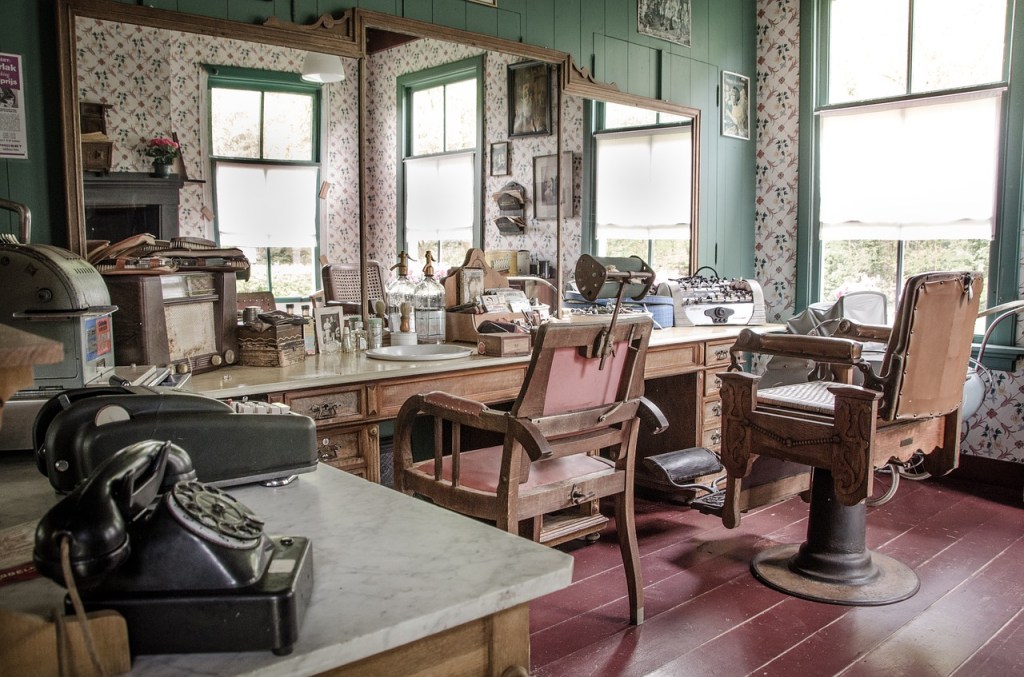
There we were in the manse on Saturday night, in that sleepy little Canadian town. The minister’s wife was giving him a haircut before his Sabbath labors the next day. He was, well, idiosyncratic. The thin-framed parson had quite the shock of unmanageable white hair, much like Doc Brown. He sat there with some smock-like cloth draped around him, his helpmate-hairdresser poised with bowl of water and comb. Soon she set to taming the wild mane with the moistened comb. Water applied, it seemed as though his head had shrunk by half.
As she went to work with her clippers, the old minister told me about The Days of the Fathers in Ross-Shire, an old classic of the glory days of 18th and 19th century Highlands-Islands Presbyterianism. His eyes beamed, and he cackled with boyish delight as he retold his favorite story about Samsonesque Aeneas Sage and his rather unconventional missionary exploits. There was something about this all that strongly impressed me. There was something of greatness, a romance and even a mystique about that legacy that lingered about the place. The old Scots-Irish town, its church, manse, and, of course, this amusing old minister still retained something of the glow of the “years of the right hand of the Most High.”
Suffice it to say, this green goyim just had to find and read the book. And I did, again and again. And having been ‘bit,’ I’ve retold the story of Rev. Sage over and over to anyone who would listen. My children can probably repeat it verbatim … with a few eye rolls thrown in for good measure! And as an old bookish minister friend of mine would sometimes say, “And if it isn’t true, it should be!”
Just finished reading and recording it. You can access it here. I also post a wide variety of classical Reformed, Puritan, and Scottish Presbyterian sermons, articles, and books. I aim to fill gaps with relatively quality audio recordings, especially for the benefit of pastors and elders who work with thinner margins of time.
Posted in Articles, Church of Scotland, Gospel Tactics, Ordinary Means Ministry, Parish Theory & Practice, Parochial Strategy, Pastoral Theology, Thomas Chalmers, Vignettes from the Old Parish Way, Visitation Evangelism, Visitation Journaling on July 28, 2020| 2 Comments »
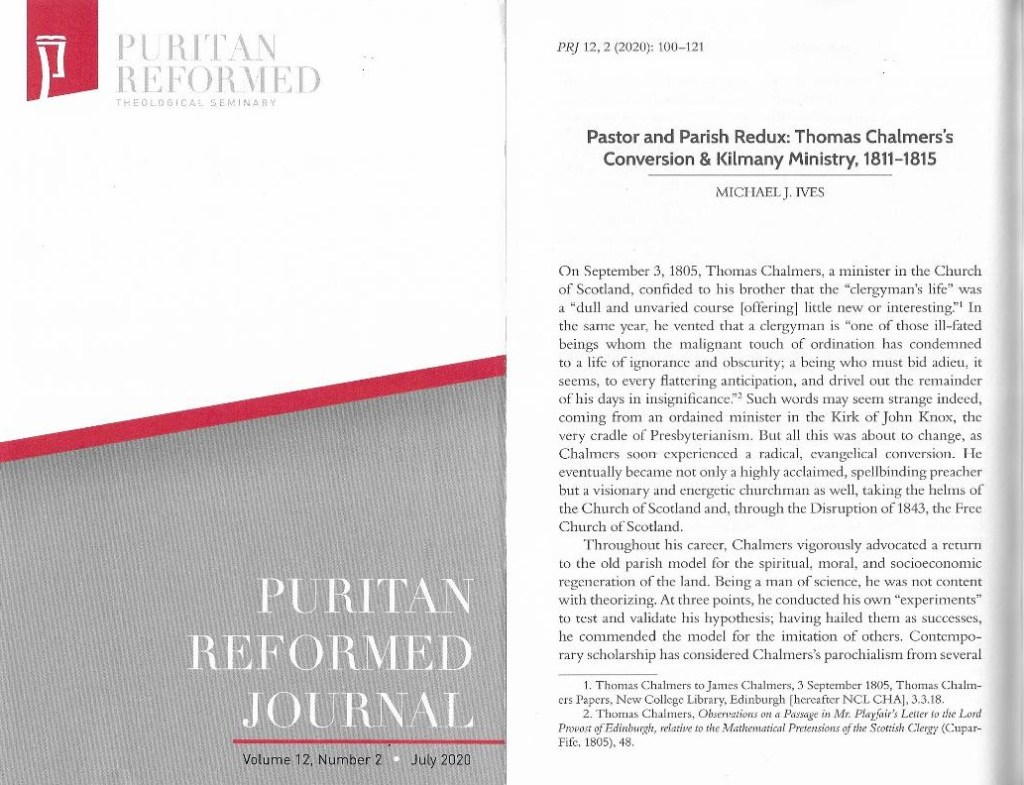
My recent journal article, “Pastor and Parish Redux: Thomas Chalmers’s Conversion & Kilmany Ministry, 1811-1815” (submitted copy), published in the July 2020 edition of the Puritan Reformed Journal. Images used by permission. To purchase a copy, click here.
Posted in Articles, Covenant Theology, Family Religion, Parish in American Context, Parish Theory & Practice, Parochial Strategy, The Romance of Locality, Transgenerational Faith, Visitation Evangelism, WPE Editor on June 23, 2020| Leave a Comment »
 District, door-to-door evangelism done right is distinctly Reformed, being a distinctly household-oriented approach to Gospel outreach.
Follow me here. Doesn’t God administer His grace to individuals as well as to households? Doesn’t it start with the head and flow to the members? Isn’t it interested in reconciling the father to the son and the son to the father? Abraham, Joshua, Cornelius, Lydia. “Believe on the Lord Jesus Christ, and thou shalt saved, and thy house” (Acts 16:31). We aim for the heads of households; and if we get them, we get the family. (more…)
Posted in Articles, Free Church of Scotland, Locality & the Law of Residence, Missiology, Moral Suasion, Parish Theory & Practice, Parochial Strategy, The Romance of Locality, Theology of Community, Theology of Place, Thomas Chalmers, Vignettes from 19th Century District Visitation, Visitation Evangelism, West Port experiment, WPE Editor on April 14, 2020| Leave a Comment »
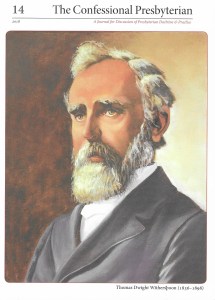
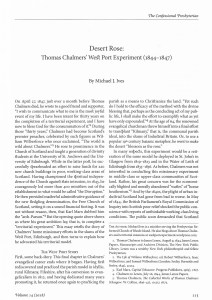
My 2018 journal article, “Desert Rose: Thomas Chalmers’ West Port Experiment (1844-1847),” published in the 2018 edition of The Confessional Presbyterian. Images used by permission. To purchase a copy, click here.
Posted in Church of Scotland, Experimental Religion & the Cure of Souls, Family Religion, Free Church of Scotland, Gospel Tactics, Locality & the Law of Residence, Missiology, Moral Suasion, Parish Theory & Practice, Parochial Strategy, Vignettes from 19th Century District Visitation, Visitation Evangelism, WPE Editor on April 9, 2020| Leave a Comment »
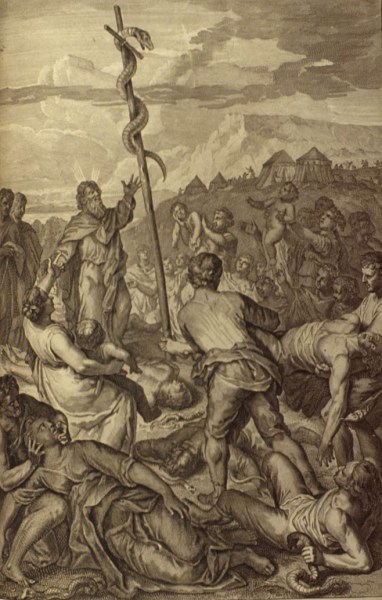
“As to the attendance of the people on the Sabbath ministrations of the missionary, you will doubtless find that they will give you very fair promises. They may all say they will go to church; but by many of them the promises will not be kept. In such circumstances, a very good plan, which I would recommend to you, would be this, — Let either the agent of the district, or some person on whom he can depend, after the hour at which the various churches go in, go to the district where the defaulters, — reside, and entering one of their houses, beg to be allowed to conduct a family exercise, to which the neighbours may be called in. Depend upon it, they will take it very well. They will of course feel themselves caught . . . but still they will tolerate you, and make their escape next Sabbath, by going to the place of worship. That’s one of a variety of doing the thing. It will bring them in contact with the gospel at any rate. The great matter is to get them into the habit of church-going.”
-Thomas Chalmers, 1844 lecture on the eve of the West Port Experiment
[image]
Posted in Establishments, Parish Theory & Practice, Parochial Strategy, The Romance of Locality, Thomas Chalmers, Visitation Evangelism on September 18, 2019| Leave a Comment »
 “A territorial division of the country into parishes, each of which is assigned to at least one minister as the distinct and definite field of his spiritual cultivation— this we have long thought does for Christianity, what is often done in agriculture by a system of irrigation. You are aware what is meant by this. Its use is for the conveyance and the distribution of water, that indispensable aliment to all vegetation, over the surface of the land. It is thus for example, that, by the establishment of ducts of conveyance, the waters of the Nile are made to overspread the farms of Egypt—the country through which it passes. This irrigation, you will observe, does’ not supply the water. It only conveys it. It does not bring down the liquid nourishment from heaven. It only spreads it abroad upon the earth. Were there no descent of water from above causing the river to overflow its banks—there is nothing in the irrigation, with its then dry and deserted furrows, which could avail the earth that is below. On the other hand were there no irrigation, many would be the tracts of country, that should have no agriculture and could bring no produce. Let not therefore our dependence on the Spirit lead us to despise the machinery of a territorial establishment; and neither let our confidence in machinery lead us to neglect prayer for the descent of living water from on high.”
-Thomas Chalmers, “On the Analogies Which Obtain Between a Natural and a Spiritual Husbandry”
Posted in Church of Scotland, Parish Theory & Practice, Parochial Strategy, Pastoral Theology, Patronage, The Gospel & the Poor, The Romance of Locality, Visitation Evangelism on June 20, 2019| Leave a Comment »
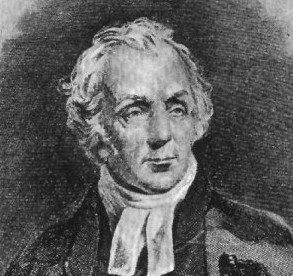 In this 1816 charge to Thomas Chalmers’ newly elected elders, he winsomely appeals to them to ‘repair the breaches’ of the old system of spiritual, district visitation. Let the elders together with the ministers be once again the friends and spiritual patrons of all men, especially the poor. Ad urbem!
* * *
“I am well aware how widely the practice of our generation has diverged from the practice of our ancestors—how, within the limits of our Establishment, the lay office-bearers of the Church are fast renouncing the whole work of ministering from house to house in prayer and in exhortation and in the dispensation of spiritual comfort and advice among the sick or the disconsolate or the dying. On this subject I urge nothing upon you. I am aware that a reformation in this department can only be brought about by an influence of a more gentle and moral, and withal more effectual kind than that of authority; and I shall therefore only say that I know of almost nothing which would give me greater satisfaction than to see a connexion of this kind established between my elders and the population of those districts which are respectively assigned to them—that I know of nothing which would tell more effectually in the way of humanizing our families, than if so pure an intercourse were going on as an intercourse of piety between our men of reputable station on the one hand, and our men of labour and of poverty on the other,—I know of nothing which would serve more powerfully to bring and to harmonize into one firm system of social order the various classes of our community; I know not a finer exhibition, on the one hand, than the man of wealth acting the man of piety, and throwing the goodly adornment of Christian benevolence over the splendour of those civil distinctions which give a weight and a lustre to his name in society; I know not a more wholesome influence, on the other, than that which such a man must carry around him when he enters the habitations of the peasantry, and dignifies by his visits the people who occupy them, and talks with them as the heirs of one hope and of one immortality, and cheers by the united power of religion and of sympathy the very humblest of misfortune’s generation, and convinces them of a real and longing affection after their best interests, and leaves them with the impression that here at least is one man who is our friend, that here at least is one proof that we are not altogether destitute of consideration amongst our fellows, that here at least is one quarter on which our confidence may rest—ay, and amidst all the insignificance in which we lie buried from the observation of society, we are sure at least of one who, in the most exalted sense of the term, is ever ready to befriend us, and to look after us, and to care for us.”
 West Port Experiment
