Feeds:
Posts
Comments

Archive for the ‘Transgenerational Faith’ Category

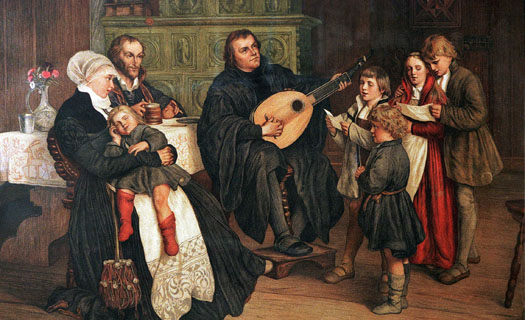
As Reformed people, we are deeply committed to the covenant. We have a solemn responsibility to our children—who after all are not ours, but the Lord’s. We as parents and as pastors have a sacred trust. As pastors, we require solemn vows of parents as they present their covenant children for holy baptism. As parents, we take those public vows in deep, humble gratitude for the manifold grace of God in ‘spreading His skirt over our little ones.’ With faith, we lay hold of the gracious promise, yet with a real trembling for the stewardship that is ours to raise them up in the “fear and admonition of the Lord.”

And yet, while our covenant-tradition is clothed with solemnity and gravitas, the lighter side of life shines through (or, it ought to!) as we endeavor to light the flame of faith in our children. There is a place for play; and, in fact, there is great promise in it. I’m increasingly convinced after twenty years of pastoring, twenty-five years of parenting, and now almost two years of grand-parenting, that one major ingredient of parenting and, yes, even pastoring, involves play. And I believe this is all the more vital in small, first- and second-generation Reformed and Presbyterian churches who lack the longevity of larger multi-generational churches. The margins are smaller and the risk of losing our children greater. Especially in our circles, the imperative to do all we lawfully can to create a home and church environment where our covenant children will naturally want to profess faith, commune, marry, bear children, and put down deep roots in our rootless world.

But whether your church is large or small and your subculture more fragile or more robust, these children are still ‘ours to lose.’ Yes, the Holy Spirit must regenerate. Enculturation is a barren womb without free and sovereign grace. But our responsibility, in giving and taking baptismal vows, is not just to catechize and keep good order in home and church. We may and must, if I may put it this way, “win” our children winsomely. And so I say, let us play.

(more…)

Read Full Post »

A couple of good articles here and here, promoting biblical and natural-law views of women, motherhood, and childbearing contra feminism. I have tremendously little knowledge of Taylor Swift or her music; but the analysis from someone who does only confirms my suspicions and that Swift is a tragic symbol of feminism’s Faustian bargain.

On the other side of the gender coin is this article. I’ve never read this author before, but he definitely strikes a chord with me about a prescription for solid, biblical masculinity with a healthy, and distinctly Protestant embrace of church tradition:

And as usual, standard caveats (Rom. 12:9).

Read Full Post »

The following three articles by Frank DeVito at the Witherspoon Institute resonate with me rather deeply. He challenges conventional thinking in order to promote the rejuvenation not just of the nuclear family, but the extended family, and that inter-generationally in the localities where God has planted us. Well said, sir!

Read Full Post »

Years back, my heart got large for missions — especially urban missions to those on the ‘other side of the tracks.’ At about the same time, I became Reformed (a high octane, old school Presbyterian no less!), putting me in a a sub-subset of a subset. My life and ministry has ever since lived somewhat in the frontiers the unlikely and the implausible. A straightlaced, tall gringo Presbyterian goes out among immigrants, trying to evangelize in broken Spanish and recruit sinners to the “outward and ordinary means” in a humble, little Reformed church 15 minutes to the south. And to sing Psalms. Without musical accompaniment. In English.

I admit that there are all kinds of problems with this model, from a human perspective. But it is actually more plausible than one might think. Yet before I deal with the plausibles, let me first set forth some principles.

The first principle is principle! Principle precedes the practical. We must first determine whether something should be done before we decide whether or not we think it is practical. We ought to go out and bring the Gospel to all. None excluded. Politics quite aside, we may and must not discriminate based on sex, ethnicity, gender, or for that matter even sexual ‘preference.’ By the mandate of our King, we must go and tell them. Yes, as Calvinists, we know that not every “all” means “all.” But “every creature” does in fact mean “every creature.” Even if they don’t look like us, eat like us, or even use our language. It doesn’t matter whether they ‘have papers’ or not, vote Democrat or not. How they got here and whether they should by law be here, is a separate issue for a different discussion (and full disclosure: I lean quite “red” when it comes to immigration policy!). But that they are here means they are here for us to evangelize. And not just gripe about and avoid them as much as possible.

(more…)

Read Full Post »

Classic Presbyterianism has been enjoying a small renaissance. It seems like every day I’m encountering new people and pastors embracing the “regulative principle of worship,” singing psalms exclusively, removing instruments in church, and objecting to holy days of human origin, such as Christmas. Sacred cows are a-falling, or at least are being questioned.

With respect to Christmas, then, it’s been reassuring to see more and more voices pointing out its pagan origins, and more and more being willing to cross the personal Rubicon … and not looking back. I rejoice in these things and thank the Lord for any and all Reformation gains. But I am concerned that for some, even good fathers and brothers in the faith, certain concessions are made that I fear leave a weed in place to grow back in full force. In other words, I respectfully express my concern about the informal retention of Christmas while officially going on the record as against it.

(more…)

Read Full Post »

IMG_5335District, door-to-door evangelism done right is distinctly Reformed, being a distinctly household-oriented approach to Gospel outreach.

Follow me here. Doesn’t God administer His grace to individuals as well as to households? Doesn’t it start with the head and flow to the members? Isn’t it interested in reconciling the father to the son and the son to the father? Abraham, Joshua, Cornelius, Lydia. “Believe on the Lord Jesus Christ, and thou shalt saved, and thy house” (Acts 16:31). We aim for the heads of households; and if we get them, we get the family. (more…)

Read Full Post »

The following chapter entitled, “The Parson Catechizing,” is taken from George Herbert’s (1593-1633) classic of pastoral theology, A Priest to the Temple, or, The Country Parson his Character and Rule of Holy Life. Herbert, a celebrated English poet, was a minister in the Church of England. Though a conformist, his work surely merits serious attention by the heirs of nonconformity – a definitely pre-Baxter Baxterian. May the lost duty & art of pastoral catechizing be revived and stimulated by this rich contribution! [Recorded in audio here.]

* * * *

unnamed

The Country Parson values catechizing highly: for there being three points of his duty; the one, to infuse a competent knowledge of salvation in every one of his flock; the other, to multiply, and build up this knowledge to a spiritual temple; the third, to inflame this knowledge, to press, and drive it to practice, turning it to reformation of life, by pithy and lively exhortations; catechizing is the first point, and but by catechizing, the other cannot be attained. Besides, whereas in sermons there is a kind of state, in catechizing there is an humbleness very suitable to Christian regeneration; which exceedingly delights him as by way of exercise upon himself, and by way of preaching to himself, for the advancing of his own mortification; for in preaching to others, he forgets not himself, but is first a sermon to himself, and then to others; growing with the growth of his parish.

He useth, and preferreth the ordinary church catechism, partly for obedience to authority, partly for uniformity sake, that the same common truths may be every where professed, especially since many remove from parish to parish, who like Christian soldiers are to give the word, and to satisfy the congregation by their catholic answers.

(more…)

Read Full Post »

A few years back, our family traveled to the U.K. by way of Holland. One of my daughters became entranced by all things Dutch while aboard a KLM flight, with tall, blonde and brunette stewardesses speaking freely in their mother tongue. While she had little firsthand experience of modern Dutch culture, she already had some exposure to the richness of Dutch Christianity, having read Brother Andrew’s God’s Smuggler (re-read chapter 1!) and Corrie ten Boom’s The Hiding Place. And it wasn’t long before she started trying to learn Dutch online. So when I found myself back in Grand Rapids, I had my antennae up, on the lookout for a trinket for my Lowlands-smitten girl.

I was staying for a week at my hosts, the Kamps, the dearest Christian seniors you will ever meet. When my daughter came up in conversation, they really rose to the occasion. Mrs. Kamp right then and there hopped up, and busily rifled through her very tidy house (are there any messy Hollanders?). I would have been quite content with a cheap curio, something easily parted with and forgotten. While she did hand me a few inexpensive momentos, I was profoundly humbled that she offered the old book above without so much as a blink.

The volume is a late 19th century Dutch New Testament, a metrical Psalter set to the grand old Geneva tunes, and at the end, the Three Forms of Unity. The book exudes the “beauty of holiness” from the best of their heritage and serves as a handheld Ebenezer of God’s covenant faithfulness. As I hold it in my latecomer, ‘Gentile’ hands, I glory in a rich tradition I now own. In it, I hear the voice of generations past, confessing the true, Reformed religion, their “only comfort in life and in death.” I hear the august psalmody of the venerable dead, the spirits of just men made perfect who have gone to their reward. I hear their roaring thunder as they, the great cloud of witnesses, cheer us on while we yet run the race that is set before us.

I have been grafted into the good olive tree, as the Dutch, the Scots, the English, and many others before me. And my children, by covenant, are now holy to the Lord. May they too own “their father’s God.” May they never reject what they have received, selling their birthright for a full stomach. And may they cherish this volume and all that is stands for in an age that is fast losing its way.

For more images, visit here.

Read Full Post »

The following is especially written for young men.  It’s advice I hope to give to my own son when he comes of age.  But of course, there are principles that carry over for females as well.

* * *

1. It is billus-08etter to marry than to burn. If you are not called to be celibate, be honest with yourself (Matt. 19:12, 1 Cor. 7:9). Then make three things your full-time job, in this order. First, become outwardly ready. If you’re miles away from financial readiness, don’t waste time and energy by toying with what you can’t yet have. Yet, don’t wait for a perfect readiness that may never come, or you may tempt yourself. Second, seriously begin finding a suitable partner. Finally, get married as soon as reasonably possible. Don’t prolong things unnecessarily. This is a recipe for trouble.
2. Do not be unequally yoked. This means that you ought to seek a sincere, orthodox Christian, above all (1 Cor. 7:39, 2 Cor. 6:14). Then after this non-negotiable, seek one of relatively the same spiritual maturity, of relatively the same confessional and practical convictions, and of relatively the same outward circumstances – age, appearance, socio-economic background, etc. Race, however, should not be a factor. As a rule, the better the match, the better the marriage. The more mismatched, the more occasions for problems down the road.

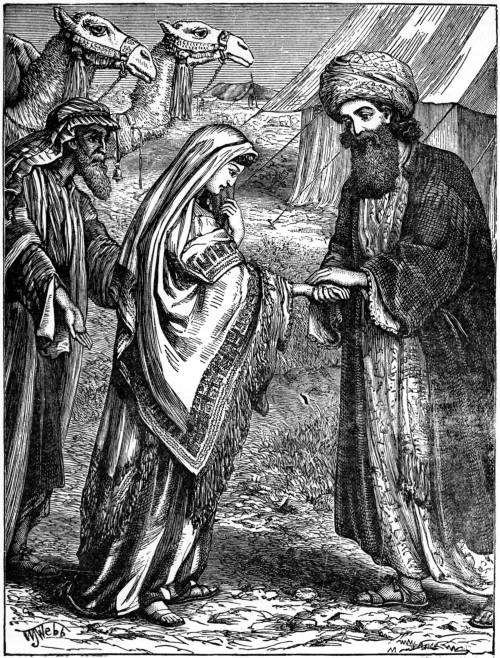
3. Keep perspective on attraction. Don’t discount attraction or feel unholy for desiring it – God made it (Gen. 24:16, Prov. 30:18, 19). But don’t let it override your better judgment, as the flesh can make it a snare (Judg. 14:3). Give greater weight to piety than to appearances (1 Sam. 16:7, Prov. 11:22, 31:10-31, 1 Pet. 3:3, 4). Also keep in mind that beauty is somewhat subjective. It is multi-faceted, and some aspects can take time to discover and appreciate. Marriage is but the beginning of a journey in discovering a partner’s beauty – and seeing beyond imperfections. Last, be aware of the influence of our culture’s paradigms on your remaining corruption. It wants to condition your ideals, and you must manfully resist it (Rom. 12:1, 2).

4. Navigate safely to shore. In terms of process, start with friendships in safe contexts. You can always make friends, but you should never break hearts if you can help it. Reserve your affections (as far as possible) for after engagement and your body for after marriage (1 Cor. 6:18, 2 Tim. 2:22).

5. Weigh the whole package. Look at pros and cons as impartially and prayerfully as you can. Be an intelligent reader of providence. Weigh such things as proximity, ‘availability,’ ‘attainability,’ personalities, the interest you sense or don’t sense, the in-law advantages and disadvantages, church situations, the prospect’s outlook on important life-issues, such as family, career, education, etc., and the time investment necessary in working through all this. Remember #1 and that time is ticking.

6. Ask advice and help from your parents and trusted friends – and pray. There is wisdom in a multitude of counselors. They will often give you helpful perspective – and perhaps help you make connections. But don’t ever forget to bring this all before the Lord. All answers are with Him (Jas. 1:5). “Delight yourself in the Lord, and he shall give you the desires of your heart.”

7. Never give your ‘all’ to anyone but Jesus, and love Him above anyone else. He is the best match, and will never disappoint. And remember that the married state is temporary, while heaven is for eternity (1 Cor. 7:29-31).

Read Full Post »

I recently read a very troubling, yet extremely revealing quote in John Macleod’s Scottish Theology.  In the context, Macleod is  speaking of  the theological decline of the 19th century Free Church of Scotland and the erosion of confessional subscription in her ranks.  To illustrate the Zeitgeist of the time, he quotes a famous anti-confessionalist by the name of James Martineau, who apparently was an influential Unitarian.  It shows the essential grudge he and others had about the time-honored practice of ecclesiastical subscription to subordinate standards:

My protest is against a Church fixing its creed, i.e., against a prior generation of life tenants prejudging the convictions of a posterior and using their own rights to the restriction of their posterity’s.  I know well that to believe a thing true is to believe it immutable; that earnest conviction naturally excludes all suspicion of possible change and carries in it a confidence of spreading to other minds and attaining to universal recognition.  Within the limits of his proper rights I would have every man surrender himself freely to these impressions, utter them and act upon them.  But limits there certainly are to his proper rights in this respect; arising partly from the presence around him of his fellows within precisely similar feeling attached to different beliefs; partly from the certainty of successors whose faculties and opportunities are not his to mortgage.

Macleod then judiciously observes, “That is to say, men may think  for themselves that they have found the truth, but the Church must be ever learning and never able to come to the knowledge of it” (Scottish Theology, pp. 316-17).

As if the quote were not damning enough, it bears a disturbing resemblance to the words of a famous Deist, Thomas Jefferson.  Writing to James Madison in 1789, Jefferson wrote:

I set out on this ground, which I suppose to be self evident, ‘that the earth belongs in usufruct to the living’: that the dead have neither powers nor rights over it. The portion occupied by an individual ceases to be his when himself ceases to be, and reverts to the society. . . . [thus] it may be proved that no society can make a perpetual constitution, or even a perpetual law. The earth belongs always to the living generation. They may manage it then, and what proceeds from it, as they please, during their usufruct. They are masters too of their own persons, and consequently may govern them as they please.

Read Full Post »

Older Posts »