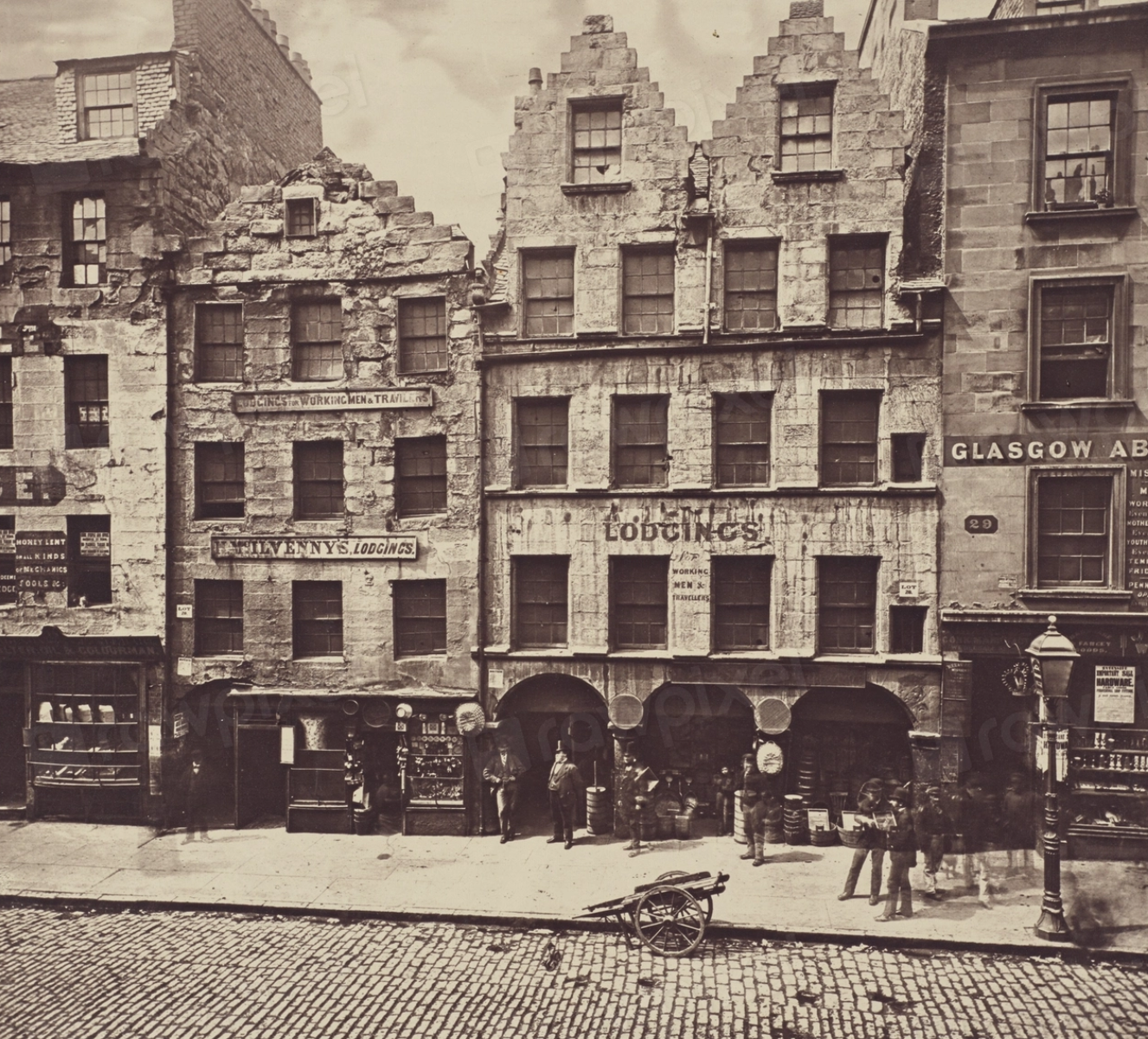
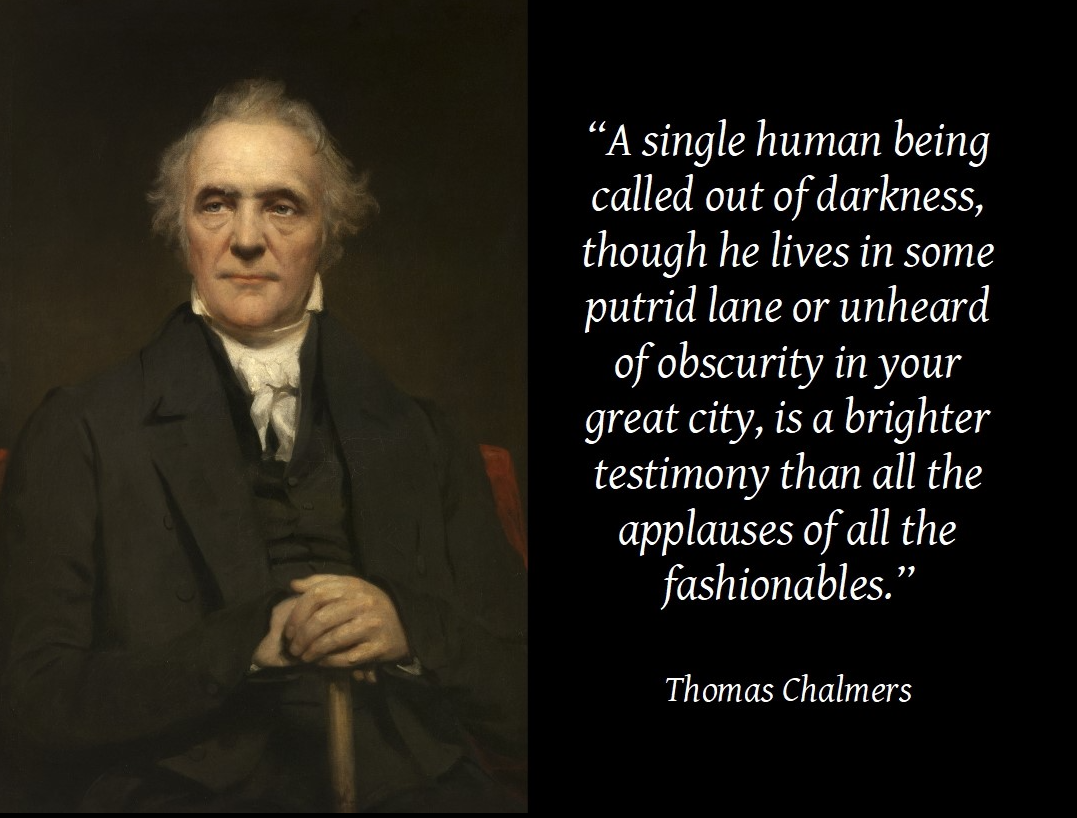
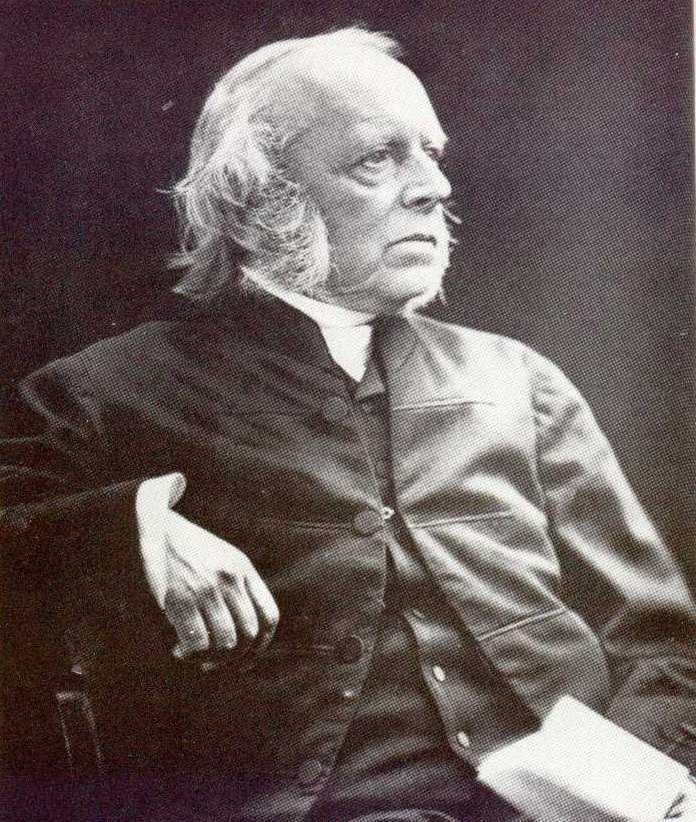
Religious establishments are built upon the divine economy, both of nature and of grace: “They are the overflowings of the Nile which have given rise to the irrigations of an artificial husbandry in Egypt, for the distribution of its waters. And there is positively nothing in the doctrine of a sanctifying or fertilizing grace from heaven above, which should discharge us—but the contrary—from what may be termed the irrigations of a spiritual husbandry in the world beneath. It is not enough that there be a descent; there must be a distribution also, or ducts of conveyance, which, by places of worship and through parishes, might carry the blessings of this divine nourishment to all the houses and families of a land” (Thomas Chalmers, Works 17:190-91).
Archive for the ‘Thomas Chalmers’ Category
Church establishments & the economy of God
Posted in Church of Scotland, Establishments, Parish Theory & Practice, Thomas Chalmers on February 4, 2025| Leave a Comment »
“For Love of Jewish Neighbor”
Posted in Audio Resources, Church of Scotland, Israel; Calling of & Mission to the Jews, Missiology, Thomas Chalmers on January 27, 2025| Leave a Comment »
A really solid and balanced article by Zach Groff. Sadly necessary these days in some conservative Reformed circles.
Also, Groff mentions a sermon by Robert Murray M’Cheyne, “Our Duty to Israel.” I recorded that in audio not long ago: you can access that here. He also mentions M’Cheyne’s mentor, Thomas Chalmers. Here is a lecture of his on Romans 11, on Paul’s prophecy of the Jews’ future repentance and embrace of their rejected Messiah. And check out the entire WPE Audio library by clicking the tab at the top.
God’s clear mark upon the needy
Posted in Benevolence & the Diaconate, The Gospel & the Poor, Thomas Chalmers on January 27, 2025| Leave a Comment »
In doubt about a hand-out? Chalmers says that God has made those worthy of our benevolence abundantly clear: “The halt, and the blind, and the maimed, and the impotent, and the dumb, and the lunatic—stand before us, with a special mark impressed upon them by the hand of Providence, and which at once announces both their necessity and their claim, for the unqualified sympathy of all their fellows” (Works, 21:394).
Home missions: a thorough pervading
Posted in Church of Scotland, Free Church of Scotland, Missiology, Parish Theory & Practice, Thomas Chalmers on January 8, 2025| Leave a Comment »
“For the accomplishment of this, there must not only be a going forth on the vast and untrodden spaces that are without; there must be a filling up of the numerous and peopled vacancies that are within—a busy, internal locomotion, that might circulate, and disperse, and branch off to the right and to the left, among the many thousand families which are at hand: and thoroughly to pervade these families; to make good a lodgment in the midst of them, for the nearer or the more frequent ministrations of Christianity than before; to have gained welcome for the Gospel testimony into their houses, and, in return, to have drawn any of them forth to attendance on the place of Sabbath and of solemn services—this, also, is to act upon our text, this is to do the part, and to render one of the best achievements of a missionary.”
-Thomas Chalmers, Works, 6:270.
A single soul!
Posted in Light of Eternity, Parish Theory & Practice, Thomas Chalmers on January 4, 2025| Leave a Comment »
Parish missions: household evangelism
Posted in Missiology, Parish Theory & Practice, Thomas Chalmers on December 16, 2024| Leave a Comment »
Door-to-door parish missions “may not introduce Christianity within the precincts of every family; but it brings the overtures of Christianity or of Christian instruction to the door of every family. The lessons of the gospel are brought by it to every door; and our experience is, that, when once brought thus far, in the vast majority of instances an entry is permitted—and so these lessons are carried by it across almost every threshold” (Thomas Chalmers, Works, 17:333).
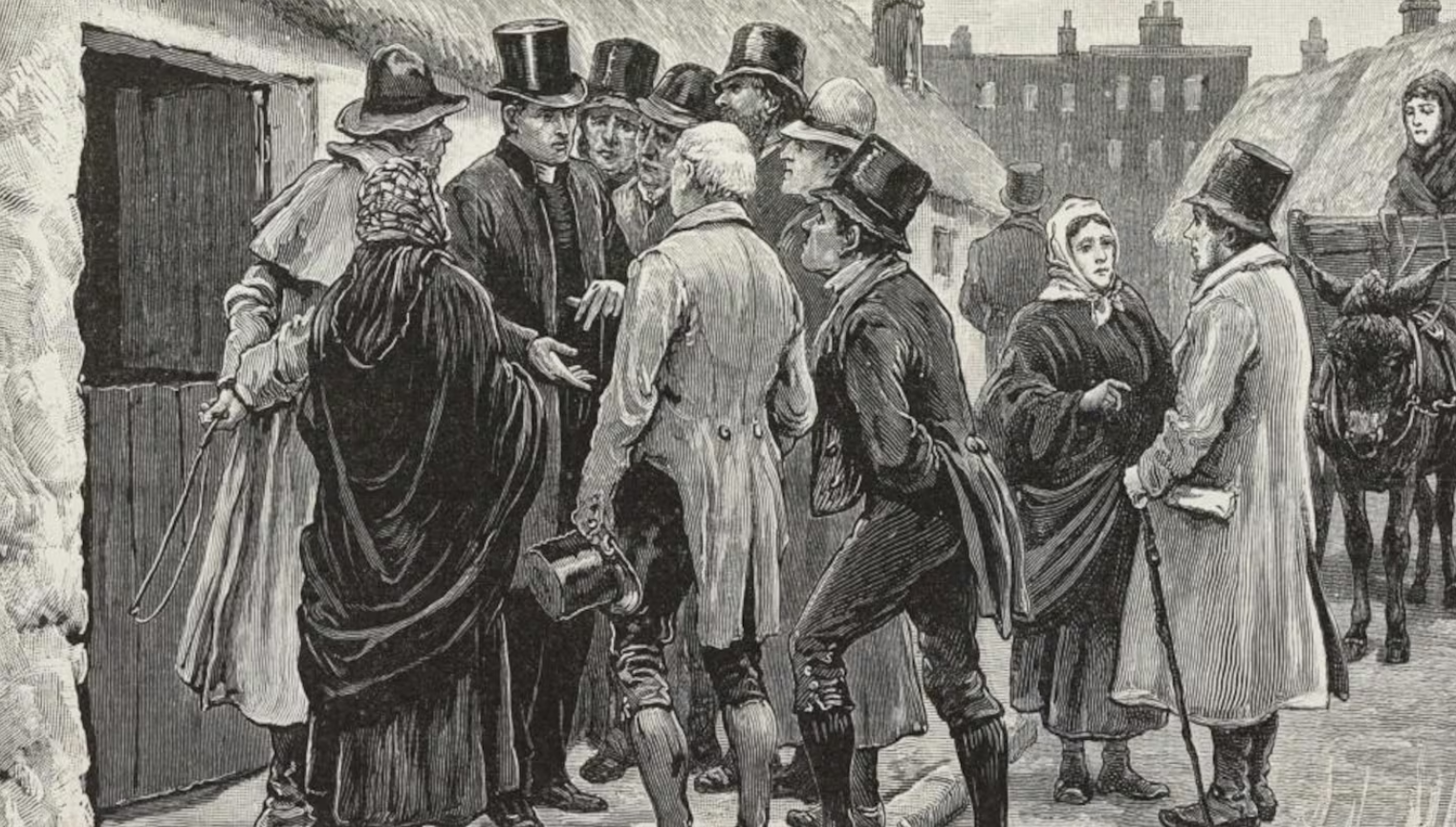
Chalmers’ parochial care for Irish Catholics
Posted in Missiology, Parish Theory & Practice, Protestant Conversions from Rome, Protestantism & Romanism, Thomas Chalmers, Vignettes from the Old Parish Way on November 30, 2024| 1 Comment »

“Yet I must say I liked the Irish part of my parishioners. They received me always with the utmost cordiality, and very often attended my household ministrations, although Catholics” (Works 16:243).
This and the following are selections from Thomas Chalmers on his attitude and outlook on reaching the poor Irish “papists” of his day, both domestically through aggressive, Protestant territorial missions, as well as on the Emerald Isle itself. Much here that is relevant, especially when so many Western nations have swarms of un-Christianized immigrants on our very doorstep.
* * * * *
Chalmers here refutes the notion that the Protestant establishment in Ireland ought to respect parochial bounds of Romanists. No! Parish lines are only relevant for the sake of the Gospel, and ought valiantly to be transgressed when the strong man’s house must be plundered: “We do not say that the maxim has been universally acted on, but it has been greatly too general, that to attempt the conversion of a Papist was to enter another man’s field; and that, in kind at least, if not in degree, there was somewhat of the same sort of irregularity or even of delinquency in this, as in making invasion on another man’s property. In virtue of this false principle, or false delicacy, the cause of truth suffered, even in the hands of conscientious ministers; and when to this we add the number of ministers corrupt, or incompetent, or utterly negligent of their charges, we need not wonder at the stationary Protestantism, or the yet almost entire and unbroken Popery of Ireland. We now inherit the consequences of the misgovernment and the profligacy of former generations. They may be traced to the want of principle and public virtue in the men of a bygone age. Those reckless statesmen who made the patronage of the Irish Church a mere instrument of subservience to the low game of politics—those regardless clergymen who held the parishes as sinecures, and lived in lordly indifference to the state and interests of the people—these are the parties who, even after making full allowance for the share which belongs to the demagogues and agitators of the day, are still the most deeply responsible for the miseries and the crimes of that unhappy land (Chalmers T 1838m; Works 17:304).
(more…)Andrew Bonar at Finnieston
Posted in Free Church of Scotland, Locality & the Law of Residence, Missiology, Parish Theory & Practice, The Romance of Locality, Thomas Chalmers, Vignettes from the Old Parish Way, tagged art, bible, christianity, horatius-bonar, music on October 17, 2024| Leave a Comment »
The article below on Andrew Bonar at Finnieston, Glasgow, was written by my friend Matthew Vogan and published in the Bulwark Magazine of the Scottish Reformation Society. The author relates the compelling story of Bonar’s evangelistic labor on the parish principle as taught and modeled by Thomas Chalmers.
Here are some sample extracts from the article:
Every afternoon from one o’clock till nearly five he would be found walking about his parish, visiting his people. He was well known on the streets of the district. He became a well-known figure in the area, and his friendly way of speaking and behaving endeared him to all, including children. Little children would run up to him as he walked and put their hand in his and receive a smile and gentle hand laid on the heard. One child called him “the minister with the laughing face.” Soon after arriving in the city, he spoke to a little girl in the street, addressing her by name. The child ran home to her mother with the delighted cry, “Mither, mither, he kens me.” [“Mother, mother, he knows me!”]
(more…)
Zoom SRS conference: Thomas Chalmers and the “Great Home Mission”
Posted in Church of Scotland, Constantine, Establishments, Parish in American Context, Parish Theory & Practice, Religious Marketplace, The Church in America, Thomas Chalmers on October 8, 2024| Leave a Comment »
In this public lecture of the Scottish Reformation Society, I will be discussing Thomas Chalmers’ (1780-1847) defense of church establishments over against Adam Smith’s critique. Chalmers championed such an establishment as a “Great Home Mission.”‘ Yet is this a merely an academic question? Does Chalmers have something to offer is in modern, pluralistic America? You might be surprised. Join us Friday, October 18 at 2:30 p.m. Eastern-U.S. / 7:30 p.m. U.K. Watch through Facebook Live. More information below:
Micro-presbyterians & church planting
Posted in Catholicity, Connectionalism & Conciliarism, Missiology, Parish in American Context, Parish Theory & Practice, Thomas Chalmers, WPE Editor, tagged bible, christianity, church, god, theology on July 20, 2024| 1 Comment »
Micro-presbyterians study hard to get things right. We dot our i’s and cross our t’s. And yet for all our learning, we can miss some pretty big things—in fact, some pretty big presbyterian things. Church-planting would definitely be one of them.
I speak from experience. For nearly the entirety of my 29-year Reformed career, I’ve been a ‘micro-presbyterian.’ I skipped the 1689 thing, past the (relatively) big-tent Reformed bodies, going straight into the Presbyterian Reformed Church, a very small psalm-singing body formed in 1965. I rather distaste the term ‘micro-presbyterian,’ especially with its connotations of over-scrupulosity and cantankerousness; and, the term may be a little dated. But in any case, God put me here, and I love my denomination. (And getting a gorgeous wife and elder’s daughter out of deal didn’t hurt either!).
I also think it has come a long way over the years. I feel that we have matured simultaneously, from a kind of cage-stage to something more balanced, stable, and seasoned. It has also helped, quite frankly, that we decided to join NAPARC some years back. Sure, it made us a pariah with many who might otherwise have sought us out. But often, those very types would never be happy in any case until they were safe in the embrace of an ecclesiastical micromanager or worshipping every Lord’s day in their own living-room.
I know we all have learned the hard way from many mistakes, missteps, and quite frankly, sins. “In many things, we offend all.” While we cannot deny the light that the Lord has graciously shown us, but embrace and follow on in it; while we cannot but press forward to the higher and better attainments of the First and Second Reformations and maintain them with diligence and zeal, we must also humbly acknowledge where we have mixed holy with unholy fire, and where we have in fact justified means by ends. Sometimes in our earnestness for truth we have cut corners; sometimes we’ve cut far more than just corners. But two wrongs do not make a right. And we may never “do evil that good may come.”
(more…)