Feeds:
Posts
Comments

Archive for the ‘Thomas Chalmers’ Category

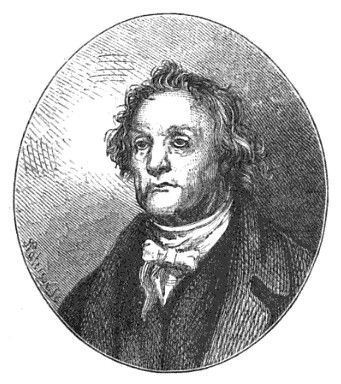
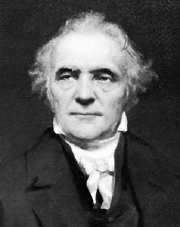
Thomas Chalmers (1780-1847) may have been in favor of religious establishments. (Bravo!)  But he was hardly for a sycophant ministry beholden to the state, much less a political party:

“It appears to us that a Christian minister cannot keep himself in the true path of consistency at all, without refusing to each of the parties all right of appropriation. . . He who cares for neither [of two rivaling political parties] is the only independent man; and to him only belongs the privilege of crossing and re-crossing their factious line of demarcation, just as he feels himself impelled by the high, paramount, and subordinating principles of the Christianity which he professes. . . But turning away from the beggarly elements of such a competition as this, let us remark, that on the one hand, a religious administration will never take offence at a minister who renders a pertinent reproof to any set of men, even though they should happen to be their own agents or their own underlings; and that, on the other hand, a minister who is actuated by the true spirit of his office, will never so pervert or so prostitute his functions, as to descend to the humble arena of partisanship.  He is the faithful steward of such things as are profitable for reproof and for doctrine, and for correction, and for instruction in righteousness” (Collected Works 11:34-36).

Now, this is anything but a call for the clergy remain aloof from all things political.   Instead, it holds out the high principle of ministerial allegiance to heaven, which may make the man of God unpopular or put him on a collision course with the powers that be – whoever they be.  This was the legacy of Knox, the bold gadfly of Queen Mary.   This was the costly legacy of the John the Baptist and of so many of the prophets who preceded him.  May God grant us a double portion of their spirit.  And so let us stay out of anyone’s pocket – except God’s.

Read Full Post »

I just read a great piece by Carl Trueman on the virtue of self-restraint when engaging in theological controversy.  He essentially argues that we ought to be much more modest about our usefulness beyond the sphere God has placed us.  Most of us ought simply to retire our capes, roll up our sleeves, and channel our energies our own small, local plot.  While Trueman’s piece is by no means a formal endorsement of parochialism, my parochial mind can’t help thinking about Chalmers’ celebration of the “power of littles” and his famous dictum, “Locality, in truth, is the secret principle wherein our great strength lieth.”  Chalmers also repeatedly burst the bubbles of the pretentious who thought they could and should assume larger fields of work.  They ought rather be “sober minded” about their gifts and celebrate the giftings of others.  And work.  Locally.

Read Full Post »

Thomas Chalmers (1780-1847) records the following about an invitation he had accepted to preach.  In the passage, he relates his growing revulsion as he learned of the details planned for the event.  It’s amusing, yet sobering – especially since it’s so contemporary!

* * * * *

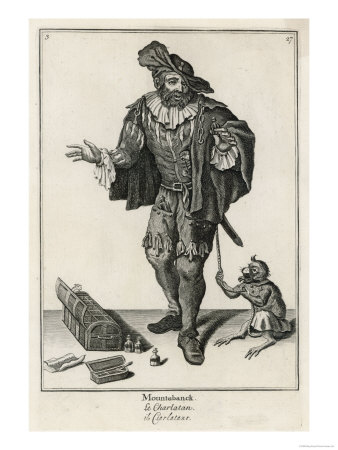
“They have got the sermon into the newspaper, and on reading the advertisement I was well-nigh overset by the style of it. They are going to have a grand musical concert along with the sermon, to which the best amateurs and performers of the neighborhood are to lend their services. This is all put down in their gaudy manifesto, and to me it is most ineffably disgusting. You know that I am to be very guarded; but I could not perfectly disguise my antipathies to this part of the arrangement. I asked Mr. Grant if I might take the paper with me for the amusement of my Scottish friends. He asked if I disliked music. I said that I liked music, but disliked all charlatanry. Thus far I went; and it was perhaps too far, but this is really making it a theatrical performance, and me one of the performers. But let me be patient; I am jaded and overdone, and reserve my further writing till Monday. . .

When I went to the great preaching hall, I found that there was just this practicing before an immense assemblage, on which I called out, in the distinct hearing of those about me, that there was an air of charlatanry about the whole affair, and that I did not like it at all. I would stay no longer in that place, and went along with them to the committee-room, where there were about twenty managers and others. I said that I had come from a great distance on their account, and had therefore purchased the privilege of telling them plain things; that they should have consulted me ere they had made their arrangements—that I was quite revolted by the quackery of their advertisement—that they had made me feel myself to be one of the performers in a theatrical exhibition—that what they had done stood in the same relation to what they ought to have done, that an advertisement of Dr. Solomon’s did to the respectable doings of the regular faculty, &c., &c. I was firm and mild withal—they confused, and awkward, and in difficulties. I said, that still I would preach, but that I thought it right to state what I felt” (Memoirs 2:41).

Read Full Post »

The following extract comes from Thomas Chalmers: A Biographical Study, by James Dodds (1870).  In it, he recounts a lesser known story from the career of Thomas Chalmers.  While not an effort on par with his earlier St. John’s and his later West Port Experiments (he was teaching divinity at the University of Edinburgh at this time) the Water of Leith story nonetheless exhibits his ardent commitment to territorial or parochial urban mission.  Not to mention his readiness to roll up his sleeves!

* * * *

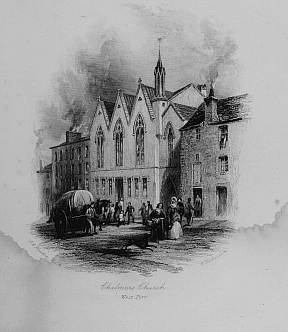
HALMERS, in 1833-4, was residing in Forres Street, Edinburgh, not far from the line of the Great North Road by Queensferry.  In his walks out to the country in that direction, he would often cross the lofty and spacious Dean Bridge, then newly erected,—the latest wonder in Edinburgh, —spanning the ravine through which, far below, foams the Water of Leith, turbid and brawling, and laden with pollution.  From this elevation he would look down upon the village of the Water of Leith, — almost sunk out of sight and sound of the world, though within a few hundred paces of the metropolis, — antiquated and decayed; cooped within steep narrow precipices; with tall gaunt chimneys, untenanted and crumbling granaries, rough dirty streets, miserable hovels into which ‘every element of heaven may enter;’ with scarce any sign of life or action, except two or three lounging figures, the noise and froth of mill-wheels, the grunting of pigs, and the squalling of children without childhood.  This abject and neglected place had made itself very notorious, in the late visitation of cholera, by its extreme ignorance and violence.  Yet in many ways it had a quaint, old-fashioned, half-savage charm.  To the antiquarian, this village was a curious relic of the past, lying close to, yet with a kind of repulsion hiding itself from, the encroaching pomp of the New Town of Edinburgh.  To the painter or poet it had strange bits of ancient masonwork; and it had frothing pools, and steep banks clustered all over with wild vegetation, and aspects of a rude primitive life. Chalmers was not insensible to the associations of the past; for, was he not born and brought up amongst the old decayed towns of the East of Fife?  He had also the artist’s eye for quaint and out-of-the-way nooks, either of nature or of human habitation.  But these lighter moods, though neither scorned nor abjured, were in his mind always subordinated to the sentiment of Christian benevolence.  Looking, then, from the height of the Dean Bridge, he might feel, ‘How antique!  how it carries one back to the time when Mary Stuart rode her palfrey across that now toppling old bridge in her excursions to the Highlands!’  Or, ‘ How quaint and picturesque these straggling houses, in the deep ravine, with the babbling brook running through the midst!’  But his uppermost feeling would be, ‘What a spot, as if scooped out by nature, and thrown aside by man, to plant a Territorial Church, with all its reclaiming and purifying influences!’

And in the Water of Leith he resolved to show to the world a new model of that Territorial system, which he had begun in St. John’s of Glasgow.

On a survey, it was found that the inhabitants were 1356 in number, but of these only 143 had sittings in any place of worship.  There was a meeting-house of some denomination in or near the village, but only five of the inhabitants had sittings; it was attended almost entirely by persons coming from a distance, outside the territory of the Water of Leith.  Chalmers, assisted by the liberal friends who never failed him, determined to raise here a territorial church, specially devoted to the inhabitants of the Water of Leith.  A missionary began his labours amongst them in 1833.  He visited from house to house, made the acquaintance of the people, was courteously received by them, conversed with them, visited the sick, was with them in the hour of affliction and death, was their daily counsellor and friend.  He invited them to come to meetings, where he addressed them—in fact, preached to them.  His audience became more and more numerous; he had to seek out places of meeting larger and larger; at last he resorted to an old maltgranary, where, with great packing, some 400 people could attend.  A church was then erected by subscription, which was opened in May 1836. The sittings were about 1000, and at a moderate charge, and offered in preference to the inhabitants.  Soon after the opening, about 700 of the sittings were taken, and almost entirely by inhabitants. It was a true territorial church.

Chalmers officiated at the opening, and dwelt paternally upon the effect of its territorial character.

‘Instead of leaving this church to fill as it may from all parts of the town, we first hold out the seats that we have to dispose of, at such prices as we can afford, to its own parish families. . . . Our fond wish for Edinburgh and its environs is that, district after district, new churches may arise, and old ones be thrown open to their own parish families, till not one house remains which has not within its walls some stated worshipper in one or other of our Christian assemblies; and not one individual can be pointed to, however humble and unknown, who has not some man of God for his personal acquaintance, some Christian minister for his counsellor and friend.’

This new and eminently successful model of Territorialism, coupled with his long teachings, the private exertions at the very same time of his old Glasgow friends, and also the religious darkness and fearful profligacy especially of the large towns, were at length stirring the Church of Scotland from its culpable neglect. . . 

Read Full Post »

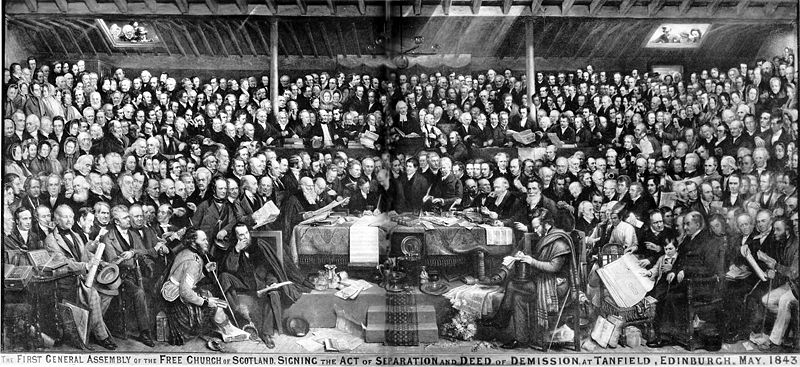
By the 1830s, the Church of Scotland was in the midst of a true evangelical revival.  Yet with the revival came conflict.  Increasingly, the State transgressed into the sphere of the established Church.  Its interference called into question the very spiritual independence of the institution that John Knox and others had helped consolidate under Christ’s ultimate authority. 

Thomas Chalmers, the premier Scottish preacher of the day, threw his full weight on the side of the evangelicals.  In temporal matters, the Church was to be subject to the State.  But not one inch of ground should be given on matters spiritual.  Christ is Head of the Church, and His law is higher than the law of the land.  His servants must at the end of the day obey God rather than man.

In Chalmers’ Memoirs, we read the following words about the dire consequences for compromise.  Speaking of the State’s intrusion in spiritual things, he writes, “Why, this would be lording it over us with a vengeance!  It would be making us swallow the whole principle; and the Church of Scotland, bereft of all moral weight, might henceforth be cast a useless and degraded thing into the bottom of the sea” (Memoirs 4:139).  In short, pragmatism leads to cultural irrelevance.

Though writing in a very different context, his words ring true today.  If the Church should indulge in pragmatism, then it not only breaks allegiance to Christ, but so debases itself as to be contemptible even to the wicked.   “If the salt loses its saltiness, how shall it be made flavorful?  Is it then good for nothing, but to be cast out and trampled under men’s feet.”

Read Full Post »

Here’s a good post over at Feeding on Christ on practical guidelines for helping the poor.  Thankfully, there are still people out there in favor of intelligent charity!

Read Full Post »

Few in confessional Reformed circles would question the ‘McDonaldization’ of the Church thesis.  So much of evangelical Christianity in America has caved in to consumerism.   But historically, I have to ask whether we’re at the end of a long journey begun by 19th century Voluntaries?  Or was it perhaps commenced inadvertently by the 17th century devotees of “gathered churches?”  The following quote from William Smith (a la Chalmers) at least raises the question, given that his central critique of Voluntaryism is its commericialization of the Church:

“But the radical and fatal defect of the Voluntary system lies in this, that from its very nature it tends to occupy and engross itself with the fat places of the land, leaving the lean neglected and uncared for—that it absorbs and isolates into self-supporting confederations the very portion of the population that ought to be caring for the perishing souls of others less happily conditioned—that the more successful it is in any field, the more neglectful must it be of those persons connected with that field who most require the ministrations of the Gospel —and that its besetting and generally irresistible temptation is to make the grace and ordinances of religion a matter of mere competitive shopkeeping on the one hand, and of ready-money purchase on the other” (William Smith, Endowed Territorial Work, 100-1).

Yet, I fear that Smith’s critique of consumerism cuts both ways.   

Smith wrote at a time when the integrity of evangelicalism had not been radically vitiated.  Many (most?) Voluntaries were Calvinist.  Smith really was criticizing all Voluntaryism, Calvinist or not, because it tended to make the faith once delivered gravitate to where the money is.  Voluntaryism of whatever stripe simply had no internal mechanism to ensure that everyone in the land, including the working classes, were provided the pure ordinances.  The old Kirk, with its principle of endowed territorialism, did. 

Reformed churches in North America are de facto if not de jure gathered churches.  And while many of us have been kept from the abyss of crass McDonaldization (so far), yet we tend to exist only where we can be financed.  Does this explain not only the temptation to dilute our confessionalism, but also why there are so few confessionally Reformed churches in urban America?

Read Full Post »

The following essay by A. T. Pierson, successor to Charles Spurgeon at the Metropolitan Tabernacle, is a nice little overview of Dr. Chalmers’ heroic Christian labors among the urban poor.  Before wading into Pierson, two observations from the essay. 

While I’m very familiar with the old West Port story, one of Pierson’s statements raised yet another angle on territorial outreach that I hadn’t considered in awhile.  The old, Reformed territorial plan helps reduce evangelistic recidivism. 

Second, I’m reminded of how Chalmers’ care for the unchurched aimed to ‘elevate’ that culture, if you will, into the culture of the Church.  Here’s a positive model for modern Reformed missions.  Cultural sensitivity, o.k.  But faithful mission ultimately means the inculturation (reformation?) of the outsider.  That may seem patronizing; but then again, so is mission.  For more on that, read on!

* * * *

DR. THOMAS CHALMERS AND THE  UNCHURCHED MASSES.

By A. T. Pierson, D.D. (Presbyterian), Philadelphia.

Dr. Thomas Chalmers is a name especially worthy of a permanent record, as one of the men who led the way in the practical solution of that great problem of our civilization: How to deal with the masses in our great cities.

At his sixty-fifth year we find this greatest of Scotchmen on fire with all his youthful ardor, in this mission to the masses in Edinburgh, in which, as in Ephesus, the gold, silver, and precious stones of the sacred fanes and palaces were in strong contrast to the wood, hay, stubble of the huts and hovels of the poor. With sublime devotion Chalmers at this advanced age, when most men retire from active and arduous toil, entered upon the most difficult experiment of his life, that he might demonstrate by a practical example what can be done for the poor and neglected districts in a great metropolis.

The West Port, in the “old town” of Edinburgh, was the home of a population, whose condition may be described by two words, poverty and misery.  He undertook to redeem this heathen district by the Gospel, planting in it schools and a church for the people, and organizing Christian disciples into a band of voluntary visitors.  The name “territorial system” was attached to the plan as he worked it, and has passed into history under that sonorous title.

In St. John’s parish, Glasgow, he had already proved the power of visitation and organization.  Within his parochial limits he found 2,161 families, 845 of them without any seats in a place of worship.  He assigned to each visitor about fifty families.  Applications for relief were dealt with systematically, and so carefully yet thoroughly that not a case either of scandalous allowance or scandalous neglect was ever made known against him and his visitors.  There was a severe scrutiny to find out the fact and the causes of poverty, to remove necessary want and remedy unnecessary want by removing its cause.  The bureau of intelligence made imposture and trickery hopeless, especially on a second attempt.  And not only was poverty relieved, but at a cost which is amazingly small.  While in other parishes of Glasgow it averaged £200 to every 1,000 of the population, and in many parishes of England it averaged a pound for every inhabitant, in St. John’s it was but thirty pounds for 1,000 people!

It was an illustration of heroism in these latter days, when a man passed threescore years, whose public career both with his pen and tongue had made him everywhere famous, gave up his latter days to elevate the physical, mental, moral and spiritual condition of a squalid population in an obscure part of the modern Athens.  His theory was that about 400 families constituted a manageable town parish, and that for every such territorial district there ought to be a church and a school, as near as may be, free to all.  This district in West Port contained about this number of families, which were subdivided into twenty “proportions,” each containing some twenty families.

A careful census, taken by visiting, revealed that of 411 families forty-five were attached to some Protestant church, seventy were Roman Catholics, and 296 had no church connection.  Out of a gross population of 2,000, 1,500 went to no place of worship; and of 411 children of school age, 290 were growing up entirely in ignorance.  It is a curious fact that these 411 families averaged one child each of appropriate age for school; and that of these 411 children there were about as many growing up untaught as there were families without church connection.  This careful compilation of statistics revealed that the proportion of ignorance and of non-attendance at church correspond almost exactly; in other words, families that attend a place of worship commonly send children to school, and the reverse.

Another fact unveiled by this effort at city evangelization was that about one fourth of the inhabitants of this territory were paupers, receiving out-door relief, and one-fourth were habitual, professional beggars, tramps, thieves, and riff-raff.

Here was a field indeed for an experiment as to what the Church could do in her mission among the masses. Chalmers was hungry for such an opportunity; it stirred all his Scotch blood.  So he set his visitors at work.  But he did not himself stand aloof.  Down into the “wynds” and alleys and “closes” of West Port he went; he presided at their meetings, counselled them sympathetically, identified himself with the whole plan in its formation and execution, while his own contagious enthusiasm and infectious energy gave stimulus to the most fainthearted.  He loved to preach to these people, not less than to the most elegant audiences of the capital, or the elect students of the university.  He would mount into a loft to meet a hundred of the poorest, as gladly as ascend the pulpit of the most fashionable cathedral church, crowded with the elite of the world’s metropolis.  And those ragged boys and girls hung on his words with characteristic admiration.

Two years of toil, with the aid of Rev. W. Tasker, enabled Dr. Chalmers to open a new free church in this district; the Lord’s Supper was administered, and out of 132 communicants one hundred were trophies of the work done by him and his helpers in that obscure district. With a prophetic forecast Chalmers saw in this success the presage of greater possibilities, and a practical solution of the problem of city evangelization; and hence he confessed it was the joy of his life, and the answer to many prayers.

The plan pursued by Dr. Chalmers was not at all like the modern evangelistic services, an effort spasmodic if not sporadic, preaching for a few weeks in some church edifice or public hall or tabernacle, and then passing into some other locality, leaving to others to gather up results and make them permanent.  From the most promising beginnings of the sort, how often have we been compelled to mourn that so small harvests have been ultimately gleaned!  He organized systematic work that looked to lasting results.  The plowman and the sower of seed bore his sickle and watched for the signs of harvest.  And whenever the germs of a divine life appeared, they were nurtured, cherished, guarded, and converts were added to the Church, set at work, kept under fostering care, and not left to scatter, wander at will, or relapse into neglect.

As to his mode of dealing with pauperism, the sagacious Chalmers saw that while a ministry of love to the poor, sick, helpless, was a first necessity, it would be unwise and hurtful to their best interests to encourage them to depend on charity. The Church must not be an asylum in which indolence and incompetence and improvidence should take refuge. The poorest must be educated to maintain, not to sacrifice, self-respect, and must be compelled to form and maintain habits of self-help, industry, economy, thrift. Instead of clothing the poor with the half-worn garments of the better classes, he would have them taught to save money worse than wasted on tobacco, drink and vicious indulgence, and buy their own garments.  And the results of this wise policy were seen in the gradual and rapid improvement in appearance of the attendance at church—rags gave way to respectable raiment, and it was not the castoff clothing of their betters, either.

Chalmers had no less an ambition than to ameliorate and finally abolish pauperism; and his success in St. John’s parish, Glasgow, had proven that he was master of the situation; and no one can tell what results might have followed but for the poor law, enacted in 1845, which, by the admission of a statutory right to public relief, encourages improvidence, weakens family ties among the poor, conduces to a morbid satisfaction with a state of dependence, and thus sows the seed of the very pauperism it professes to relieve and reduce.

[Taken from The Pulpit Treasury: An Evangelical Monthly, Vol. 5, 1887-88]

Read Full Post »

The following is an extract from Thomas Chalmers’ personal notes from house to house visitation in his first parish of Kilmany, with comment by William Hanna, editor of his Memoirs.  It well illustrates the Scottish Reformed legacy of the spiritual care for all souls in a defined geographical area as well as the ancillary custom of pastoral journaling.  Here are the records of a true, spiritual physician.

A few specifics are worthy of special observation.  Note the frequent entreaties raised to the Lord, reminiscent of another memoir-writer, Nehemiah (Neh. 2:4, 5:19, 6:14, 13:14, 22, 29, 31).  Here is one devoting himself to the ministry of the Word and prayer.  We also should observe amid these ‘ejaculatory’ prayers an ongoing willingness to engage in self-criticism.  May we too rest in the Lord for whom we labor, and not in our labors themselves.  They are fraught with sin and imperfection – “but our sufficiency is of God” (2 Cor. 3:5). 

Last, Hanna includes an overview of Chalmers’ practice of catechizing, in the well-worn path of the old Church of Scotland practice.  His method was evidently very gracious and dialogical, yet it clearly honored the high authority vested in the Catechism’s biblical doctrines.  Firmness in confession, pastoral finesse in method.  A delicate balance indeed!

* * * *

“February 15th, 1813.—Visited Mrs. B., who is unwell, and prayed. Let me preach Christ in all simplicity, and let me have a peculiar eye on others. I spoke of looking unto Jesus, and deriving thence all our delight and confidence. O God, give me wisdom and truth in this household part of my duty.

“February 21st.— Visited at Dalyell Lodge. They are in great affliction for the death of a child. I prayed with them. O God, make me wise and faithful, and withal affectionate in my management of these cases. I fear that something of the sternness of systematic orthodoxy adheres to me. Let me give up all sternness; but let me never give up the only name by which men can be saved, or the necessity of forsaking all to follow Him, whether as a Saviour or a Prince.

“March 25th.— Visited a young man in consumption. The call not very pleasant; but this is of no consequence. O my God, direct me how to do him good.

“June 2d.— Mr. ——— sent for me in prospect of death; a man of profligate and profane habits, who resents my calling him an unworthy sinner, and who spoke in loud and confident strains of his faith in Christ, and that it would save him. O God, give me wisdom in these matters to declare the whole of thy counsel for the salvation of men. I represented to him the necessity of being born again, of being humbled under a sense of his sins, of repenting and turning from them. O may I turn it to my own case. If faith in Christ is so unsuitable from his mouth because he still loves sin, and is unhumbled because of it, should not the conviction be forced upon me that I labor myself under the same unsuitableness?  O my God, give me a walk suitable to my profession, and may the power of Christ rest upon me.

“June 4th.— Visited Mr  — again. Found him worse, but displeased at my method of administering to his spiritual wants. He said that it was most unfortunate that he had sent for me; talked of my having inspired him with gloomy images, but seemed quite determined to buoy himself up in Antinomian security.  He did not ask me to pray. I said a little to him, and told him that I should be ready to attend him whenever he sent for me.

“August 9th.— Miss — under religious concern. O my God, send her help from Thy sanctuary. Give me wisdom for these cases.  Let me not heal the wound slightly; and, oh, while I administer comfort in Christ, may it be a comfort according to godliness. She complains of the prevalence of sin. Let me not abate her sense of its sinful ness. Let me preach Christ in all his entireness, as one that came to atone for the guilt of sin, and to redeem from its power.

“March 15th, 1814.—Poor Mr. Bonthron, I think, is dying. I saw him and prayed, after a good deal of false delicacy. O my God, give me to be pure of his blood, and to bear with effect upon his conscience. Work faith in him with power. I have little to record in the way of encouragement. He does not seem alarmed himself about the state of his health, and, I fear, has not a sufficient alarm upon more serious grounds. It is a difficult and heavy task for me; and when I think of my having to give an account of the souls committed to me, well may I say, Who is sufficient for these things?

“March 23d.— Mr. Bonthron was able to be out, and drank tea with us. I broke the subject of eternity with him. He acquiesces; you carry his assent always along with you, but you feel as if you have no point of resistance, and are making no impression.

“March 26th and 27th.—Prayed each of these days with Mr. Bonthron. I did not feel that any thing like deep or saving impression was made. O Lord, enable me to be faithful!

“April 3d.—Visited John Bonthron.

“April 5th.—Prayed with more enlargement with John than usual. I see no agitations of remorse; but should this prevent me from preaching Christ in His freeness?  The whole truth is the way to prevent abuses.

“April 6th and 8th Visited Mr. Bonthron.

“April 9th.—Read and commented on a passage of the Bible to John. This I find a very practicable, and I trust effectual way of bringing home the truth to him.”

The next day was the Sabbath, on the morning of which a message was brought to the manse that Mr. Bonthron was worse. While the people were assembling for worship, Mr. Chalmers went to see him once more, and, surrounded by as many as the room could admit, he prayed fervently at his bedside. No trace remains of another visit.

Prosecuting his earlier practice of visiting and examining in alternate years, he commenced a visitation of his parish in 1813, which, instead of being finished in a fortnight, was spread over the whole year. As many families as could conveniently be assembled in one apartment were in the first instance visited in their own dwellings, where, without any religious exercise, a free and cordial conversation, longer or shorter as the case required, informed him as to the condition of the different households. When they afterward met together, he read the Scriptures, prayed, and exhorted, making at times the most familiar remarks, using very simple yet memorable illustrations. “I have a very lively recollection,” says Mr. Robert Edie, “of the intense earnestness of his addresses on occasions of visitation in my father’s house, when he would unconsciously move forward on his chair to the very margin of it, in his anxiety to impart to the family and servants the impressions of eternal things that so filled his own soul.”  “It would take a great book,” said he, beginning his address to one of these household congregations, “to contain the names of all the individuals that have ever lived, from the days of Adam down to the present hour; but there is one name that takes in the whole of them—that name is sinner: and here is a message from God to every one that bears that name, ‘ The blood of Jesus Christ, His Son, cleanseth us from all sin.'” Wishing to tell them what kind of faith God would have them to cherish, and what kind of fear, and how it was that, instead of hindering each other, the right fear and the right faith worked into each other’s hands, he said, “It is just as if you threw out a rope to a drowning man. Faith is the hold he takes of it. It is fear which makes him grasp it with all his might; and the greater his fear, the firmer his hold.” Again, to illustrate what the Spirit did with the Word: “This book, the Bible, is like a wide and beautiful landscape, seen afar off, dim and confused; but a good telescope will bring it near, and spread out all its rocks, and trees, and flowers, and verdant fields, and winding rivers at one’s very feet. That telescope is the Spirit’s teaching.”

His own records of one or two of these visitations are instructive:

“February 18th, 1813.—Visited at Bogtown, Hawkhill, and East Kinneir. No distinct observation of any of them being impressed with what I said. At East Kinneir I gave intimation that if any labored under difficulties, or were anxious for advice upon spiritual and divine subjects, I am at all times in readiness to help them. Neglected this intimation at Hawkhill, but let me observe this ever after.

” February 16th.— A diet of visitation at ——. Had intimate conversation only with M. W. I thought the —— a little impressed with my exhortation about family worship, and the care of watching over the souls of their children. I should like to understand if —— has family worship.

” March 9th.—Visited at ——. The children present.  This I think highly proper, and let me study a suitable and impressive address to them in all time coming.

“May 19th.— Visited at ——. I am not sure if Icould perceive any thing like salutary impression among them; but I do not know, and perhaps I am too apt to be discouraged. C. S. and J. P. the most promising. O my God, give me to grow in the knowledge and observation of the fruits of the Spirit and of His work upon the hearts of sinners.

“August 9th—Visited at Hill Cairney. Resigned myself to the suggestions of the moment, at least did not adhere to the plan of discourse that I had hitherto adopted. I perceived an influence to go along with it. O my God, may this influence increase more and more. I commit the success to Thee.”

In examining his parish he divided it into districts, arranging it so that the inhabitants of each district could be accommodated in some neighboring barn or school-house. On the preceding Sabbath all were summoned to attend, when it was frequently announced that the lecture then delivered would form the subject of remark and catechizing. Generally, however, the Shorter Catechism was used as the basis of the examination. Old and young, male and female, were required to stand up in their turn, and not only to give the answer as it stood in the Catechism, but to show, by their replies to other questions, whether they fully understood that answer. What in many hands might have been a formidable operation, was made light by the manner of the examiner. When no reply was given, he hastened to take all the blame upon himself. “I am sure,” he would say, “I have been most unfortunate in putting the question in that particular way,” and then would change its form.  He was never satisfied till an answer of some kind or other was obtained. The attendance on these examinations was universal, and the interest taken in them very great. They informed the minister of the amount of religious knowledge possessed by his people, and he could often use them as convenient opportunities of exposing any bad practice which had been introduced, or was prevailing in any particular part of his parish. Examining thus at a farm-house, one of the plowmen was called up. The question in order was, “Which is the eighth commandment?”  ” But what is stealing?”  “Taking what belongs to another, and using it as if it were your own.”  “Would it be stealing, then, in you to take your master’s oats or hay, contrary to his orders, and give it to his horses?”  This was one of the many ways in which he sought to instill into the minds of his people a high sense of justice and truth, even in the minutest transactions of life.

“November 30, 1813.—Examined at . J. W. and B. T. both in tears.  The former came out to me agitated and under impression.

“January 20th, 1814.—Had a day of examination, and felt more of the presence and unction of the Spirit than usual.

“January 21st—Had a day of examination. Made a simple commitment of myself to God in Christ before entering into the house.

“February 8th—Examined, and have to bless God for force and freeness.  D. absenting himself from all ordinances. Let me be fearless at least in my general address, and give me prudence and resolution, O Lord, in the business of particularly addressing individuals.  I pray that God may send home the message with power to the people’s hearts.

“February 23d.—Examined ——. A very general seriousness and attention. B. and his wife still, I fear, very much behind.

“April 5th.—Examined at P.  I can see something like a general seriousness, but no decided marks in any individual.

“March 8th.— Examined at S.   The man P. B. deficient in knowledge, and even incapable of reading; the father of a family too.  I receive a good account of ——. Oh! that they may be added to the number of such as shall be saved.

“July 2d.—Examined with more enlargement and seriousness.  I feel as if there was an intelligence and good spirit among the people. O God, satisfy me with success; but I commit all to Thee.

“July 27th—Examined at ——. The family afraid of examination, I think, and they sent me into a room by myself among the servants. This I liked not; but, O God, keep me from all personal feeling on the occasion. I brought it on myself by my own accommodating speeches. I have too much of the fear of man about me. Never felt more dull and barren. I feel my dependence on God. I pray for a more earnest desire after the Christianity of my parish, and, oh may that desire be accomplished. O God, fit a poor, dark, ignorant, and wandering creature for being a minister of Thy word!  Uphold me by Thy free Spirit, and then will I teach transgressors Thy ways.”

The family here referred to was that of a farmer recently settled in the parish, and who, unfamiliar with the practice of examination, felt at the first a not unnatural reluctance to be subjected to it. On his return to the manse, Mr. Chalmers jotted down the preceding impressive notice of his reception and its result. In the afternoon of the same day he went back to the family; told them that, as they had not come to him in the morning, he had just come to them in the evening to go over the exercise with themselves. The frank and open kindness of the act won their instant compliance, and brought its own reward.

Read Full Post »
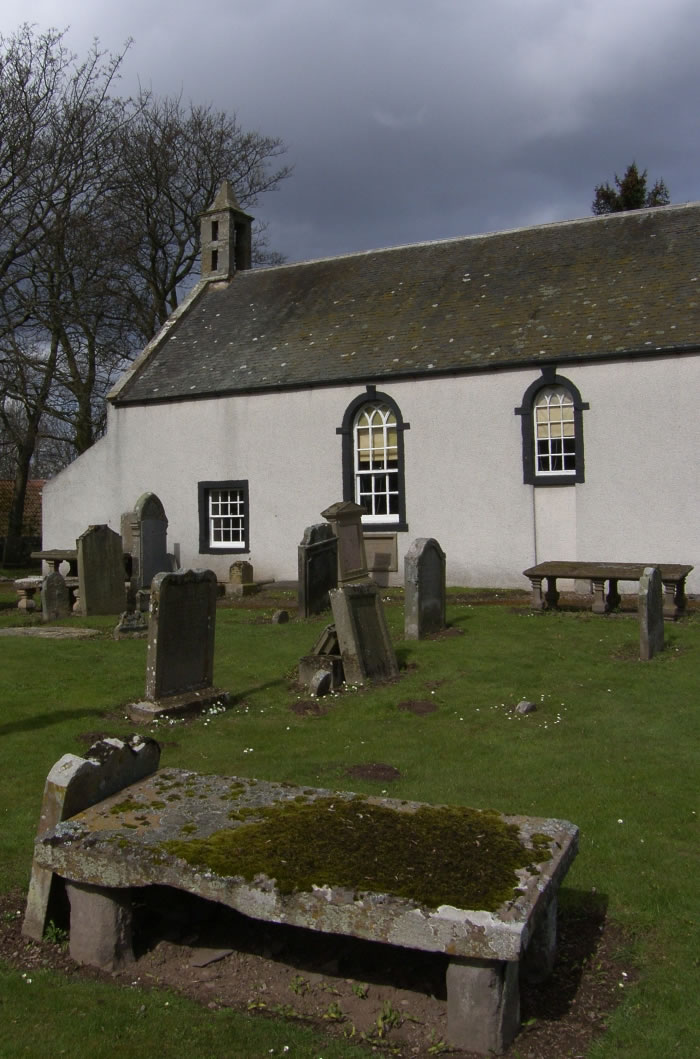
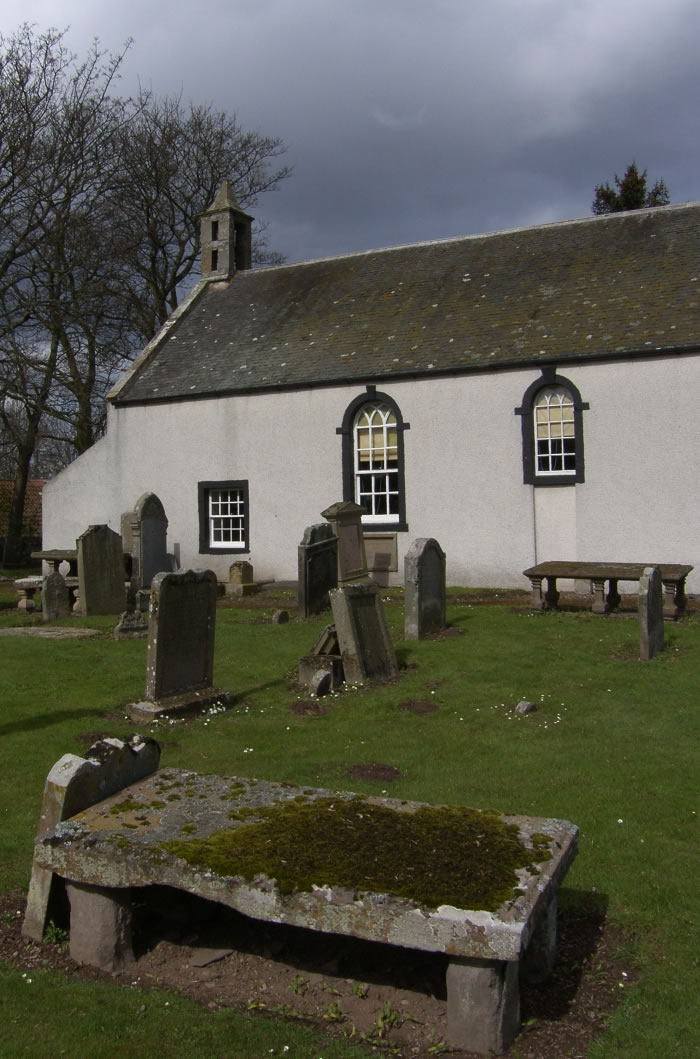
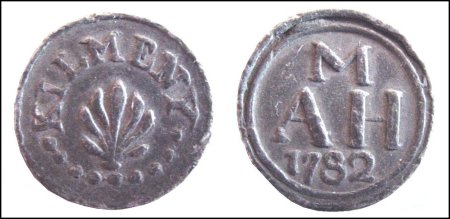
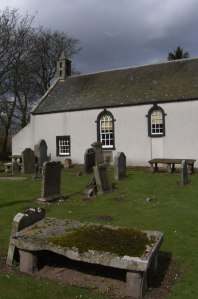
Thomas Chalmers (1780-1847), one of the greatest 19th century preachers, began his ministry in the rural parish of Kilmany in Fife, Scotland.  He began that ministry, strangely enough, as an unconverted man.  Under the sway of Moderatism, Chalmers approached the ministry as a country gentlemen.  To him, it was a cushy job with ample liesure to pursue his real passion – mathematics.

When, however, the Lord converted him, his whole paradigm of ministry shifted.  His charge in Kilmany was no longer a sinecure, but a full-time commission from the Most High.  At that point, he threw himself into his labors with a weighty sense of pastoral obligation.  “Woe unto me if I preach not the Gospel!”

The following quote, in a letter from Chalmers to a correspondent, reflects his high view of the ordained ministry.  For context, it comes at a time when a larger field of usefulness was opening up to him at the Tron Church in Glasgow.  In this letter, Chalmers explains that he would only consider the post if it was eventually shorn of all those administrative duties that were typically laid on city preachers in those days.  He would not go if his spiritual office was thus to be ‘secularised.’

The secular employment laid upon your clergy to the degree mentioned by you, will not restrain me from accepting it. But I will not oblige myself to any portion of such employment, however small. I may find it prudent to take a share; but in its least degree, I count it a corrupt encroachment on the time and occupations of a minister: see Acts, vi., 4. And I shall only add, that I know of instances where a clergyman has been called from the country to town for his talent at preaching; and when he got there, they so belabored him with the drudgery of their institutions, that they smothered and extinguished the very talent for which they had adopted him. The purity and independence of the clerical office are not sufficiently respected in great towns. He comes among them a clergyman, and they make a mere churchwarden of him. I have much to say upon this subject; and I do not despair, if we shall have the felicity of living together, of obtaining your concurrence in this sentiment. It shall be my unceasing endeavor to get all this work shifted upon the laymen; and did I not hope to succeed in some measure, I would be induced to set my face against the whole arrangement at this moment. I shall only say of my own dear parishioners, that they have expressed their value for me on no other ground than pure ministerial services; and it is hard to leave such a people for another, who may not be satisfied unless I add to my own proper work a labor which does not belong to me (Memoirs 1:337).

Two obserations.  First, Chalmers was not against ministerial administration.  But that administration was largely a service of delegation, so that it could be free to do what it was designed to do – pray and preach!   Moreover, most of the supervision had to be delegated as well, or the minister would fill up his time with managing human resources.  Little better, really, than “waiting on tables” (Acts 6:2)!

On that score, it does seem that Chalmers’ talk of shifting administrative duties to ‘laymen’ needs a bit of context.  If I am not mistaken, Chalmers had first in mind ruling elders, those presbyters devoted not to the regular ministry of the Word but to the government of the Church alongside teaching elders.  He probably also meant deacons beneath the elders of the kirk session.   So his terminology might mislead some of us.  While he did seem to entertain a higher view of the ministry of the unordained believer – what others might more customarily call a ‘lay person’ – yet, ‘shifting’ all the work on the laymen in the first place meant utilizing those in the ruling and diaconal offices to their full capacity.  That as an aside.

But the second observation is that in Chalmers’ day, you had a higher view of the ministry across the board within evangelicalism.  Evangelical ministers in many cases – especially in the established Church – often resigned to the reality of civil responsbilities that took them away from their study and closet.  Chalmers stood out as a minister who would not cave in.  What we often have today in American evangelicalism is this same secularization, this distraction of the ministry of the Word and prayer to the administration of temporal matters.  But the difference, as I see it, is that most do not even ‘cave in.’  They willingly sign up for the managerial ministry!  This is not the seclarization of the office from without, but from within.  We are our own worst enemy.

May the Lord raise up a new army of ministers who will not yield to secularization of the ministry, or sell its birthright for a bowl of lentils.  May He purge it, purify it, and spread it far and wide for the good of souls, and to the honor of the Lord Christ.

Read Full Post »

« Newer Posts - Older Posts »