Feeds:
Posts
Comments

Archive for the ‘Thomas Chalmers’ Category

In the following quote, Thomas Chalmers (1780-1847) is urging that the Church of Scotland in his day stick to its parish principles, that is, attaching a church to a district, charging its minister to evangelize it, and giving preference to its residents in seating during the services.  A church should be a local, or a ‘territorial’ church.  It should not operate on the law of supply and demand, thus drawing any and all irrespective of residence.  When it does, as Chalmers here points out, it occasions the worst in those who are already religious, fostering a culture of religious fastidiousness – and church-hopping.

Without a territorial arrangement, the “population” of the parish “might still abide in a state of unmoved heathenism; and the chapel congregation, instead of being formed or recruited out of their families, will be drawn very much at the expense of previous congregations, from that class of the community whose habits of church-going are not only already established, but may be said to have been refined into fastidiousness; to whom change is luxury, and who, ever agog on the impulse of novelty, are, in fact, the deadliest adversaries of that territorial system, wherein the great strength of our establishment lies” (Collected Works 16:184).

Again, Chalmers exposes the commercialization of religion that has only grown from embryo to full monster.

Read Full Post »

“If a poor child be capable of being thus transformed, how it should move the heart of a city philanthropist, when he thinks of the amazing extent of raw material, for this moral and spiritual manufacture that is on every side of him—when he thinks, that in going forth on some Christian enterprise among a population, he is, in truth, walking among the rudiments of a state that is to be everlasting—that out of the most loathsome and unseemly abodes, a glory can be extracted, which will weather all the storms, and all the vicissitudes of this world’s history—that in the filth and raggedness of a hovel, that is to be found, on which all the worth of heaven, as well as all the endurance of heaven, can be imprinted—that he is, in a word, dealing in embryo with the elements of a great and future empire, which is to rise, indestructible and eternal, on the ruins of all that is earthly, and every member of which shall be a king and a priest for evermore.”

– Thomas Chalmers (1780-1847)

Read Full Post »

Thomas Chalmers (1780-1847) was an early voice opposing the compulsory, state-managed poor relief, what would later evolve into the present monster of the welfare state.  He argued that a compulsory, bureaucratized system tended to stop up four natural fountains of charity within society, fountains that had long adequately refreshed the poor in rural Scottish society for ages.  In order, these fountains were (1) personal industry, (2) the kindness of personal relatives, (3) the sympathy of the wealthy, and (4) the sympathy of the poor for each other.  Unstop these by eliminating the compulsory system, and in general, poverty is naturally relieved.  A few words from Chalmers himself on each, from his Collected Works, Vol. 14:

(1) Natural fountain # 1: personal industry.

“We know not a more urgent principle of our constitution than self-preservation; and it is a principle which not only shrinks from present suffering, but which looks onward to futurity, and holds up a defence against the apprehended wants and difficulties of the years that are to come.  Were the great reservoir of public charity, for the town at large, to be shut, there would soon be struck out many family reservoirs, fed by the thrift and sobriety, whichnecessity would then stimulate, but which now the system of pauperism so long has superseded;—and from these there would emanate a more copious supply than is at present ministered out of poor rates, to aliment the evening of plebeian life, and to equalise all the vicissitudes of its history” (402).

(2) Natural fountain # 2: the kindness of personal relatives.

“One of the most palpable, and at the same time most grievous effects of this artificial system, is the dissolution which it has made of the ties and feelings of relationship. It is this which gives rise to the melancholy list of runaway parents, wherewith whole columns of the provincial newspapers of England are oftentimes filled. And then, as if in retaliation, there is the cruel abandonment of parents, by their own offspring, to the cold and reluctant hand of public charity. In some cases, there may not be the requisite ability; but the actual expense on the part of labourers, for luxuries that might be dispensed with, demonstrates that, in most cases, there is that ability. But it is altogether the effeet of pauperism to deaden the inclination. It has poisoned the strongest affections of nature; and turned inwardly, towards the indulgences of an absorhent selfishness, that stream which else would have flowed out on the needy of our own blood and our own kindred. It has shut those many avenues of domestic kindliness by which, but for its deadening and disturbing influence, a far better and more copious circulation of needful supplies would have been kept up throughout the mass of society” (402-403).

(3) Natural fountain # 3: the sympathy of the wealthy.

By the state-managed system, the result is that the wealthy and the poor “stand to each other in a grim array of hostility—the one thankless and dissatisfied, and stoutly challenging as its due, what the other reluctantly yields, and that as sparingly as possible. . . Were this economy simply broken up, and the fountain of human sympathy again left free to be operated upon by its wonted excitements, and to send out its wonted streams throughout those manifold subordinations by which the various classes of society and bound and amalgamated together – we doubt not that from this alone a more abundant, or, at least, a far more efficient and better-spread tide of charity would be diffused throughout the habitations of indigence” (404-405)

(4) Natural fountain # 4: the sympathy of the poor for each other.

“In the veriest depths of unmixed and extended plebeianism, and where, for many streets together, not one house is to be seen which indicates more than the rank of a common labourer, are there feelings of mutual kindness, and capabilities of mutual aid, that greatly outstrip the conceptions of a hurried and superficial observer: And, but for pauperism, which has released immediate neighbours from the feeling they would otherwise have had, that in truth the most important benefactors of the poor are the poor themselves— there has been a busy internal operation of charity in these crowded lanes, and densely peopled recesses, that would have proved a more effectual guarantee against the starvation of any individual, than ever can be reared by any of the artifices of human policy” (405).

Read Full Post »

The labor of the man of God, in the congregation or the community, ought to be paternal through and through. “For though ye have ten thousand instructors in Christ, yet have ye not many fathers: for in Christ Jesus I have begotten you through the gospel” (1 Cor. 4:15; cf. Larger Catechism 124). He must be strong and steady, a visionary, yet eminently practical. He must patient, but ever pushing and pulling. He must be sensitive to the true needs and worthy feelings of the people, yet not obsequiously over-indulgent to their every whim.

Tragically, too much of modern ministry fails to live up to this ideal. While the clergy have in the past sometimes been too harsh and overbearing, the pendulum has swung quite the opposite direction. The modern pastor-coach is in the worst case an effeminate nothing. He cannot command true respect. Only fleeting popularity from the herd.

The following passage from Thomas Chalmers reveals just how timeless the unfatherly pastor is – and how dignified the ideal. O Lord, make us those men.  Our Father, make us fathers!

* * *

“And here one reason at least becomes manifest, why, on the part of clergymen, the mere whimsies of popular feeling ought not to be complied with; and that between favourite preachers and their doting admirers such a spectacle should never be held out, as that of servile indulgence upon the one side, and weak, trifling, senseless conceits of taste and partiality, on the other.  It is this which, more perhaps than any other cause, has degraded the popular opinion into a thing of no estimation; and has thrown circumstances of ridicule around it, which have given, an edge to satire, and furnished a plea of extenuation for the policy that holds it at nought. If it be grievous to observe the demand of the people about frivolities of no moment, it is still more grievous to behold the deference which is rendered thereto by the fearful worshippers at the shrine of popularity. It is a fund of infinite amusement to lookers on, when they see, in this interchange of little minds, how small matters can become great, and each caprice of the popular fancy can be raised into a topic of gravest deliberation. It were surely better that Christian people reserved their zeal for essentials; and that Christian teachers, instead of pampering the popular taste into utter childishness, disciplined it, by a little wholesome resistance, into an appetite, at once manly, and rational, and commanding. Everything that can disarm the popular voice of its energy will be lamented by those who think as we do, that it is a voice which, in the matters of Christianity, is mainly directed to what is practically and substantially good; and that it is just the despite which has been done to it that has so paralyzed the ministrations of our Establishment. And, therefore, do we hold it so desirable that the popular taste were chastened out of all those vagaries which have just had the effect of chasing away the homage that else would have been rendered to it. We know that it has its occasional weaknesses and extravagances; but we believe that these are in no way essential to it; and that, by the control of the ministers of religion, acting wisely, and honestly, and independently, they could all be done away. Though these were lopped off from the affection, it would still subsist with undiminished vigour, and it would then be seen what it nakedly and characteristically is—not that mere fantastic relish which it is often conceived to be, but the deep and strong aspiration of conscious humanity, feeling, and most intelligently feeling, what the truths, and who the teachers are, that are most fitted to exalt and to moralize her.

“In proof of this we may, with all safety, allege that let there be a teacher of religion, with a conscience alive to duty, and an understanding soundly and strongly convinced of the truths of the gospel; let him, with these as his only recommendations, go forth among a people, alive at every pore to offence from the paltry conceits and crotchets in which they have drivelled and been indulged for several generations; let them be prepared with all the senseless exactions which a dark and narrow bigotry would often bring upon a minister; and let him, disdainful of absurdity in all its forms, whilst zealous and determined in acquitting himself of every cardinal obligation, only labour amongst them in the spirit of devotedness: and it will soon be seen that the general good-will of a neighbourhood is far more deeply and solidly founded, than on the basis of such petty compliances as have made popularity ridiculous in the eye of many a superficial observer. The truth is, that there is not one irrational prejudice among his hearers, which such a teacher would not be at liberty to thwart and to traverse, till he had dislodged it altogether. Grant him the pure doctrine of the Bible for his pulpit, with an overflowing charity in his heart for household ministrations— and the simple exhibition of such worth and such affection on the week, from one who preaches the truths of Scripture on the Sabbath, will, without one ingredient of folly, gain, for him, from the bosoms of all, just such a popularity as is ever awarded to moral worth and to moral wisdom. This, indeed, we believe to be the main staple of that popularity which is so much derided by the careless, and often so unfeelingly trampled upon by the holders of patronage. And thus it is fearful to think that, in the systematic opposition which has been raised upon this subject against the vox populi, Government may, unknowing of the mischief, have been checking, all the while, the best aspiration that am arise from the bosom of a country—may have been combating, in its first elements, the growth of virtue in our land —and, in wanton variance with its own subjects about the principle of religion, may have been withering up all those graces of religion, which would else have blessed and beautified our population” (Works 14:192-195).

Read Full Post »
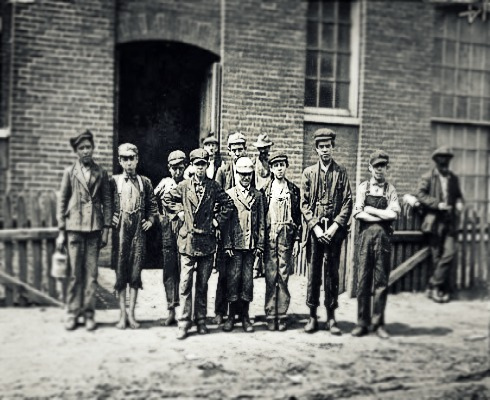
“In these circumstances do we know of no expedient by which this woful degeneracy can be arrested and recalled, but an actual search and entry upon the territory of wickedness. A mere signal of invitation is not enough. In reference to the great majority, and in reference to the most needful, this were as powerless as was the bidding to the marriage-feast of the parable. We must have recourse at last to the final expedient that was adopted on that occasion; or, in other words, go out to the streets and the highways, and, by every fair measure of moral, and personal, and friendly application, compel the multitude to come in. We must do with the near, what we are doing with the distant world. We do not expect to Christianize the latter, by messages of entreaty, from the regions of paganism. But we send our messages to them. Neither do we give a roving commission to the bearers, but assign to each of them their respective stations in that field, which is the world. And we most assuredly need not expect to Christianize any city of nominal Christendom, by waiting the demand of its various districts for religious instruction, and acting upon the demands as they arrive. There must just be as aggressive a movement in the one case as in the other. There is not the same physical distance, but there is nearly the same moral distance to be described with both ; and they who traverse this distance, though without one mile of locomotion to the place of their labour, do, in effect, maintain the character, and fulfil the duty of missionaries.”

-Thomas Chalmers, Works 14:84-85

Read Full Post »

Thomas Chalmers (1780-1847), ardent advocate of the parish in modern society, commended his Anglican contemporary, Charles Bridges (1794-1869), as a model of a man dedicated to the cure of souls.   “My excellent friend, the Rev. Charles Bridges, of Old Newton, Suffolk, finds, I am sure, most ample occupation among those six hundred people whom he may be said to have domesticated into one parochial family; and, were it not for his still more important services to the Christian church at large, would show, by his incessant labours, how possible it were to make out a most beneficial expenditure of all his strength and all his time amongst them” (Collected Works 18:62).   This quote certainly illustrates Chalmers’ high regard for evangelical Anglicanism, the better part of the established Kirk’s English counterpart.  But there’s something else here as well. 

Those of us today who read and appreciate Bridges’ great classic The Christian Ministry can easily fail to realize that he was not writing as a congregational, but as a parochial minister.  Chalmers refers to Bridges precisely for this reason.  This fact sheds light on Part V of Bridges’ work, “The Pastoral Work of the Christian Ministry.”  In that section, he treats the wide range of individual cases that the pastor must treat in his charge.  The first two classes are “The Infidel” and “The Ignorant and Careless.”  Not your typical church member – or your typical church attender!  But a percentage of the 600 souls under Bridges’ geographic charge.

Read Full Post »

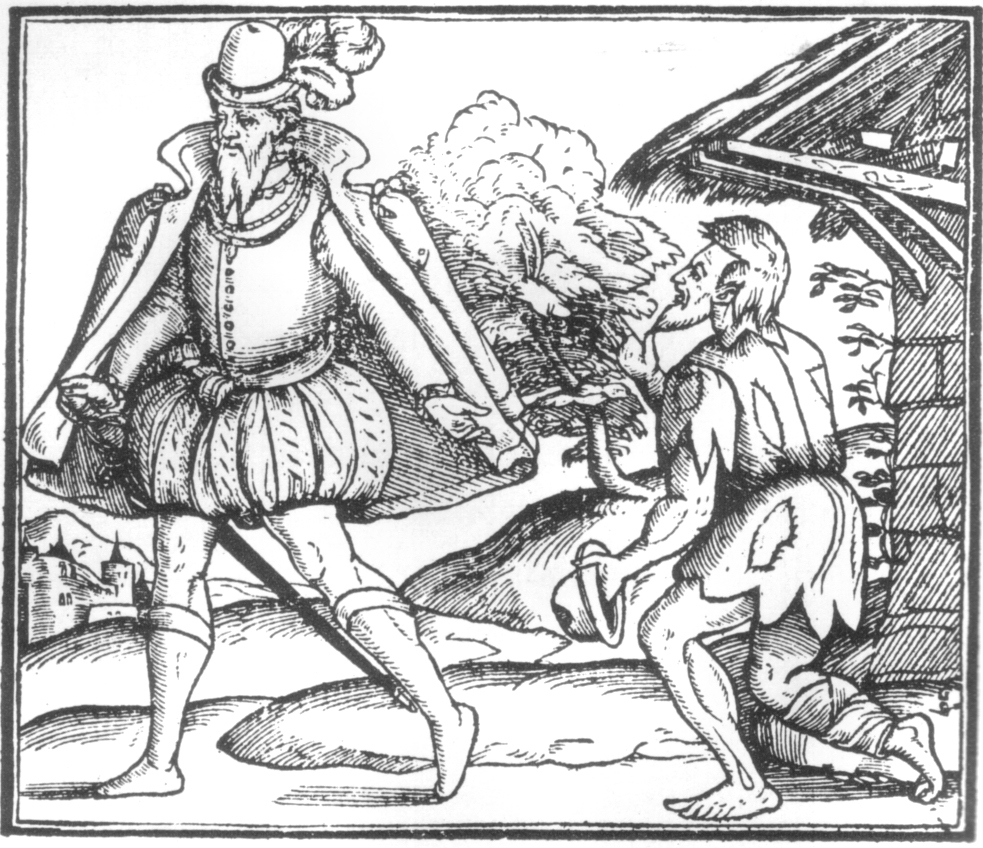
The following poem comes from a 19th century Edinburgh periodical, Tait’s Magazine.  It was written during the middle of a controversy over ‘seat rents,’ a traditional way used to finance the ministry and infrastructure of the church.  The author of the poem expresses the sentiments of churchmen like Thomas Chalmers who were mortified at the increasingly bald commercialism of the system, which effectively made church attendance for the poor cost-prohibitive.  The Presbyterian Church of Scotland had always been a church of the people, for the people.  And the poor, above all, ought to have the Gospel preached to them.  Has not God bypassed so many of the monied and of noble blood, in preference for the despised poor?

While the times and circumstances were considerably different from our own, one can certainly discern the thread of religion for profit.  And that evil is as old as the hills.  And is it not the case that the poor are largely left to shift for themselves when it comes to Reformed outreach and church planting (when done at all)?   How un-Presbyterian we Presbyterians can sometimes be!

* * *

THE POOR CHRISTIAN AND THE CHURCH

“How glorious Zion’s courts appear,”
The pious poor man cries:
“Stand back, you knave, you’re in arrears,”
The manager replies.

POOR CHRISTIAN.
“The genius of the Christian code
Is charity, humility;”
MANAGER, (In a rage.)
“I’ve let your pew to ladies, Sir,
Of high respectability.”

POOR CHRISTIAN.
“And am I then debarred the house
Where erst my father pray’d?
Excluded from the hallowed fane
Where my loved mother’s laid?”

MANAGER.
Their seat-rent, Sir, was never due;
The matter to enhance,
As duly as the term came round,
They paid it in advance.”

POOR CHRISTIAN.
“The temple of the living God
Should have an open door,
And Christ’s ambassadors should preach
The Gospel to the poor.”

MANAGER.
“We cannot, Sir, accommodate
The poor in their devotions;
Besides we cordially detest
Such antiquated notions.

“We build our fanes, we deck our pews
For men of wealth and station;
(Yet for a time the thing has proved
A losing speculation.)

“Then table down your cash anon
Ere you come here to pray;
Else you may wander where you will,
And worship where you may.”

POOR CHRISTIAN.
“Then I shall worship in that fane
By God to mankind given;
Whose lamps are the meridian sun,
And all the stars of heaven;

“Whose walls are the cerulean sky,
Whose floor the earth so fair,
Whose dome is vast immensity :—
All nature worships there.”

Read Full Post »

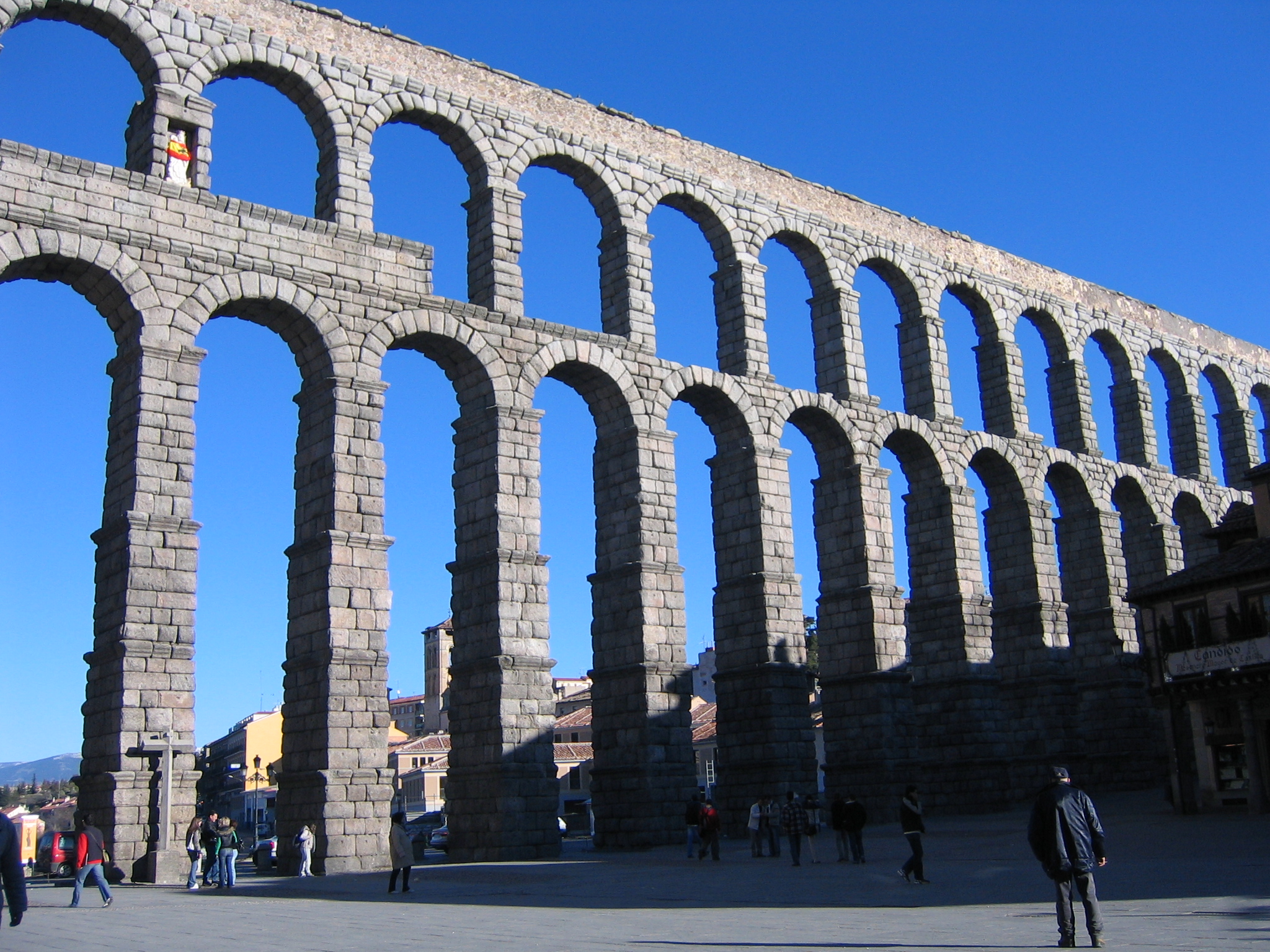
Another stately quote below by Thomas Chalmers (1780-1847) on the parish system.  Here, he affirms the absolute sovereignty of the Spirit in the conversion of men, yet urges the necessity of ecclesiastical infrastructure for broadest distribution.  Without rain, there is no life.  Yet there is a place for ‘aqueducts!’ 

* * * *

“The truth is, that whenever a more copious descent of the Holy Ghost shall come down upon us, it will pass through all the channels of conveyance that have been furnished for it in the land—entering into pulpits, and then spreading itself over congregations, and finding its way, most readily, through the most free and frequented pathways of communication that have been opened up between the ministers of religion and the people among whom they expatiate.  By subdividing parishes, we just multiply these pathways; and by localising parishes, we just make the pathways shorter, and more convenient and accessible, than before. We do not set aside the doctrine of a spiritual influence; for we believe that it is this which will be the primary and the essential agent in that great moral regeneration that awaits our species. But just as in the irrigating processes of Egypt, the reservoirs are constructed, and the furrows are drawn, and every field on the banks of the Nile is put into readiness for the coming inundation—so we, knowing that the Spirit maketh its passage into the human heart, by the word and the ordinances of the gospel, are just labouring at a right process of spiritual irrigation, when we provide such arrangements as will bring the greatest number of human beings into broadest and most recurring contact with this word, and with these ordinances.”

Read Full Post »

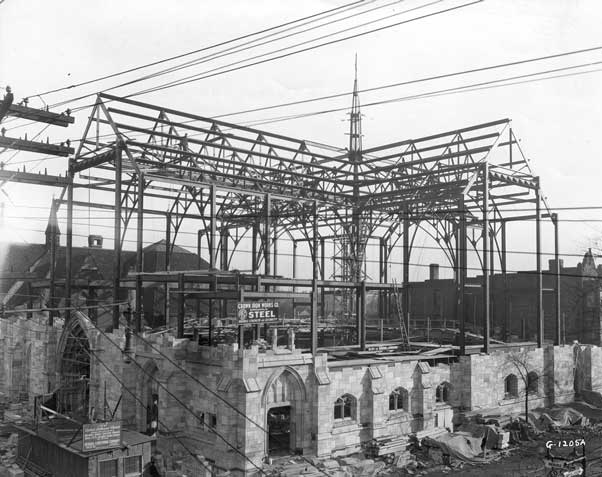
Writing more than a century before the McDonaldization of the Church, Thomas Chalmers (1780-1847) exposed the fallacy of faith in structures for evangelization.  It is a “Quixotic imagination, that on the strength of churches alone, viewed but in the light of material apparatus, we were to Christianize the population – expecting of these new erections, that, like so many fairy castles, they were, of themselves, to transform every domain in which they were placed into a moral fairyland” (Works 18:109).  While perhaps most evangelicals would probably deny the bald proposition that the building can birth a believer, yet it is very easy subconsciously to think that outward can allure the natural man out of his state of spiritual rebellion.  The fact is, if you build it, they just won’t come.  It is fleshly to think otherwise, for the arm of the flesh – and the fleshly mind – are powerless.

Yes, but what if it is well stocked with professionals?  Professional preachers, counsellors, and administrators?  All with D.Mins?  What if the attractive building is complemented with wide array of wonderful programs for young and old, and for every other conceivable demographic slice?  If you build that, will they come?  No doubt.  But then there is coming (Jn. 6:24-26), and there is coming (Jn. 6:65-66)!

Yet, church buildings are of  value.  Chalmers believed as much and zealously campaigned for the provision of more church buildings in his day.  By his efforts, more than 200 were built in the 1830s throughout Scotland.  But buildings are nothing unless they are furnished with a faithful ministry.  What is more, he contended, they must not serve the public indiscriminately.  To the church and its ministry a fixed, geographical district ought to be assigned for its regular and faithful cultivation.  A church ought to be a neighborhood church, a parish church, with a busy parish minister.  

Build that, and they will come.  Those whom the Father draws, that is.

Read Full Post »

A. C. Cheyne (1924-2006), a recognized Scottish Church History scholar summarizes the central ideas inherent in Chalmers’  “territorial parish.”  It was a “manageably small area housing a community of some two thousand souls who lived, worked and worshipped together, with a church and a school at its center and a minister and a kirk session to attend to both its spiritual and its temporal necessities: here, he argued, was the basic – he would even have said the redemptive – unit of Scottish society.  Here was the means of national regeneration.”   In my reading of Chalmers, I would suggest that he would say the preaching of the Gospel was the means.  Yet, he certainly saw the territorial parish as the most efficient vehicle for getting that Gospel preaching to every man, woman, and child.

Read Full Post »

« Newer Posts - Older Posts »