Feeds:
Posts
Comments

Archive for the ‘Thomas Chalmers’ Category

Some choice counsel from Thomas Chalmers to a Christian lady struggling with doubts (1826).  His distinction between having a concern about what and not how to believe is especially choice.

* * *

2318058434_433229b519_o

But, generally, you complain that you are ignorant of how to go—how to believe. Now this has long been a stumbling-block to many; their thoughts are how they are to believe, when their thoughts should be what they should believe. They look inwardly for the work of faith, when they should look outwardly for the object of faith. “For every one thought,” says Richard Baxter, “that he casts downwardly upon himself, he should cast ten upwardly and outwardly upon Jesus, and upon the glorious truths of the Gospel.” You say that you have no doubts of the freeness of Christ’s salvation, and of His willingness to save you. Dwell upon this; persist in this; stand in the Gospel attitude of looking upon Jesus, and light will at length arise within you. In the act of looking, you may have to wait a longer or a shorter time for your coming enlargement; but surely it is worth the waiting for. Meanwhile your business is prayer; a diligent attention in the ordinances of religion; reading of God’s word; and, above all, a keeping of the sayings of Christ: “He that keepeth my sayings, to him will I manifest myself.” Be assured you are in good hands, even in the hands of Him who will not break the bruised reed nor quench the smoking flax.

Read Full Post »

Reformations are unsettling. They always involve a critique of the old order, a prophetic protest against wrong. And when those protests give way to action, things change. The Protestant Reformation of the 16th century was no different. So when it reached the shores of Scotland, there was quite a shaking up. [To read further, see full article here – starting at p. 9]


Read Full Post »

Thomas Chalmers here responds to a close friend who felt the secularizing influence of unconverted company.  His reply?  Aspire for the emergence of Christian communities and restlessly work to build them by aggressive soul-winning.  Again, Chalmers exhibits a wholesome blend of romanticism and realism.   He also gives some other helpful words to those engaged in the task of reaching the lost.

* * *

“You speak of uncongenial business or society in the evening, which broke up in some measure the religious frame of your mind on the preceding part of the day. Now, mark wellIMG_4119a that there will be no such interruptions in the Millennium; there are none such in a Moravian village at this moment; and there would be much fewer than there are in Glasgow had we a more extensive Christian community. The direct road to this is just to make as many Christian individuals and Christian families as we can; and in the exact proportion of our success shall we be rewarded by a freedom from all these temptations which the deadening and secularizing influence of the great majority of companies brings along with it. Let us ever keep by this object, then, as our great aim and purpose of our lives here below, combining, at the same time, all that discretion and skill which are necessary in the important work. Let us pray for that most desirable wisdom, the wisdom of winning souls—not forgetting that He who says, Keep thyself pure, also says, Lay hands on no man suddenly; and taking care, at the same time, never to convert the latter direction into a shelter for cowardice, or a plea for denying Christ before men. Oh, my dear sir, you are right to feel your shortcomings, and it is at the same time right to strike the high aim of being perfect, even as God is perfect. It is only wrong to conceive such a purpose in a dependence on ourselves; but who shall limit the power of His Spirit?”

Read Full Post »

Below, Chalmers makes a compelling case against the notion that a Christian ruler must leave his religion at the door of public office.  Men are men, privately and publicly.  And Christian men must be Christian men wherever they go, advocating good and resisting evil according to their place and calling:

“A righteous and religious monarch, or righteous and religious senators, must impress their character on their acts; nor can we understand the distinction, or rather the disjunction, which is spoken of in these days, between Christian governors and a Christian government. We have no such notion of the moral that we have of the physical chemistry, in the compounds of which, the properties of the ingredients may be changed or disappear. The corporation of a state cannot be thus denaturalised, or reduced to a sort of caput mortuum, discharged of all soul and all sentiment—as if by a process of constitution-making in the crucibles of a laboratory. The cold metaphysical abstraction that is thereby engendered, may exist in the region of the ideal; but it does not exist in the region of the actual, nor even in the region of the possible; for men, though convened within the hall of a legislative assembly, will not, therefore, forget that they are men; or think that they must renounce all care for the highest well-being of families, when called to deliberate on the well-being of a nation.”

Hardly rocket science.

Read Full Post »

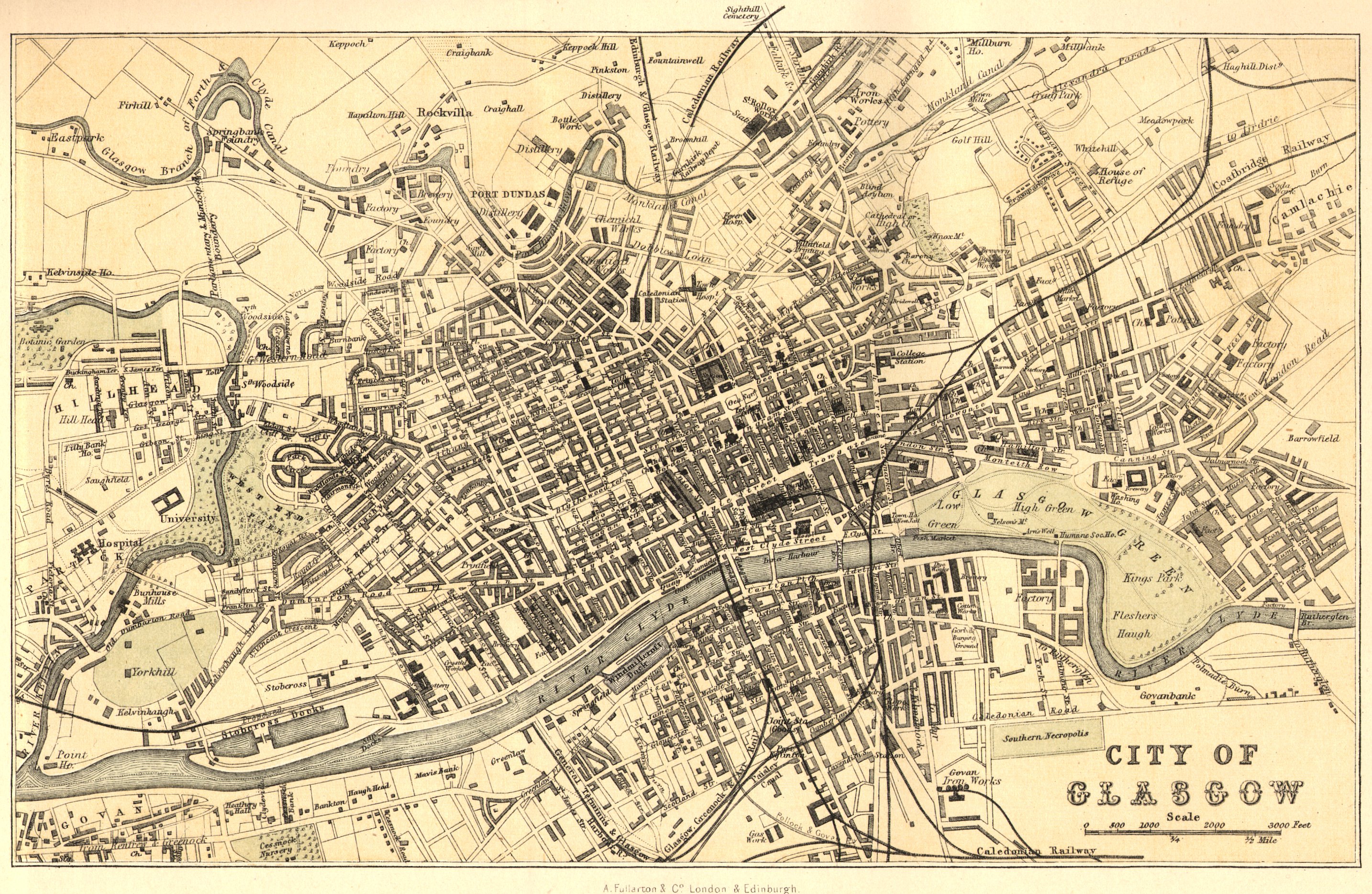
Glasgow_map_1878“Now the specific business which we would like to put into the hands of a Christian minister is, not that he should fill his church any how – that he may do by the superior attractiveness of his preaching, at the expense of previous congregations, and without any movement in advance on the practical heathenism of the community: But what we want is, to place his church in the middle of such a territory as we have now specified and to lay upon him a task, for the accomplishment of which we should allow him to the labour and preference of a whole lifetime; not to fill his church any how, but to fill this church out of that district. We should give him the charge over head, of one and all of its families; and tell him, that, instead of seeking hearers from without, he should so shape and regulate his movements, that, as far as possible, his church-room might all be taken up by hearers from within. It is this peculiar relation between his church, and its contiguous households, all placed within certain geographical limits, that distinguishes him from the others as a territorial minister.”

– Thomas Chalmers

Read Full Post »

In the following, we hear Thomas Chalmers echoing the sentiment of the inspired apostle, “I am debtor both to the Greek, and to the barbarian, to the wise and to the unwise . . . to preach the Gospel.” This is a timeless reminder to be a minister who is truly all things to all men, and not slavishly ‘relevant’ (beholden?) to a narrow slice of the demographic pie.

* * *

“There is no doubt the vanity of popular applause; but there is also the vanity of an ambitious eloquence, which throws the common people at a distance from our instructions altogether; which, in laying itself out for the admiration of the tasteful and enlightened few, locks up the bread of life from the multitude; which destroys this essential attribute of the gospel, that it is a message of glad tidings to OLYMPUS DIGITAL CAMERAthe poor; and wretchedly atones by the wisdom of words, for the want of those plain and intelligible realities which all may apprehend and by which all may be edified. Now the great aim of our ministry is to win souls; and the soul of a poor man consists of precisely the same elements with the soul of a rich. They both labour under the same disease, and they both stand in need of the same treatment. The physician who administers to their bodies brings forward the same application to the same malady; and the physician who is singly intent on the cure of their souls will hold up to both the same peace-speaking blood, and the same sanctifying Spirit, and will preach to both in the same name, because the only name given under heaven whereby men can be saved. . . . We hear of the orator of fashion, the orator of the learned, the orator of the mob. A minister of the gospel of Jesus Christ should be none of these; and, if an orator at all, it should be his distinction that he is an orator of the species. He should look beyond the accidental and temporary varieties of our condition; and recognise in every one who comes within his reach, the same affecting spectacle of a soul forfeited by sin, and that can only be restored by one Lord, one faith, one baptism.”

Read Full Post »

Thomas Chalmers (1780-1847) in his 1829 sermon, On Religious Establishments, addresses a long-standing objection to establishments.  They necessarily corrupt the Church, and history demonstrates it.  The Church only declined after the Edict of Milan.  But, Chalmers counters, the Voluntaries fallaciously mistake the cause.  The source of the secularization was not the state – it was the Church itself.  There is no fault in the contract of these two independent parties, each laboring in its own separate sphere, yet supporting each other mutually.  The fault rests with the party who abuses the contract.  And before the Reformation, it was not the Church that got the raw end of the deal:

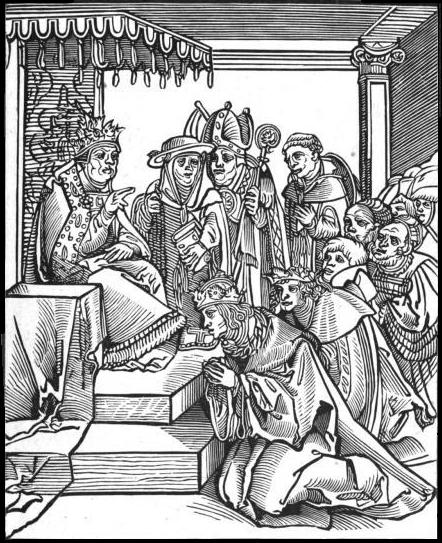
“There is a kind of vague and general imagination, as if corruption were the invariable accompaniment of such an alliance between the civil and the ecclesiastical; and this has been greatly fostered, by the tremendously corrupt Popery, which followed in historical succession after the establishment of Christianity in the days PopeKissing_Feetof Constantine, and which certainly holds out, in vivid contrast, the difference between this religion in the period of its suffering, and this religion in the period of its security and triumph. But it were well to discriminate the precise origin of this frightful degeneracy. It arose not from without; it arose from within. It was not because of any ascendency by the state over the church whom it now paid, and thereby trenched upon its independence in things spiritual. It was because of an ascendency by the church over the state, the effect of that superstitious terror which it wielded over the imaginations of men, and which it most unworthily prostituted to the usurpation of power in things temporal. The fear that many have of an establishment, is, lest through it, the state should obtain too great power over the church, and so be able to graft its own secularity, or its own spirit of worldliness, on the pure system of the gospel,—whereas the actual mischief of Popery, (more…)

Read Full Post »

William Hanna, son-in-law and biographer of Thomas Chalmers, here reflects on the bearing of Chalmers’ inner, spiritual history on his outer history in the public light.  Inner histories are certainly more inaccessible and uncertain to others.  “For what man knoweth the things of a man, save the spirit of man which is in him?”  Even self-knowledge is murky at best.  Yet with the infallible light of Scripture, we may shed light on what is left us of the inner-histories of great men, shaping the parts they played on the stage of divine providence.

* * *

“The events in which Dr. Chalmers mingled, and which ho helped so much to mould, were far from engrossing his thoughts. The part he took in them was in fact the product of those deeper convictions which rested upon the unseen and enduring objects of faith. Behind the outer history of his life there lay that inner spiritual history which made the other what it was. His correspondence, his speeches, his published writings, and his public acts, which furnish such ample materials for unfolding the one history, are absolutely barren as to the other. We know of no other iImagendividual of the same force and breadth of Christian character, who, in all his converse, public and private, with his fellow-men, spoke so little of himself, or afforded such slender means of information as to his own spiritual condition and progress, and yet it would be difficult to name another of whose deeper religious experience we have so full and so trustworthy a record. We owe this to the openness and perfect truthfulness of his private Journal. The strict reserve which he observed in his communications with others he entirely laid aside when communing with his own heart, the fullness of the one disclosure more than atoning for the stintedness of the other. The very breaks and gaps, the compressed or the expanded condition of his private Journal, when studied in connection with his external occupations during different periods, are themselves instructive. Judged of in this way, the year 1840 formed a marked epoch in his spiritual life, as exhibiting the commencement of that softening, refining, elevating process which, ripening to perfection, threw such a pure and mellow light of piety around his closing years—a light whose chastened lustre was perceived and felt even by those who saw not into the place of its birth.”


Read Full Post »

Chalmers standingThe following are the words of exhortation Dr. Thomas Chalmers gave to his ruling elders upon their induction to office to the newly formed St. John’s parish in Glasgow, in 1819.  These men were installed not simply to attend to the communicant and baptized membership, but each was assigned a small district of contiguous households  within the parish.  They were thus ordained as missionaries to all within the limits of their assignment, visiting each house in turn, seeking lost sheep.  The address below highlights the tension frequently stressed by Chalmers – the obligation diligently to use all lawful means to reclaim the unsaved and at the same time to look alone to the Mighty Spirit to bring it all to pass.

* * *

“The whole habit and tendency of my thoughts on the subject of Christian usefulness incline me to attach a far higher importance to your relationship with the parish of St. John’s than to your relationship with the Church, and I do honestly believe, that never till the rights of parishes come to be better respected, never till the attention of ministers and elders be more restricted to the population of a given local territory, never till God put it into the hearts of men to go forth among our heathen at home with the same zeal and enthusiasm which are expected of missionaries who go abroad, will there be any thing like a revival of religion throughout the mass of our city families, or a reclaiming of them from those sad habits of alienation from God and from goodness into which the vast majority of them have fallen.

“There is one circumstance of encouragement which you will soon in the course of your movements through the districts that arc assigned to you be enabled to verify by your own experience. All the householders, with scarcely one exception, and whatever be their character in respect of Christianity, will welcome you with the utmost cordiality and courteousness. There is something in the very presence of one human being when he comes with the feelings and the desires of friendship, which serves to conciliate and to subdue another human being. Bear an honest regard to the people, and the people will, in spite of themselves, bear you an honest regard back again. This is what may be called an open door for you in the first instance, and the effect of frequent intercourse between the higher and lower orders of life in tranquilizing the general spirit of a community, and softening their malignant antipathies which else might ferment and fester and break out into. open violence, and consolidating something like a system of brotherhood through a mighty aggregate of human beings, this I say would confer a civil blessing on the establishment of an eldership that is altogether incalculable.

“But it must be remarked, on the other hand, that so wide and universal a welcome from the families may lead at the outset to a most delusive anticipation. A civil comes more easily and readily than a Christian effect. You are not to infer, because the good will of the people can be so immediately carried, that the conversion of the people will therefore speedily follow in its train. There is much of what is constitutionally attractive among men distinct and apart from any religious tendencies; and there is none who sets himself in good earnest to the working of a Christian effect, that will not soon feel himself engaged in a business where aids and instruments are necessary that are altogether superhuman. You will, in particular, be struck with the obstinate and determinate stand which the manhood of the population will make to all your proofs and all your earnestness. In sad proof of the progressive hardening of conscience will it be seen how arduous if not how impossible it is, with all the arts and resources of Christian philanthropy, to make any sensible advances on those who have been suffered to ascend from boyhood without the Word and without the ordinances.

“It is this which has shut up so many adventurers on the field of Christian usefulness, both at home and abroad, to the melancholy conclusion, that the grown-up generation are to be given up in despair, and that the hope of brighter and better days all lies with the capabilities of the young; and I certainly do recommend, among the foremost objects of your attention, the encouragement of those religious schools which may be situated within the limits of your respective localities, and for the discouragements which you will experience in the obstinacy and immovableness of many parents, you will often meet with a cheering compensation in the

promise and docility of their children.

“At the same time, I would never give up any human being in despair. Forget not the affirmation of the missionary Eliot, that it was in the power of pains and of prayers to do any thing. We are apt to confide in the efficacy and wisdom of our own arrangements—to set up a framework of skillful contrivance, and think that so good an apparatus will surely be productive of something—to please ourselves with parochial constitutions, and be quite sanguine that on the strength of elderships and deaconships, and a machinery of schools and agents, and moralizing processes, some great and immediate effect is to follow. But we may just as well think that a system of aqueducts will irrigate and fertilize the country without rain, as think that any human economy will Christianize a parish without the living water of the Spirit—without the dew df heaven descending upon the human administrators, and following them in their various movements through the houses and families under their superintendence. Still it is right to have a parochial constitution, just as it is right to have aqueducts. But the supply of the essential influence cometh from above. God will put to shame the proud confidence of man in the efficacy of his own wisdom, and He will have all the glory of all the spiritual good that is done in the world, and your piety will, therefore, work a tenfold mightier effect than your talents, in the cause you have undertaken; and your pains without your prayers will positively do nothing in this way, though it must be confessed that prayers without pains are just as unproductive, and that because they must be such prayers of insincerity as can not rise with acceptance to heaven. It is the union of both which best promises an apostolical effect to your truly apostolical office; and with theso few simple remarks do I commend you to Him who alone can bles3 you in this laudable undertaking, and give comfort and efficacy to the various duties that are involved with it.”

Read Full Post »

Had the following been written by anyone other than Thomas Chalmers (1780-1847), it might be taken as a specimen of pietistic escapism.  But coming from one known for his lifelong advocacy for political reform and his busy, personal involvement in caring for the poor of Industrializing Britain, it is anything but.  It’s not an unhealthy other-worldliness, by any means.  It’s a reality check.  And a very necessary reminder for us in the weeks running up to the election.

* * *

“There is a delusion that attaches to much of moral and much of political speculation. The purpose of both is to ameliorate the condition of humanity, and to rear the permanent and substantial fabric of a better society than that which now encompasses our globe. It is, indeed, a soothing perspective for the eye of the philanthropist to dwell upon, when he looks onward to fancied scenes of bliss and perfection in the ages that are to come —and while he pictures to himself as the fruit of his enlightened labours in the philosophy of public affairs, that there shall then be love in every heart, and plenty in every habitation, it is scarcely to be wondered at, that he should kindle in the thought of all this goodly munificence, as if it bore upon it somewhat of the worth and greatness of immortality. But apart from religion – and how poor is the amount of all that the mere cosmopolite can do for our species!  And even though, without its aid, he should he able to perfect the temporal economy of nations, never can he perpetuate beyond a few flying years, to a single individual of this vast assemblage, any portion of the bliss or the glory that he thinks to have provided for them. It is death which brings down the worth and computation of his high-blown enterprise, that though established over the whole earth, and weathering the lapse of many centuries, can only gild in brighter and more beauteous characters than before, the fantastic day of each ephemeral generation. It is the gospel of Jesus Christ through which life and immortality are brought to light—it is this alone that can furnish the friend of humanity with solid and enduring materials – and never can he stand on a vantage ground where the mockeries of the grave do not reach him, till labouring and devising for the Christianity of his fellows, he helps to extend an interest that shall survive the wreck of every death-bed; and which, instead of being swept into annihilation, will be ushered to everlasting day, by that trumpet, at whose sound, our world, with all the pomp and all the promise of its many institutions, shall utterly pass away” (Collected Works 16:214).

Read Full Post »

« Newer Posts - Older Posts »