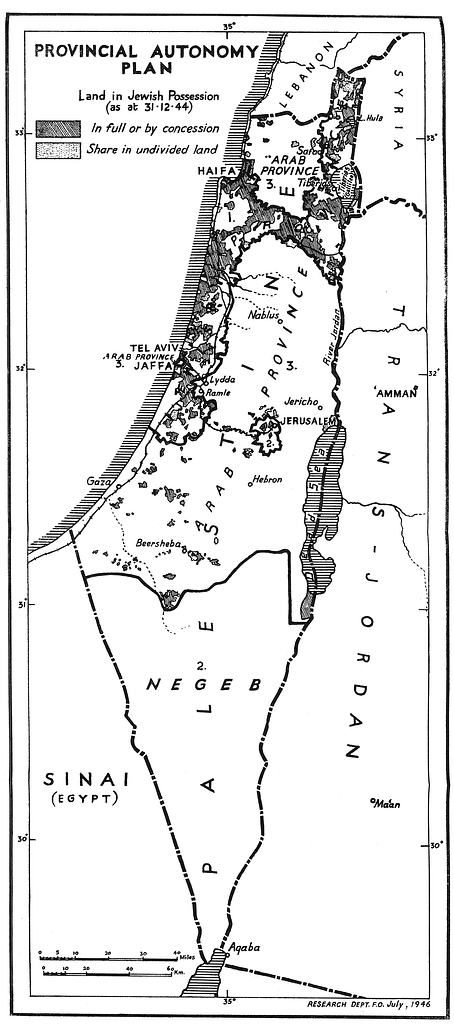
A friend shared this very helpful article about a year ago that explores the actual contours of how Scottish Presbyterians dealt with Jewish questions, the emergence of the nation-state of Israel, and the very problematic other-rail of Dispensationalism in modern evangelicalism. It is very regrettable in the current context that there isn’t much nuance in how our Reformed fathers approached Jewish questions vis-a-vis the errors of J.N. Darby and his ilk. Abstract here:
“There should be the previous working of a Home Missionary among the families of the locality for which it is destined. . . . We set a parish missionary amongst them, who can give his whole time to the work, and who, by his unwearied ministrations among the sick, and the dying, and the ignorant, and the young, has created such a demand for Sabbath attendance, that his preaching-hall, which holds 300, is filled to an overflow; and we feel encouraged to build a church (to be set about immediately,) in the confident hope that many hundreds, who till now have been living in heathenism, will be reclaimed to the good old habits of their forefathers.”
“But wherever a new parochial economy is meant to be set up, it is in all cases most desirable that a moral preparation should go before the erection of the material apparatus. I do not know a more useful set of labourers than our local missionaries, who ply the families through the week, and congregate them at preaching stations, either on week-nights or on the Sabbath” (Chalmers, Works 18:228-29, 270).
“Under a local system, the teachers move towards the people. Under a general system, such of the people as are disposed to Christianity, move towards them. . . .
“It is the pervading operation of the local system, which gives it such a superior value and effect in our estimation. It is its thorough diffusion through that portion of the mass in which it operates. It is that movement by which it traverses the whole population; and by which, instead of only holding forth its signals to those of them who are awake, it knocks at the doors of those who are most profoundly asleep, and, with a force far more effective than if it were physical, drags them out to a willing attendance upon its ministrations. . . .
“The schools under a local system are so many centres of emanation, from which a vivifying influence is actively propagated through a dead and putrid mass.”
“An establishment may . . . be the occasional, but not the efficient cause of mischief. The machine may be faultless; but exposed, as it must be, while the species lasts, to the intromission of hands, which to a certain degree will taint and vitiate all that they come in contact with. The remedy is not to demolish the machine, and transfer the hands which wrought it to other managements and other modes of operation—There will still be corruption notwithstanding.” And even a reformed establishment can be re-corrupted: “The human nature which you thus transfer, will carry its own virus along with it” (Thomas Chalmers, Works 11:454).
Or, in other words, bad men can make a bad use of good things.
In the following passage, Thomas Chalmers writes of the secondary, ‘collateral’ benefits of an aggressive, national parish system in bringing the Gospel to the masses. The “moral distance” of estranged classes within society would tend to melt away, and so indirectly rejuvenate the outward social and political order of the nation:
“The more that this [moral] distance is alleviated by the subdivisions of locality, the more do the charities of common companionship mingle in the commotion, and exude an oil upon the waters that assuages their violence. They are the towns of an empire, which form the mighty organs of every great political overthrow, and if a right parochial system in towns would serve to check, or rather to soften, the turbulence that is in them, then ought the establishment of such a system to be regarded by our rulers as one of the best objects of patriotism” (Chalmers, Works, 14:388).
Not that we can revive a national establishment without a mass awakening and a groundswell of support both by people and princes. Yet, Chalmers contended, we can all engage in local parish mission at the grassroots level, seeking the regeneration of communities as we pray and wait for national repentance.
“The Dissenter builds his chapel, and he draws hearers indiscriminately from all the places around; but drawing none save those who have a predisposition for what is sacred, he can only retard the degeneracy of his townsmen, but never, with his present processes, is heable to recall it. The Establishment builds its chapel also; but, besides this, it metes off [measures out] a geographical vineyard to him who officiates therein; and it lies with himself to be in a very few months, a respected and a recognized functionary among all its tenements; and without any romantic sacrifice of his time or of his ease, but just in the quiet and regular discharge of the assiduities of his office, among the ignorant, the sick, and the dying, will he be sure to find good welcome in every heart, and goodwill in every home towards him. Now, it is by these week-day attentions among the people of his local territory, that he, at length, diffuses over the whole of this contiguous space an interest and a desire after his Sabbath ministrations; and gathers new recruits to his congregation from the most worthless of its families” (Thomas Chalmers, Works 16:149).
“Why, the circle, whose centre is his meeting-house, and whose radius passes at its further extremity through the tenement of his most distant hearer—such a circle would comprehend, in Edinburgh, a population of fifty thousand, and in London, a population of half a million. There is no other way of addressing ourselves with effect to the moral cultivation of this stupendous domain, but by breaking it up into parishes, and each of its ministers going forth on the territorial principle, charged with the care and the cognizance of all its families—keeping up, by his varied attentions, the spiritual appetite where it exists, and reviving it when it has fallen into dormancy—sustaining, by the external appliance of his household visits and week-day ministrations, that will for religion, and for its services, which, when left to itself, is so miserably apt to wither into extinction—doing, on the large scale of a parish, all that a city missionary does on the smaller scale of a district” (Chalmers, Works 18:90).
“It is no personal disparagement to the dissenting minister, when we simply say of him that he is less favourably placed. He may officiate through the week among his own hearers, who often lie scattered in isolated families over a wide extent of country, or through all the streets, and to the distant outskirts of a populous town. We have no doubt that he would greatly augment his influence, by assuming a local district in either of these two situations, and, in the way of Christian experiment, charging himself with the duty of religious attention to all the families within its limits whom he shall find willing to receive him. We should look for a far wider and more welcome respondency, and therefore a better result than is generally anticipated. But, in point of fact, this is seldom if ever done by dissenters. They are incredulous of its success—and are even themselves discouraged by a certain haunting sense of inferiority, which in as far as it is well founded, is itself a strong demonstration in favour of a religious establishment. They do apprehend a certain defect of reception and recognition among the families; and that, on the ground too, that they are not the regular or established functionaries of the land. They hang back under a sort of consciousness, that theirs is not so valid a right of entry as that of the parish minister. They cannot help the feeling of a certain defect in their warrant, in virtue of which they are not so authorized to go into every house, and there overture the services of Christianity. They themselves, in short, would have a greater sense of comfort and confidence in the prosecution of such a round, if translated into the place of regular clergymen, or similarly backed by the institutions of the land. For ourselves, we should like if our dissenting ministers could in the spirit of enlightened zeal, or of active religious philanthropy, overleap all these delicacies, and actually make the attempt of carrying their household ministrations into the bosom of every family that would open the door to them. The fact that this is so little done by them, is pregnant with inference. To our mind, it speaks powerfully for a religious establishment; that under the cover of its sanctions, there is on the one side, a greater boldness of access felt by its ministers; and, on the other side, a readier acquiescence by the people, in their offered services. The propriety of a universal movement among the houses of his allotted territory on any Christian errand, or with any Christian proposal, is far more promptly recognized by all, when performed by the parish clergyman, than would be a similar movement, if gratuitously attempted by a sectarian minister. And this would be the feeling not of the upper classes of society alone—but, in truth, the feeling even of workmen and cottagers. It is one of those aptitudes of our nature, of which it were most legitimate to avail ourselves—and which is turned to its best account by the device of an establishment. Without this machinery, the population will fall away in large masses, beyond the scope of any ecclesiastical cognizance. With it a wide door of access is opened to all the families. It is just the access which it is most desirable that a man of principle and prayer should be provided with that as it is a great, so also it may be an effectual door” (Thomas Chalmers, Collected Works 17:123-124).
“We presume it to be agreed on both sides, that the outcast millions ought to be reclaimed from the ignorance and irreligion of heathenism. The only difference relates to the party at whose expense this great achievement ought to be perfected —whether by private Christians, under the impulse of a religious benevolence; or by an enlightened government under the impulse of a paternal regard for the highest weal of its subject population. We, the advocates of a National Establishment, hold it the duty and wisdom of every state, thus to undertake for the education of the great family under its charge, and to provide the requisite funds for the fulfilment of the enterprise—and this without prejudice, but the contrary, to the liberality of those individuals, who might choose of their own means to build more churches, and maintain more ministers—thus adding to the amount of Christian instruction in the land. Our antagonists on the other hand hold this to be only the fitting work of individuals, whether acting separately or in associated bodies—to be their concern, and theirs exclusively; and that the government of a country should have nothing to do with it” (Chalmers, Works 17:258-59).
“If you build it, they will come.” Or . . . will they? Smith said yes; Chalmers said absolutely not. The following is an academic article I wrote for the Historical Journal of the Scottish Reformation Societythat explains how Thomas Chalmers (1780-1847) argued for religious church establishments as mission agencies againstAdam Smith’s regrettable misapplication of laissez faire to matters of religion.
I also gave a somewhat abbreviated lecture last year at Puritan Reformed Theological Seminary. You can listen to that here:
Someday I hope to be free to return to further academic research on Chalmers’ territorial or ‘parish’ missiology, if not to get back into a Ph.D. program. All God willing!




 West Port Experiment
