
If you would truly profit by ordinances, after you have a fixed pastor, I think it is of moment to forget, as much as possible, the persons of men, and consider them as no more than instruments in the hand of God, for your daily instruction and comfort. The more you remember the appointment of God, and wait upon his ordinances, in the faith of his presence, and the expectation of his blessing, the more you are likely to receive both sensible and lasting benefit. I must therefore take the liberty to observe, that we have amongst us a set of wandering unsettled hearers, who run about from one congregation to another, and even from one profession to another, and are scarcely ever to be seen a whole day in one place. If they be but deliberating where to fix, we may fay of them, that they are ever learning, and never come to the knowledge of the truth. But the probability is, that they have itching and curious ears, and go about not to serve God but to hear men. If I am able at all to judge, either by reflection or observation, those are most likely to profit, who having deliberately made their choice, sit habitually and regularly under one minister. By this means they enter into his views; and as he will naturally endeavour, if any thing was wanting at one time, to complete his scheme by supplying it at another, they will thereby have a more comprehensive view of the whole counsel of God. At the fame time, not having the charm of novelty to enchant them, they will have nothing to do but to reap instruction. On the other hand, by hearing separate, detached, and independent discourses, men may please their fancy more, but they will improve their understanding less. It is also plain, that as every minister will endeavour, not only to follow an order in his discourses on one subject, but to have a respect to the connection, and relation of the subjects themselves, the more accurate and exact he is, in suiting one part to the, illustration of another, the less he will be understood by these desultory hearers, who take only a single branch, without being able to perceive its subserviency to the general design. I have many times known exceptions taken at ministers, for some parts of a discourse by such persons, when, if they had heard the whole upon the same or corresponding subjects, they would have perceived there was no place for their objections. The great purpose, my brethren, of a serious and judicious people, in attending on ordinances, should neither be to please themselves, nor to criticise their teachers; but to hear the word of God, that they may do it. On this account it is, that humble and regular Christians are getting real advantage to their souls, while some are only watching the opinions, or others only passing judgment on the ability, perhaps no more than the style and outward manner of the speaker.
Listen to the entire sermon here.





 “I am quite aware that the situation of some of the largest of our city churches in those central districts from which the better class of the population is rapidly receding towards the suburbs, and leaving their neighbourhoods to be occupied chiefly either by enormous warehouses, or by crowded masses of the very poorest people, renders it exceedingly difficult to use them in strict accordance with the territorial principle. I have a strong opinion that such districts will never be made what they ought to be in reference to church attendance and religion till this difficulty is boldly faced and completely overcome, and till the districts are worked and superintended as regular parishes, with their own ministers and kirk-sessions, responsible to the Church at large, and particularly to the presbytery of their bounds, for their faithful management. In some instances, however, transitional expedients might for a time be resorted to with advantage. A church confessedly too large for one parish of manageable extent might, for example, be used as the church not only of the district specially designated as its proper parish, but also of several other districts annexed to it for the nonce. Each of these should have its own minister from the first, and eventually would have its own church; but till things were made ripe for this latter consummation, the ministers of all the districts would work together from a common centre and have different services in the same church. Possibly in this way, by combined endeavours of a systematic kind, and by a variety of agencies and services, good might be done for all the districts in question, which could not be done for any one of them apart by itself. Nevertheless the expedient at best is of doubtful issue, and should only be tried in extreme cases ; and the thorough-going remedy of separate churches and of independent territorial work, wherever practicable, is to be preferred.”
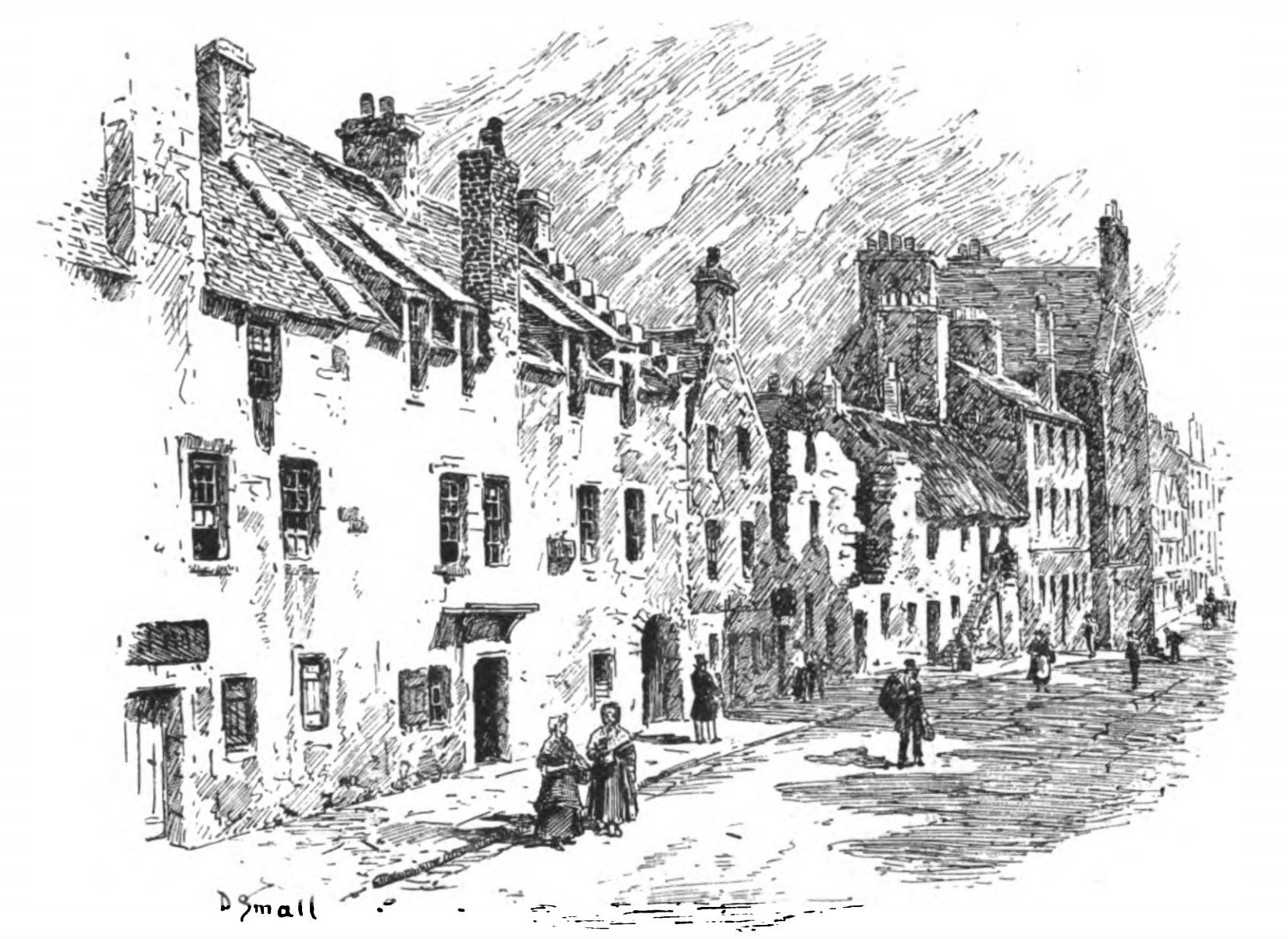
 West Port Experiment