 One of my personal heroes is Scottish Presbyterian minster, Aeneas Sage (1694-1774). I’m not quite sure if everything written about him is totally accurate; I get a whiff of the hagiographic if not the legendary in some of the stories. Yet, something in my gut tells me it is too good and so must be true! (Like a historian friend of mine quipped, ‘If it ain’t true, it should be!’) Whatever the case, Aeneas Sage captivates me, for as a pastor he knew how to captivate an audience – in more ways that one.
Archive for the ‘Theology of Community’ Category
All things to all men: a lesson from a Samsonesque Presbyterian
Posted in Church of Scotland, Experimental Religion & the Cure of Souls, Gospel Tactics, Highlands & Islands, Parish Theory & Practice, Parochial Strategy, Preaching, The Romance of Locality, Theology of Community on May 13, 2016| 1 Comment »
Thomas Guthrie, Apostle of the Ragged Schools
Posted in Benevolence & the Diaconate, Church of Scotland, Free Church of Scotland, Theology of Community, Thomas Chalmers on January 6, 2014| Leave a Comment »
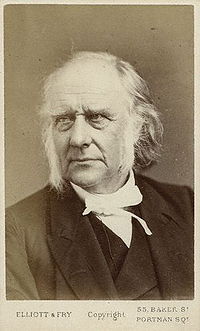 Here is an excellent article on a contemporary of Thomas Chalmers, Thomas Guthrie. Like Chalmers, Guthrie (1803-1873) had a heart beating for the good of the souls and bodies of those downtrodden in Industrial-Age Scotland. He also embraced the parish plan of action. ‘Let each select their own manageable field of Christian work. Let us embrace the whole city, and cover its nakedness, although, with different denominations at work, it should be robed, like Joseph, in a coat of many colours. Let our only rivalry be the holy one of who shall do most and succeed best in converting the wilderness into an Eden, and causing the deserts to blossom as the rose.’
The author of this article, Andy Murray, blogs at Ragged Theology. Andy also tells me that he’s just published a Kindle version of Guthrie’s memorable The City: Its Sins and Sorrows.
Sighing for Christian communities
Posted in Parochial Strategy, Theology of Community, Thomas Chalmers on October 26, 2013| Leave a Comment »
Thomas Chalmers here responds to a close friend who felt the secularizing influence of unconverted company. His reply? Aspire for the emergence of Christian communities and restlessly work to build them by aggressive soul-winning. Again, Chalmers exhibits a wholesome blend of romanticism and realism. He also gives some other helpful words to those engaged in the task of reaching the lost.
* * *
“You speak of uncongenial business or society in the evening, which broke up in some measure the religious frame of your mind on the preceding part of the day. Now, mark well that there will be no such interruptions in the Millennium; there are none such in a Moravian village at this moment; and there would be much fewer than there are in Glasgow had we a more extensive Christian community. The direct road to this is just to make as many Christian individuals and Christian families as we can; and in the exact proportion of our success shall we be rewarded by a freedom from all these temptations which the deadening and secularizing influence of the great majority of companies brings along with it. Let us ever keep by this object, then, as our great aim and purpose of our lives here below, combining, at the same time, all that discretion and skill which are necessary in the important work. Let us pray for that most desirable wisdom, the wisdom of winning souls—not forgetting that He who says, Keep thyself pure, also says, Lay hands on no man suddenly; and taking care, at the same time, never to convert the latter direction into a shelter for cowardice, or a plea for denying Christ before men. Oh, my dear sir, you are right to feel your shortcomings, and it is at the same time right to strike the high aim of being perfect, even as God is perfect. It is only wrong to conceive such a purpose in a dependence on ourselves; but who shall limit the power of His Spirit?”
Natural fountains for the relief of poverty
Posted in Benevolence & the Diaconate, Theology of Community, Thomas Chalmers, Two Kingdoms Theology on May 9, 2012| Leave a Comment »
 Thomas Chalmers (1780-1847) was an early voice opposing the compulsory, state-managed poor relief, what would later evolve into the present monster of the welfare state. He argued that a compulsory, bureaucratized system tended to stop up four natural fountains of charity within society, fountains that had long adequately refreshed the poor in rural Scottish society for ages. In order, these fountains were (1) personal industry, (2) the kindness of personal relatives, (3) the sympathy of the wealthy, and (4) the sympathy of the poor for each other. Unstop these by eliminating the compulsory system, and in general, poverty is naturally relieved. A few words from Chalmers himself on each, from his Collected Works, Vol. 14:
(1) Natural fountain # 1: personal industry.
“We know not a more urgent principle of our constitution than self-preservation; and it is a principle which not only shrinks from present suffering, but which looks onward to futurity, and holds up a defence against the apprehended wants and difficulties of the years that are to come. Were the great reservoir of public charity, for the town at large, to be shut, there would soon be struck out many family reservoirs, fed by the thrift and sobriety, whichnecessity would then stimulate, but which now the system of pauperism so long has superseded;—and from these there would emanate a more copious supply than is at present ministered out of poor rates, to aliment the evening of plebeian life, and to equalise all the vicissitudes of its history” (402).
(2) Natural fountain # 2: the kindness of personal relatives.
“One of the most palpable, and at the same time most grievous effects of this artificial system, is the dissolution which it has made of the ties and feelings of relationship. It is this which gives rise to the melancholy list of runaway parents, wherewith whole columns of the provincial newspapers of England are oftentimes filled. And then, as if in retaliation, there is the cruel abandonment of parents, by their own offspring, to the cold and reluctant hand of public charity. In some cases, there may not be the requisite ability; but the actual expense on the part of labourers, for luxuries that might be dispensed with, demonstrates that, in most cases, there is that ability. But it is altogether the effeet of pauperism to deaden the inclination. It has poisoned the strongest affections of nature; and turned inwardly, towards the indulgences of an absorhent selfishness, that stream which else would have flowed out on the needy of our own blood and our own kindred. It has shut those many avenues of domestic kindliness by which, but for its deadening and disturbing influence, a far better and more copious circulation of needful supplies would have been kept up throughout the mass of society” (402-403).
(3) Natural fountain # 3: the sympathy of the wealthy.
By the state-managed system, the result is that the wealthy and the poor “stand to each other in a grim array of hostility—the one thankless and dissatisfied, and stoutly challenging as its due, what the other reluctantly yields, and that as sparingly as possible. . . Were this economy simply broken up, and the fountain of human sympathy again left free to be operated upon by its wonted excitements, and to send out its wonted streams throughout those manifold subordinations by which the various classes of society and bound and amalgamated together – we doubt not that from this alone a more abundant, or, at least, a far more efficient and better-spread tide of charity would be diffused throughout the habitations of indigence” (404-405)
(4) Natural fountain # 4: the sympathy of the poor for each other.
“In the veriest depths of unmixed and extended plebeianism, and where, for many streets together, not one house is to be seen which indicates more than the rank of a common labourer, are there feelings of mutual kindness, and capabilities of mutual aid, that greatly outstrip the conceptions of a hurried and superficial observer: And, but for pauperism, which has released immediate neighbours from the feeling they would otherwise have had, that in truth the most important benefactors of the poor are the poor themselves— there has been a busy internal operation of charity in these crowded lanes, and densely peopled recesses, that would have proved a more effectual guarantee against the starvation of any individual, than ever can be reared by any of the artifices of human policy” (405).
More on my allergy to small groups
Posted in Articles, Gospel Proclamation, Ordinary Means Ministry, Preaching, Theology of Community on December 5, 2011| Leave a Comment »
Call me a curmudgeon. Or an arch-conservative, allergic to all things new. And I will freely admit that I romanticize earlier days, fully aware that they were never so rosy as I fancy them. But I am just not ready to jump on the small (‘cell’) groups bandwagon like so many other Reformed folks. I have already raised some questions on the subject in a previous post. I really do question how ecclesiologically Reformed it is after all.
But here’s another thing that makes me nervous of them. I fear that they detract from a robust pulpit ministry, from Lord’s day to Lord’s day. In some circles, cell groups aim to provide meaningful biblical study for preachers who want their Sunday services to be ‘seeker sensitive.’ In my judgment, that makes cell groups a crutch for an impotent ministry.
 Related, it seems that they are now being touted (or maybe I’m just noticing it) as suitable vehicles for ‘missional’ outreach. Unbelievers need a ‘safe’ place to be welcomed, where they will not feel judged. So we can win them over to church, with all its trappings, through the back door. Now, I am all for loving unbelievers and making them feel loved. But what about public preaching as a means of grace? What of God’s choice of the foolishness of preaching? What of the scandal of the cross? And does that scandal come in bold face through the small groups, or is it in the fine print on page 236?
Why are Reformed people enthusiastic about this? Am I off, or is this broad evangelicalism, low churchism, or even anti-churchism sneaking in under the radar?
Corporate guilt & corporate confession
Posted in Covenant Theology, Theology of Community on June 13, 2011| Leave a Comment »
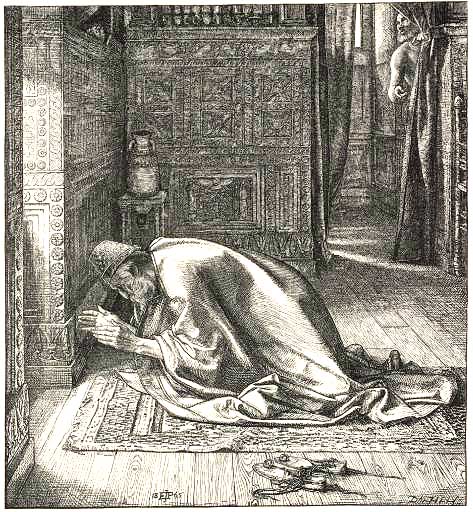 Our hyper-individualized society possesses a very low sense of corporate solidarity. Every man does that which is right in his own eyes. Every man isolates himself, tears apart what God has joined together, challenging, “and who is my neighbor?” Or, “am I my brother’s keeper?” Tragically, this thinking bleeds over into the mentality of the Church. We have become conformed to this individualistic world, not transformed by the renewing of our mind. Shame on us!
When, however, we begin thinking corporately – and for that matter, inter-generationally (should I say, consistently covenantal?) – we will find ourselves doing much more than confessing our own individual sins. For starters, we will confess the sin of individualism. But what is more, we will sense the guilt that we bear as members of families, states, and nations. We will sense a shared guilt by our association with the compromised Visible Church. And we will certainly feel, in addition to our own sins, the shared sins of our forbears.
Observe this principle in Leviticus 26:40, 42, “If they shall confess their iniquity, and the iniquity of their fathers, with their trespass which they trespassed against me . . . then will I remember my covenant with Jacob, and also my covenant with Isaac, and also my covenant with Abraham will I remember; and I will remember the land.” When exiled as a punishment for their sins and the sins of their fathers, Israel ought to repent and confess both. And they should do so with the assurance that the God who shows mercy from generation to generation will do precisely that!
See this also with Daniel in his great confession. This holy man, far from isolating himself from the larger body to which he belonged, rather owned it and identified with it. Even if the nation would not confess its sin, he would do it for them. Or, more to the point, as a part of them. “We have sinned, and have committed iniquity, and have done wickedly, and have rebelled, even by departing from thy precepts and from thy judgments: neither have we hearkened unto thy servants the prophets, which spake in thy name to our kings, our princes, and our fathers, and to all the people of the land” (Dan. 9:6; see the reference to “our fathers” also in vv. 8 & 16).
Now we may not like this. We may complain, charging God with injustice. “The fathers have eaten sour grapes and the children’s teeth are set on edge” (Ezek. 18:2). But the Potter has power over the clay. And it has pleased Him to make us not bare, atomized individuals – but much more. We are also members of corporate bodies. We are waves in a larger generational stream, branches in a much bigger tree. This is biblical. This is covenantal. This is reality! Let us acknowledge it and confess our sins. Including those we share with our ancestors. And if we do, should we not expect the God of the thousand generations to remember his mercies towards us – and our children (Acts 2:39)?
The social promise of parochial missions
Posted in Gregarious (Social) Principle, Parish Theory & Practice, The Romance of Locality, Theology of Community, Thomas Chalmers on February 5, 2010| Leave a Comment »
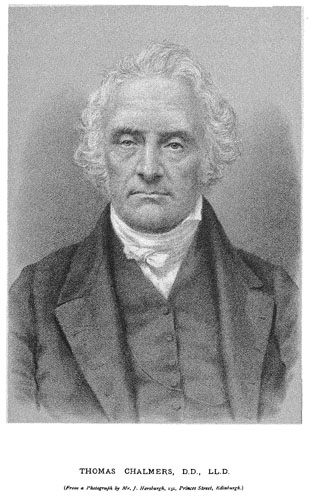 Key to understanding Thomas Chalmers’ advocacy of the locality (or parish) principle for urban missions is what he called ‘the gregarious principle.’ Man by God’s design was made a social creature. And as a part of God’s moral government, there are certain social laws that men disregard only to their detriment. The locality principle does not disregard, but presumes the gregarious principle and harnesses its potential. As a minister adopts a territory for its spiritual cultivation, he removes not only the geographic, but the social distance between himself, his church, and the people he is seeking to reach. And in the end, heart joins with heart.
The following quote illustrates Chalmers’ view of the social advantages in a minister doing outreach on the locality principle. Notice his concern with social ideas such as acquaintance, intimacy, friendliness, welcome, and fellow feeling:
In the first place, then, it is not so likely that a minister will go forth on his share of the population, when spread at random over the whole city, as when they lie within the limits of a space that is overtakable. He feels an incitement to move in the latter way of it, which he does not feel when his attentions are dispersed over a wide and bewildering generality. He, under the one arrangement, may have rare, and rapid, and transient intercourse with the individuals of a diffused multitude; but this can never ripen into solid acquaintanceship with more than a very few. Under the other arrangement, he may, at a greatly less expense, attain to terms of intimacy with some, and of civility with many. And it would add prodigiously to this operation, were his hearers, on the Sabbath, also his parochial acquaintances through the week. By this simple expedient alone, he would attain such an establishment of himself in his parish, in a single month, as he will not otherwise reach, but by the labour and assiduity of years. The very consciousness that, in a certain quarter of the city, lay the great body of his congregation, would be enough to assure him of a welcome there, and a friendship there, that would ever be inclining his footsteps to his parish, as the fittest scene of promise and of preparation for all his enterprises. And he would find, that the business of the Sabbath and the business of the week, had a most wholesome reciprocal influence the one upon the other. The former business would immediately open a wide and effectual door of intercourse with the people; and the latter business would not only retain the people in attendance upon their minister, but would rapidly extend their demand of attendance upon him, whenever there was room for it. . . .
But the second influence of locality in this matter, is perhaps of greater efficacy still. The first is that by which the minister obtains a more intense feeling of his relationship to his people. The second is that by which the people obtain a more intense feeling of their relationship to their minister. It is incalculable how much this last is promoted by the mere juxtaposition of the people to one another. There is a great deal more than perhaps can be brought out by a mere verbal demonstration, in a number of contiguous families, all related by one tie to the same place of worship, and the same minister. It would go to revive a feeling, which is now nearly obliterated in towns, whereby the house which a man occupies, should be connected, in his mind, with the parish in which it is situated, and an ecclesiastical relationship be recognised with the clergyman of the parish. In these circumstances, where there was no interference of principle, and no personal disapprobation of the clergyman, attendance upon the parish church would at length pass into one of the habitual and established proprieties of every little vicinage. Old families would keep it up, and new families would fall into it; and the demand for seats, instead of slackening under such an arrangement, would become more intense every year, so as to form a distinct call for more churches, whenever they were called for by the exigencies of a growing population (The Christian & Economic Polity of a Nation, pp. 67-68).
Of rain and parishes
Posted in Parish Theory & Practice, Theology of Community, WPE Editor on November 28, 2008| Leave a Comment »

It struck me recently that the formation of new Christian communities is like the formation of rain in two ways. First, a droplet cannot form without a microscopic bit of dust in the atmosphere. Water molecules adhere to and form around them. So with new parishes. There must be a center, a nucleus, for disconnected sinners to adhere and to gather around. That nucleus is the true community-generating word of salvation. Where it is preached, God gathers His people. And since that word lives and dwells within us, those most likely to gather around us are those closest to us. That means our neighborhoods – yours and mine – can be future parish communities. As God re-forms these communities, people could be walking to church once again.
But there is also another analogy. Gregory Falkovich of the Weizmann Institute of Science in Israel writes, “Theorists and experimentalists understand this progression, but they cannot agree on how long it takes. When you estimate the typical time you need to grow from micron- to millimeter-sized droplets, it would take maybe ten or fifteen hours, and empirically people noticed that often rain starts long before this–say in half an hour.” So with the re-emergence of Christian communities. It is a phenomenon shrouded in mystery. And we may not realize that they are re-emerging until the droplets suddenly form in conversions.
Jesus taught a parable on a similar analogy in Mark 4:26-29. The Kingdom of God is at work today, renewing and re-forming true communities. Let us tirelessly work for conversions and for new Christian communities, believing the One who calls those things that are not as though they were (Rom. 4:17).
Surviving Creative Destruction
Posted in Parish Theory & Practice, Theology of Community, Thomas Chalmers on November 5, 2008| Leave a Comment »
 In the modern day, old orders are forced to give way to new ones. This is the inevitable process of capitalism. In 1942, Joseph Schumpeter coined a phrase for this, that apparently became a buzzword in the dot-com boom of the 1990s. He called it “creative destruction.” It is a “process of industrial mutation that incessantly revolutionizes the economic structure from within, incessantly destroying the old one, incessantly creating a new one” (http://www.investopedia.com/terms/c/creativedestruction.asp).
As I was reading further in Greenspan’s Age of Turbulence, he illustrated the opposite of this principle on a holiday with his wife in Venice. “Venice, I realized, is the antithesis of creative destruction. It exists to conserve and appreciate the past, not create a future. But that, I realized, is exactly the point. The city caters to a deep human need for stability and permanence as well as beauty and romance. Venice’s popularity represents one pole of a conflict in human nature: the struggle between the desire to increase material well-being and the desire to ward off change and its attendant stress” (181).
There we have it again. A deep human need for the once-familiar and once-enjoyed ‘rootedness.’ We wish we could have it again, and enjoy what once was – true community. “Sometimes you want to go / where everybody knows your name, / and they’re always glad you came.”
The Anstruther of Thomas Chalmers’ childhood was his Venice. It hadn’t changed in his memory, and it would never change in that sense. Only, Chalmers wasn’t going to let Anstruther remain locked up in the past or remain only as a quaint tourist attraction for future generations. He fully realized that the idyllic parish community of his childhood would never remain exactly the same; yet he sought to transplant its essential features to the slums of St. John’s in Glasgow and the West Port in Edinburgh. That is, I think, part of the genius of Chalmers. In an age of change, he didn’t pay homage to creative destruction. He reckoned with its reality, yes – perhaps successfully, perhaps not so successfully. But the past was worth preserving; or better, the past was worth reimplementing.
Brick and Mortar in a Digital Age
Posted in Theology of Community on November 4, 2008| 2 Comments »
“By 2006, nearly 69 percent of households owned their own home, up from 64 percent in 1994 and 44 percent in 1940. The gains were especially dramatic among Hispanics and blacks, as increasing affluence as well as government encouragement of subprime mortgage programs enabled many members of minority groups to become first-time home buyers. This expansion of ownership gave more people a stake in the future of our country and boded well for the cohesion of the nation, I thought. Home ownership resonates deeply today as it did a century ago. Even in a digital age, brick and mortar (or plywood and Sheetrock) are what stabilize us and make us feel at home” (Alan Greenspan, Age of Turbulence, p. 230).
Notwithstanding the subprime debacle that has thrown Wall Street into a tailspin since this quote, Greenspan’s last observation struck me. The preconditions for community in the historic sense are vanishing in our day with advancements in travel, technology, and communications. As we are annexed into the Global Village, we become the neighbors of all and none at once. But we will never shake our longing for rootedness. And as social beings, we want to be rooted together. So as long as we have houses and as long as we have neighbors, we have the raw materials for the old community to be revived. What is needed is the Spirit of God to breathe into these dead bones and constitute true communities again.
But God’s Spirit is at work today, and He is rebuilding true community. It can be found in the Visible Church, consisting of those who profess the Christian gospel and their children. Yes, we bear the imprint of our culture. More often than not, we no longer live in geographic community. We have drifted far from that ideal that we discover in the ancient church of Jerusalem, “And all that believed were together . . . and they continuing daily with one accord in the temple, and breaking bread from house to house, did eat their meat with gladness and singleness of heart . . .” (Acts 2:44, 46). But though we must travel by car, call by phone, or communicate by e-mail, God’s people have discovered that God has preserved and is remaking community in a day when it seems past repair. There is still a “togetherness,” a “one accordness” in our congregations.
And yet I for one haven’t given up on hoping for the reemergence true, Christian communities on a large scale. I hope to see the kind of communities that prevailed in Scotland, the Netherlands, and New England. Communities leavened with the Gospel – people walking to church once again. Neighbors enjoying brotherly fellowship, older matrons giving a helping hand to harried young mothers, baptized children playing together in front of their own houses. Those same children growing up, falling in love, marrying, and ushering in third and fourth generation to the church of their childhood. Ministers working in tandem for the Christianization of cities, regions, and states, not resting until the lump of the nation has been filled.
I hold out that hope because, as Greenspan has said, people still want to put their roots down. And they still want to live in community. And even more importantly, God is still at work, preserving and building true community up. If He is building true community, and that community is constantly seeking to enfold the alienated (Eph. 2:12), then the neighborhoods in which our people live can easily be future parishes in the old fashioned sense. Within our church communities, there are still ‘brick and mortar’ houses. And these can – they must! – become beachheads from which our church communities expand and realize themselves.
Greenspan is right. Community is not dead. But more to the point, God has said it – and He is at work!
“Thus saith the LORD; I am returned unto Zion, and will dwell in the midst of Jerusalem: and Jersualem shall be called a city of truth; and the mountain of the LORD of hohsts the holy mountain. Thus saith the LORD of hosts; there shall yet old men and old women dwell in teh streets of Jerusalem, and every man with his staff in his hand for very age. And the streets of the city shall be full of boys and girls playing in the streets thereof” (Zech. 8:3-5).
 West Port Experiment