Feeds:
Posts
Comments

Archive for the ‘The Visible Church’ Category

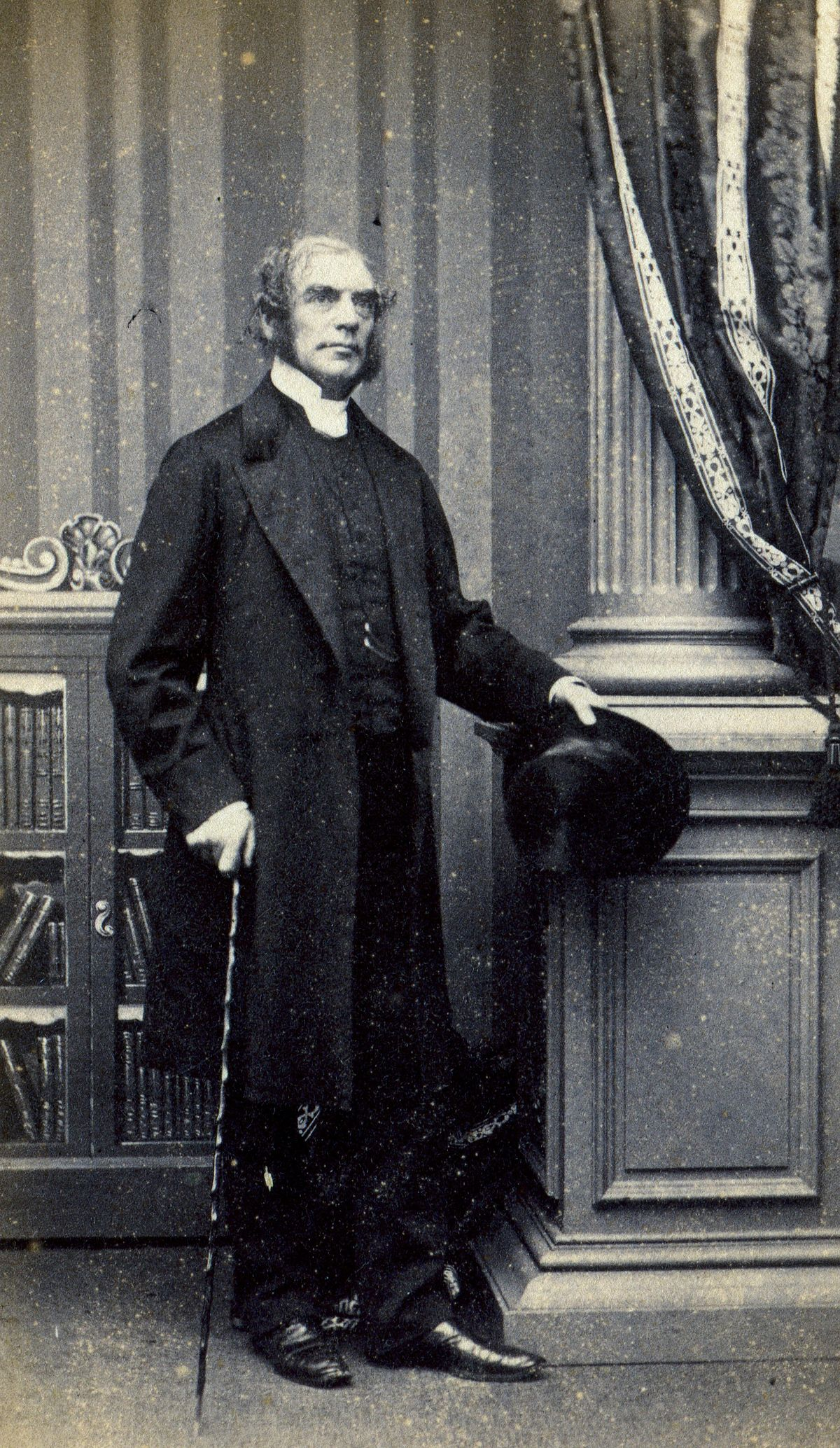
The following passage is taken from Free Church of Scotland minister Robert Gordon’s Christ as Made Known to the Ancient Church (1854), where he treats the command of God to build the tabernacle in the wilderness. “And let them make me a sanctuary; that I may dwell among them” (Ex. 25:8). Gordon sets forth rather poignantly the biblical doctrine as expressed in the Westminster Confession of Faith ch. 25, “On the Church.”

* * * * *
Though it was to the incarnation of Christ, therefore, that the passage before us does more immediately refer, as that which was prefigured by the tabernacle; yet the effect of his manifestation is, that God has always dwelt, and ever will dwell, among men, even in his Church, to whom Christ has promised that by his Spirit he will be with her always, even unto the end of the world. The Church, indeed, is represented as the tabernacle or dwelling, place of the Lord; for it is evidently of the Church at large, as well as of the place which God had chosen from among the tribes of Israel to put his name there, that he thus speaks: “The Lord hath chosen Zion; he hath desired it for his habitation. This is my rest for ever: here will I dwell; for I have desired it. I will abundantly bless her provision: I will satisfy her poor with bread. I will also clothe her priests with salvation: and her saints shall shout aloud for joy.” And again, “Look upon Zion, the city of our solemnities: thine eyes shall see Jerusalem a quiet habitation, a tabernacle that shall not be taken down; not one of the stakes thereof shall ever be removed, neither shall any of the cords thereof be broken. But there the glorious Lord will be unto us a place of broad rivers and streams.”

(more…)
Read Full Post »

A very insightful and theologically rich article on Augustine and the Church. I realize now just how much classic Westminsterian ecclesiology and sacramentology owes to him, especially as he articulated biblical truth over against the Donatists.

[source]

Read Full Post »

“In the second place, the principles laid down demonstrate the evil of schism, or of causeless separation in the Church. The visible Church of Christ was intended by Him to be catholic and one; and notwithstanding of the dissemination far and wide throughout the world of the separate societies of professing Christians, it would be one in reality, as comprehending all and uniting all, were it not for the sinful infirmities of its members. That can be no light offence which gives to the one kingdom of God in this world the appearance of a kingdom divided against itself, and liable to fall. It were impossible, indeed, to deny that there may be real and sufficient ground for separation from some particular local Church. That a particular Church may itself apostatize from the faith, or be guilty of imposing upon its members terms of communion, to comply with which would be sin, there cannot be a doubt; and in such a case separation becomes a duty to be discharged, and not an offence to be avoided. But in separating in such circumstances from the Church, the schism lies not with the parties who separate, but with the Church that compels and causes the separation. In thus going forth from it, we maintain, in fact, rather than infringe on the higher unity of the one Church of Christ. But for parties to separate wantonly, and on insufficient grounds, from the communion of the visible Church, is a grave and serious offence against the authority of Christ in His house. To go out from the communion of the visible Church, and to widen its breaches wilfully, and for trivial reasons, is to set ourselves against the desire and design of Christ that His kingdom in this world should be catholic and one. And when schism is aggravated by the permanent abandonment of a Church profession and Church state,—when causeless separation from any one Church of Christ is followed by the disavowal of all,—when the outward profession that makes a man a member of the visible Church is cast off, and all Christian fellowship is disowned, the guilt incurred is of a ruinous kind.” ” The visible Church,” says the Confession of Faith,” is the house and family of God, out of which there is no ordinary possibility of salvation” (emphasis mine).

James Bannerman, The Church of Christ

* * * *

Whole doctrine catholicity | “Who is she that looketh forth as the morning, fair as the moon, clear as the sun, and terrible as an army with banners” (Song 6:10)?

Read Full Post »

“Schism and division among the ministers and members of the church is a grievous malady that we at present labour under. Surely it is a most unnatural distemper that causes the sheep of Christ to bite and devour one another, and the members of Christ to separate as aligns; yea, not only to break up Christian communion, but break out in uncharitable reflections, bitterness, wrath, clamour and evil speaking, one against an other. A strange distemper! that puts those who will delightfully worship God together through a whole eternity, in such a case, that they cannot keep fellowship together here! A distemper that makes men renounce communion with those they once delighted in, and with whom the glorious Head doth still hold communion: that takes many off from the vitals and essentials of religion and employs their time in public controversies about party opinions, the grounds of separation, the characters of preachers, and things which rather tend to be. get alienation of affections, and angry quarrels, than to promote saving knowledge, faith, love, and godly edifying. Oh! how, like a judgment is that spirit of strife and division which God hath poured out upon this land for our former misimprovement of the gospel, and contempt of many glorious evils Christ? and calamities! Ah, what a flood-gate doth it open to many evils and calamities! That is a true doth word it of the apostle, James iii, 16, “Where envying and strife is there is confusion and every evil work.” What a plague must that be that produces every evil work? What a dreadful disease it is, that turns Christian converse into vain janglings, that hinders social prayers, that mars the success of the gospel, weakens the interest of religion, propagates all kind of evil, and exposes the church to the scorn and derision of her enemies! How applicable is that word to us, Lam. ii. 13, “Thy breach is great like the sea, who can heal thee?” Surely none but he that hath the balm of Gilead.”

Whole doctrine catholicity | “Who is she that looketh forth as the morning, fair as the moon, clear as the sun, and terrible as an army with banners” (Song 6:10)?

Read Full Post »

It is a joyful time when new members are added to a congregation, formally identifying themselves as believers in Jesus and committing to live as one of His disciples. All churches have some kind of admission process which allows them to decide whether somebody can be accepted as a new member. However, what criteria should a church use? Robert Baillie (1602–1662) served as a minister in Kilwinning, an army chaplain, and Professor of Divinity (later Principal) at Glasgow University. He was also one of the Scottish commissioners to the Westminster Assembly. In his writings he interacted with some who believed that people were obliged to provide evidence that they were truly regenerate before they could be accepted as church members. Robert Baillie argues in the following extract that this sets the bar for church membership too high. We cannot see into each other’s hearts, so how can we know whether someone is genuinely saved or not? Also, the Lord Himself has organised His church in the world in such a way that it will never be composed entirely of the truly regenerate. Baillie’s position strives for the highest standards for church members to live up to, while relieving us of the burden of deciding whether each individual church member is genuinely born again.

Read the rest of the article at Reformation Scotland.

Read Full Post »

“Did believers in the Lord Jesus more frequently meet in council, in service, in communion, how soon and entirely would the coldness, the party spirit; the jealousies, the erroneous impressions vanish which now, alas! divide the body of Christ, all whose members are ‘members one of another.’ Knowing each other better, they would love each other more; and loving each other more, there would be more ready concession made to the freedom of judgment and the claims of conscience. The clergy of the various sections of the Christian Church stand too wide apart from each other simply because they do not know each other. And if the shepherds are thus sundered, it is no marvel that the sheep are divided! The Church of Christ is essentially one, why should she not be visibly one? Inseparable from Christ, why should we be separated from each other? With an essential unity of faith, why should we not all unite in excluding uncharitableness? Oh! If the Lord’s people—losing sight of every badge but Christian, and of every name but Christ—were to mingle more frequently, confidingly, and prayerfully together, how much more would they find of assimilation, of sympathy, and affection—how much less to sunder, separate, and censure, and how much more to admire, love, and imitate in each other than they had any conception of.”

–Octavius Winslow

Read Full Post »

“Therefore all the true Members [of the Church] should study Unity; This Truth of the Oneness of the Catholick Visible Church, being the Ground of all the Union and Communion in the Ordinances thereof. Cant. 6.9. My Dove, my Undefiled is but One, She is the only One of Her Mother. If the Church be One, Divisions and divided Communions in her must either inferr that this one Church is many, made up of Heterogeneous parts, or that the Church divided from is not apart of that one Church, and hath broken off from that which compacts the Body together.”

Alexander Shields (1661-1700)

* * * *

Whole doctrine catholicity | “Who is she that looketh forth as the morning, fair as the moon, clear as the sun, and terrible as an army with banners” (Song 6:10)?

Read Full Post »

Came upon this choice piece from Boston’s Memoirs. A series of questions put to a prospective communicant. The first question I find rather insightful—I’ve long tended to think that a working understanding of the Shorter Catechism is basically the cognitive side of Presbyterian terms of communion. Without reaching that bar, the session ought to delay that applicant and give further instruction (L. Cat. 173). Also, there is explicit submission to church discipline.

I am aware that Boston arguably had some “independent” aspects to his presbyterianism, and perhaps this reflects too much a likeness to the old Congregational “church covenants?” But whatever the case, I find this explicit consent and covenanting commendable:

“And if the Session be satisfied in this also, the party is to be put explicitly to consent to the Covenant (whereof he desires the seal), to be the Lord’s, live under Him, and serve Him all the days of his life, by answering expressly the following (or the like) questions: 1. Do you believe the doctrine of the Shorter Catechism of this Church, so far as you understand the same, to be the true doctrine agreeable to the Holy Scriptures, and resolve through grace to live and die in the profession of the same? 2. Do you consent to take God in Christ to be your God, the Father to be your Father, the Son to be your Saviour, and the Holy Ghost to be your Sanctifier; and that, renouncing the devil, the world and the flesh, you be the Lord’s for ever? 3. Do you consent to receive Christ, as He is offered in the gospel, for your Prophet, Priest and King; giving up yourself to Him, to be led and guided by His Word and Spirit; looking for salvation only through the obedience and death of Jesus Christ, who was crucified without the gates of Jerusalem; promising in His strength to endeavour to lead a holy life, to forsake every known sin, and to comply with every known duty? 4. Lastly, do you promise to subject yourself to exhortation, admonition, and rebuke, and the discipline of the Church, in case (which God forbid !) you fall into any scandalous sin?”


Memoirs, Appendix 3, § 10, p. 488.


Read Full Post »

MacPherson explains the radically catholic ecclesiology of our Scottish Presbyterian forbears. Listen to an audio recording of the chapter where he treats this subject here.

Whole doctrine catholicity | “Who is she that looketh forth as the morning, fair as the moon, clear as the sun, and terrible as an army with banners” (Song 6:10)?

Read Full Post »

This was a particularly good episode. It just so happened that I had picked up Anselm’s masterpiece on penal substitutionary atonement, Cur Deus Homo? (Why the God-man?) There is definitely more light from the “Dark Ages” than is often supposed. Protestantism rejected a lot from the Medieval Church; but it retained a lot both from it and the Patristic era.

Read Full Post »

Older Posts »