The labor of the man of God, in the congregation or the community, ought to be paternal through and through. “For though ye have ten thousand instructors in Christ, yet have ye not many fathers: for in Christ Jesus I have begotten you through the gospel” (1 Cor. 4:15; cf. Larger Catechism 124). He must be strong and steady, a visionary, yet eminently practical. He must patient, but ever pushing and pulling. He must be sensitive to the true needs and worthy feelings of the people, yet not obsequiously over-indulgent to their every whim.
Tragically, too much of modern ministry fails to live up to this ideal. While the clergy have in the past sometimes been too harsh and overbearing, the pendulum has swung quite the opposite direction. The modern pastor-coach is in the worst case an effeminate nothing. He cannot command true respect. Only fleeting popularity from the herd.
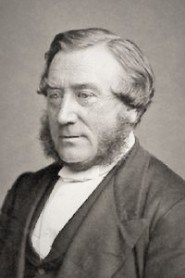
The following passage from Thomas Chalmers reveals just how timeless the unfatherly pastor is – and how dignified the ideal. O Lord, make us those men. Our Father, make us fathers!
* * *
“And here one reason at least becomes manifest, why, on the part of clergymen, the mere whimsies of popular feeling ought not to be complied with; and that between favourite preachers and their doting admirers such a spectacle should never be held out, as that of servile indulgence upon the one side, and weak, trifling, senseless conceits of taste and partiality, on the other. It is this which, more perhaps than any other cause, has degraded the popular opinion into a thing of no estimation; and has thrown circumstances of ridicule around it, which have given, an edge to satire, and furnished a plea of extenuation for the policy that holds it at nought. If it be grievous to observe the demand of the people about frivolities of no moment, it is still more grievous to behold the deference which is rendered thereto by the fearful worshippers at the shrine of popularity. It is a fund of infinite amusement to lookers on, when they see, in this interchange of little minds, how small matters can become great, and each caprice of the popular fancy can be raised into a topic of gravest deliberation. It were surely better that Christian people reserved their zeal for essentials; and that Christian teachers, instead of pampering the popular taste into utter childishness, disciplined it, by a little wholesome resistance, into an appetite, at once manly, and rational, and commanding. Everything that can disarm the popular voice of its energy will be lamented by those who think as we do, that it is a voice which, in the matters of Christianity, is mainly directed to what is practically and substantially good; and that it is just the despite which has been done to it that has so paralyzed the ministrations of our Establishment. And, therefore, do we hold it so desirable that the popular taste were chastened out of all those vagaries which have just had the effect of chasing away the homage that else would have been rendered to it. We know that it has its occasional weaknesses and extravagances; but we believe that these are in no way essential to it; and that, by the control of the ministers of religion, acting wisely, and honestly, and independently, they could all be done away. Though these were lopped off from the affection, it would still subsist with undiminished vigour, and it would then be seen what it nakedly and characteristically is—not that mere fantastic relish which it is often conceived to be, but the deep and strong aspiration of conscious humanity, feeling, and most intelligently feeling, what the truths, and who the teachers are, that are most fitted to exalt and to moralize her.
“In proof of this we may, with all safety, allege that let there be a teacher of religion, with a conscience alive to duty, and an understanding soundly and strongly convinced of the truths of the gospel; let him, with these as his only recommendations, go forth among a people, alive at every pore to offence from the paltry conceits and crotchets in which they have drivelled and been indulged for several generations; let them be prepared with all the senseless exactions which a dark and narrow bigotry would often bring upon a minister; and let him, disdainful of absurdity in all its forms, whilst zealous and determined in acquitting himself of every cardinal obligation, only labour amongst them in the spirit of devotedness: and it will soon be seen that the general good-will of a neighbourhood is far more deeply and solidly founded, than on the basis of such petty compliances as have made popularity ridiculous in the eye of many a superficial observer. The truth is, that there is not one irrational prejudice among his hearers, which such a teacher would not be at liberty to thwart and to traverse, till he had dislodged it altogether. Grant him the pure doctrine of the Bible for his pulpit, with an overflowing charity in his heart for household ministrations— and the simple exhibition of such worth and such affection on the week, from one who preaches the truths of Scripture on the Sabbath, will, without one ingredient of folly, gain, for him, from the bosoms of all, just such a popularity as is ever awarded to moral worth and to moral wisdom. This, indeed, we believe to be the main staple of that popularity which is so much derided by the careless, and often so unfeelingly trampled upon by the holders of patronage. And thus it is fearful to think that, in the systematic opposition which has been raised upon this subject against the vox populi, Government may, unknowing of the mischief, have been checking, all the while, the best aspiration that am arise from the bosom of a country—may have been combating, in its first elements, the growth of virtue in our land —and, in wanton variance with its own subjects about the principle of religion, may have been withering up all those graces of religion, which would else have blessed and beautified our population” (Works 14:192-195).
Read Full Post »



 West Port Experiment