Feeds:
Posts
Comments

Archive for the ‘The Romance of Locality’ Category

Below is an extract from an upcoming journal article I’m writing on Thomas Chalmers’ territorial (parochial) method of outreach.

* * * *

The method also capitalizes on the power of moral influence. Now, as we have seen already, the very doctrinal keystone of Chalmers’ model was the stern, Calvinist doctrine of human depravity. Attraction might work, if men were not half bad. But as they are altogether bad – spiritually speaking – there must be aggression. Yet, perhaps surprisingly, the aggression must be gentle. The laborer must go among the people and “ingratiate” himself in their affections by his manifest care for them, body and soul, parents and children:

… he is to watch every opportunity, to go to them especially at those seasons when, through sickness or death in their houses, their hearts are peculiarly open and susceptible to impressions from one who comes to them in the character of a friend and comforter, as interesting himself in the education of their families, and by a thousand nameless offices and topics of introduction by which you may make a pretext or a reason occasion of visiting them: and you will infallibly, in ninety-nine cases out of the hundred, meet with a cordial welcome from this alienated population.

This aggression is the force of moral suasion, or as he wrote elsewhere, the “omnipotence of Christian charity.” That the people are thus susceptible highlights Chalmers’ convictions of a certain abiding goodness in human nature, which the territorial method exploits. It may not always result in conversion, but it should very well restore a population to regular church attendance – a more hopeful prelude to conversion.

Read Full Post »

Here is a delightful vignette of old parish ‘missions,’ if you will, in 17th century Presbyterian Scotland.  The minister, William Guthrie (1620-1665), labored to be all things to all men, that he might gain some.

* * *

“After William Guthrie came to Fenwick, many of the people were so rude and barbarous, that they never attended upon divine worship, and knew not so much as the face of their pastor. To such, everything that respected religion was disagreeable; many refused to be visited or catechised by him; they would not even admit him into their houses. To such he sometimes went in the evening disguised in the character of a traveller, and sought lodging, which he could not even obtain without much entreaty, but, having obtained it, he would engage in some general amusing conversation at first, and then ask them how they liked their minister. When they told him that they did not go to church, he engaged them to go and take a trial; others he hired with money to go. When the time of family worship came, he desired to know if they made any, and if not, what reasons they had for it.

(more…)

Read Full Post »

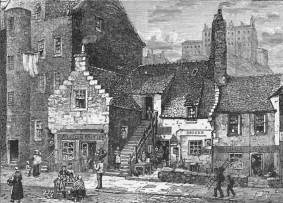
0_engraving_-_one_2_224_west_portI recently gave a lecture (sermon?) on the fascinating and inspiring story of Thomas Chalmers’ West Port Experiment in the slums of Industrial Edinburgh, from 1844-1847.  You can listen to it hereAd urbem!


Read Full Post »

One of my personal heroes is Scottish Presbyterian minster, Aeneas Sage (1694-1774). I’m not quite sure if everything written about him is totally accurate; I get a whiff of the hagiographic if not the legendary in some of the stories.  Yet, something in my gut tells me it is too good and so must be true!  (Like a historian friend of mine quipped, ‘If it ain’t true, it should be!’)  Whatever the case, Aeneas Sage captivates me, for as a pastor he knew how to captivate an audience – in more ways that one.

(more…)

Read Full Post »

A. C. Cheyne (1924-2006), a recognized Scottish Church History scholar summarizes the central ideas inherent in Chalmers’  “territorial parish.”  It was a “manageably small area housing a community of some two thousand souls who lived, worked and worshipped together, with a church and a school at its center and a minister and a kirk session to attend to both its spiritual and its temporal necessities: here, he argued, was the basic – he would even have said the redemptive – unit of Scottish society.  Here was the means of national regeneration.”   In my reading of Chalmers, I would suggest that he would say the preaching of the Gospel was the means.  Yet, he certainly saw the territorial parish as the most efficient vehicle for getting that Gospel preaching to every man, woman, and child.

Read Full Post »

Key to understanding Thomas Chalmers’ advocacy of the locality (or parish) principle for urban missions is what he called ‘the gregarious principle.’  Man by God’s design was made a social creature.  And as a part of God’s moral government, there are certain social laws that men disregard only to their detriment.  The locality principle does not disregard, but presumes the gregarious principle and harnesses its potential.  As a minister adopts a territory for its spiritual cultivation, he removes not only the geographic, but the social distance between himself, his church, and the people he is seeking to reach.  And in the end, heart joins with heart. 

The following quote illustrates Chalmers’ view of the social advantages in a minister doing outreach on the locality principle.  Notice his concern with social ideas such as acquaintance, intimacy, friendliness, welcome, and fellow feeling:

In the first place, then, it is not so likely that a minister will go forth on his share of the population, when spread at random over the whole city, as when they lie within the limits of a space that is overtakable. He feels an incitement to move in the latter way of it, which he does not feel when his attentions are dispersed over a wide and bewildering generality. He, under the one arrangement, may have rare, and rapid, and transient intercourse with the individuals of a diffused multitude; but this can never ripen into solid acquaintanceship with more than a very few.  Under the other arrangement, he may, at a greatly less expense, attain to terms of intimacy with some, and of civility with many. And it would add prodigiously to this operation, were his hearers, on the Sabbath, also his parochial acquaintances through the week. By this simple expedient alone, he would attain such an establishment of himself in his parish, in a single month, as he will not otherwise reach, but by the labour and assiduity of years. The very consciousness that, in a certain quarter of the city, lay the great body of his congregation, would be enough to assure him of a welcome there, and a friendship there, that would ever be inclining his footsteps to his parish, as the fittest scene of promise and of preparation for all his enterprises. And he would find, that the business of the Sabbath and the business of the week, had a most wholesome reciprocal influence the one upon the other. The former business would immediately open a wide and effectual door of intercourse with the people; and the latter business would not only retain the people in attendance upon their minister, but would rapidly extend their demand of attendance upon him, whenever there was room for it. . . .

But the second influence of locality in this matter, is perhaps of greater efficacy still. The first is that by which the minister obtains a more intense feeling of his relationship to his people. The second is that by which the people obtain a more intense feeling of their relationship to their minister. It is incalculable how much this last is promoted by the mere juxtaposition of the people to one another. There is a great deal more than perhaps can be brought out by a mere verbal demonstration, in a number of contiguous families, all related by one tie to the same place of worship, and the same minister. It would go to revive a feeling, which is now nearly obliterated in towns, whereby the house which a man occupies, should be connected, in his mind, with the parish in which it is situated, and an ecclesiastical relationship be recognised with the clergyman of the parish. In these circumstances, where there was no interference of principle, and no personal disapprobation of the clergyman, attendance upon the parish church would at length pass into one of the habitual and established proprieties of every little vicinage. Old families would keep it up, and new families would fall into it; and the demand for seats, instead of slackening under such an arrangement, would become more intense every year, so as to form a distinct call for more churches, whenever they were called for by the exigencies of a growing population (The Christian & Economic Polity of a Nation, pp. 67-68).

Read Full Post »
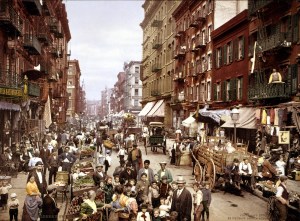
“However thoroughly we may he convinced of the benefit that would result from the influence of locality, we feel that it is not in easy task didactically to set forth this influence, by any process of argument or explanation. The conviction is far more readily arrived at by the tact of real and living experience, than by the lessons of any expounder. There is a charm in locality, most powerfully felt by every man who tries it; but which, at the same time, it is most difficult so to seize upon as to embody it in language, or to bring it forth in satisfying demonstration to the public eye. We do not know an individual who has personally attached himself to a manageable portion of the civic territory, and has entered with taste and spirit upon its cultivation-and who does not perceive, with something like the force and the clearness of intuition, that, if this way of it were spread over an assembled million of human beings, it would quickly throw a new moral complexion over the teeming expanse that is on every side of him. But what he feels, it is not easy to make others see. For, however substantial the influence of locality is, there is a certain shadowy fineness about it, in virtue of which it eludes the efforts of an observer to lay hold of it, and to analyze it. It is no bad evidence, however, of the experimental soundness of this operation, that the incredulity about it, is all on the side of those who stand without the field of local management; and the confidence about it, on the side of those who stand within-and that, while the former regard it as a mystic and undefinable fancy, the latter find in it as much of sureness and solidity, as if their eyes saw it, and their hands handled it.”

-Thomas Chalmers, The Christian and Economic Polity of a Nation, p. 43.

Read Full Post »

The following is a delightful quote in the preface of the 1840 edition of Thomas Chalmers’ Christian and Economic Polity of a Nation:

We confess no small gratification in finding, at the end of twenty years, that our promulgations, held at the time to be altogether Utopian, of the great charm and efficiency which lie in the household ministrations of clergymen, are now repeated in the most popular, and at the same time, the most able and authoritative of our daily journals. The Times newspaper of a few days back recommends with great force and eloquence, and in the following terms, “the still further prosecution of an earnest and indefatigable system of parochial domiciliary visiting throughout all the parishes of the land. This, depend upon it, is the only patent and talismanic key to English hearts, whether of Churchmen, Papists, or Dissenters. Disinterested and persevering kindness, brought habitually to a man’s home under all sorts of discouragement, is what no human being can long or rudely resist. With that elevated determination and singleheartedness, which, in the absence of all impertinent intrusions or officious curiosity, manifestly seeks to engage mankind in a devout concern for their immortal interests, let every family in every city, town, or hamlet, be regularly and affectionately visited, no matter what denomination they may belong to. The established clergy, accredited, commissioned, and upheld by the law of this realm, are the clergy of the whole nation. Every fireside in their parish is a part of their allotted charge. They have an official as well as a moral right, subject, of course, to discreet limitations, to seek admittance into every door, ‘ whether men will hear or whether they will forbear.’  Painful repulses will occasionally, though not often, occur; but these, compensated by a consciousness of dutiful exertion and by cordial welcomes in other cases, will sooner or later be overcome hy meek and patient endurance. Only let all the families of England be regularly invited to the dispensation of a free gospel in a free church ; and eventually the very universality of this hahit of parochial visiting will establish it as a part of our social system; and cause it to work with the uniform beneficence of nature’s general laws.”

Read Full Post »

« Newer Posts