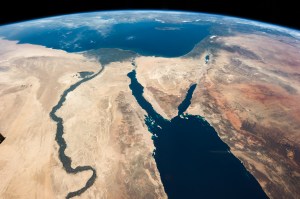
 “A territorial division of the country into parishes, each of which is assigned to at least one minister as the distinct and definite field of his spiritual cultivation— this we have long thought does for Christianity, what is often done in agriculture by a system of irrigation. You are aware what is meant by this. Its use is for the conveyance and the distribution of water, that indispensable aliment to all vegetation, over the surface of the land. It is thus for example, that, by the establishment of ducts of conveyance, the waters of the Nile are made to overspread the farms of Egypt—the country through which it passes. This irrigation, you will observe, does’ not supply the water. It only conveys it. It does not bring down the liquid nourishment from heaven. It only spreads it abroad upon the earth. Were there no descent of water from above causing the river to overflow its banks—there is nothing in the irrigation, with its then dry and deserted furrows, which could avail the earth that is below. On the other hand were there no irrigation, many would be the tracts of country, that should have no agriculture and could bring no produce. Let not therefore our dependence on the Spirit lead us to despise the machinery of a territorial establishment; and neither let our confidence in machinery lead us to neglect prayer for the descent of living water from on high.”
-Thomas Chalmers, “On the Analogies Which Obtain Between a Natural and a Spiritual Husbandry”
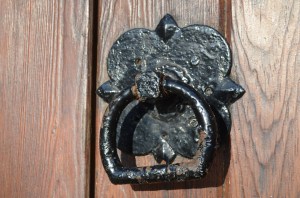 “Behold, I have set before thee an open door, and no man can shut it” (Rev. 3:8).
 Saturday was no disappointment. Above our Congolese friends is a small Somali family. The young man, a Muslim, was very polite and listened to the Gospel of the “Lamb of God” who takes away the sin of the world. Above them we met a single Iraqi woman, also Muslim, complete with prayer carpet and ornately decorated Qu’ran lying out. She was clearly needy, in more ways than one. A lonely soul who needed friends, and of course, the Friend who sticks closer than a brother. We spoke of the story of Joseph (“Yousef” as she recalled from the Qu’ran), and how he was lonely and abandoned, yet not abandoned by God. And we shared that he was a picture of the Christ to come, who would be abandoned by his friends that He might die and redeem them. We got her contact information and hope to follow up with her on some practical levels – and hopefully she continues to be open to the Gospel.
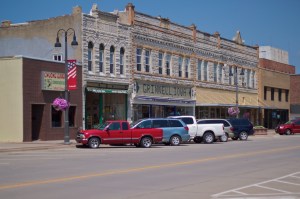 When I first met Pastor Reaves, he had just finished mowing. I didn’t know this, because he came into the house wearing a tie. He shared with me later that he did this so that he would be ready in case he got a call to the hospital. I would also learn soon that a visit to the hospital with him, in this town of about 9,000, could turn into an all-day event. That is not because he overstayed his welcome. On the contrary, he seemed to know just how long to stay, usually less than 15 minutes. No, it was because he visited so many patients.
 Went out in my nearby Lakewood parish Friday. Very encouraging overall. First, approached a couple of fellows who were talking in their driveway. Not wanting to interrupt, I handed them my literature. “Don’t let me interrupt you … unless you’re open to talking religion!” Well, they were. The one fellow, a 40-something biker type with a braided beard, told me that Christianity was suspect, having come down to us through the ages through oral tradition. He didn’t mention the telephone game illustration, but that was the gist of it. I explained to him and his friend the radical concern the early Christians had in bearing witness to the truth. Eventually, I gave the great ‘for instance’ in Saul of Tarsus. Open enemy. Jihadi type. A card-carrying, high profile Jew who hated the Christians. Then he claimed he witnessed the risen Christ, then began “preaching the faith he once destroyed.” At the very least, we should sit up and take notice. I invited him to church, and he indicated that I would probably see him someday.
 West Port Experiment