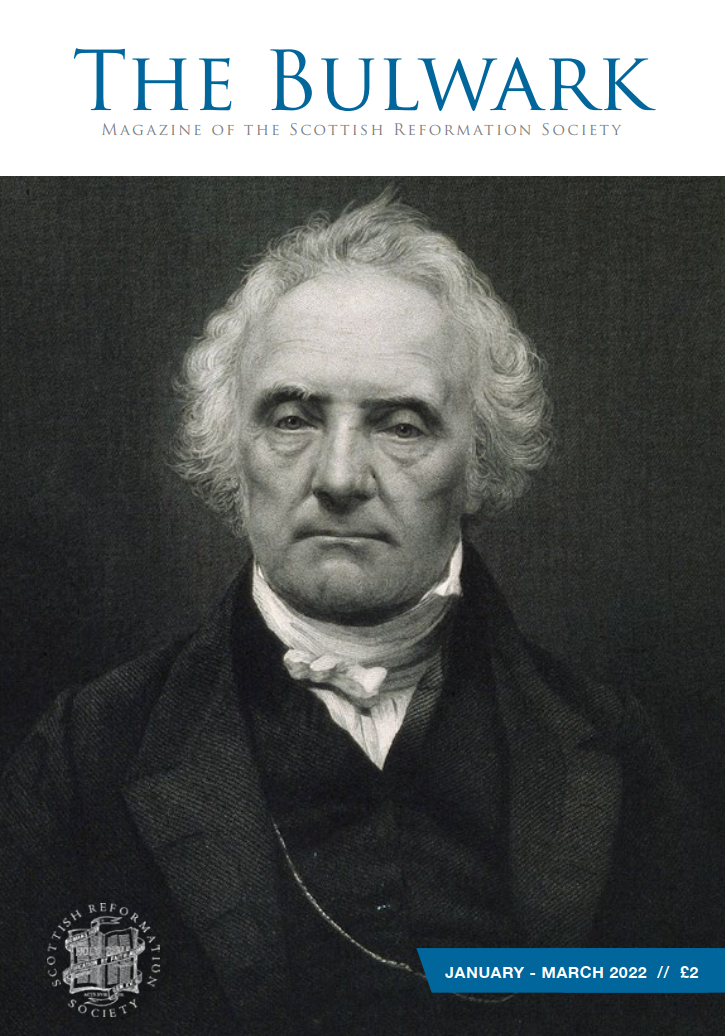
The article below on Andrew Bonar at Finnieston, Glasgow, was written by my friend Matthew Vogan and published in the Bulwark Magazine of the Scottish Reformation Society. The author relates the compelling story of Bonar’s evangelistic labor on the parish principle as taught and modeled by Thomas Chalmers.
Here are some sample extracts from the article:
Every afternoon from one o’clock till nearly five he would be found walking about his parish, visiting his people. He was well known on the streets of the district. He became a well-known figure in the area, and his friendly way of speaking and behaving endeared him to all, including children. Little children would run up to him as he walked and put their hand in his and receive a smile and gentle hand laid on the heard. One child called him “the minister with the laughing face.” Soon after arriving in the city, he spoke to a little girl in the street, addressing her by name. The child ran home to her mother with the delighted cry, “Mither, mither, he kens me.” [“Mother, mother, he knows me!”]
The following three articles by Frank DeVito at the Witherspoon Institute resonate with me rather deeply. He challenges conventional thinking in order to promote the rejuvenation not just of the nuclear family, but the extended family, and that inter-generationally in the localities where God has planted us. Well said, sir!
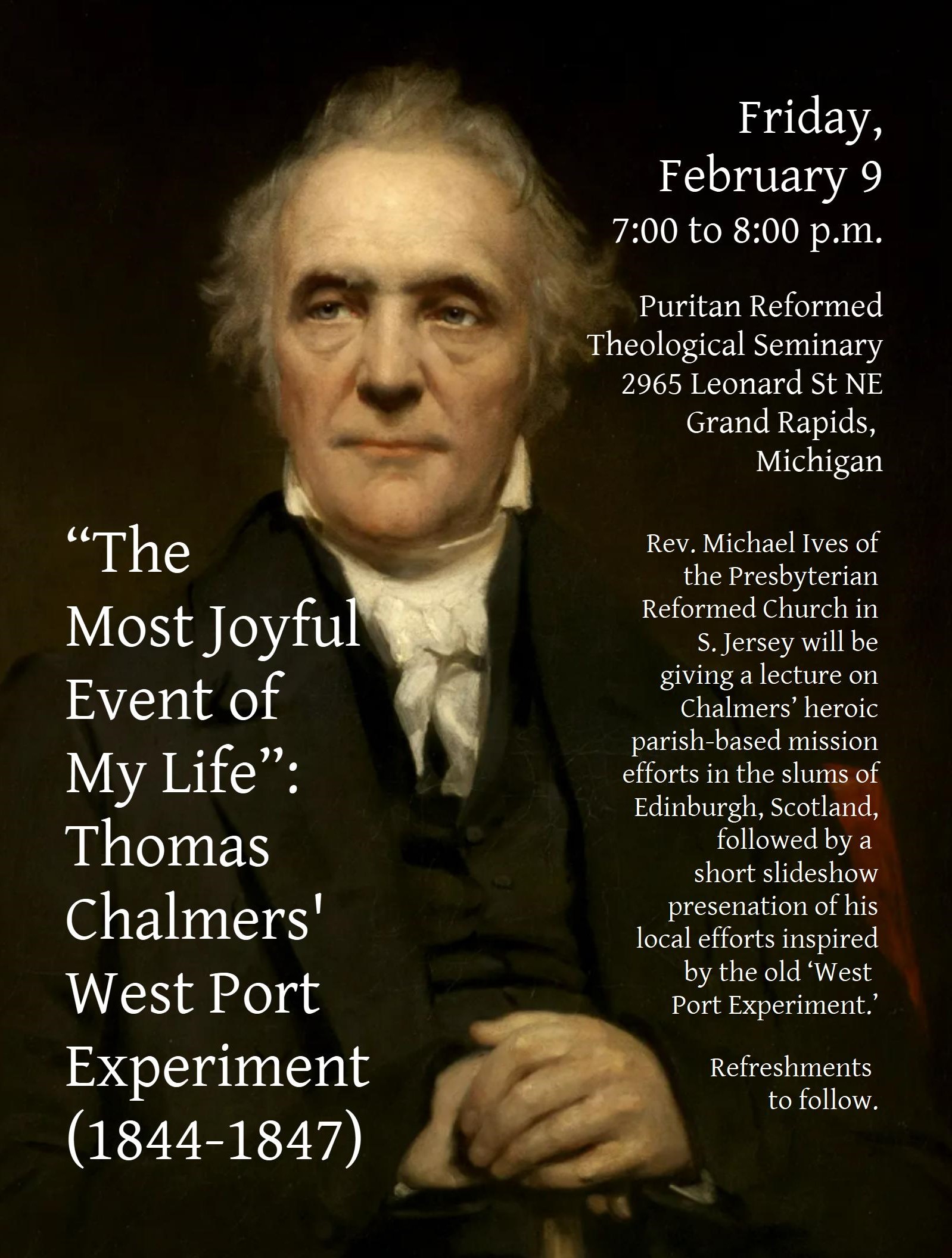
Note: this is a distinct, public event after the earlier PRTS Student Society lecture below. Both, however, are livestreamed (yet not including the short RPM slideshow as these include unedited photos of personal mission contacts).
This message was delivered at the Presbytery Conference of the Presbyterian Reformed Church on June 16, 2022. The audio is available here. Special thanks to Susan Abel for her selfless efforts in transcription!
* * * * *
Isaiah 35:7-10, “And the parched ground shall become a pool, and the thirsty land springs of water: in the habitation of dragons, where each lay, shall be grass with reeds and rushes. And an highway shall be there, and a way, and it shall be called The way of holiness; the unclean shall not pass over it; but it shall be for those: the wayfaring men, though fools, shall not err therein. No lion shall be there, nor any ravenous beast shall go up thereon, it shall not be found there; but the redeemed shall walk there. And the ransomed of the LORD shall return, and come to Zion with songs and everlasting joy upon their heads: they shall obtain joy and gladness, and sorrow and sighing shall flee away.”
Revelation 21:1-3, “And I saw a new heaven and a new earth: for the first heaven and the first earth were passed away; and there was no more sea. And I John saw the holy city, new Jerusalem, coming down from God out of heaven, prepared as a bride adorned for her husband. And I heard a great voice out of heaven saying, Behold, the tabernacle of God is with men, and he will dwell with them, and they shall be his people, and God himself shall be with them, and be their God. Amen, this is the Word of the living God.”
Last month I had the personal privilege of going back to my old stomping grounds—at least, one of them— as a boy. I had not been to Homestead, Florida, just south of Miami, since I was about fourteen years old, not long after my father went to glory. It was a place, notwithstanding the bitterness of the memories of the loss of my father, [that] was overall a time of great delight: many good memories, especially on this particular street. And I am sure my children can tell you, that I would mention the many late nights when we would play a pick-up game of baseball, and take some charcoal and make some bases, and have an awful lot of fun. Well, as we drove up and came into the neighborhood, memories started flooding back—a lot of good memories. And finally I came with my wife to this home, and there it was, largely as I remembered it, although it had a new coat of paint. And much was the same, and much was so very sweet and so very special. I even got to meet the next-door neighbor whom I did remember as a boy (and I got to have a selfie with them!). So it was quite special.
“Chalmers’ method was simple, systematic, spiritual, and unadorned. It was concerned with reaching souls rather than building brands; it sought them out. A gathered team of committed individuals connected with their local community and the lives of individuals through visitation and interaction. Such a method has massive challenges in a society where community has disintegrated but that is not to say it is impossible. No doubt something resembling it is bearing fruit in some communities.”
In this article below, my good friend Matthew Vogan recounts the old national vision of our Scottish Presbyterian forbears like Thomas Chalmers, who maintained confessional fidelity while also aggressively engaged in home missions. Does anyone among the theological heirs of Chalmers have such a national vision? Or even more pointedly, does anyone care?
Well, I for one deeply believe that they do care. And that they have the almighty Spirit of God dwelling in them and resting upon them. Nothing can defeat the sword of the Lord and of Gideon, nothing can stop these ‘sons of oil,’ for it is “not by might, nor by power, but by [His] Spirit, saith the LORD.” They will hear their charge, and they will go, shaking off all inhibitions and possessing the good land that rightly belongs them–and much more, to the Heir of all!
(There. That’s the closest this stodgy Presbyterian will ever get to ‘naming and claiming!’)
* * * *
This article is found in The Bulwark, popular magazine published by the Scottish Reformation Society. To read it more easily, you will likely need to download and rotate view.
“There is one lesson that we need not teach, for experience has already taught it, and that is, the kindly influence which the mere presence of a human being has upon his fellows. Let the attention bestowed upon another, be the genuine emanation of good-will, and there is only one thing more to make it irresistible. The readiest way of finding access to a man’s heart, is to go into his house; and there to perform the deed of kindness, or to acquit ourselves of the wonted and the looked for acknowledgment. By putting ourselves under the roof of a poor neighbour, we in a manner put ourselves under his protection—we render him for the time our superior—we throw our reception on his generosity, and we may be assured that it is a confidence which will almost never fail us. If Christianity be the errand on which the movement is made, it will open the door of every family; and even the profane and the profligate will come to recognise the worth of that principle, which prompts the unwearied assiduity of such services. By every circuit which is made amongst them, there is attained a higher vantage-ground of moral and spiritual influence; and, in spite of all that has been said of the ferocity of a city population, in such rounds of visitation there is none of it to be met with, even among the lowest receptacles of human worthlessness. This is the home walk in which is earned, if not a proud, at least a peaceful popularity—the popularity of the heart—the greetings of men, who, touched even by the cheapest and easiest services of kindness, have nothing to give but their wishes of kindness back again; but, in giving these, have crowned such pious attentions with the only popularity that is worth the aspiring after—the popularity that is won in the bosom of families, and at the side of death-beds.”
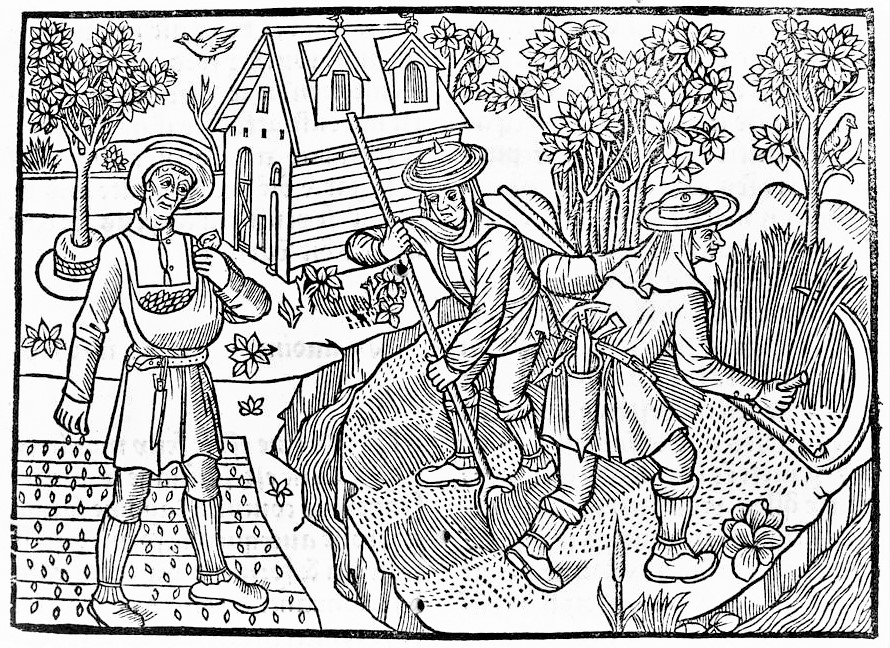
District, door-to-door evangelism done right is distinctly Reformed, being a distinctly household-oriented approach to Gospel outreach.
Follow me here. Doesn’t God administer His grace to individuals as well as to households? Doesn’t it start with the head and flow to the members? Isn’t it interested in reconciling the father to the son and the son to the father? Abraham, Joshua, Cornelius, Lydia. “Believe on the Lord Jesus Christ, and thou shalt saved, and thy house” (Acts 16:31). We aim for the heads of households; and if we get them, we get the family. (more…)
Just finished a new addition to the Chalmers Audio Library, “The Right Ecclesiastical Economy of a Large Town.” (Original here.) While it is somewhat ponderous in its Victorian style and treats some antiquated matters, the core of this piece is a profoundly relevant contribution to historic, Reformed missiology. If only every Reformed and Presbyterian office-bearer would read it and process it!
Here is a little extract to give an idea of his parochial approach:
“If he go much among them through the week, the unfailing result in time will be, that they shall come much about him on the Sabbath. This is the ligament, and we know not a more important one in the whole mechanism of human society, by which to elevate a degenerate population, and again to place them on that higher moral platform from which they have descended. There is no romance, there is a sober and home-bred reality in all the steps of this operation. On the very first movements of the clergyman, he will meet with the smiles of encouragement and welcome from every quarter of his parish, with a thousand promises of attendance on his church, many of which in the first instance will not be realized; but, with every month of perseverance in the assiduities of his office, he will find a lessening reluctance on the part of his people, and that even the obstinacy of their practical heathenism is not unconquerable. It will at length give way under the power of his sustained and duteous attentions. Providence will open a door for him, even to the most ruthless of the families; and, implicating his presence with the sicknesses, and the deaths, and the funerals of every household, he will, on the sheer efficacy of his Christian worth, and with no other engine by which to make his way than Christian kindness, obtain an ascendant over the hearts of his people, only to be won by the omnipotence of charity” (Chalmers, Works 18:73-74).
For any who wants a simpler, more accessible introduction to Chalmers’ thought, you can listen to this lecture.
Another addition to the ‘Chalmers Audio Library.’ A fascinating defense of religious establishments, arguing for them on the ground that they serve as a great, national Home Mission. In my opinion, he counters some of the standard objections well.
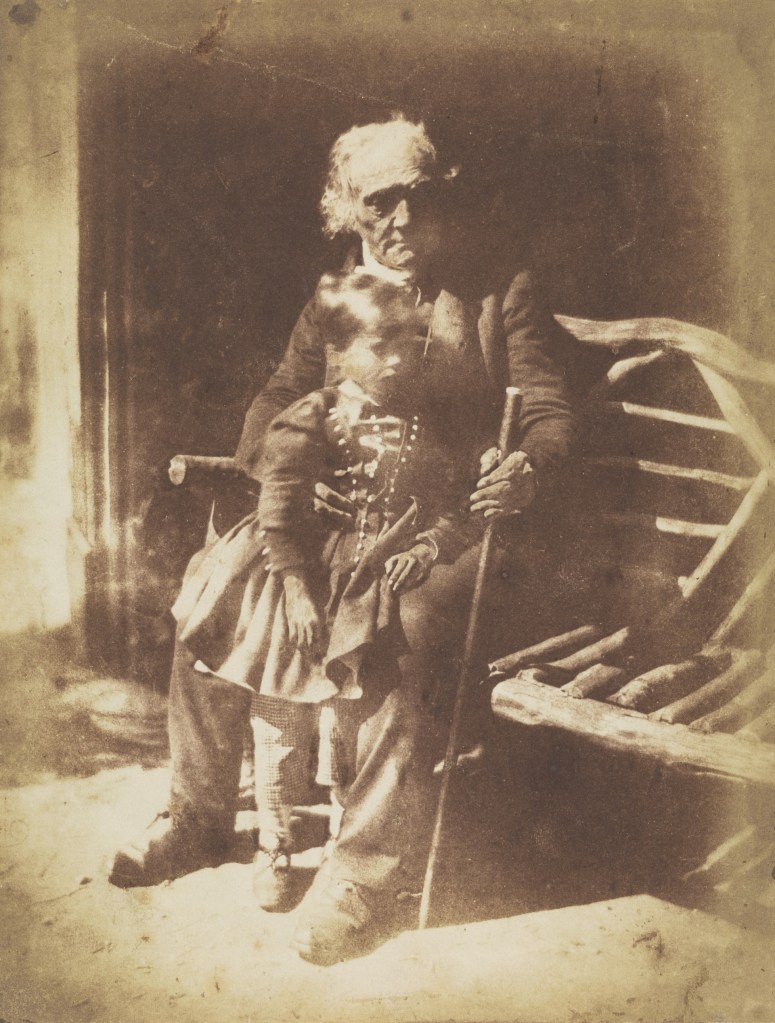
 District, door-to-door evangelism done right is distinctly Reformed, being a distinctly household-oriented approach to Gospel outreach.
 West Port Experiment