Feeds:
Posts
Comments

Archive for the ‘The Lord’s Supper’ Category

“He has dressed the whole Supper Himself, covered the table, and there is no more for us to do, but sit down and eat. If we look to this dressed Supper, Christ dressed it all Himself, in the furnace of God’s wrath, and the bread that we here eat is His flesh, which He gave for the life of the world. The wine, which is mingled and drawn is His blood. And, O, sirs, was not our Lord a hot man in making ready this Supper? Not one dish is mis-cooked, all is set before us in the gospel, and Jesus craves no more for all His pains, but only that His friends come to the banquet and eat and be merry; and if ye will come, Christ will pay all the reckoning. When the Israelites were fed with manna, they behoved to go out of the camp, and gather it themselves; but we furnish nothing of this Supper. God be thanked, Christ bears all the expense. Alas! alas! that the unhappy world will not eat heartily, since Christ pays for all. The poor sons of Adam were all sick and at the point of death, and their stomachs were so spoiled with a sour apple that Adam did eat, that they were famished and not able to eat. In comes Jesus and makes a medicinal dinner of His own flesh and blood; lays down Himself and is slain to make physic of His crucified body for us, in order to affect our cure. It is just they die for hunger, and lose their stomach for evermore, who loathe this meat. In the sacrament all things are ready; whatever the soul wants, it shall find at the Table. All the hungry shall find Christ meat and drink.”

Samuel Rutherford

Read Full Post »

“Let a man examine himself, and so let him eat of that bread and drink of that cup. For he that eateth and drinketh unworthily, eateth and drinketh damnation [judgment] to himself, not discerning the Lord’s body” (1 Cor. 11:27-28).

How should you prepare for the Lord’s Supper? A few thoughts for those who have come to appreciate the theology, practice, and piety of confessional Presbyterianism around the celebration Communion.

First, dedicate time ahead of time. You cannot put things off until Saturday night. Nor can you just let attendance at a midweek preparatory service ‘check the box.’ You need to begin to schedule in some meaningful time, in addition to your regular personal and family seasons of worship, to be one on one with God. Adjust your week’s schedule early, especially if you have more responsibilities surrounding the weekend, such as food preparation, etc. And husbands, be especially mindful of your wives. Help plan ahead and streamline things so that preparation doesn’t get eclipsed, helping the children step up–and even stepping up yourself!

(more…)

Read Full Post »

“This is their [Romanist] argument; whereof ye see their conclusion to be this: We get no other new thing in the sacrament than we do in the word, if there be no perception but spiritual. Ergo, the sacrament, is superfluous. We admit the antecedent to be true; we get no other thing, nor no new thing in the sacrament, but the same thing which we got in the word. I would have thee devise and imagine with thyself, what new thing thou wouldest have: let the heart of man devise, imagine, and wish; he durst never have thought to have such a thing as the Son of God; he durst never have presumed, to have pierced the clouds, to have ascended so high, as to have craved the Son of God in His flesh, to be the food of his soul. Having the Son of God, thou hast Him who is the heir of all things; who is King of heaven and earth; and in Him thou hast all things. What more then canst thou wish? What better thing canst thou wish ? He is equal with the Father, one in substance with the Father, true God, and true man, what more canst thou wish? Therefore, I say, we get no other thing in the sacrament than we had in the word: content thee with this. But suppose it be so; yet the sacrament is not superfluous. For wouldest thou understand what new thing thou obtainest, what other thing tbou gettest? I will tell thee. Suppose thou get that same thing which thou hadst in the word, yet thou gettest that same thing better. What is that better? Thou obtainest a greater and surer hold of that same thing in tire sacrament, than thou hadst by the hearing of the word. That same thing which thou possessedst by the hearing of the word, thou dost possess now more largely; He has larger bounds in thy soul by the receiving of the sacrament, than otherwise He could have by the hearing of the word only. Then, wilt thou ask what new thing we get? I say, we get this new thing : we get Christ better than we did before; we get the thing which we had, more fully, that is, with a surer apprehension than we had of it before; we get a greater hold of Christ now. For by the sacrament my faith is nourished, the bounds of my soul are enlarged: and so, whereas I had but a little hold of Christ before, as it were between my finger and my thumb, now I get Him in my whole hand; and still the more that my faith grows, the better hold I get of Christ Jesus. So the sacrament is very necessary, if it were no more but to get Christ better, and to get a closer apprehension of Him, by the Sacrament than we could have before.”

The following is an extremely profound passage from Robert Bruce’s magisterial treatise on the sacrament of the Lord’s Supper. Listen to this chapter in audio here. Those who may not be used to the older style may benefit from a modern rendition available here. Access more titles in the WPE Audio library.

Read Full Post »

“Our Reformers were men of great wisdom, undaunted courage, irrepressible zeal and strong faith. They relied not on human expediency, vain traditions, or worldly wisdom, but on God’s promised blessing on His own means. They went direct to the Bible for all their plans, and the result was that every rag of rotten Popery, and every relic of the Amorite was purged away, and cast forth as things accursed into the region of eternal detestation, and the pure evangel set up instead. In the language of George Gillespie:

‘The Church of Scotland was blessed with a more glorious and perfect reformation than any of our neighbor Churches. The doctrine, discipline, regiment, and policy established here by ecclesiastical and civil laws, and sworn and subscribed unto by the king’s majesty and [the] several presbyteries and parish churches of the land, as it had the applause of foreign divines; so was it in all points agreeable unto the word; neither could the most rigid Aristarchus of these times challenge any irregularity of the same.'”

* * * *

These words are drawn from the opening of David Hay Fleming’s four-part series of articles in the Original Secession Magazine in 1878 entitled, “The Discipline of the Reformation.” I’ve just finished recording the fourth today. Listen to them here. The PDF is below. And check out more titles in my expanding amateur audio library.

I do not suggest that everything our fathers in the Reformation and Second Reformation did or said regarding discipline should be carried over in toto today. Nor do I think Fleming himself thought this. But before we too quickly dismiss what we may judge austere or harsh, let us consider that we are just as much creatures of our time as they were. And if we shouldn’t be slaves to their judgments, yet we still ought to honor father and mother. And listen to them in the first case!

[image source]

Read Full Post »

The following is a series of messages given to lay out the distinctives of the Presbyterian Reformed Church, a denomination organized through the instrumentality of Professor John Murray in 1965, committed to the principles of historic Scottish Presbyterianism in doctrine, worship, government, and discipline, as enshrined in the original Westminster Confession of Faith (1646).

(Note: The title “Our Testimony” is merely thematic, and does not refer to a supplementary ecclesiastical document besides the Westminster Standards as is done among Reformed Presbyterian brethren.)

Original Series

Our Testimony, Part 1: Psalm Singing

Our Testimony, Part 2: Instruments in Worship

Our Testimony, Part 3: Presbyterianism

Our Testimony, Part 4: Holy Days, True & False

Our Testimony, Part 5: Confessionalism

Our Testimony, Part 6: Experimental Religion

Our Testimony, Part 7: The Free Offer of the Gospel

Our Testimony, Part 8: Religious Establishments #1

Our Testimony, Part 8: Religious Establishments #2

Our Testimony, Part 9: Head Coverings

Our Testimony, Part 10: Liberty of Conscience

Our Testimony, Part 11: Our Communion Practice

Our Testimony, Part 12: Frequency of Communion

Additional Messages

One Table, One Cup, One Bread

Read Full Post »

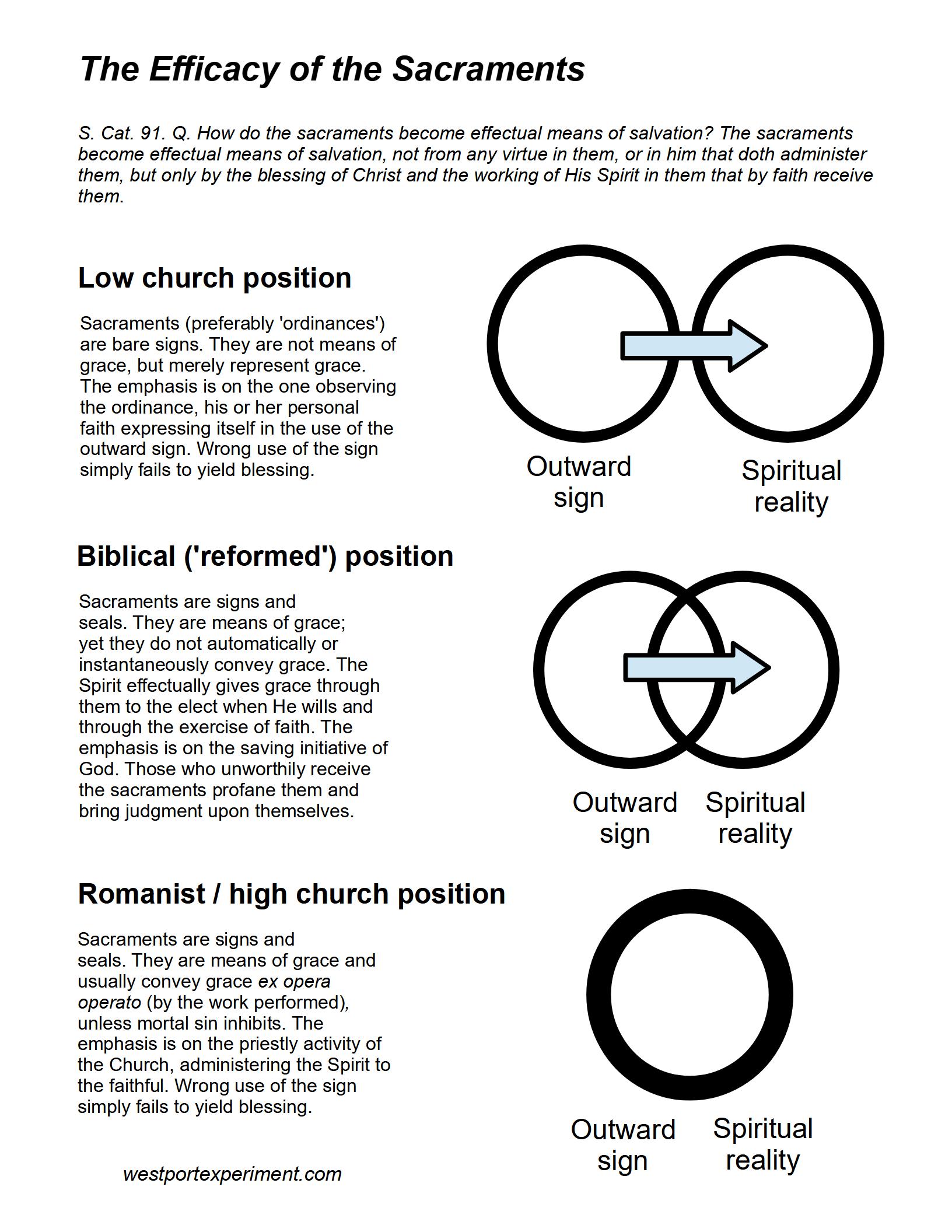
Another theological diagram as a teaching aid for my next lesson on the Westminster Shorter Catechism this Sabbath. I designed this some time back and got some feedback on it from a couple of my ministerial colleagues.

Like any diagram, it doesn’t say it all. But I think it helps distinguish the Reformed position from extremes on either side. What think ye?

Read Full Post »

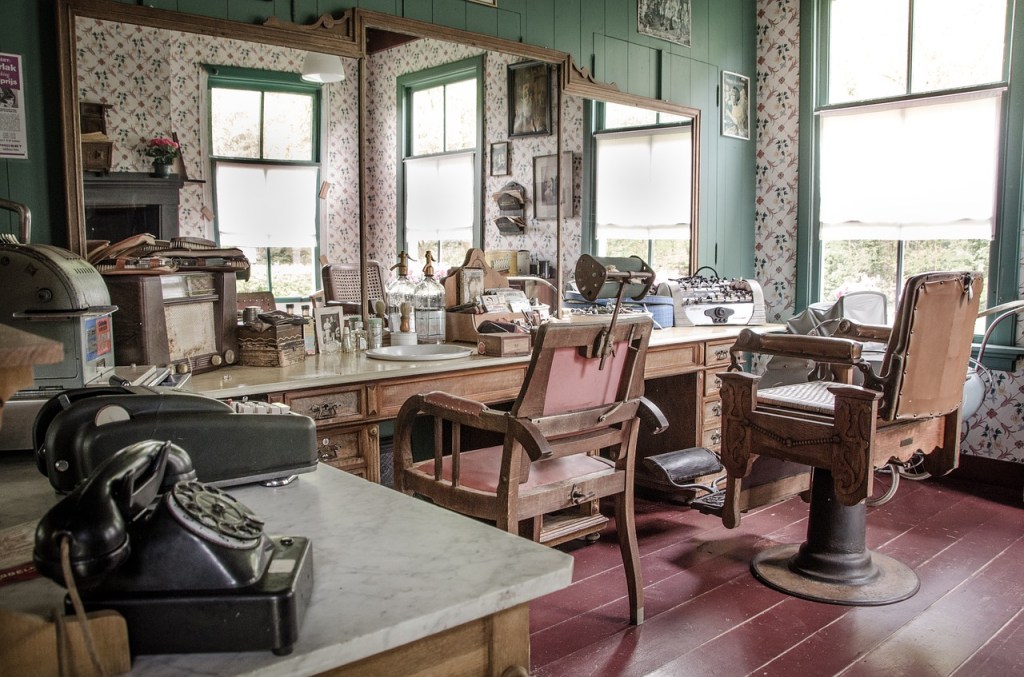
There we were in the manse on Saturday night, in that sleepy little Canadian town. The minister’s wife was giving him a haircut before his Sabbath labors the next day. He was, well, idiosyncratic. The thin-framed parson had quite the shock of unmanageable white hair, much like Doc Brown. He sat there with some smock-like cloth draped around him, his helpmate-hairdresser poised with bowl of water and comb. Soon she set to taming the wild mane with the moistened comb. Water applied, it seemed as though his head had shrunk by half.

As she went to work with her clippers, the old minister told me about The Days of the Fathers in Ross-Shire, an old classic of the glory days of 18th and 19th century Highlands-Islands Presbyterianism. His eyes beamed, and he cackled with boyish delight as he retold his favorite story about Samsonesque Aeneas Sage and his rather unconventional missionary exploits. There was something about this all that strongly impressed me. There was something of greatness, a romance and even a mystique about that legacy that lingered about the place. The old Scots-Irish town, its church, manse, and, of course, this amusing old minister still retained something of the glow of the “years of the right hand of the Most High.”

Suffice it to say, this green goyim just had to find and read the book. And I did, again and again. And having been ‘bit,’ I’ve retold the story of Rev. Sage over and over to anyone who would listen. My children can probably repeat it verbatim … with a few eye rolls thrown in for good measure! And as an old bookish minister friend of mine would sometimes say, “And if it isn’t true, it should be!

Just finished reading and recording it. You can access it here. I also post a wide variety of classical Reformed, Puritan, and Scottish Presbyterian sermons, articles, and books. I aim to fill gaps with relatively quality audio recordings, especially for the benefit of pastors and elders who work with thinner margins of time.

Read Full Post »

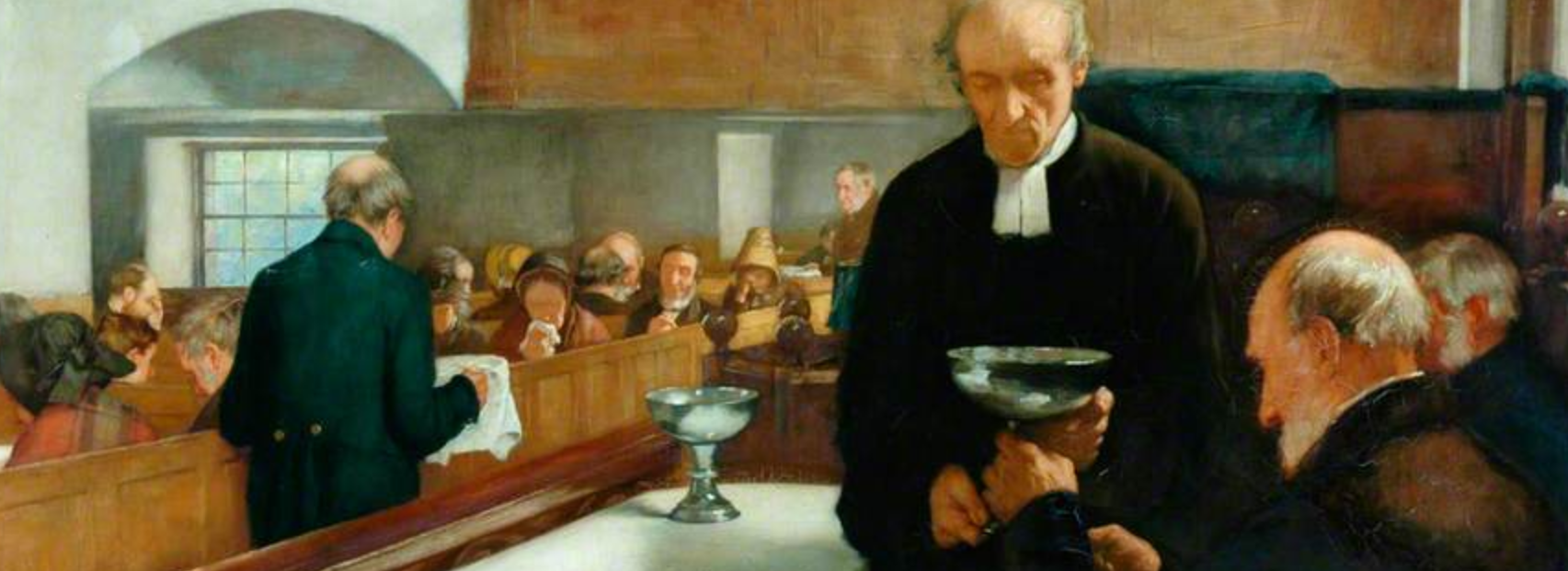
The following is a firsthand snapshot of a Highland Communion season, from John Kennedy’s endearing work, The Days of the Fathers in Ross-Shire (1867).  Here is certainly an alternate ‘high sacramentarianism.’  I would challenge the supporters of the now fashionable weekly-communion position whether this ‘auld’ wine was not the better!

* * *

A communion season is approaching. It has been timeously announced that it may be known ” far and wide,” and that the praying people may be bearing it on their spirits before the throne of grace. The minister preaches a suitable course of sermons on several preceding Sabbaths. The Lord’s people are stirred up to seek a special manifestation of His power indexand glory. A few who propose to seek admission to the Lord’s table are deeply exercised about the solemn step they contemplate, and faithfully and tenderly are they dealt with by both minister and elders. As the appointed time draws nigh, special meetings for prayer are held, and, with holy solicitude, all the preparatory arrangements are made. The Fast-day is come. Eminent ministers have arrived to take part in the solemn services. Many of the Lord’s people are gathering. From as many as forty parishes they come; but lodgings they will easily procure, as the parish people are striving for the pleasure of entertaining them. Suitable discourses are preached in Gaelic on the open field, and to a small English congregation in the church, and in the evening prayer meetings are held in the various districts of the parish. On Friday the day of self-examination, the only public service is in the open air. A large crowd is gathered. “In the tent” there are several godly ministers. The service is that of a fellowship meeting, such as has already been described, but now with special reference to the solemn duties of a communion Sabbath. There are two questions proposed successively to secure variety. Strangers only are called to speak, and even of these only “the flower,” for there are so many. Not fewer than thirty will have spoken before the service is over. Blessed indeed to many souls have these “Friday meetings” been. The services on Saturday, the day of preparation, are conducted as on Thursday, but, owing to the gathering influx of strangers, the congregation outside is greatly larger than on the Fast-Day. At the close of the service, tokens are distributed. Prayer meetings are held throughout the parish in the evening; and while the ministers are preparing for the solemn work of the Sabbath, many are the petitions that ascend in their behalf, to Him who hath “the treasure ” to dispense, and of whom is “the excellency of the power.” In many instances, these prayer meetings have been protracted all night. So sensible were the people of the presence of the Lord that they could not forsake the place where they enjoyed it; and they found “the joy of the Lord” a sweet substitute for sleep. On Sabbath, the day of Communion, an immense crowd is gathered before the tent. At many as eight thousand are there. The “Beauty of the Lord” is on the assembly of His people; and before the service is over, many a soul has had reason to say “it is good to be here.” On Monday, the day of thanksgiving, a crowd almost as large as that on Sabbath is assembled ; and often has “the last” been found to be the “great day of the feast.” The closing service of the communion season is now over, and then comes the solemn parting! How affecting do the Lord’s servants and people feel the scene before them to be, as that multitude disperses, never to meet all together again till the vast congregation of “the last day” has assembled! What touching farewells are now exchanged between the Christians who enjoyed with each other, and together with the Lord, such sweet communion since they met a few days before! There are few tearless eyes, but the weeping is expressive of gratitude as surely as of sorrow. Such was a communion season in the good days of the Fathers in Ross-shire.
Read Full Post »