Feeds:
Posts
Comments

Archive for the ‘Terms of Communion’ Category

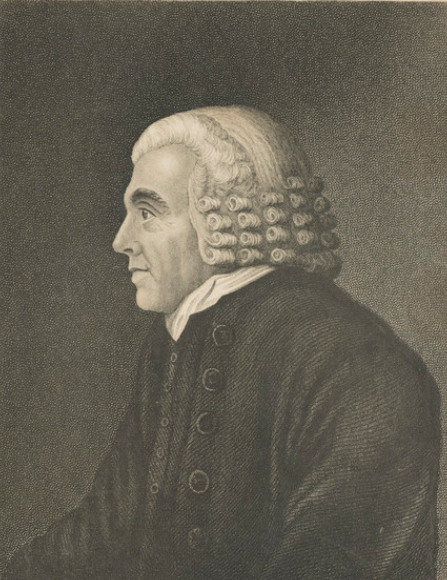
It is a joyful time when new members are added to a congregation, formally identifying themselves as believers in Jesus and committing to live as one of His disciples. All churches have some kind of admission process which allows them to decide whether somebody can be accepted as a new member. However, what criteria should a church use? Robert Baillie (1602–1662) served as a minister in Kilwinning, an army chaplain, and Professor of Divinity (later Principal) at Glasgow University. He was also one of the Scottish commissioners to the Westminster Assembly. In his writings he interacted with some who believed that people were obliged to provide evidence that they were truly regenerate before they could be accepted as church members. Robert Baillie argues in the following extract that this sets the bar for church membership too high. We cannot see into each other’s hearts, so how can we know whether someone is genuinely saved or not? Also, the Lord Himself has organised His church in the world in such a way that it will never be composed entirely of the truly regenerate. Baillie’s position strives for the highest standards for church members to live up to, while relieving us of the burden of deciding whether each individual church member is genuinely born again.

Read the rest of the article at Reformation Scotland.
Read Full Post »

Just recorded three of John Brown’s Letters on the Constitution, Government, and Discipline of the Christian Church: No. 4, “Of the Qualifications of Church Members,” No. 18, “Of Scandals and Discipline,” and No. 19, “Of Church Fellowship and Separation.” Very solid and worth your time. Visit the entire WPE Audio library at the tab up top.

Below I’ve included a few striking passages, followed by the entire PDF. A few observations. First, I note that his letters definitely reflect his Secession outlook vis-a-vis certain corruptions of the Church of Scotland at the time. Second, baptized children may revoke their church standing by falling into heathenish “principles or practices.” Next, it would seem that Brown agrees with me (or better, I with him) that a working knowledge of the Shorter Catechism is more or less the cognitive requisite for an intelligent profession of faith. And while he counts as useful and warranted to utilize confessions and catechisms as a means to ascertaining an intelligent profession of faith, he has great misgivings against overloading the minds and consciences of applicants by the misuse of obliging them to public covenanting. He has said what I have long thought: to require taking vows to historically involved and obscure documents easily calls for implicit faith.

(more…)

Read Full Post »

Came upon this choice piece from Boston’s Memoirs. A series of questions put to a prospective communicant. The first question I find rather insightful—I’ve long tended to think that a working understanding of the Shorter Catechism is basically the cognitive side of Presbyterian terms of communion. Without reaching that bar, the session ought to delay that applicant and give further instruction (L. Cat. 173). Also, there is explicit submission to church discipline.

I am aware that Boston arguably had some “independent” aspects to his presbyterianism, and perhaps this reflects too much a likeness to the old Congregational “church covenants?” But whatever the case, I find this explicit consent and covenanting commendable:

“And if the Session be satisfied in this also, the party is to be put explicitly to consent to the Covenant (whereof he desires the seal), to be the Lord’s, live under Him, and serve Him all the days of his life, by answering expressly the following (or the like) questions: 1. Do you believe the doctrine of the Shorter Catechism of this Church, so far as you understand the same, to be the true doctrine agreeable to the Holy Scriptures, and resolve through grace to live and die in the profession of the same? 2. Do you consent to take God in Christ to be your God, the Father to be your Father, the Son to be your Saviour, and the Holy Ghost to be your Sanctifier; and that, renouncing the devil, the world and the flesh, you be the Lord’s for ever? 3. Do you consent to receive Christ, as He is offered in the gospel, for your Prophet, Priest and King; giving up yourself to Him, to be led and guided by His Word and Spirit; looking for salvation only through the obedience and death of Jesus Christ, who was crucified without the gates of Jerusalem; promising in His strength to endeavour to lead a holy life, to forsake every known sin, and to comply with every known duty? 4. Lastly, do you promise to subject yourself to exhortation, admonition, and rebuke, and the discipline of the Church, in case (which God forbid !) you fall into any scandalous sin?”


Memoirs, Appendix 3, § 10, p. 488.


Read Full Post »