Feeds:
Posts
Comments

Archive for the ‘Recent Reading (Book Recommendations)’ Category

Just finished listening to an audiobook version of Wayne A. Mack’s Strengthening Your Marriage. Highly recommended. Especially appreciated his chapter on developing and keeping up good communication between spouses, a really insightful and practical chapter on figuring out your shared finances, and—what perhaps surprised me the most—a chapter on child-rearing. The latter makes buckets of sense when you realize that marital tension is aggravated by poor and sloppy discipline, or beneath that, an unbiblical “philosophy” of child-rearing.

Great refresher for strong marriages (we can never just coast!), a solid primer for those in the early glow, and a life-preserver for those treading water and wanting to get back to shore.

Pick up and read! Or, if you have access to Hoopla or other free library services, have a listen!

Read Full Post »

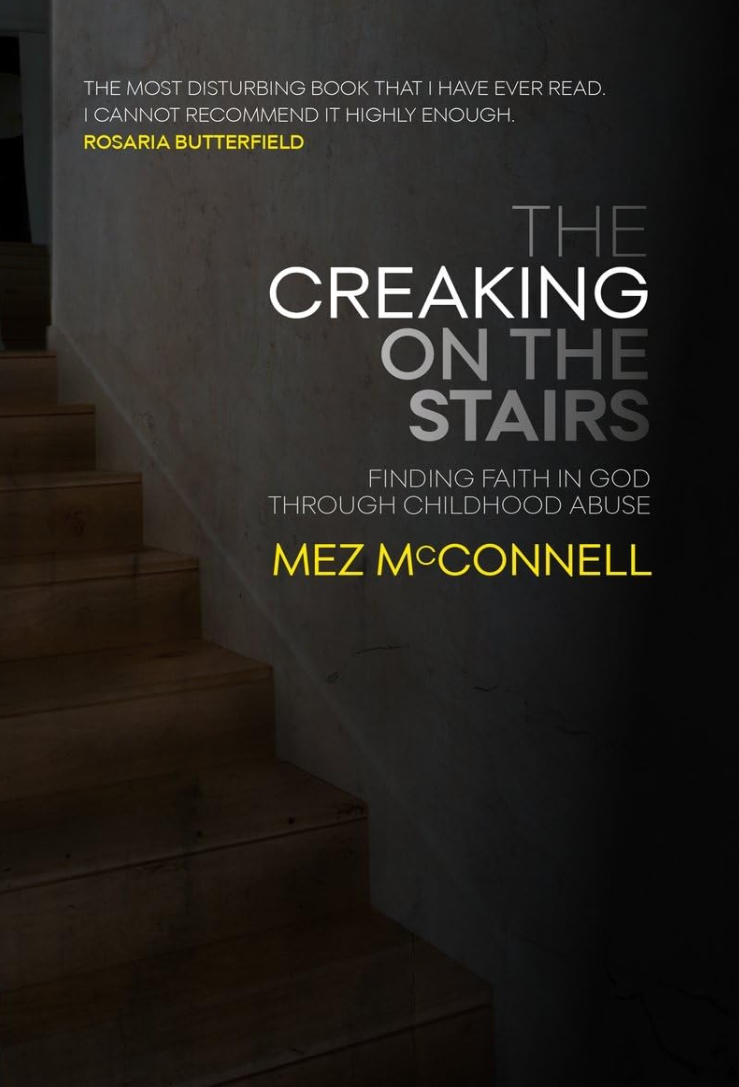
Just finished listening to this audiobook, The Creaking on the Stairs: Finding Faith in God Through Childhood Abuse. Very highly recommended. Rosaria Butterfield says in the forward, “The most disturbing book that I have ever read, and I cannot recommend it highly enough.” While I can’t say it is the most disturbing book I’ve ever read, the subject matter is beyond doubt extremely disturbing … and yet heavenly at the same time, which is why I heartily second Rosaria.

The author, Mez McConnell, was raised up in an extremely dysfunctional and highly abusive home. After coming of age, he fell into gross, reckless sin, became a criminal, and did hard time; but Christ had other plans. And so at the “time appointed,” Christ made a trophy of this sinner, plucking him as a brand from the burning and liberating his heart from anger, bitterness, and resentment.

The book is part narrative, part theology and spiritual reflection. It reminds me in many ways of Augustine’s great Confessions and Thomas Halyburton’s Memoirs, especially in its adult, post-conversion reflections on childhood, sin, and grace. (If you’ve never read those two classics, then tolle, lege! And for a taste, read Augustine’s thoughts on the ‘pear tree’ incident.) Further, Creaking is dramatic theodicy—if not directly inspired by the Book of Job, then at least resonating highly with it. If God is and is good, then why is there suffering?

This book is for those who have suffered abuse, Christian or not. It’s also for those who live with those who have or want to understand how better to love and support sufferers. Really, it’s for everyone. And I would be surprised if this doesn’t end up being something of a modern, Christian classic of autobiography, like Joni Eraekson Tada’s Joni and Rosaria Butterfield’s Secret Thoughts. Oh, and add those two to your list as well!

Read Full Post »
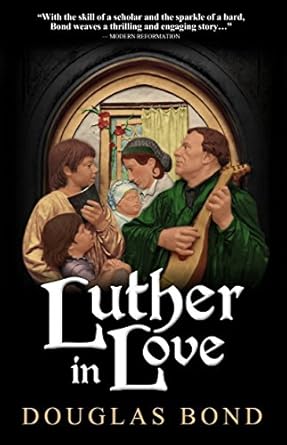
Some more personal reading recommendations. First, finished reading Luther in Love to the family in our Sabbath down time. We’ve read a number of his other books for younger readers—and the young at heart—all of them well-researched and well-written. I thought this one in particular really exhibited Bond’s literary excellence. Very easy to read. My only quibble is that the book’s title would lead you to think that its central theme is his relationship with his wife, Katharina von Bora. Their relationship is prominent, to be sure; but it’s really more a life of Luther. But if you really want to read some historical fiction featuring their Christian romance, I’d highly recommend, Kitty, My Rib, by E. Jane Mall.

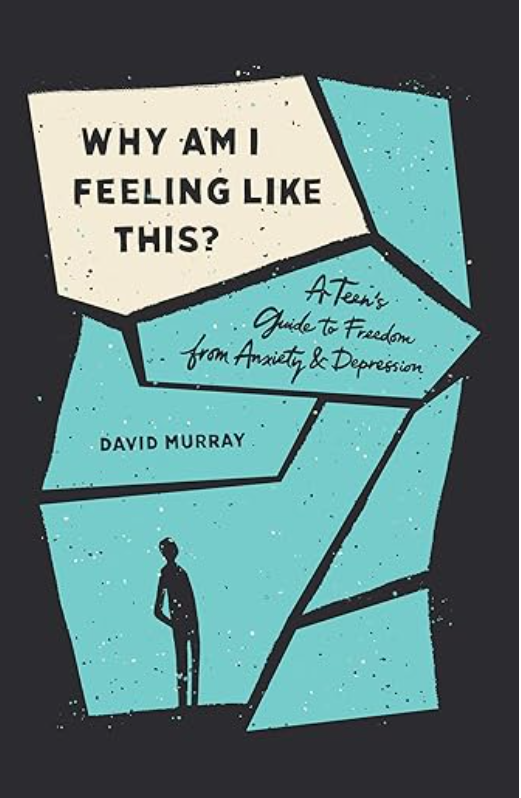
Another book I read to the family was the non-fiction book by David Murray, Why Am I Feeling Like This? A Teen’s Guide to Freedom from Anxiety and Depression. This is the best thing I’ve come across from a Reformed perspective, addressed to adolescents. He covers the range of emotional pathologies, whether full-blown disorders or just the phases of that often tumultuous transition from childhood to adulthood. Very insightful, very appropriate, and very accessible. This is helpful also to share with others who are trying to help their teenagers weather their feelings biblically and wisely. You can read the introduction and the first chapter here, where he introduces “Circular Sarah.”

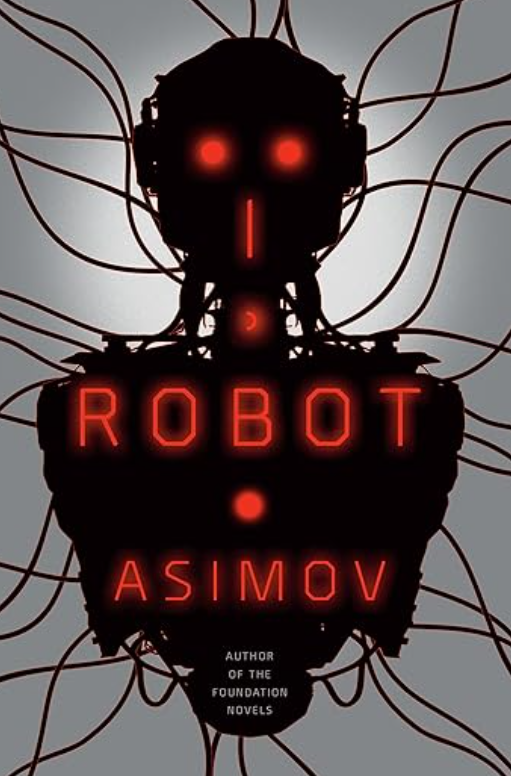
Finally, my last recommendation is a modern, secular classic, the sci-fi I, Robot by Isaac Asimov. Now, this genre is not my typical go-to, but my son put me on to it, and I was not at all disappointed. Originally published in 1950 and written about a futuristic world set in the 21st century, it is quite striking how very prescient Asimov was in terms robotics and artificial intelligence. The book is a catena of short stories featuring a handful of characters and their robotic counterparts who really prove to be a foil and a looking-glass for themselves as humans, in all their fancy, fury, and folly. I was quite surprised with how Asimov combined the technical, literary, and philosophical in a compelling way. Definitely both sides of the brain were working full power! And yet so tragic to consider that the celebrated author was a Russian Jew turned atheist. Man can imagine artificial intelligence and foreshadow it with elegance; and time has shown that he can bring it into being. Yet in his hubris he cannot and will not return to the Source. “Where is the wise? where is the scribe? where is the disputer of this world? hath not God made foolish the wisdom of this world?  For after that in the wisdom of God the world by wisdom knew not God, it pleased God by the foolishness of preaching to save them that believe” (1 Cor. 1:20-21). When one looks at the image above, what does he see but a dead idol, the stump of Dagon, the hollow shell of a man? Even so, the idol-maker is just “like unto them.”

And check out my growing library of devotional and theological resources from our rich and diverse Reformed heritage here.

Read Full Post »

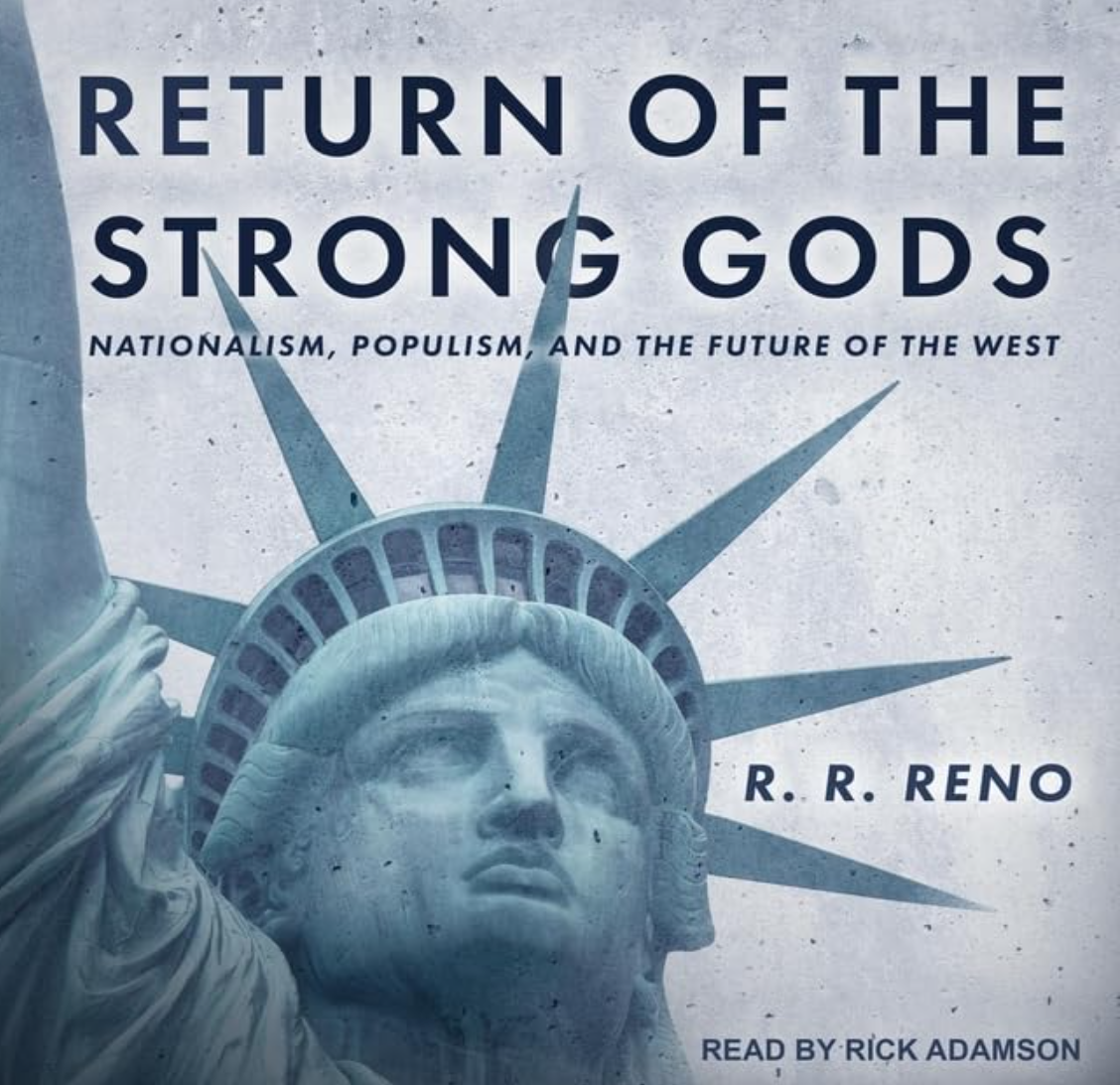
In the last few months, I finished a couple of really insightful non-fiction titles. The first was R. R. Reno’s The Return of the Strong Gods: Nationalism, Populism, and the Future of the West. This was the most helpful overview of what the “post-war consensus” (PWC) actually is and why it is on life support if not in its death pangs. Basically, the PWC was birthed in the aftermath of World War II and the horrors both on the battlefield and in the concentration camps. “Never again!” was the motto in Europe and the U.S., and the modus operandi of the elites was to tamp down on all discourse—religious, political, or social—that could elevate the blood pressure of the nations and so risk a reprise of the world wars. Liberalism in the broader sense of tolerance, acceptance, and openness, was the prevailing doctrine. But what it ended up doing was fueling the populisms and nationalisms we have witnessed in the last decade or so. In the end, we are humans who need “strong loves.” Something to be passionate about—and even die for!

(more…)

Read Full Post »

I thought I might share what I’ve been reading recently. In addition to my devotional and theological recordings, here are some books I’ve finished in recent days of personal interest. In our extremely digital age, we need to stay reading. Let us read good books; and if we read books that are not explicitly Christian, let us do so critically with an eye to Scripture as our absolute authority.

First, Nancy R. Pearcey’s The Toxic War on Masculinity: How Christianity Reconciles the Sexes. In a similar fashion to Carl Trueman’s The Rise and Triumph of the Modern Self, Nancy Pearce frames her book of cultural commentary around a “how did we get here?” question. For Trueman, it was “how did we ever get to the place where a man thinks he is a woman?” For Pearcey, it is “how did masculinity ever become ‘toxic?'” She engages in a historical and sociological inquiry that is quite insightful, from a thoughtful, Christian perspective. I especially found her explanation of the shift of men from cottage-industry and family-integrated work patterns to working outside the home in factories, etc., at the Industrial Revolution, and its negative impact on father-son relationships and family life in general. For a kind of teaser, listen to this interview on Issues, etc.

(more…)

Read Full Post »