As we turn in deep gratitude to the Most High for all His blessings towards us, let us remember especially the unique favor He has shown to our fathers and mothers of the faith who first came to these shores on a holy “errand into the wilderness.” In the words of the Mayflower Compact (1620), their cause was “undertaken for the Glory of God, and Advancement of the Christian Faith, and the Honour of our King and Country.”
Let me encourage you to listen to our Pilgrim and Puritan fathers. In addition to other amateur recordings, I’ve been steadily adding to this collection of sermons, treatises, and narratives from the pen of these giants of the faith, who helped found this “City on a Hill.” And if you’d like to hear an early account of the Pilgrim colony, check out Cotton Mather’s, “Magnalia Christi Americana 1.1: Discoveries of America.” Also, John Winthrop’s original sermon where he speaks of the “city on an hill,” is available under “A Modell of Christian Charity.”
And as we thank the Lord today, lest us with humility and earnestness implore Him to restore the former glory through national repentance. He did it before, and He can do it again! “Wilt thou not revive us again: that thy people may rejoice in thee” (Psalm 85:6)?
This is an academic article from the earlier 20th century on New England Puritan, Cotton Mather, on his zealous concern for the salvation of the Jews. He develops the account from Mather’s notable journal entry in 1696: “This day, from the dust, where I lay prostrate, before the Lord, I lifted up my cries: For the conversion of the Jewish Nation, and for my own having the happiness, at some time or other, to baptize a Jew, that should by my ministry, bee brought home unto the Lord.”
“Sometimes the church is like a ship in the hands of foolish guides that know not the right art of steerage, at other times spotted with the calumnies of adversaries, or the stains and scandals of its own children; sometimes rent and torn by sad divisions, every party impaling and enclosing the common salvation within their own bounds, unchristianing and unchurching all the rest, and the name of christians challenged to themselves and denied to others, and like a ball of contention carried away by that party that can rustle down others who stand in their way. Though with all this disadvantage it is better to dwell in the courts of the Lord than in the tents of wickedness; yet surely a tender spirit that minded Sion’s welfare will groan under these disorders, and long to come at that great council of souls who with perfect harmony are lauding and praising of God for evermore, ‘that innumerable company of spirits made perfect,’ Heb. 12:23. That general assembly, gathered together out of several countries into one body and one place, who live together sweetly, and serve God without weakness, weariness, and imperfection.”
Thomas Manton
* * * *
Whole doctrine catholicity | “Who is she that looketh forth as the morning, fair as the moon, clear as the sun, and terrible as an army with banners” (Song 6:10)?
The following is drawn from William Ames’ Marrow of Theology 2.16, “Of Justice and Charity toward our neighbour.” A Reformed orthodox treatment of the ordo amoris or order of love.
* * * * *
13. The order of this charity is this: that God is first and chiefly to be loved by charity, and so he is, as it were, the formal reason for this charity toward our neighbour. Next after God we are bound to love ourselves, namely with that charity which respects true blessedness; for loving God himself with a love of union, we love ourselves immediately with that chief charity which respects our spiritual blessedness. But secondarily, we should love others whom we would have partake of the same good with us. Moreover, others may be deprived of this blessedness without our fault, but we ourselves cannot; and therefore we are more bound to will and to seek this blessedness for ourselves than for others.
14. This is why the love of ourselves has the force of a rule or a measure for the love of others: You shall love your neighbour as yourself.
15. Hence it is never lawful to commit any sin for another’s sake, even though our offence may seem small, and to be a chief good which we should seek for another. For he that wittingly and willingly sins, hates his own soul. Pro 8.36, He that sins against me, offers violence to his own soul. Pro 29.24. He that partakes with a thief, hates himself: he hears cursing and does not declare it.
The following are quotes are from A Body of Practical Divinity (1838 edition):
“We glorify God, when we give God the glory of all we do. . . . As the silk-worm, when she weaves her curious work, she hides herself under the silk, and is not seen; so when we have done Constantine did use to write the name of Christ over his door, so should we write the name of Christ over our duties; let him wear the garland of praise” (27).
“The word being begun to be preached, hear it with reverence and holy attention. ‘A certain woman, named Lydia, attended unto the things which were spoken of Paul.’ Acts 16: 14. Constantine, the emperor, was noted for his reverent attention to the word” (381).
The following are extracts from John Flavel’s Whole Works reflecting his (and Protestantism’s) mainly positive appraisal of Constantine and the shift to Christendom. The first passage doesn’t mention his name in particular, but employs the “earth helping the woman” trope for Christian magistrates supporting the true religion that I first encountered in Thomas Chalmers, but clearly predates him.
* * * * * * * * * * * *
“Secondly, We shall next enquire how Jesus Christ administers this providential kingdom. And here I must take notice of the means by which, and the manner in which he does it. The means, or instruments, he uses in the governing the providential kingdom, (for he is not personally present with its himself), are either angels or men, “the angels are ministering creatures, sent forth by him for the good of them that shall be heirs of salvation,” Heb. 1:14. Luther tells us, they have two offices, superius canere, et inferius vigilare, “to sing above and watch beneath.” These do us many invisible offices of love. They have dear and tender respects and love for the saints. To them, God, as it were, puts forth his children to nurse, and they are tenderly careful of them while they live, and bring them home in their arms to their Father when they die. And as angels, so men are the servants of Providence; yes, bad men as well as good. Cyrus, on that account, is called God’s servant: they fulfill his will, while they are prosecuting their own lusts. “The earth shall help the woman,” Rev. 12:16. But good men delight to serve Providence; they and the angels are fellow servants in one house, and to one master, Rev. 19:10. Yes, there is not a creature in heaven, earth, or hell, but Jesus Christ can providentially use it and serve his ends, and promote his designs by it. But whatever the instrument be Christ uses, of this we may be certain, that his providential working is holy, judicious, sovereign, profound, irresistible, harmonious, and to the saints peculiar” (Works 1:216).
Listen to the last two sermons of Richard Sibbes here. Both of them are on the words of our Lord on the night of his betrayal, “Let not your hearts be troubled: ye believe in God, believe also in me” (John 14:1).
“Holy men, as they be ‘ trees of righteousness,’ Isa. Ixi. 3, and desire to be fruitful at all times, so most especially towards their end; having but a short time to live in the world, they be willing to leave the world with a good savour. So it was with Jacob. So with Moses, as appears in his excellent Song made before his death. You may see it in King Solomon and David before their deaths. But especially in our Saviour. The nearer to heaven, the more heavenly-minded. When grace and glory are ready to join, the one to be swallowed up of the other, then grace is most glorious. All the passages of Christ are comfortable; but none more comfortable than those sermons of his, that were delivered a little before his death. Of all words that come from loving men to those they love, such are most remarkable as be spoken when they be ready to die; because then men are most serious, they being about the most serious business. Then they be wisest, and best able to judge; for the consideration of their end makes them wise. And therefore, saith God, ‘ that my people were wise to consider their latter end!’ Deut. xxxii. 29. And, ‘ teach me to number my days, that I may apply my heart to wisdom,’ saith Moses, Ps. xc. 12. And indeed there is no wisdom to that; for it teacheth men to pass a right judgment upon all things in the world. They be no longer drunk with the prosperity of the world; they be no longer swayed with opinion, but they pass an estimation of things as they are.”
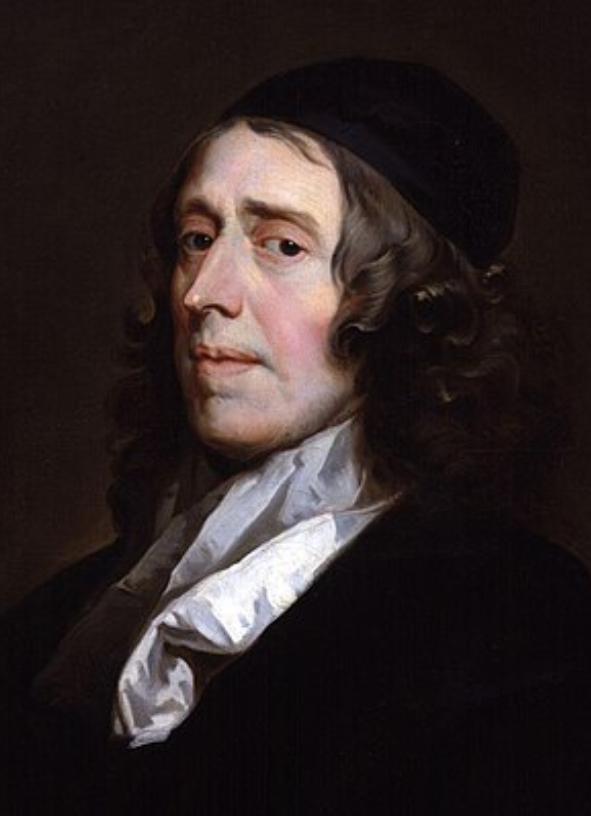
Here is a sermon I recorded by John Owen on the ordination of a minister, late in his career. As always, Owen is exceptional. Here is a sample passage—so searching! See the rest of the WPE Audio library at the tab up top.
* * * * * *
“Another thing required hereunto, is experience of the power of the things we preach to others. I think truly, that no man preaches that sermon well to others, that doth not first preach it to his own heart. He who doth not feed on, and digest, and thrive by what he prepares for his people, he may give them poison as far as he knows; for, unless he finds the power of it in his own heart, he cannot have any ground of confidence, that it will have power in the hearts of others. It is an easier thing to bring our heads to preach, than our hearts to preach. To bring our heads to preach, is but to fill our minds and memories with some notions of truth of our own or other men, and speak them out to give satisfaction to ourselves and others: this is very easy. But to bring our hearts to preach, is to be transformed into the power of these truths ; or to find the power of them both before, in fashioning our minds and hearts. and in delivering of them, that we may have benefit; and to be acted with zeal for God, and compassion to the souls of men. A man may preach every day in the week, and not have his heart engaged once. This hath lost us powerful preaching in the world, and set up, instead of it, quaint orations; for such men never seek after experience in their own hearts : and so it is come to pass, that some men’s preaching, and some men’s not preaching, have lost us the power of what we call the ministry: that, though there be twenty or thirty thousand in orders, yet the nation perishes for want of knowledge, and is overwhelmed in all manner of sins, and not delivered from them unto this day.”
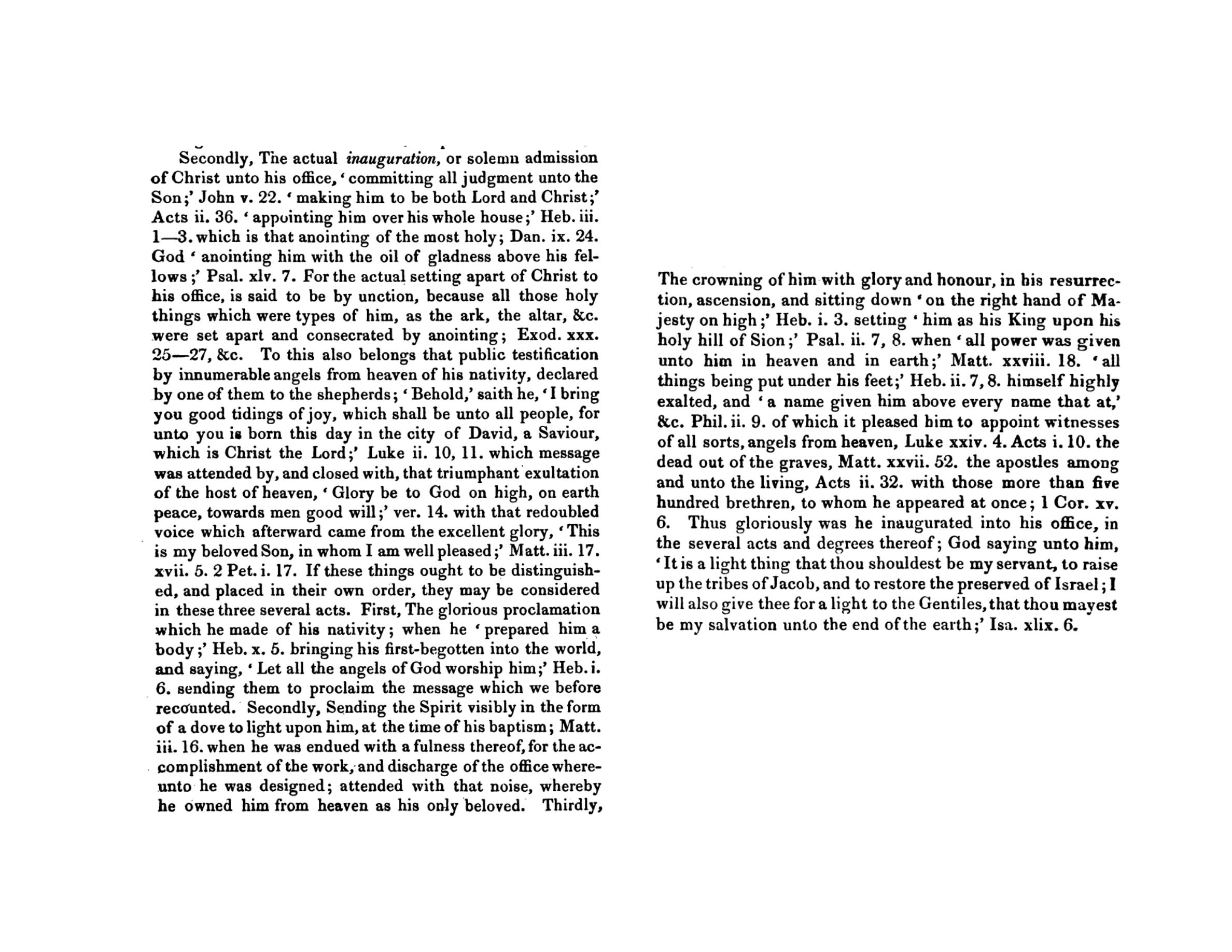
The following is the text of a rather insightful, inspiring, and challenging firsthand vignette of English Puritanism, by John Geree, “The Character of an Old English Puritan, or Non-Conformist.” Listen to a recording of it here; and visit the entire WPE audio library. A digital facsimile is below.
* * * *
The Old English Puritan was such an one, that honored God above all, and under God gave every one his due. His first care was to serve God, and therein he did not what was good in his own, but in God’s sight, making the word of God the rule of his worship. He highly esteemed order in the House of God: but would not under color of that submit to superstitious rites, which are superfluous, and perish in their use. He reverenced Authority keeping within its sphere: but durst not under pretence of subjection to the higher powers, worship God after the traditions of men. He made conscience of all God’s ordinances, though some he esteemed of more consequence. He was much in prayer; with it he began and closed the day. It is he was much exercised in his closet, family and public assembly. He esteemed that manner of prayer best, whereby the gift of God, expressions were varied according to present wants and occasions; yet did he not account set forms unlawful. Therefore in that circumstance of the church he did not wholly reject the liturgy, but the corruption of it. He esteemed reading of the word an ordinance of God both in private and public but did not account reading to be preaching. The word read he esteemed of more authority, but the word preached of more efficiency. He accounted preaching as necessary now as in the Primitive Church, God’s pleasure being still by the foolishness of preaching to save those that believe. He esteemed the preaching best wherein was most of God, least of man, when vain flourishes of wit and words were declined, and the demonstration of God’s Spirit and power studied: yet could he distinguish between studied plainness and negligent rudeness. He accounted perspicuity the best grace of a preacher: And that method best, which was most helpful to the understanding, affection, and memory. To which ordinarily he esteemed none so conducible as that by doctrine, reason and use. He esteemed those sermons best that came closest to the conscience: yet would he have men’s consciences awakened, not their persons disgraced. He was a man of good spiritual appetite, and could not be contented with one meal a day. An afternoon sermon did relish as well to him as one in the morning. He was not satisfied with prayers without preaching: which if it were wanting at home, he would seek abroad: yet would he not by absence discourage his minister, if faithful, though another might have quicker gifts. A lecture he esteemed, though not necessary, yet a blessing, and would read such an opportunity with some pains and loss. The Lord’s Day he esteemed a divine ordinance, and rest on it necessary, so far as it conduced to holiness. He was very conscientious in observance of that day as the mart day of the soul. He was careful to remember it, to get house, and heart in order for it and when it came, he was studious to improve it. He redeems the morning from superfluous sleep, and watches the whole day over his thoughts and words, not only to restrain them from wickedness, but worldliness. All parts of the day were like holy to him, and his care was continued in it in variety of holy duties: what he heard in public, he repeated in private, to whet it upon himself and family. Lawful recreations he thought this day unseasonable, and unlawful ones much more abominable: yet he knew the liberty God gave him for needful refreshing, which he neither did refuse nor abuse. The sacrament of baptism he received in infancy, which he looked back to in age to answer his engagements, and claim his privileges. The Lord’s Supper he accounted part of his soul’s food: to which he labored to keep an appetite. He esteemed it an ordinance of nearest communion with Christ, and so requiring most exact preparation. His first care was in the examination of himself: yet as an act of office or charity, he had an eye on others.
He endeavored to have the scandalous cast out of communion: but he cast not out himself, because the scandalous were suffered by the negligence of others. He condemned that superstition and vanity of Popish mock-fasts; yet neglected not an occasion to humble his soul by right fasting: He abhorred the popish doctrine of opus operatum in the action. And in practice rested in no performance, but what was done in spirit and truth. He thought God had left a rule in his word for discipline, and that aristocratical by elders, not monarchical by bishops, nor democratical by the people. Right discipline he judged pertaining not to the being, but to the well-being of a church. Therefore he esteemed those churches most pure where government is by elders, yet unchurched not those where it was otherwise. Perfection in churches he thought a thing rather to be desired, than hoped for. And so he expected not a church state without all defects. The corruptions that were in churches he thought his duty to bewail, with endeavors of amendment: yet he would not separate, where he might partake in the worship, and not in the corruption. He put not holiness in churches, as in the temple of the Jews; but counted them convenient like their synagogues. He would have them kept decent, not magnificent: knowing that the gospel requires not outward pomp. His chief music was singing of psalms wherein though he neglected not the melody of the voice, yet he chiefly looked after that of the heart. He disliked such church music as moved sensual delight, and was as hinderance to spiritual enlargements. He accounted subjection to the higher powers to be part of pure religion, as well as to visit the fatherless and widows: yet did he distinguish between authority and lusts of magistrates, to that he submitted, but in these he durst not be a servant of men, being bought with a price. Just laws and commands he willingly obeyed not only for fear but for conscience also; but such as were unjust he refused to observe, choosing rather to obey God than man; yet his refusal was modest and with submission to penalties, unless he could procure indulgence from authority. He was careful in all relations to know, and to duty, and that with singleness of heart as unto Christ. He accounted religion an engagement to duty, that the best Christians should be best husbands, best wives, best parents, best children, best masters, best servants, best magistrates, best subjects, that the doctrine of God might be adorned, not blasphemed. His family he endeavors to make a church, both in regard of persons and exercises, admitting none into it but such as feared God; and laboring that those that were borne in it, might be born again unto God. He blessed his family morning and evening by the word and prayer and took care to perform those ordinances in the best season. He brought up his children in the nurture and admonition of the Lord and commanded his servants to keep the way of the Lord. He set up discipline in his family, as he desired it in the church, not only reproving but restraining vileness in his. He was conscientious of equity as well as piety knowing that unrighteousness is abomination as well as ungodliness. He was cautious in promising, but careful in performing, counting his word no less engagement than his bond. He was a man of tender heart, not only in regard of his own sin, but others misery, not counting mercy arbitrary, but a necessary duty wherein as he prayed for wisdom to direct him, so he studied for cheerfulness and bounty to act. He was sober in the use of things of this life, rather beating down the body, than pampering it, yet he denied not himself the use of God’s blessing, lest he should be unthankful, but avoid excess lest he should be forgetful of the Donor. In his habit he avoided costliness and vanity, neither exceeding his degree in civility, nor declining what suited with Christianity, desiring in all things to express gravity. He own life he accounted a warfare, wherein Christ was his captain, his arms, prayers, and tears. The Cross his banner, and his word, Vincit qui patitur.
He was immovable in all times, so that they who in the midst of many opinions have lost the view of true religion, may return to him and find it.





 West Port Experiment