While doing some research in a related area, I ran into this first article by Torrance Kirby in the great Italian Reformer, Peter Martyr Vermigli. I know rather little of him, though he has been recognized as a major figure alongside Calving, Bullinger, etc. I wasn’t aware of how involved he was with the Church of England. As of the moment, I haven’t read the following two I post here, but they look similarly interesting. Here’s the source for these online.
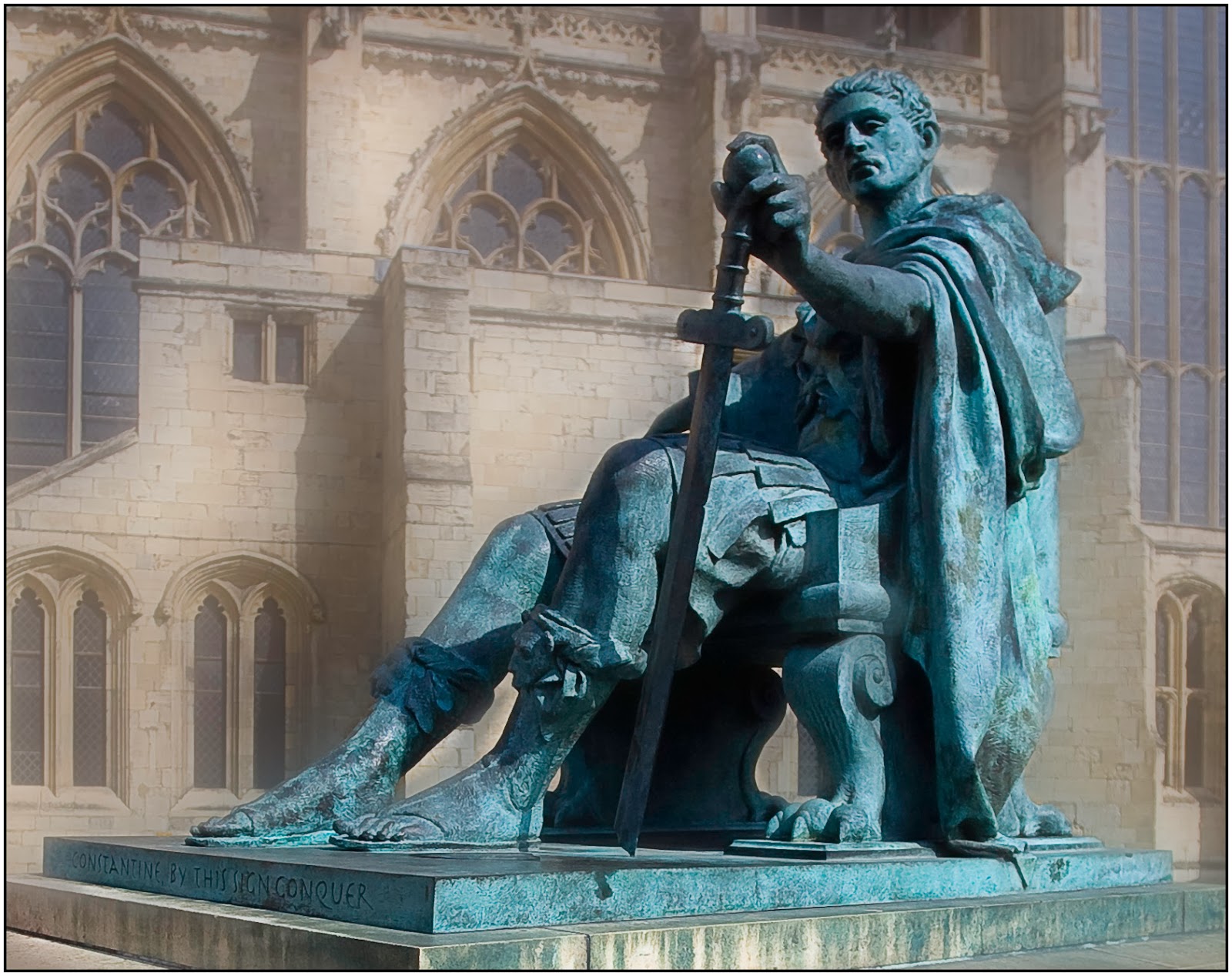
Eusebius of Ceasarea (ca. 260-339). And thus note, not a 2CV.
“You also wrote me concerning some supposed image of Christ, which image you wished me to send you. Now what kind of thing is this that you call the image of Christ? I do not know what impelled you to request that an image of Our Saviour should be delineated. What sort of image of Christ are you seeking? Is it the true and unalterable one which bears His essential characteristics, or the one which He took up for our sake when He assumed the form of a servant? . . . Granted, He has two forms, even I do not think that your request has to do with His divine form. . . . Surely then, you are seeking His image as a servant, that of the flesh which He put on for our sake. But that, too, we have been taught, was mingled with the glory of His divinity so that the mortal part was swallowed up by Life. Indeed, it is not surprising that after His ascent to heaven He should have appeared as such, when, while He—the God, Logos—was yet living among men, He changed the form of the servant, and indicating in advance to a chosen band of His disciples the aspect of His Kingdom, He showed on the mount that nature which surpasses the human one—when His face shone like the sun and His garments like light. Who, then, would be able to represent by means of dead colors and inanimate delineations (skiagraphiai) the glistening, flashing radiance of such dignity and glory, when even His superhuman disciples could not bear to behold Him in this guise and fell on their faces, thus admitting that they could not withstand the sight? If, therefore, His incarnate form possessed such power at the time, altered as it was by the divinity dwelling within Him, what need I say of the time when He put off mortality and washed off corruption, when He changed the form of the servant into the glory of the Lord God. . . ? … How can one paint an image of so wondrous and unattainable a form—if the term ‘form’ is at all applicable to the divine and spiritual essence—unless, like the unbelieving pagans, one is to represent things that bear no possible resemblance to anything. . . ? For they, too, make such idols when they wish to mould the likeness of what they consider to be a god or, as they might say, one of the heroes or anything else of the kind, yet are unable even to approach a resemblance, and so delineate and represent some strange human shapes. Surely, even you will agree that such practices are not lawful for us.
“But if you mean to ask of me the image, not of His form transformed into that of God, but that of the mortal flesh before its transformation, can it be that you have forgotten that passage in which God lays down the law that no likeness should be made either of what is in heaven or what is in the earth beneath? Have you ever heard anything of the kind either yourself in church or from another person? Are not such things banished and excluded from churches all over the world, and is it not common knowledge that such practices are not permitted to us alone?
Pope Leo apparently just said, “Someone who says ‘I’m against abortion but says I am in favor of the death penalty’ is not really pro-life.”
Thomas Aquinas said, “Therefore if a man be dangerous and infectious to the community, on account of some sin, it is praiseworthy and advantageous that he be killed in order to safeguard the common good . . . .” (ST IIa-IIae, q. 64, a. 2).
And, “It is permissible to kill a criminal if this is necessary for the welfare of the whole community. However, this right belongs only to the one entrusted with the care of the whole community — just as a doctor may cut off an infected limb, since he has been entrusted with the care of the health of the whole body” (ST IIa-IIae, q. 64, a. 3).
Rome the same, “everywhere, always, by all,” right?
“An establishment may . . . be the occasional, but not the efficient cause of mischief. The machine may be faultless; but exposed, as it must be, while the species lasts, to the intromission of hands, which to a certain degree will taint and vitiate all that they come in contact with. The remedy is not to demolish the machine, and transfer the hands which wrought it to other managements and other modes of operation—There will still be corruption notwithstanding.” And even a reformed establishment can be re-corrupted: “The human nature which you thus transfer, will carry its own virus along with it” (Thomas Chalmers, Works 11:454).
Or, in other words, bad men can make a bad use of good things.
Continuing to follow with interest Timon Cline et al over at American Reformer. Still parsing the field of contemporary “Christian nationalism” and trying to discern the good and the not-so-good; so I share this with some tentativeness, yet general appreciation thus far. Classical Protestant ethics and socio-political ethics fascinates me, so anyone participating in a retrieval has my attention.
Have enjoyed reading this article about John Witherspoon and the colonial Presbyterian iteration of establishmentarianism, contra Kevin DeYoung’s pluralistic take of the American revision of the WCF 23. Looks like others there have also written on the same. I still wonder to what degree Witherspoon may have been influenced by Enlightenment liberalism and what bearing that may have had on how he approached Christian magistracy. But that there is more continuity with the original WCF 23 than not just seems to sync with what I’ve understood about public religion in colonial America. Absolute separation just seems laughable on so many counts. I am also reminded how Dr. William Young opined that the American revision of WCF 23 did not technically contradict the original 1646 statement. While my denomination is the only NAPARC body committed to the original edition, I am at least coming to appreciate that we may have more of a genetic connection with colonial Presbyterian than I had first thought.
Patrick Fairbairn (1805–1874), Free Church of Scotland theologian and author of The Typology of Scripture, on his understanding of the papacy as the antichrist and “man of sin.”
* * * *
“On the whole, then, the conclusion which forces itself upon our minds from a full and impartial consideration of the apostolic testimony, is that the antichristian apostacy cannot be identified cither with the heathenism ofancient Rome, or with any conceivable form of infidelity or atheism yet to be developed. The conditions of the prophetical enigma are not satisfied by either of these views. So much for the negative side of the question. And in regard to the positive, if we may not say (as, indeed, we by no means think it can in truth be said) that in Romanism and the papacy the anticipated evil has found its only realization; yet we cannot for a moment doubt, that it is there we are to look for the most complete, systematic, and palpable embodiment of its grand characteristics. There, we perceive, as nowhere else, either to the same extent, or with the same firm determination of purpose, a mass of errors and abuses “grafted on the Christian faith, in opposition to, and in outrage of, its genius and its commands, and taking a bold possession of the Christian church.” We see “the doctrines of celibacy, and of a ritual abstinence from meats, against the whole spirit of the gospel, set up in the church by an authority claiming to have universal obedience; a man of sin exalting himself in the temple of God, and openly challenging rights of faith and honour due to God; advancing himself by signs and lying wonders, and turning his pretended miracles to the disproof and discredit of some of the chief doctrines or precepts of Christianity; and this system of ambition and falsehood succeeding, established with the deluded conviction of men still holding the profession of Christianity.” All this meets so remarkably the conditions of St Paul’s prophecy, and in its history and growth also from the apostolic age so strikingly accords with the warnings given of its gradual and stealthy approach, that, wherever else the antichrist may exist, they must be strangely biased, who do not discern its likeness in the Romish apostacy. We may the rather rest in the certainty of this conclusion, as it is matter of historical certainty, that ages before the Reformation, and, indeed, all through the long conflict that was ever renewing itself on the part of kings and men of faith against Rome, the Pope was often denounced as the antichrist, and man of sin. But it is one thing to find a great and palpable realization of the idea there, and another thing to hold, that it is the only realization to be found in the past or the future. And if Romanists have made void the testimony of Scripture in rejecting the one application, we fear Protestants have too often grievously narrowed it by excluding every other. Of this, however, we shall have a fitter occasion to speak, when we have examined that remaining portion of New Testament Scripture, which treats of the same subject, and in a way peculiarly its own. We refer, of course, to the Apocalypse.”
A couple of good articles here and here, promoting biblical and natural-law views of women, motherhood, and childbearing contra feminism. I have tremendously little knowledge of Taylor Swift or her music; but the analysis from someone who does only confirms my suspicions and that Swift is a tragic symbol of feminism’s Faustian bargain.
On the other side of the gender coin is this article. I’ve never read this author before, but he definitely strikes a chord with me about a prescription for solid, biblical masculinity with a healthy, and distinctly Protestant embrace of church tradition:
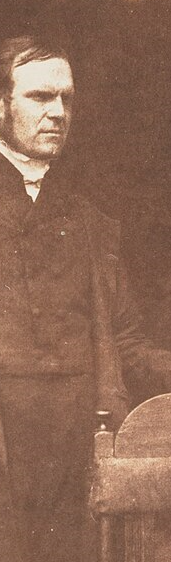
The following is a rather interesting piece in an old edition of the Bulwark Magazine. James Begg inquires with Dugald MacColl on the effect of his territorial mission with the Roman Catholic population in Glasgow.
See also this post on Thomas Chalmers’ outlook on Protestant parochial missions to Irish Roman Catholics.
“Yet I must say I liked the Irish part of my parishioners. They received me always with the utmost cordiality, and very often attended my household ministrations, although Catholics” (Works 16:243).
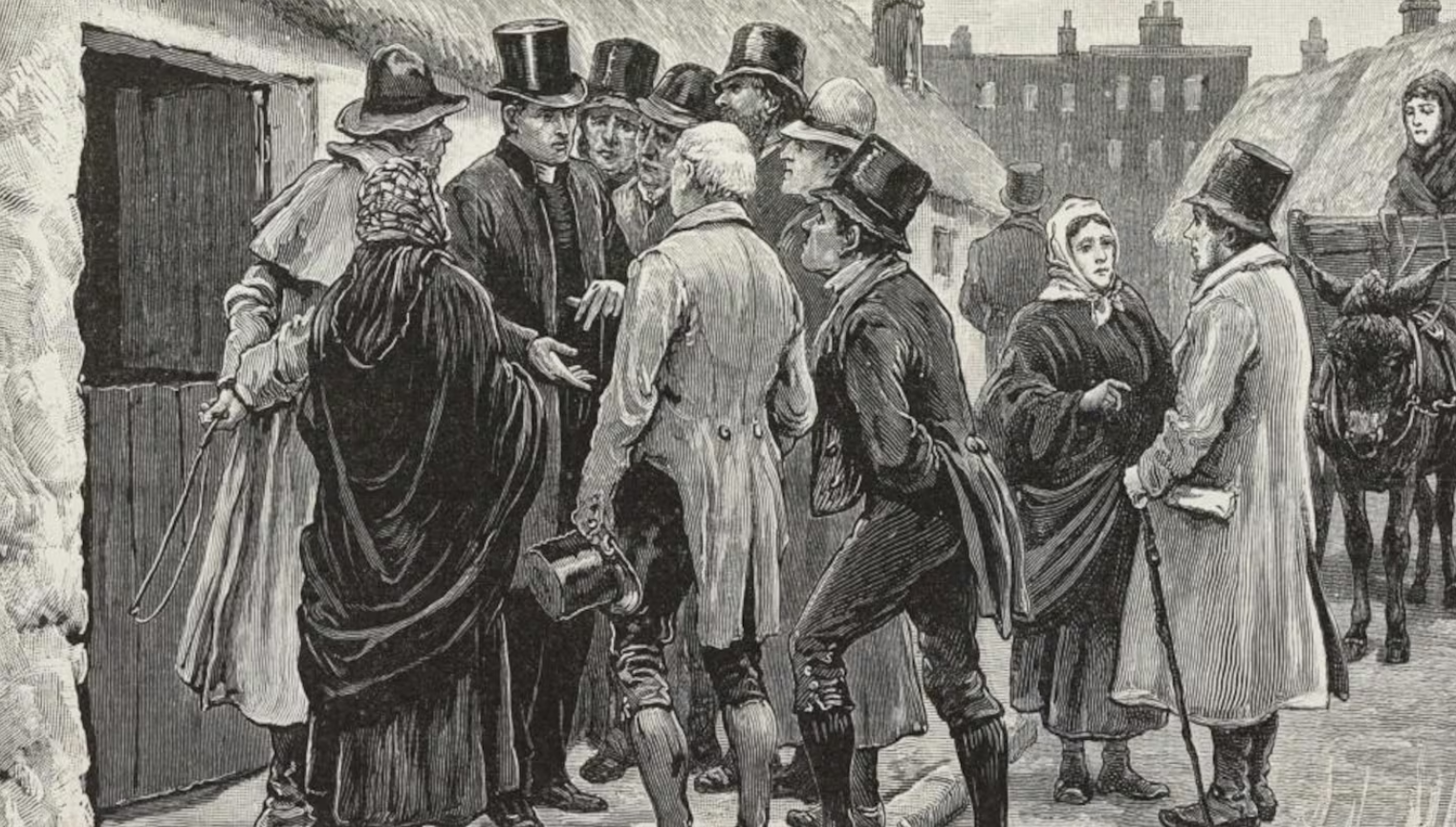
This and the following are selections from Thomas Chalmers on his attitude and outlook on reaching the poor Irish “papists” of his day, both domestically through aggressive, Protestant territorial missions, as well as on the Emerald Isle itself. Much here that is relevant, especially when so many Western nations have swarms of un-Christianized immigrants on our very doorstep.
* * * * *
Chalmers here refutes the notion that the Protestant establishment in Ireland ought to respect parochial bounds of Romanists. No! Parish lines are only relevant for the sake of the Gospel, and ought valiantly to be transgressed when the strong man’s house must be plundered: “We do not say that the maxim has been universally acted on, but it has been greatly too general, that to attempt the conversion of a Papist was to enter another man’s field; and that, in kind at least, if not in degree, there was somewhat of the same sort of irregularity or even of delinquency in this, as in making invasion on another man’s property. In virtue of this false principle, or false delicacy, the cause of truth suffered, even in the hands of conscientious ministers; and when to this we add the number of ministers corrupt, or incompetent, or utterly negligent of their charges, we need not wonder at the stationary Protestantism, or the yet almost entire and unbroken Popery of Ireland. We now inherit the consequences of the misgovernment and the profligacy of former generations. They may be traced to the want of principle and public virtue in the men of a bygone age. Those reckless statesmen who made the patronage of the Irish Church a mere instrument of subservience to the low game of politics—those regardless clergymen who held the parishes as sinecures, and lived in lordly indifference to the state and interests of the people—these are the parties who, even after making full allowance for the share which belongs to the demagogues and agitators of the day, are still the most deeply responsible for the miseries and the crimes of that unhappy land (Chalmers T 1838m; Works 17:304).
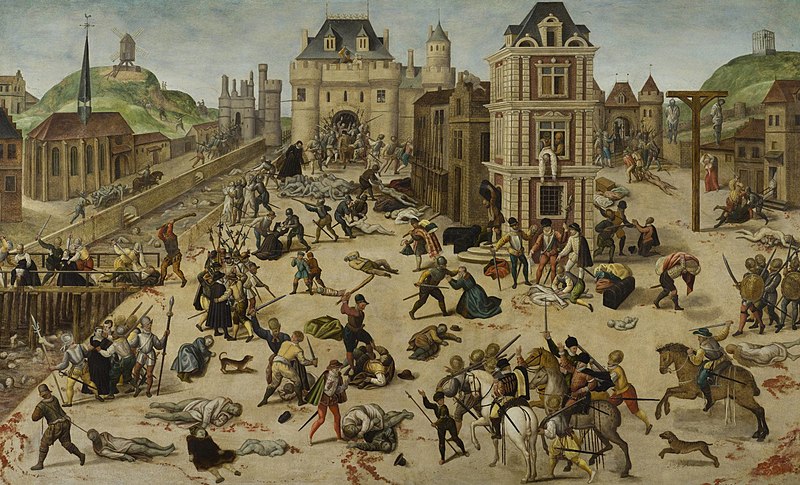
Why should we think about the St Bartholomew’s Day Massacre? What took place then was a long time ago, in a very different world. Most of society today will not have heard about [this] massacre. Of those that have, the majority will say that its significance is merely historical, and that today we are advancing in a new era that is leaving narrow-minded bigotry behind, and that focusing upon the evils of the past will simply perpetuate thoughtless sectarianism. Beside this, and much more significantly, there is the exhortation of Philippians 4:8: “whatsoever things are true, whatsoever things are honest, whatsoever things are just, whatsoever things are pure, whatsoever things are lovely, whatsoever things are of good report; if there be any virtue, and if there be any praise, think on these things.” The question that may therefore be legitimately asked, is, is it correct and is it helpful for us to focus upon this ugly and violent episode from the past?
In answer we must recognise that when scripture directs us to meditate and dwell on what is good, it does not forbid us from recognising and learning from what is not good. Rather, in scripture itself there are many horrific events, and we have a duty to notice and learn from them. It is very naïve to think that today’s world has progressed beyond such horrific violence. We must not turn away from the issues of our own day but be thoughtfully involved in addressing them, and there are important lessons to be learnt from this historic event.
Continue reading in the PDFs below. This article was written by the Rev. James MacInnes, of the Free Church of Scotland (Continuing) and published in the April-June and the July-September editions of the Bulwark, a publication of the Scottish Reformation Society.



 West Port Experiment