 One of my personal heroes is Scottish Presbyterian minster, Aeneas Sage (1694-1774). I’m not quite sure if everything written about him is totally accurate; I get a whiff of the hagiographic if not the legendary in some of the stories. Yet, something in my gut tells me it is too good and so must be true! (Like a historian friend of mine quipped, ‘If it ain’t true, it should be!’) Whatever the case, Aeneas Sage captivates me, for as a pastor he knew how to captivate an audience – in more ways that one.
Archive for the ‘Preaching’ Category
All things to all men: a lesson from a Samsonesque Presbyterian
Posted in Church of Scotland, Experimental Religion & the Cure of Souls, Gospel Tactics, Highlands & Islands, Parish Theory & Practice, Parochial Strategy, Preaching, The Romance of Locality, Theology of Community on May 13, 2016| 1 Comment »
Open air preaching: problems & solutions
Posted in Gospel Proclamation, John Murray, Preaching on April 12, 2016| 1 Comment »
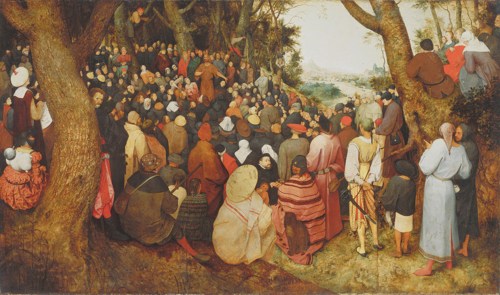 The following comes from a report of the Committee of Local Evangelism in the OPC in which Professor John Murray played a major role prior to World War II. It was drawn from this source.
There is an acute problem that confronts the open-air preacher in our day and age. The great problem is to get and hold a sizeable audience. In Whitefield’s day the masses thronged to hear his message. This is not true today; the multitudes pass us by. What is the cause? What can be done to assist in the solution of the problem?
Various factors may be said to contribute to the listlessness of those whom we seek to reach with the gospel. There are the many attractive forms of pleasure. No age of ministers has had to compete with as many enticing modes of pleasure as has the minister of the twentieth century. It is reported of Moody that he looked with apprehension on the popularity of the bicycle, fearing its effect upon evangelistic meetings in America. The automobile, the radio, the moving picture, and television have done much to make the average open-air meeting appear unattractive. Another factor that has engendered a spirit of indifference to the open-air preacher is the attitude of the average educated person. He considers such a method as beneath his intellectual level and personal dignity. Even Wesley at first recoiled before the thought of open-air preaching for this reason. He knew that immediately he would be branded by many as an “ignorant and unlearned” man. But perhaps the most basic reason for the average American’s antipathy toward open-air preaching is that he has been educated, however unwittingly, into a prejudice against the Christian gospel. America’s antitheistic public school system and the deadening influence of modernism within the visible church have had their deadly effect upon the souls of men.
These difficulties, however, are not to be taken as valid reasons for not engaging in open-air preaching. God is sovereign, and has enabled His servants to devise methods whereby the problem of drawing a crowd has to a degree at least been overcome. We present at this point the recommendations that have come to us from ministers who have had some degree of success in obtaining a good hearing in open-air preaching. They are as follows:
Go where the people are, not where we hope they will come. In most places where we have churches, the spring and summer are the only times that weather will permit the holding of outdoor services. During these seasons the people will be found in public parks and squares, at seashore and mountain resorts, by places of public amusement, and outside factories during lunch hours. Recently provision has been made in England to have chaplains for defense industries. In at least one large industrial plant in America permission has been granted for the preaching of the gospel to the men during their lunch hour. These examples may be straws in the wind indicating a tendency to recognize the need and the worth of bringing the Word of God to the working men of our nation. Here may be an opportunity to reach the heads of families whose very souls are being crushed out of them by long hours and Sunday work. In every city and town there are areas where large numbers of under-privileged and spiritually neglected people can be found. These areas should be sought out and surveyed with a view to securing a commodious meeting place. Most important of all, pray for an open door.
Go in absolute confidence in the truth and power of the gospel and in complete reliance upon the Holy Spirit to bless. Only as the love of God is shed abroad in our hearts by the Holy Spirit can we proclaim boldly, convincingly, and winsomely the everlasting gospel. To this end, we need to pray that we might be filled with the Spirit. Nothing can draw and hold so well and so surely in an open-air service as the preaching of the Word in the power of the Spirit.
There are successful ways of gathering a good audience. One way is to have a nucleus of Christians to go with the minister. A crowd draws a crowd. When the passers-by observe that a goodly number are listening they will stop to satisfy at least their curiosity. From that point on you may depend upon the Word to elicit and maintain their interest. A method that has been used by some Roman Catholics with real success in drawing a crowd is the question and answer method. The minister seeks out a passer-by and requests him to ask questions from a specified distance. The minister then proceeds to answer the man’s questions. As others gather they, too, are requested to ask questions. When a sizeable group has been attracted by this method the minister may discourse on a subject of his choice.
The preaching station, the germ of a future parish church
Posted in Missiology, Parish Theory & Practice, Preaching, Thomas Chalmers on July 22, 2015| Leave a Comment »
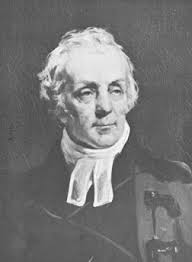
Recently, I’ve been curious about the historic place of “preaching stations” and their relevance for modern missions. It could just be me, but there seems to be little discussion or usage of the construct in “church planting” efforts. Not sure of the reason for this. Maybe it’s because of the subdued place of preaching as the prime vehicle for conversion—at least within broader evangelicalism. I fear that within Reformed circles, it may reflect church planting that engages more in picking up Calvinist proselytes (at best) or bald sheep-stealing (at worst). That is, church growth that aims not so much at the lost community as an ever-recycling Christian one.
Whatever the case may be, historically and in the contemporary situation, I’m liking what I read from Chalmers on the topic:
“I should not hold it wise to rush precipitately on the formation of a parish church, till a preaching station, upheld by household assiduities, had been tried and found to be successful. Such a preaching station is the germ of the future church, as the missionary is of the future clergyman; but not till the germ had so far germinated, would we venture on a full parochial apparatus for any locality whatever.”
First, preaching stations are forward-moving Gospel efforts, in the direction of full-fledged congregations. They are missionary endeavors. Second, they operate in the right order with respect to sacraments. Word first; then assuming reception, baptism and the Lord’s Supper. Throw the Gospel net far and wide, but keep the sacraments out of the equation until there are “fruits worthy of repentance.” Third, aggressive, territorial household visitation as an indispensable adjunct to the preaching station.
Hellfire preachers in hell
Posted in Preaching, Richard Baxter, The Sacred Ministry on September 16, 2014| Leave a Comment »
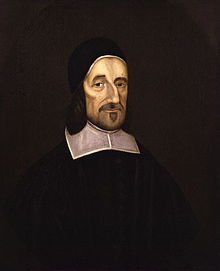 Many have warned others that they come not to that place of torment, while yet they hastened to it themselves: many a preacher is now in hell, who hath a hundred times called upon his hearers to use the utmost care and diligence to escape it. Can any reasonable man imagine that God should save men for offering salvation to others, while they refuse it themselves; and for telling others those truths which they themselves neglect and abuse? Many a tailor goes in rags, that maketh costly clothes for others; and many a cook scarcely licks his fingers, when he hath dressed for others the most costly dishes. Believe it, brethren, God never saved any man for being a preacher, nor because he was an able preacher; but because he was a justified, sanctified man, and consequently faithful in his Master’s work. Take heed, therefore, to ourselves first, that you be that which you persuade your hearers to be, and believe that which you persuade them to believe, and heartily entertain that Savior whom you offer to them. He that bade you love your neighbors as yourselves, did imply that you should love yourselves, and not hate and destroy yourselves and them.
-Richard Baxter (1615-1691)
The true practicality of the Gospel preacher
Posted in Ordinary Means Ministry, Preaching, The Sacred Ministry on December 4, 2012| Leave a Comment »
Is the Gospel preacher practical? The man who gives himself to prayer and the ministry of the Word, who delegates to others the lesser ministry of waiting on tables – is such a man a blessing or a bane to the Church and society? Perhaps in the short-term, it may seem that way. But when we take a step back and view aright the man of God who sacredly devotes the lion share of his time to the ‘closet’ labors of his study, we will see him not only as highly practical. He will emerge as the best doer of good to His fellow men.
The following extracts from Alexander’s Thoughts on Preaching explore this mystery with profound insight.
* * *
§ 74. To do g ood to men, is the great work of life; to make them true Christians is the greatest good we can do them. Every investigation brings us round to this point. Begin here, and you are like one who strikes water from a rock on the summits of the mountains; it flows down over all the intervening tracts to the very base. If we could make each man love his neighbour, we should make a happy world. The true method is to begin with ourselves, and so to extend the circle to all around us. It should be perpetually in our minds.
§ 75. Beneficence.—There are two great classes of philanthropists, namely, those who devise plans of beneficence, and those who execute them. If we cannot be among the latter, perhaps we may be among the former. Invention is more creative than execution. Watt has done more for mechanics than a thousand steam-engine makers. The devisers of good may again be divided into those who devise particular plans, such as this or that association or mode of operation, and those who discover and make known great principles. The latter are the rarer and the most important. Hence a man who never stirs out of his study may be a great philanthropist, if he employs himself in discovering from the study of the Scriptures and the study of human nature, those laws which originate and condition all effectual endeavours for human good.
Felt preaching
Posted in Experimental Religion & the Cure of Souls, Ministerial Fidelity, Preaching on July 3, 2012| Leave a Comment »
J. W. Alexander (1804-1859) gives the following powerful observation in Thoughts on Preaching. If we would learn how to preach, we must not start with Homiletics. We must return ever and again “to the one thing needful.” He writes,
The great reason why we have so little good preaching is that we have so little piety. To be eloquent one must be in earnest; he must not only act as if he were in earnest, or try to be in earnest, but be in earnest, or he cannot be effective.
We have loud and vehement, we have smooth and graceful, we have splendid and elaborate preaching, but very little that is earnest. One man who so feels for the souls of his hearers as to be ready to weep over them—will assuredly make himself
felt. . . We must aim therefore at high degrees of warmth in our religious exercises, if we would produce an impression upon the public mind. . .Without any increase of our numbers, the very men we now have, if actuated with burning zeal for God, might work a mighty reformation in our country.
Effectual calling: the catch of Christ
Posted in Experimental Religion & the Cure of Souls, Gospel Proclamation, Preaching on January 28, 2012| Leave a Comment »
 “As when a fish is taken there are two actions, the bait alluring and beguiling the fish with hope of meat. This is like the working of the word which is Christ’s bait; but when He wins us to dryland, then, when the fish is hooked, there is a real action of the fisher, drawing and hauling the fish to land; it leaping and flightering [fluttering] and wrestling while it bleeds with the hook. And this answereth to the Holy Spirit’s powerful hauling and drawing of the soul in all the affections, that the soul feeleth joy, comfort, delight, desire, longing, believing, nibbling, and biting Christ’s bait.”
-Samuel Rutheford (c. 1600 – 1661)
Christ, the Savior of the world
Posted in Christ & the Church, Church of Scotland, Covenant Theology, Preaching, Thomas Boston on January 21, 2012| Leave a Comment »
 The following passage is worth its weight in gold. We would expect nothing less from Thomas Boston.
* * * *
In what sense Christ is Saviour of the world. A saviour is a name of honour, and a name of business. It is an honourable thing to save and help the miserable; to be destined, appointed, and called to that employment: but the honourable post has business annexed to it; it will not do without activity, which success is expected to attend, as in the case of a teacher, physician, and the like. Now, one may be a saviour, even as a teacher or physician, of a society, two ways. (1.) In respect of office, as being called to and invested with the office of saving, teaching, or curing that society. And thus one is saviour, teacher, or physician of that society, before ever he save, teach, or cure any of them. In this respect one may be called an official saviour, teacher, or physician. (2.) In respect of the event and success, as actually and eventually saving, teaching, and healing. As the former ariseth from an appointment put upon such a one; this ariseth from the work he manageth in virtue of that appointment. In this respect one may be called an actual and eventual saviour. Thus it is said, Neb. ix. 27. ” And, according to thy manifold mercies, thou gavest them saviours, who saved them out of the hands of their enemies. This premised, we say,
1. Our Lord Jesus is the actual and eventual Saviour of the elect only, in whose room and stead only he died upon the cross, according to the eternal compact passed between him and the Father, in the covenant of grace, otherwise called the covenant of redemption; for these are not two, but one and the same covenant. Thus the apostle calls him “the Saviour of the body,” Eph. v. 23. that is, of the elect, who make up the body whereof he was appointed the head from eternity, and in whose name he contracted with the Father in the eternal covenant. And he is their Saviour eventually, as actually saving them, Matth. i. 21. “And she shall bring forth a son, and thou shalt call his name Jesus; for he shall save his people from their sins.” None but these will ever truly employ him as a Saviour, or put their case in his hand : and there are none of them but will certainly employ him sooner or later, Acts xiii. 48. ” As many as were ordained to eternal life, believed.” John vi. 37. “All that the Father giveth me, shall come to me; and him that cometh to me, I will in no wise cast out.”
2. Our Lord Jesus Christ is the official Saviour, not of the elect only, but of the world of mankind indefinitely; so our text calls him “Saviour of the world.” Agreeably to which, God in Christ is called “the Saviour of all men,” but with a speciality, “the Saviour of them that believe,” 1 Tim. iv. 10. The matter lies here: like as a prince, out of regard to his subjects’ welfare, gives a commission to a qualified person to be physician to such a society, a regiment, or the like; and the prince’s commission constitutes him physician of that society ; so that though many of them should never employ him, but call other physicians, yet still there is a relation betwixt him and them ; he is their physician by office; any of them all may come to him if they will, and be healed: So God, looking on the ruined world of mankind, has constituted and appointed Jesus Christ his Son Saviour of the world: he has Heaven’s patent for this office; and wheresoever the gospel comes, this his patent is intimated. Hereby a relation is constituted betwixt him and the world of mankind; he is their Saviour, and they the objects of his administration: so that any of them all may come to him, without money or price, and be saved by him as their own Saviour appointed them by the Father.
More on my allergy to small groups
Posted in Articles, Gospel Proclamation, Ordinary Means Ministry, Preaching, Theology of Community on December 5, 2011| Leave a Comment »
Call me a curmudgeon. Or an arch-conservative, allergic to all things new. And I will freely admit that I romanticize earlier days, fully aware that they were never so rosy as I fancy them. But I am just not ready to jump on the small (‘cell’) groups bandwagon like so many other Reformed folks. I have already raised some questions on the subject in a previous post. I really do question how ecclesiologically Reformed it is after all.
But here’s another thing that makes me nervous of them. I fear that they detract from a robust pulpit ministry, from Lord’s day to Lord’s day. In some circles, cell groups aim to provide meaningful biblical study for preachers who want their Sunday services to be ‘seeker sensitive.’ In my judgment, that makes cell groups a crutch for an impotent ministry.
 Related, it seems that they are now being touted (or maybe I’m just noticing it) as suitable vehicles for ‘missional’ outreach. Unbelievers need a ‘safe’ place to be welcomed, where they will not feel judged. So we can win them over to church, with all its trappings, through the back door. Now, I am all for loving unbelievers and making them feel loved. But what about public preaching as a means of grace? What of God’s choice of the foolishness of preaching? What of the scandal of the cross? And does that scandal come in bold face through the small groups, or is it in the fine print on page 236?
Why are Reformed people enthusiastic about this? Am I off, or is this broad evangelicalism, low churchism, or even anti-churchism sneaking in under the radar?
Presbyterian exegesis
Posted in Articles, Preaching, The Visible Church on June 25, 2011| 1 Comment »
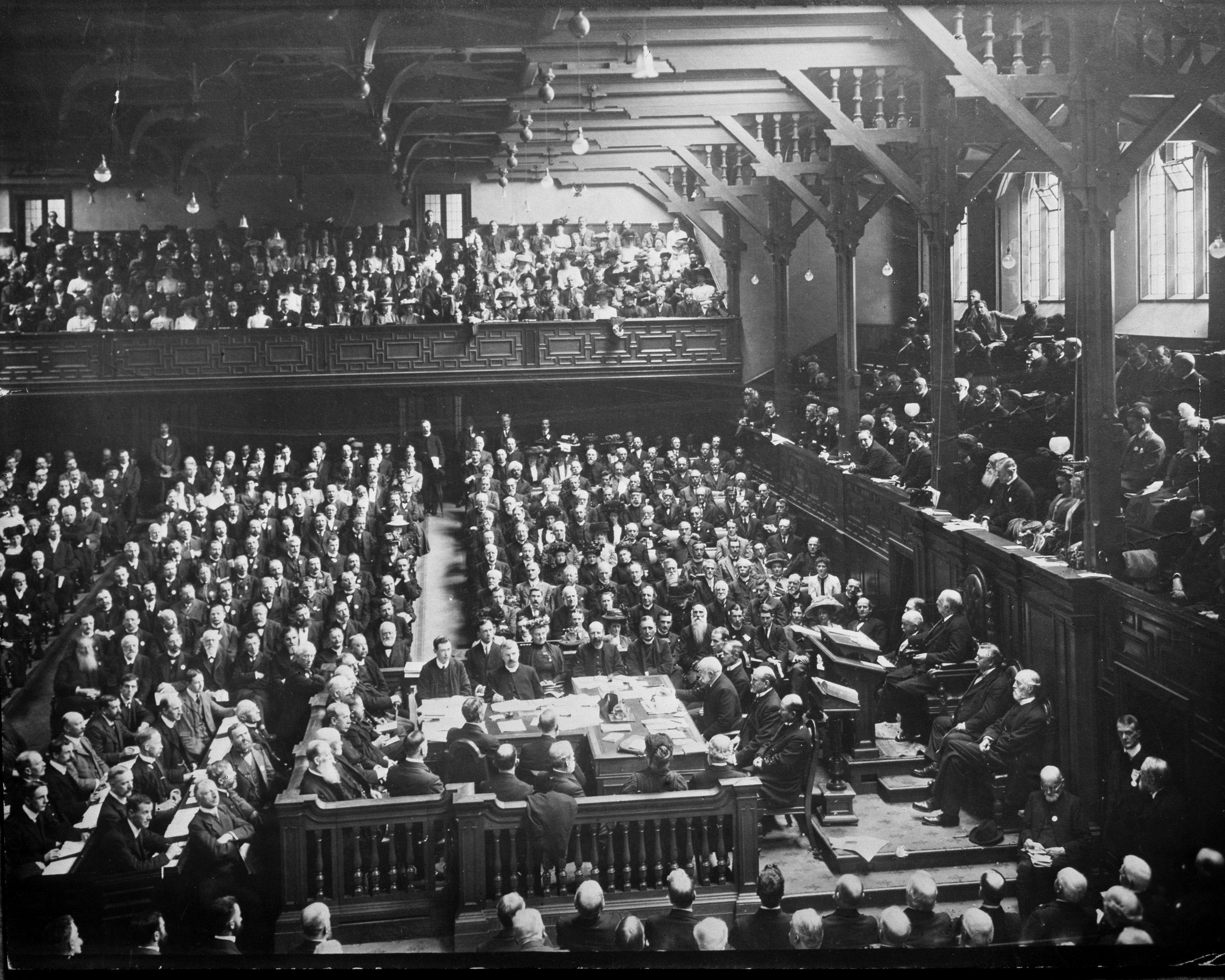 More often than not, we identify Presbyterianism as a form of church government. But recently, it occurred to me that a preacher’s exercise of looking at good commentaries after he has done his own firsthand exegesis is also an exercise in Presbyterianism. It is a golden mean between exegetical Independency and Episcopacy. Exegetical Independency says ‘no’ to the fruits of other men’s labors and an unequivocal ‘yes’ to one’s own. It is idosyncratic, and in too many instances just plain idiotic. On the other extreme, there is exegetical Episcopacy. It makes too much of the gifts of some, becoming slavishly subservient to them. The preacher who rushes to the commentaries before digesting God’s Word himself buries his talent in a napkin and exalts others to a lordly status – even over Scripture. As in church government, so in exegesis. Presbyterianism is the golden mean.
 West Port Experiment