Feeds:
Posts
Comments

Archive for the ‘Preaching’ Category

Just read this section from Charles’ Bridges masterful classic of pastoral theology, The Christian Ministry. Have a listen above; and hear the whole thing here. Or read it below.

Read Full Post »

So this is the maiden episode of the West Port Experiment podcast. I have completed the first ten episodes before releasing any to make sure I wasn’t overcommitting or underperforming. But I’m hoping that this podcast fills a niche in a crowded digital area. While this site’s theme is about “parish missions, the care of souls, and all things reformed,” the first season is dedicated specifically to the Scottish Presbyterian tradition to which my denomination is devoted. God willing, I’ll continue to focus mainly in this area. But if it continues, I may branch off into other related areas, especially my great interest in Thomas Chalmers and the theory of practice of parish missions.

For now, the episodes focus on a text or texts for discussion with various friends as conversation partners from within and beyond my presbytery. In this first season, we will be dealing with John Willison, Samuel Rutherford, Hugh Binning, Alexander Henderson, David Dickson & the Stewarton Revival, James Guthrie, and Thomas Boston. I hope to release them about once per month.

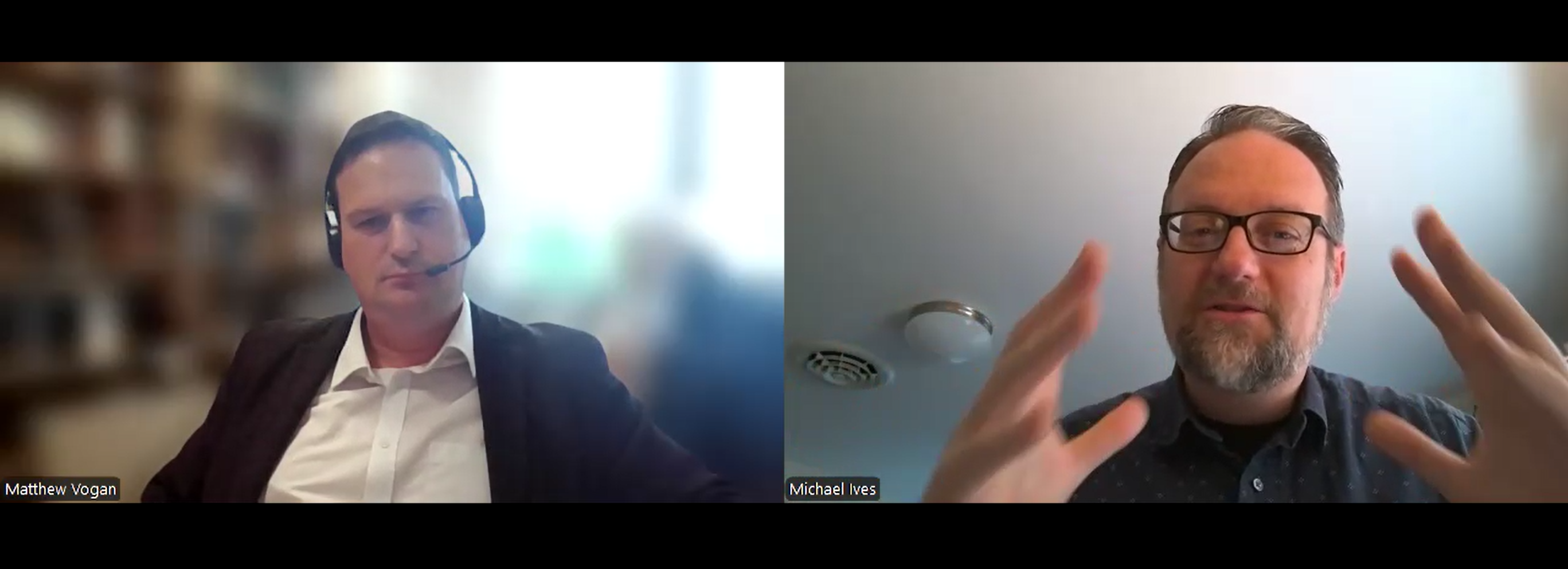
In this episode, Matthew Vogan and I discuss John Willison’s Sacramental Meditations (1747). You can listen to a number of them here or read them here. We also reference Matthew’s article in the Historical Journal of the Scottish Reformation Society, “The Origins of John Willison’s Emphasis on the Lord’s Supper,” which is available here.

If you would like to be kept updated about WPE podcast releases, subscribe to this site at the right, just under the banner. If any links are broken, please drop me a note at michael@reformedparish.com.

[Instrumental music in podcast courtesy of Ernst Stolz.]

Read Full Post »

Just added a recording in two parts of John Witherspoon’s farewell sermon to his congregation in Paisley, Scotland before sailing over to the American colonies to take up the presidency of the College of New Jersey in 1768. It is a profoundly moving and historic sermon, and especially one that ministers of the Gospel would do well to read. I began recording it soon before my transition to a pastorate in New Jersey, which added to its personal significance for me. Here are the opening words of the sermon. And to access more titles from my growing audio library, go here.

“My brethren, these words [Acts 20:26-27] are a part of the apostle Paul’s discourse to the elders of Ephesus, when taking leave of them, under a firm persuasion, or rather a certain knowledge, that he would never again see them in the body. My present situation, of which none of you is ignorant, has determined me to the choice of this passage, as a very proper subject from which I may conclude the exercise of my ministry among you. I had once occasion, on leaving another charge, to have taken a formal farewell of a very affectionate people, but had not courage to attempt it. The circumstances attending the removal, which, if Providence prevent not, seems now to be at hand, are such as do not lessen, but greatly increase the difficulty of speaking from such a subject. And yet, in another view, they seemed to urge it so strongly, and to present such an opportunity of being useful, as I durst not wholly decline. Every Christian ought to be an observer of providence. Nothing will more effectually promote his holiness and comfort. And both a minister and his people ought to improve the aspect of providence, when it hath any thing peculiar in it, to their mutual benefit.

“Let me therefore intreat you to attend to the following discourse, with patience and composure. This request I the rather hope you will comply with, as there is nothing intended that is personal, further than must necessarily arise from the subject itself, or be unavoidably suggested by your own thoughts. I bless God that I have no complaint to make of want of duty or affection upon your side; neither is it any part of my purpose to justify my own conduct, during the time that I have had the honour and happiness of being entrusted with the ministry of the gospel in this place. I shall therefore only fay, that whether I have been able to deliver my own foul by fidelity in duty, and by purity of principle, I am certain, that very much has been laid to the charge of many of yours. Least of all do I intend to endeavour to satisfy you of the motives which have induced me to accept of a call to a distant part of the world, and, in some degree, a different employment in the Church of Christ. For this, I know that an account must be given, in due time, to a much greater Judge, with whose approbation either the applause or censure of men are not worthy to be laid in the balance. The single purpose, therefore, of the following discourse, shall be to give you such a comprehensive view of the truths of the everlasting gospel, of the importance and difficulty of a minister’s work; as may direct you in the choice of another pastor, increase your esteem of such as are faithful, and excite you to guard against every thing that may either discourage them in their work, or prevent their success.”

Read Full Post »

Ever read this classic of pastoral theology? Perhaps you should. But if you could use it in audio format, I’m making progress in recording it into mp3. Access it here (and more to follow).

Consider these contemporary endorsements from the Banner edition, then I challenge you not to ‘take up and read.’ Or, now listen, if you prefer!

“This book has been my companion for almost fifty years. First published in 1830, it is arguably more needed now than then. It is a classic, serving as a guide to all who are aware of the perils and privileges of pastoral ministry.” — Alistair Begg

“People ask me, “What’s the very best book for Ministers?” Overall for the ministry, and for passionate preaching, and how to preach to different kinds of people – there’s nothing like The Christian Ministry.” — Joel Beeke

For more titles, see my growing amateur audio library. [And if any links fail, kindly drop me a note: mjves dot refparish at gmail dot com. Thanks!]

Read Full Post »

There we were in the manse on Saturday night, in that sleepy little Canadian town. The minister’s wife was giving him a haircut before his Sabbath labors the next day. He was, well, idiosyncratic. The thin-framed parson had quite the shock of unmanageable white hair, much like Doc Brown. He sat there with some smock-like cloth draped around him, his helpmate-hairdresser poised with bowl of water and comb. Soon she set to taming the wild mane with the moistened comb. Water applied, it seemed as though his head had shrunk by half.

As she went to work with her clippers, the old minister told me about The Days of the Fathers in Ross-Shire, an old classic of the glory days of 18th and 19th century Highlands-Islands Presbyterianism. His eyes beamed, and he cackled with boyish delight as he retold his favorite story about Samsonesque Aeneas Sage and his rather unconventional missionary exploits. There was something about this all that strongly impressed me. There was something of greatness, a romance and even a mystique about that legacy that lingered about the place. The old Scots-Irish town, its church, manse, and, of course, this amusing old minister still retained something of the glow of the “years of the right hand of the Most High.”

Suffice it to say, this green goyim just had to find and read the book. And I did, again and again. And having been ‘bit,’ I’ve retold the story of Rev. Sage over and over to anyone who would listen. My children can probably repeat it verbatim … with a few eye rolls thrown in for good measure! And as an old bookish minister friend of mine would sometimes say, “And if it isn’t true, it should be!

Just finished reading and recording it. You can access it here. I also post a wide variety of classical Reformed, Puritan, and Scottish Presbyterian sermons, articles, and books. I aim to fill gaps with relatively quality audio recordings, especially for the benefit of pastors and elders who work with thinner margins of time.

Read Full Post »

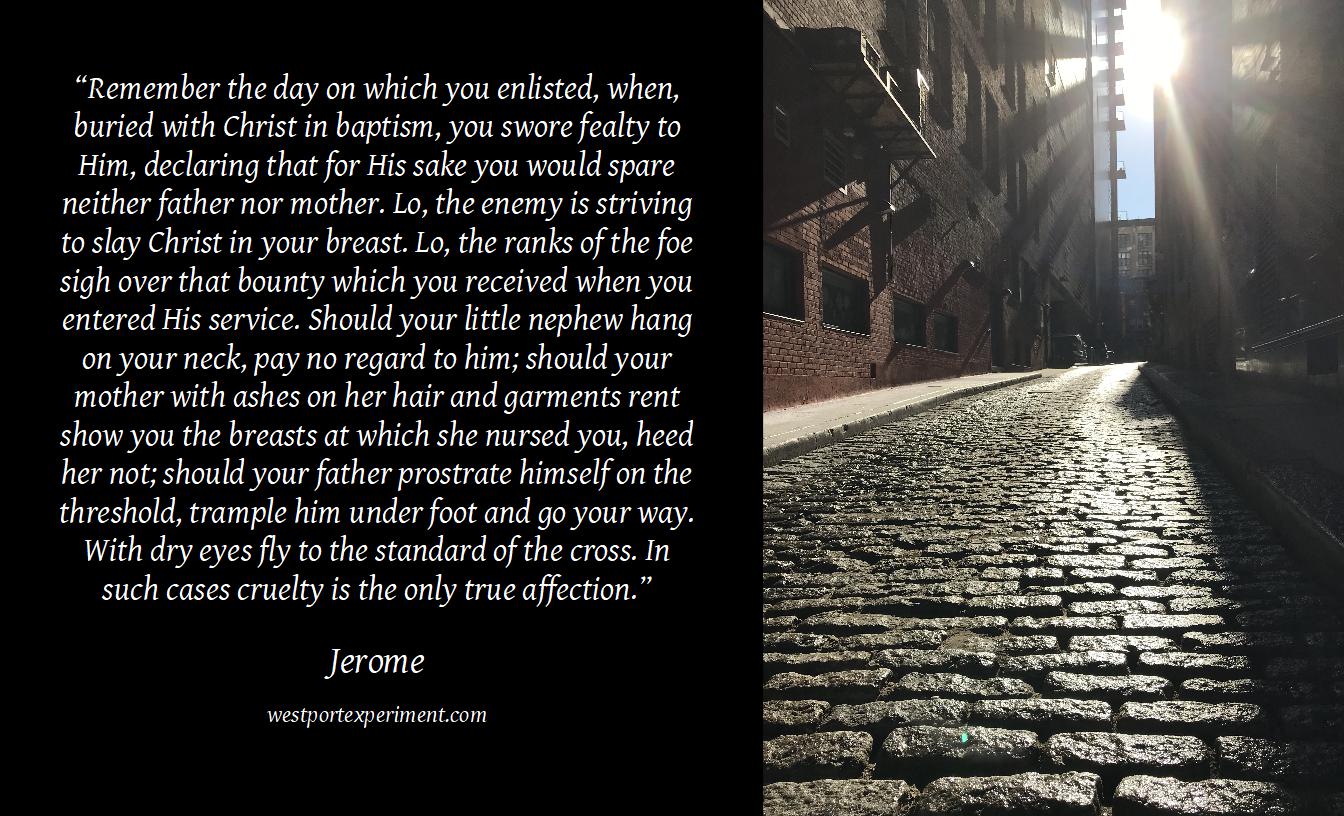
Jerome, Day of enlistment

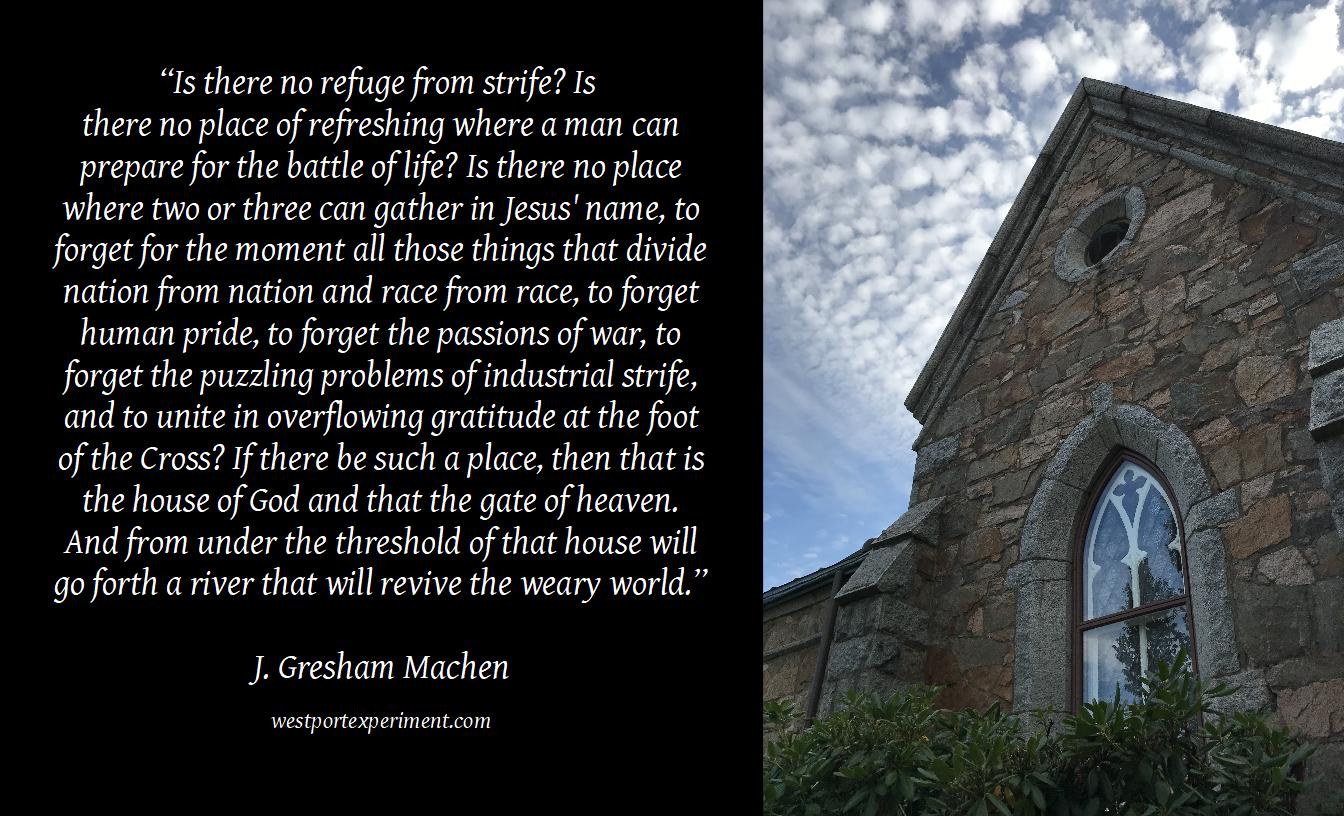
Machen, No refuge from strife

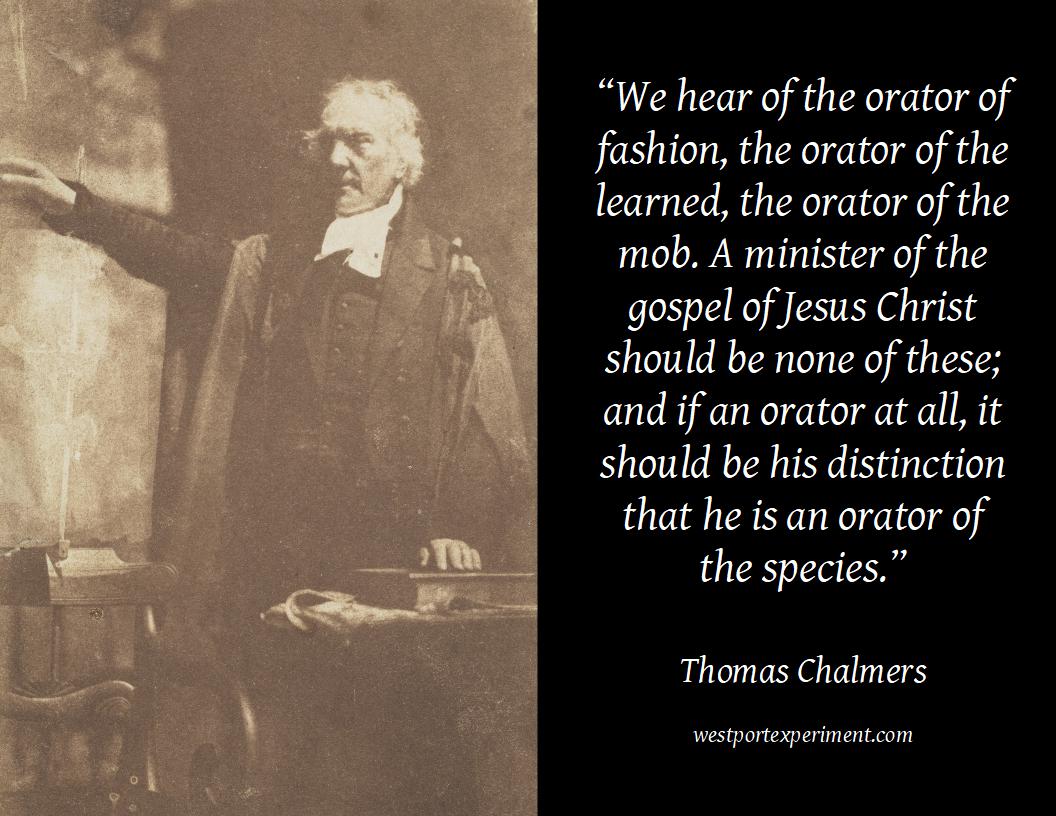
Chalmers, Orator of the Species

Image: Hill, David Octavius and Robert Adamson. Rev. Thomas Chalmers, 1780 – 1847. Preacher and Social Reformer. 1843. Scottish National Print Gallery, Edinburgh. Accessed December 19, 2019.​

Read Full Post »

“As preachers, they were all remarkable. There are some who preach before their people, like actors on the stage, to display themselves and to please their audience. Not such were the self-denied preachers of Ross-shire. There are others who preach over their people. Studying for the highest, instead of doing so for the lowest, in intelligence, they elaborate learned treatises, which float like mist, when delivered, over the heads of their hearers. Not such were the earnest preachers of Ross-shire. There are some who preach past their people. Directing their praise or their censure to intangible abstractions, they never take aim at the views and the conduct of the individuals before them. They step carefully aside, lest their hearers should be struck by their shafts, and aim them at phantoms beyond them. Not such were the faithful preachers of Ross-shire. There are others who preach at their people, serving out in a sermon the gossip of the week, and seemingly possessed with the idea, that the transgressor can be scolded out of the ways of iniquity. Not such were the wise preachers of Ross-shire. There are some who preach towards their people. They aim well, but they are weak. Their eye is along the arrow towards the hearts of their hearers, but their arm is too feeble for sending it on to the mar. Superficial in their experience and in their knowledge, they reach not the cases of God’s people by their doctrine, and they strike with no vigour at the consciences of the ungodly. Not such were the powerful preachers of Ross-shire. There are others still, who preach along their congregation. Instead of standing with their bow in front of the rank, these archers take it in line, and, reducing their mark to an individual, never change the direction of their aim. Not such were the discriminating preachers of Ross-shire. But there are a few who preach to the people directly and seasonably the mind of God in His word, with authority, unction, wisdom, fervour, and love. Such as these last were the eminent preachers of Ross-shire.”

-John Kennedy of Dingwall, The Days of the Fathers in Ross-Shire, pp. 32-33

Read Full Post »

“When I am preaching, I see Dr. Jonas sitting there, and Oecolampadius, and Melanchthon, and I say to myself, ‘Those learned doctors know enough already; so I need not trouble about them. I shall fire at the poor people in the aisles.’”

-Martin Luther

Read Full Post »

The following passage comes from the Memoirs of James Fraser of Brea (1639-1698). In it, we hear the heartbeat of a true fisher of men, a pastor-evangelist that all pastors should strive to be. Also, note that he urged the duty of the minister going beyond the four walls of the church into the “highways and hedges” to speak to the lost.  This is the good old parish way—ministerial house to house evangelistic labor in a fixed, geographical district. Would to God it may be recovered! (Italics below mine.)

* * * *

God did not send me to baptise, but to preach. But that which I was called to was, to testify for God, to hold forth his name and ways to the dark world, and to deliver poor captives of Satan, and bring them to the glorious liberty of the sons of God: this was I to make: my only employment, to give myself to, and therein to be diligent, taking all occasions; and to be plain, full and free in this charge. I was called to enter in hot war with the world and sinners, to fight by my testimony against them for God. . .

He is [in addition to public preaching] to execute his commission by exhortation, private and occasional instruction, whether for reproof, comfort, or in formation and direction. And this is it which I suppose I was most called unto, viz. to take all occasions with all persons in private discourse, to make the name of Christ known, and to do them good, and to do this as my only work; and to do it boldly, and faithfully and fully: and this to do is very hard in a right and effectual manner; to do this is harder than to preach publickly; and, to be strengthened, directed and encouraged in this, is that for which I ought to live near in a dependence on Christ, without whom we can do nothing, and of whom is all our sufficiency. In preaching there are a great many whom we can not reach, and there are many to whom we have no occasion to preach publickly; we may thus preach always, and speak more succesfully than in publick, where the greatest part of hearers do not understand the minister tho’ he speak never so plainly. This likewise we are called unto this day, seeing we are by force incapacitate: but oh how is this neglected! were ministers faithful in this, we should quickly see a change in affairs; but, alas, with grief of heart I speak it, it is in this thing that I challenge myself most of any, it is in this that I have most come short, and I suppose it may be so with others too. The Apostles went from house to house.

Read Full Post »

One of my personal heroes is Scottish Presbyterian minster, Aeneas Sage (1694-1774). I’m not quite sure if everything written about him is totally accurate; I get a whiff of the hagiographic if not the legendary in some of the stories.  Yet, something in my gut tells me it is too good and so must be true!  (Like a historian friend of mine quipped, ‘If it ain’t true, it should be!’)  Whatever the case, Aeneas Sage captivates me, for as a pastor he knew how to captivate an audience – in more ways that one.

(more…)

Read Full Post »

Older Posts »