The following is a series of messages given to lay out the distinctives of the Presbyterian Reformed Church, a denomination organized through the instrumentality of Professor John Murray in 1965, committed to the principles of historic Scottish Presbyterianism in doctrine, worship, government, and discipline, as enshrined in the original Westminster Confession of Faith (1646).
For a historical sketch of our beginnings, see here.
(Note: The title “Our Testimony” is merely thematic, and does not refer to a supplementary ecclesiastical document besides the Westminster Standards as is done among Reformed Presbyterian brethren.)
Original Series
Our Testimony, Part 1: Psalm Singing
Our Testimony, Part 2: Instruments in Worship
Our Testimony, Part 3: Presbyterianism
Our Testimony, Part 4: Holy Days, True & False
Our Testimony, Part 5: Confessionalism
Our Testimony, Part 6: Experimental Religion
Our Testimony, Part 7: The Free Offer of the Gospel
Our Testimony, Part 8: Religious Establishments #1
Our Testimony, Part 8: Religious Establishments #2
Our Testimony, Part 9: Head Coverings
Our Testimony, Part 10: Liberty of Conscience
Our Testimony, Part 11: Our Communion Practice
Our Testimony, Part 12: Frequency of Communion
 “No person can be a child of God without living in secret prayer; and no community of Christians can be in a lively condition without unity in prayer. In Daniel’s time you see how it was. (Dan. ii. 17, 18.) You see what Jesus said to his disciples on it (Mat. xviii. 19), and what a sweet promise of his presence and a gracious answer he connects with meeting for prayer. You see how it will be in the latter day (Zech. vii. 21), when meetings for prayer, or, at least, concerts for prayer, shall be held by different towns. One great rule in holding them is, that they be really meetings of disciples. If four or five of you, that know the Lord, would meet together regularly, you will find that far more profitable than a meeting open to all. In an open meeting you are apt to become teachers, and to be proud. In a secret meeting you feel all on a level, poor and needy, seeking water. If a young man, acquainted with any of you, becomes concerned about his soul, or a lively Christian is visiting any of you, these may be admitted; but do not make your meeting more open.
  “And if he had not been man, how could he have led us into the way of universal holiness, by the influence of his own example, which is, doubtless, an excellent method to reform mankind? It is not only necessary to enact rules of virtue by a kingly authority,but likewise, by example, to make precepts practicable and honourable. When brave generals, though of the noblest lineage, design to animate their armies to heroic achievements, they voluntarily submit their persons to all the humble offices and hardships of a state of war, courageously lead their troops into the high places of the field of battle,and expose their lives to the greatest perils. This our Lord has done for us; the Captain of our salvation, the King of the church, and Lord of the universe, has been made perfect through sufferings.”
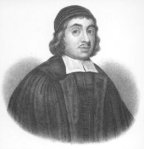 “And there is another promise, ‘He is their strength in the time of trouble‘ (Psalm 37:39). ‘Oh,’ says the soul, ‘I shall faint in the day of trial.’ But God will be the strength of our hearts; He will join His forces with us. Either He will make his hand lighter, or our faith stronger.”
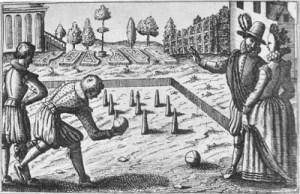 “We show and teach daily in our sermons, that God took upon him our nature: but how do men hear them? Who is there that troubleth himself much to read the scripture? There are very few that attend to these things; every man is occupied with his own business. If there be one day in the week reserved for religious instruction, when they have spent six days in
 West Port Experiment