Just read this section from Charles’ Bridges masterful classic of pastoral theology, The Christian Ministry. Have a listen above; and hear the whole thing here. Or read it below.
Archive for the ‘Pastoral Theology’ Category
“The Decided Preaching of the Gospel”
Posted in Church of England, Gospel Proclamation, Ordinary Means Ministry, Pastoral Theology, Preaching on February 23, 2026| Leave a Comment »
Alexander, “Counsels to Christian Mothers”
Posted in Experimental Religion & the Cure of Souls, Family & Family Issues, Family Religion, Motherhood & Childbearing, Old Princeton, Pastoral Theology on December 2, 2025| Leave a Comment »
The following is included as one of several appendices to Princeton Seminary’s first president and American Presbyterian worthy, Archibald Alexander. Entitled “Counsels to Christian Mothers,” this piece is worth the cost of the book, and the book itself truly worth its weight in gold. This is definitely one of my all-time favorites, a rich exploration of Christian experience in all its varieties, complexities, trials and triumphs, and all from a confessionally Reformed viewpoint and drawn from the heart of a seasoned physician of souls. The Banner of Truth has been continuously publishing it for I don’t know how long, and for good reason. Also, if you’d like to hear a recording of it, I did that several years back (I have improved in quality since then, so fair warning!). For more audio resources, visit WPE Audio here.
* * * * * *
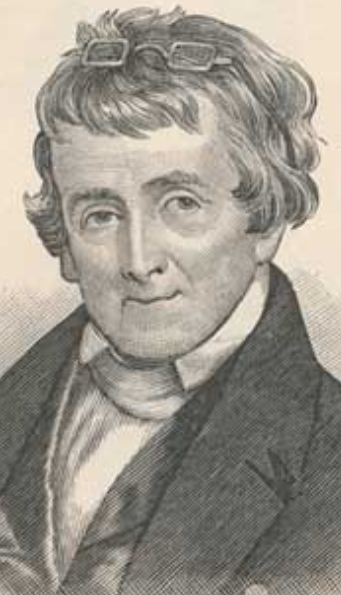
When I address myself to Christian mothers, I do not mean to intimate non-Christian mothers stand in no need of admonition. Alas! that in a Christian country there should be mothers who have nothing of the spirit of Christ! Young people often promise themselves that they will attend to true religion after they are married and settled in the world. How preposterous is this! It ought rather to be their resolution not to think of entering into a state involving such weighty responsibilities, and the exercise of so many virtues—until they have become the possessors of true religion! Without vital piety how is it possible for any woman rightly to fulfill the duties of a wife, and especially of a mother? I feel that no woman destitute of religion is fit to become a wife and mother. Only think of it—an impious mother! If it were not so common, the very expression would excite emotions similar to those which we experience when we hear of an impious minister.
I address Christian mothers, because from them alone can I expect a patient hearing. I address Christian mothers, because all mothers ought to be sincere Christians. Is there a person on earth, whose mind is so perverted by prejudice, as not to perceive a congruity between piety and this tender relation? It was formerly a current opinion, even among infidels that religion was an ornament and safeguard to a woman. I knew one distinguished man who had renounced all belief in the Christian religion himself, who encouraged it in his wife, and furnished her with all the necessary means of attending church; and when one of his friends complained to him, that his wife was becoming pious, which gave him great concern, he told him that he was a fool, for that nothing was more suitable and desirable than that a wife should be pious. Even infidels are constrained, like the demons of old, to give their testimony in favor of Christ. Many ungodly men desire to obtain wives of genuine piety, and few intelligent men in our country would be pleased with a female infidel. Such a character was so rare in Virginia forty years ago, when infidelity abounded among the higher classes of men, that when a certain lady was pointed out as the advocate of deistical opinions, it created a revulsion of feeling in almost every mind.
Here I take pleasure in saying that in no class of society anywhere have I found examples of more pure and elevated piety than among the ladies of Virginia. And I have reason to believe that these examples have rather been increased than diminished since I left my native State. It may, in an important sense, be said that the Commonwealth has been preserved from utter destruction by the prudence, purity and piety of Virginian mothers. They have been the salt which has arrested the progress of moral corruption in the mass of society. Accordingly there is no country in the world, perhaps, where mothers are so much respected by their children, and have so great an influence over them. Ask almost any young Virginian where he will look for the brightest examples of moral excellence, and his thoughts will turn at once to the character of pious females, and perhaps to his own mother, if she happens to be pious.
(more…)Benevolent manipulators & the surprise meeting
Posted in Abuse, Manipulation, Pastoral Theology on November 4, 2025| Leave a Comment »
This was a really helpful article on manipulative ministers. In particular, certain things stood out to me. First, there is such a thing as “benevolent manipulators,” as there is such a thing as true and sincere believers who manipulate. Anyone can manipulate, whether periodically and minimally, or habitually and intractably. Not all who manipulate are befanged, salivating monsters; they can be your sweet grandmother or your devoted, soft-spoken pastor. But a cigar is a cigar.

Some signs of the benevolent manipulator include: “They will subtly question your loyalty. They will be suspicious of anyone who leaves the ‘group.’ They will often undermine anyone who might pose a threat to their influence. They will try to convince you that any concerns or actions not aligned with their agenda stem from personal weakness. And so on.”
(more…)Narcissism & Narcissistic Personality Disorder
Posted in Abuse, Manipulation, Christian Conduct, Christian Ethics, Pastoral Theology on May 17, 2025| Leave a Comment »
Owen’s “The Duty of a Pastor” (1682)
Posted in Audio Resources, Experimental Religion & the Cure of Souls, Pastoral Theology, Puritans & Puritanism on April 23, 2025| Leave a Comment »
Here is a sermon I recorded by John Owen on the ordination of a minister, late in his career. As always, Owen is exceptional. Here is a sample passage—so searching! See the rest of the WPE Audio library at the tab up top.
* * * * * *
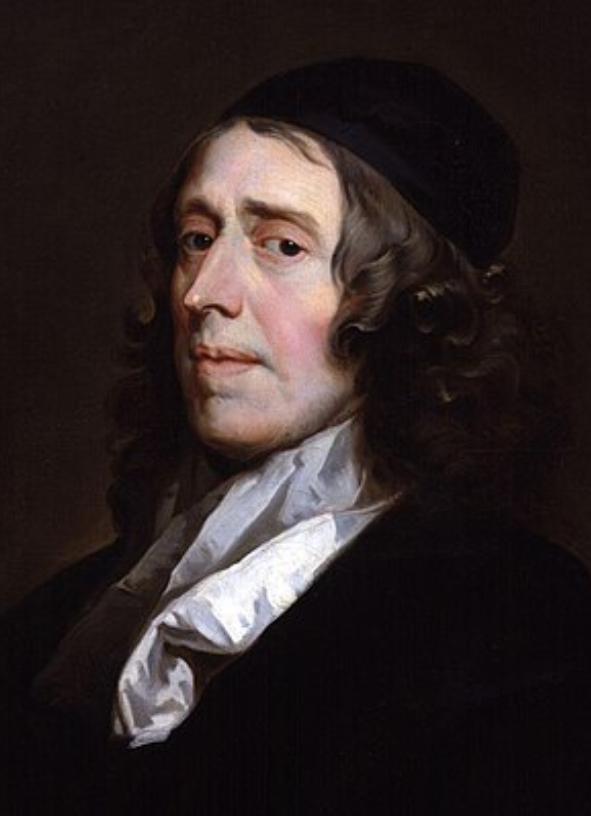
“Another thing required hereunto, is experience of the power of the things we preach to others. I think truly, that no man preaches that sermon well to others, that doth not first preach it to his own heart. He who doth not feed on, and digest, and thrive by what he prepares for his people, he may give them poison as far as he knows; for, unless he finds the power of it in his own heart, he cannot have any ground of confidence, that it will have power in the hearts of others. It is an easier thing to bring our heads to preach, than our hearts to preach. To bring our heads to preach, is but to fill our minds and memories with some notions of truth of our own or other men, and speak them out to give satisfaction to ourselves and others: this is very easy. But to bring our hearts to preach, is to be transformed into the power of these truths ; or to find the power of them both before, in fashioning our minds and hearts. and in delivering of them, that we may have benefit; and to be acted with zeal for God, and compassion to the souls of men. A man may preach every day in the week, and not have his heart engaged once. This hath lost us powerful preaching in the world, and set up, instead of it, quaint orations; for such men never seek after experience in their own hearts : and so it is come to pass, that some men’s preaching, and some men’s not preaching, have lost us the power of what we call the ministry: that, though there be twenty or thirty thousand in orders, yet the nation perishes for want of knowledge, and is overwhelmed in all manner of sins, and not delivered from them unto this day.”
Baxter’s remedies for disordered emotions
Posted in Audio Resources, Conscience & Casuistry, Experimental Religion & the Cure of Souls, Mental Health, Pastoral Theology, Puritans & Puritanism, Richard Baxter on February 19, 2025| Leave a Comment »
I just completed reading-recording the most helpful, practical, and thorough treatment on the subject of the Christian and his emotions I have ever read. Baxter’s “On the Government of the Passions” (or emotions) is found in Volume 3 of his Practical Works, a part of his massive Christian Directory. If you’ve never read the Puritans before, this would surely be a good place to start. The English is of course dated, but I’d say its much more accessible than you might think. I would personally encourage anyone who has never read this to do so—and you’ll probably feel like me, that this one should be read maybe once per year. And now I’ve recorded if for you, so now you have no excuse! Begin to heal your disordered feelings and cultivate a godly, stable, and enriching emotional life today as you are stuck in traffic or washing dishes. Your next podcast episode will still be there later. Your venerable fathers await!
And on the subject, let me commend a (more) modern theologian, B. B. Warfield, and his absolutely one-of-a-kind article, “On the Emotional Life of our Lord.” As Baxter is a doctor here treating the illness, Warfield presents the Savior who walked in our footsteps with the full range of our emotions, yet without sin. And the complete WPE Audio library can be accessed by the tab up top.
The following is a sample, where Baxter is treating sinful depression and despair. The PDF is below (print p. 256; pdf p. 281)
* * * *
Direction XIV. ‘Abhor all that tendeth to take down the power and government of reason (that is, all feebleness and cowardioe of mind, and a melancholy, a peevish, passionate disposition): and labour to keep up the authority of reason, and to keep all your passions subject to your wills; which must be done by Christian faith and fortitude.’ If you come once to that childish or distracted pass, as to grieve and say, ‘I cannot help it: I know it is sinful and immoderate, but I cannot choose,’ if you say true, you are out of the reach of counsel, advice, or comfort. You are not to be preached to, nor talked to, nor to be written for: we do not write directions to teach men how to touch the stars or explain the asperities or inequalities of the moon, or the opacous [opaque, or hidden] parts of Saturn, or to govern the orbs, or rule the chariot of the sun. If it be become a natural impossibility to you, doctrine can give you no remedy: but if the impossibility be but moral in the weakness of reason, and want of consideration, it may be doctrine, consideration, and resolution be overcome. You can do more if you will than you think you can. How come you to lose the command of your passions? Did not God make you a rational creature that hath an understanding and will to rule all passions? How come you to have lost the ruling power of reason and will? You would take it for a disparagement to be told that you have lost the use of your reason: And is it not a principal use of it to rule the passions, and all other inferior subject powers? You say you cannot choose but grieve! But if one could give you that creature which you want or desire, then you could choose: You could rejoice, if one could restore you that child, that friend, that estate which you have lost. But God, and Christ, and Heaven it seems, are not enough to cure you: if you must have but them you cannot choose but grieve! And what hearts have you then that are thus affected? Should not those hearts be rather grieved for? God will sometime make you see, that you had more power than you used.
Un Método Sencillo de Catequizar, por Thomas Doolittle
Posted in Antigua Kirk, Care for the Youth, Catechesis, Church Order & Discipline, Diets of Catechizing, Español, Evangelistic Catechesis, Family Religion, Ordinary Means Ministry, Pastoral Theology, The Sacred Ministry on June 29, 2023| Leave a Comment »
Este tratado de Thomas Doolittle, escrito por el pastor de la infancia del gran comentarista de la Biblia Matthew Henry, es una obra maestra muy olvidada sobre el tema de la naturaleza, la justificación y los métodos de la catequesis. Es una lectura obligada para cualquier pastor reformado.
Alcuin of York on catechesis
Posted in Care for the Youth, Catechesis, Medieval Church, Missiology, Pastoral Theology, Sacraments on March 10, 2023| Leave a Comment »

The following selections are from Alcuin of York (c. 735-804), some of which were directed to the Emperor Charlemagne. Drawn from The History of Christian Missions, by George Frederick Maclear (1863).
* * * *
“The Apostolic Order . . . is first to teach all nations, then is to follow the administration of baptism, and further instruction in Christian duties. Therefore in teaching those of riper years, that order should be strictly maintained, which the blessed Augustine has laid down in his treatise on this special subject.
First, a man ought to be instructed in the immortality of the soul, in the future life, in its retribution of good and evil, and in the eternal duration of both conditions.
Secondly, he ought to be taught for what crimes and sins he will be condemned to suffer with the devil everlasting punishment, and for what good and beneficial actions he will enjoy eternal glory with Christ.
Thirdly, he ought most diligently to be instructed in the doctrine of the Trinity, in the advent of the Saviour for the salvation of mankind, in His life, and passion, His resurrection, ascension, and future coming to judge the world. Strengthened and thoroughly instructed in this faith, let him be baptized, and afterwards let the precepts of the Gospel be further unfolded by public preaching, till he attain to the measure of the stature of a perfect man, and become a worthy habitation of the Holy Ghost.”
Alcuin in another letter exhorts the emperor to provide competent catechists for his newly-conquered subjects: “They ought to follow the example of the apostles in preaching the Word of God; for they at the beginning were wont to feed their hearers with milk, that is, gentle precepts, even as the Apostle Paul saith, ‘And I, brethren, could not speak unto you as unto spiritual, but as unto carnal, even as unto babes in Christ. I have fed you with milk, and not with meat: for hitherto ye were not able to bear it, neither yet now are ye able.’ And thereby that great Apostle of the whole world, Christ speaking in him, signified that newly converted tribes ought to be nourished with mild precepts, like as children are with milk, lest if austerer precepts be taught, their weak mind should reject what it drinks. Whence also the Lord Jesus Christ Himself in the Gospel replied to those asking
Him why His disciples fasted not, ‘Men put not new wine into old bottles: else the bottles break, and the wine runneth out, and the bottles perish; but they put new wine into new bottles, and both are preserved.’ For, as the blessed Jerome saith, the virgin purity of the soul which has never been contaminated with former vice is very different from that which has been long in bondage to foul lusts and passions.”
“In this sacrament . . . there are three visible and three invisible things. The visible things are the priest, the person to be baptized, and the water; the in visible are the Spirit, the soul, and faith. The three visible things effect nothing externally, if the three invisible have no internal operation. The priest washes the body with water, the Spirit justifies the soul by faith. He that will be baptized must offer his body to the mystery of the sacred washing, and his mind to the voluntary reception of the Catholic Faith. These points ought a teacher to consider most diligently if he desire the salvation of the neophyte, and he must beware of slothfully or carelessly celebrating so great a sacrament.”
“The Christian Ministry” for the time-strapped pastor [recordings updated 2/18/26]
Posted in Audio Resources, Church of England, Experimental Religion & the Cure of Souls, Light of Eternity, Ministerial Fidelity, Ordinary Means Ministry, Pastoral Theology, Preaching, The Sacred Ministry, Visiting the Sick & Dying, Vital Godliness on November 28, 2022| 1 Comment »
Ever read this classic of pastoral theology? Perhaps you should. But if you could use it in audio format, I’m making progress in recording it into mp3. Access it here (and more to follow).
Consider these contemporary endorsements from the Banner edition, then I challenge you not to ‘take up and read.’ Or, now listen, if you prefer!
“This book has been my companion for almost fifty years. First published in 1830, it is arguably more needed now than then. It is a classic, serving as a guide to all who are aware of the perils and privileges of pastoral ministry.” — Alistair Begg
“People ask me, “What’s the very best book for Ministers?” Overall for the ministry, and for passionate preaching, and how to preach to different kinds of people – there’s nothing like The Christian Ministry.” — Joel Beeke
For more titles, see my growing amateur audio library. [And if any links fail, kindly drop me a note: mjves dot refparish at gmail dot com. Thanks!]
Retaining children & aggressive missions
Posted in Articles, Audio Resources, Contemporary Parochialism, Covenant Theology, Experimental Religion & the Cure of Souls, Family Religion, Fatherhood, Gospel Proclamation, Gospel Tactics, John Murray, New England Puritanism, Parish in American Context, Parochial Strategy, Pastoral Theology, The Kingdom of God, Visitation Evangelism on April 26, 2022| Leave a Comment »
I try to avoid promoting my own sermons very often. But after giving a short, three-part series on the doctrine of hell, I continued with a second short series on the subject of biblical, Reformed church growth, something very near my heart. Specifically, I spoke from Matthew 16:18 about building up the church from within by training up, winning over, and thus retaining our baptized, covenant children. We must promote and encourage Christian child-bearing and so helping populate the (visible) Kingdom through these “federally holy” sinners, a mission field in its own right. (More on that subject here.) Then, I laid out in the final messages a call and battleplan for aggressive, local and regional missions. As Prof. Murray said when personally engaging in church-planting in New England, we must “go where the people are, not where you hope they will come.”
I have been serving in New England and now New Jersey for 18+ years. Let us pray earnestly and labor believingly for the extension of confessional Presbyterianism here in our northeastern “Samaria.” It may be spiritually ‘rocky soil,’ but God can create sons of Abraham from these stones. He did it before! If things go from bad to worse, a strategic retreat is possible. But let us not give up the Messiah’s ground without a fight! And who knows? Perhaps the Lord will make this “desert to blossom as the rose” again, and restore the pure worship of our godly Puritan forbears.
Do you live in the northeast—in New England, New York, or New Jersey? Are you committed to the old paths of the Puritans and Presbyterians? Do you long for a Third Great Awakening today? Would you be interested in hosting special meeting in your area? Please get in touch with me at 515-783-5637 or michael@reformedparish.com. [Note, 7/25/24: we would seek to do so in a collaborative way with area NAPARC and other more faithful churches, where possible.]
And if you don’t live in the northeast, would you pray for us? And maybe even consider joining us, if Providence opens a door?
 West Port Experiment