In this public lecture of the Scottish Reformation Society, I will be discussing Thomas Chalmers’ (1780-1847) defense of church establishments over against Adam Smith’s critique. Chalmers championed such an establishment as a “Great Home Mission.”‘ Yet is this a merely an academic question? Does Chalmers have something to offer is in modern, pluralistic America? You might be surprised. Join us Friday, October 18 at 2:30 p.m. Eastern-U.S. / 7:30 p.m. U.K. Watch through Facebook Live. More information below:
Archive for the ‘Parish Theory & Practice’ Category
Zoom SRS conference: Thomas Chalmers and the “Great Home Mission”
Posted in Church of Scotland, Constantine, Establishments, Parish in American Context, Parish Theory & Practice, Religious Marketplace, The Church in America, Thomas Chalmers on October 8, 2024| Leave a Comment »
Micro-presbyterians & church planting
Posted in Catholicity, Connectionalism & Conciliarism, Missiology, Parish in American Context, Parish Theory & Practice, Thomas Chalmers, WPE Editor, tagged bible, christianity, church, god, theology on July 20, 2024| 1 Comment »
Micro-presbyterians study hard to get things right. We dot our i’s and cross our t’s. And yet for all our learning, we can miss some pretty big things—in fact, some pretty big presbyterian things. Church-planting would definitely be one of them.
I speak from experience. For nearly the entirety of my 29-year Reformed career, I’ve been a ‘micro-presbyterian.’ I skipped the 1689 thing, past the (relatively) big-tent Reformed bodies, going straight into the Presbyterian Reformed Church, a very small psalm-singing body formed in 1965. I rather distaste the term ‘micro-presbyterian,’ especially with its connotations of over-scrupulosity and cantankerousness; and, the term may be a little dated. But in any case, God put me here, and I love my denomination. (And getting a gorgeous wife and elder’s daughter out of deal didn’t hurt either!).
I also think it has come a long way over the years. I feel that we have matured simultaneously, from a kind of cage-stage to something more balanced, stable, and seasoned. It has also helped, quite frankly, that we decided to join NAPARC some years back. Sure, it made us a pariah with many who might otherwise have sought us out. But often, those very types would never be happy in any case until they were safe in the embrace of an ecclesiastical micromanager or worshipping every Lord’s day in their own living-room.
I know we all have learned the hard way from many mistakes, missteps, and quite frankly, sins. “In many things, we offend all.” While we cannot deny the light that the Lord has graciously shown us, but embrace and follow on in it; while we cannot but press forward to the higher and better attainments of the First and Second Reformations and maintain them with diligence and zeal, we must also humbly acknowledge where we have mixed holy with unholy fire, and where we have in fact justified means by ends. Sometimes in our earnestness for truth we have cut corners; sometimes we’ve cut far more than just corners. But two wrongs do not make a right. And we may never “do evil that good may come.”
(more…)The Story of Chalmers in the Edinburgh Slums (1844-1847)
Posted in Articles, Parish Theory & Practice, Thomas Chalmers, West Port experiment, WPE Editor on July 5, 2024| Leave a Comment »
“I wish to communicate what to me is the most joyful event of my life. I have been intent for thirty years on the completion of a territorial experiment, and I have now to bless God for the consummation of it.” Thus Thomas Chalmers wrote to an American supporter of his West Port experiment in 1847, the final year of his life.
Read the entire story below. This is a modified portion from an earlier journal article, adapted for a broader audience. It was published in The Messenger, the denominational publication of the Free Reformed Churches. The entire magazine can be accessed here.
Witherspoon on church-hopping vagrants
Posted in Church Order & Discipline, Ordinary Means Ministry, Parish in American Context, Parish Theory & Practice, Practice of Piety, Religious Marketplace, The Church in America, The Visible Church, Theology of Community, Theology of Place on March 25, 2024| Leave a Comment »
If you would truly profit by ordinances, after you have a fixed pastor, I think it is of moment to forget, as much as possible, the persons of men, and consider them as no more than instruments in the hand of God, for your daily instruction and comfort. The more you remember the appointment of God, and wait upon his ordinances, in the faith of his presence, and the expectation of his blessing, the more you are likely to receive both sensible and lasting benefit. I must therefore take the liberty to observe, that we have amongst us a set of wandering unsettled hearers, who run about from one congregation to another, and even from one profession to another, and are scarcely ever to be seen a whole day in one place. If they be but deliberating where to fix, we may fay of them, that they are ever learning, and never come to the knowledge of the truth. But the probability is, that they have itching and curious ears, and go about not to serve God but to hear men. If I am able at all to judge, either by reflection or observation, those are most likely to profit, who having deliberately made their choice, sit habitually and regularly under one minister. By this means they enter into his views; and as he will naturally endeavour, if any thing was wanting at one time, to complete his scheme by supplying it at another, they will thereby have a more comprehensive view of the whole counsel of God. At the fame time, not having the charm of novelty to enchant them, they will have nothing to do but to reap instruction. On the other hand, by hearing separate, detached, and independent discourses, men may please their fancy more, but they will improve their understanding less. It is also plain, that as every minister will endeavour, not only to follow an order in his discourses on one subject, but to have a respect to the connection, and relation of the subjects themselves, the more accurate and exact he is, in suiting one part to the, illustration of another, the less he will be understood by these desultory hearers, who take only a single branch, without being able to perceive its subserviency to the general design. I have many times known exceptions taken at ministers, for some parts of a discourse by such persons, when, if they had heard the whole upon the same or corresponding subjects, they would have perceived there was no place for their objections. The great purpose, my brethren, of a serious and judicious people, in attending on ordinances, should neither be to please themselves, nor to criticise their teachers; but to hear the word of God, that they may do it. On this account it is, that humble and regular Christians are getting real advantage to their souls, while some are only watching the opinions, or others only passing judgment on the ability, perhaps no more than the style and outward manner of the speaker.
Listen to the entire sermon here.
“The Most Joyful Event of My Life” (in-person & livestream)
Posted in Parish Theory & Practice, The Gospel & the Poor, The Romance of Locality, Thomas Chalmers, West Port experiment on February 6, 2024| Leave a Comment »
In Grand Rapids? Join us! Or sign up and/or watch it this Friday, February 9 by Facebook Live.
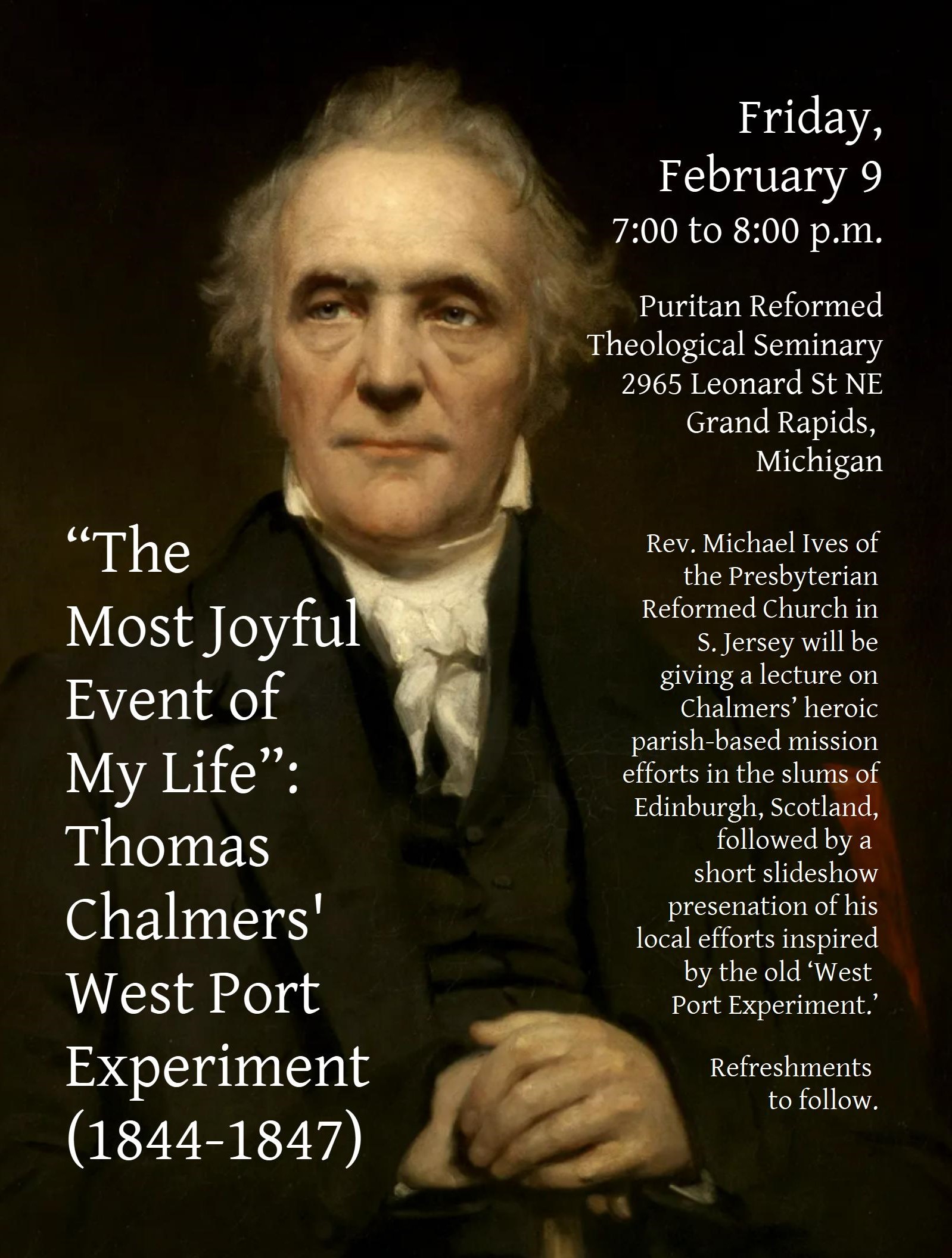
Note: this is a distinct, public event after the earlier PRTS Student Society lecture below. Both, however, are livestreamed (yet not including the short RPM slideshow as these include unedited photos of personal mission contacts).
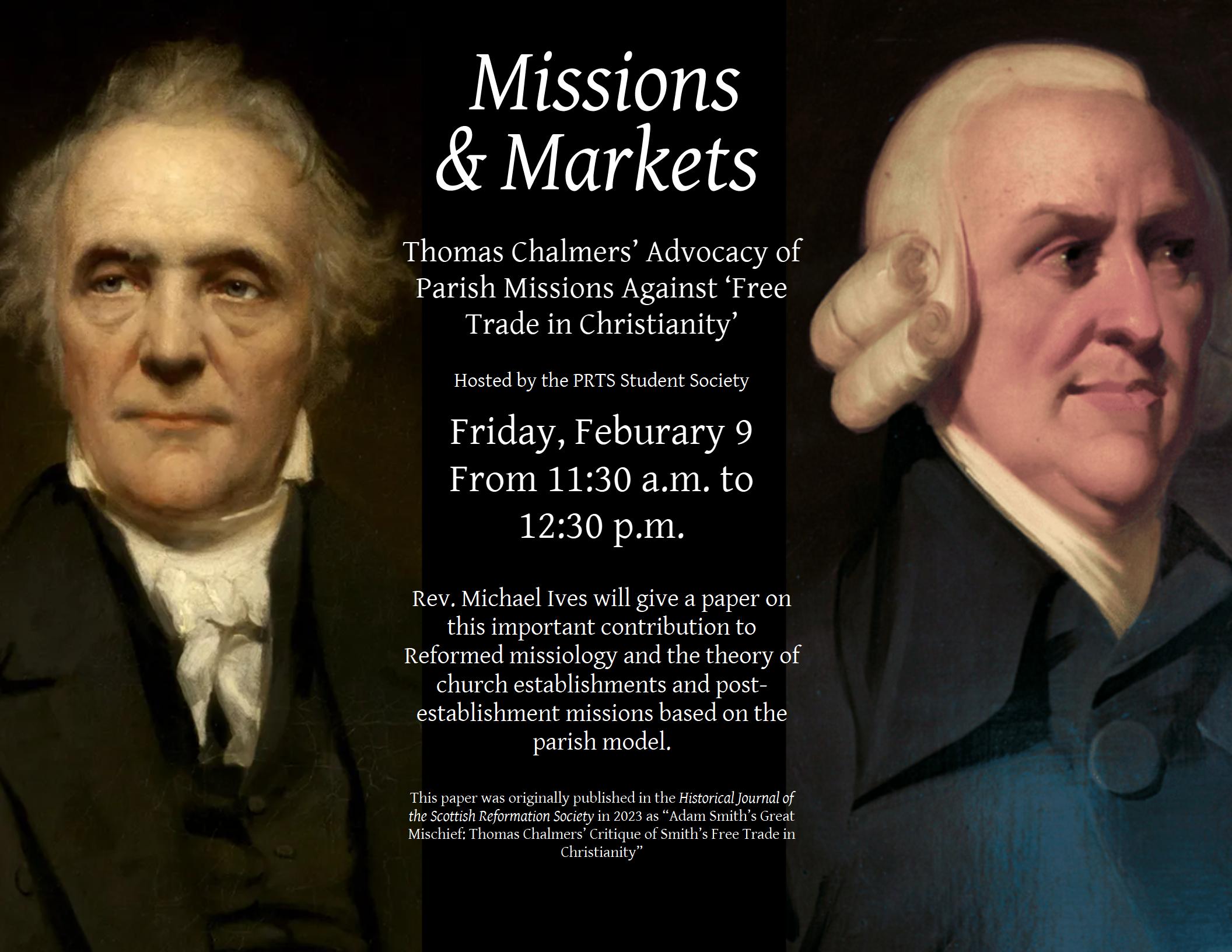
“Missions & Markets” livestream
Posted in Commerce & Christianity, Contemporary Parochialism, Establishments, Gathered Church Ecclesiology, Locality & the Law of Residence, Missiology, Parish Theory & Practice, Patronage, Religious Marketplace, Thomas Chalmers on January 31, 2024| Leave a Comment »
Apologies to everyone who tried to watch the livestream—technical issues. Here is the audio:
RPM: Drunk despair & a shoe on the other foot!
Posted in Parish in American Context, Parish Theory & Practice, Parochial Strategy, Reformed Parish Mission (RPM) Posts, WPE Editor on December 20, 2023| 1 Comment »
Over the last few weeks, I’ve made more progress door-to-door in Woodbine. It’s got some character to be sure. There are some nice, even stately old homes alternating with run-down and abandoned shells. The one below had the front door completely knocked in to the ground. With poorer judgment, I could have just walked throughout the place.
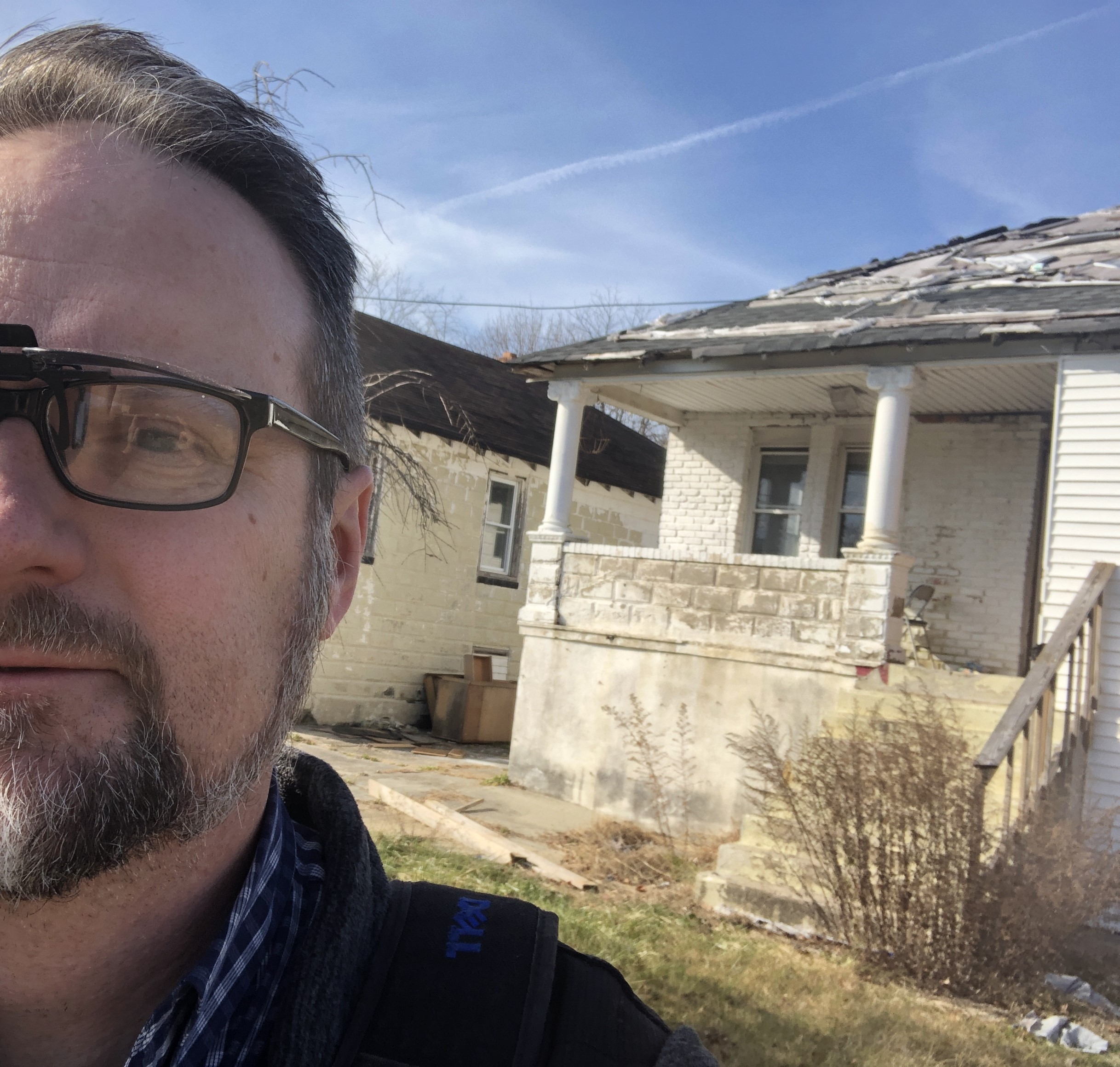
I’ve encountered and visited with a number of Spanish speakers here in Woodbine. One had me inside. And not long into this first round I’ve discovered just how many African Americans there are. And their relatively openness to talk and comparative friendliness from past experience elsewhere has been mildly surprising–and definitely encouraging.
One of my most recent encounters was with “Dequan.” As I walked up to his house, he stood there, music blaring from his car. He looked late 20s, dressed in typical urban street-wear. As I introduced himself and handed him a leaflet, he very quickly got exercised and said that there was ‘no forgiveness for him–he killed a man!’ I noticed beer on his breath. Hard to say whether he was serious or not; but I had little reason to doubt him as the conversation progressed. I spoke to him of the infinite love of God in Christ who willingly died for wicked sinners like him and like me. I told him, as for his despair of pardon, that there was a great believer in the Bible who killed a man, and yet God forgave him. “Moses!” he replied. I was thinking David. (This fellow probably had a Christian upbringing, maybe even a godly mother or grandmother still praying for him. O, let us never despair of our prodigals!) So now Dequan had two witnesses of divinely pardoned murderers, and “in the mouth of two or three witnesses every word shall be established.” I was grateful that he did not brush me off for who I was, and I certainly treated him with the dignity he deserved as a human being. But, I explained to him, he and I were both in the same boat. We are helpless sinners in desperate need of mercy! I got his phone number. Then I asked if I could pray with him? He had quite calmed down by now. As I prayed for Dequan, he volunteered an arm around me. So touching, and I responded in kind as I led our poor souls to the throne of grace.
(more…)Another prescription for community renewal
Posted in Free Church of Scotland, Missiology, Moral Suasion, Parish in American Context, Parish Theory & Practice, Parochial Strategy, Social Byproduct, Social Issues, The Gospel & the Poor, Theology of Community, Theology of Place, Thomas Chalmers on August 25, 2023| 1 Comment »
Community is dead. R.I.P. This short article by Dr. Carl Trueman laments the evaporation of community–at least in the West–and of its historically Christian nexus, the Church. He then offers a strategic prescription in the rediscovery of hospitality, no doubt in the spirit of Rosaria Butterfield. I couldn’t agree more. If we are embodied souls living in real places with zip codes and GPS coordinates, we as Christians need to love our neighbors in very tangible ways for their salvation — and as a happy byproduct, recreate community.
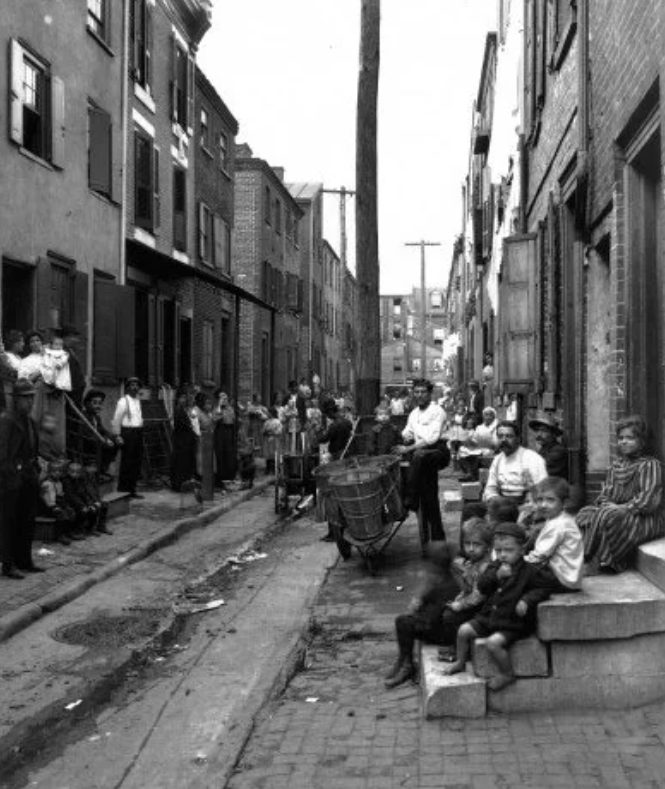
But I think this malady requires more than one prescription. Thomas Chalmers (1780-1847), the pioneer of the Free Church of Scotland in which Trueman spent many years, was even in his day deeply troubled at the disintegration of then-modern community. The Industrial Revolution had forced masses of country folk into the slums of Britain’s factory-choked cities. It grieved him to his core that these people were living in grinding poverty and were completely falling through the cracks of the Church of Scotland’s traditional spiritual care, forming a bloated underclass of unchurched “home heathen.” And the mechanized web of misery only strengthened its grip by the complete and utter absence of community. His assessment is surprisingly contemporary: “As the matter stands, juxtaposition forms no security whatever for acquaintanceship—insomuch that the members of distinct households might live for years under the same roof, unknowing and unknown to each other.”
(more…)“The Most Joyful Event of My Life”: The Story of the West Port Experiment (1844-1847)
Posted in Free Church of Scotland, Locality & the Law of Residence, Parish Theory & Practice, The Gospel & the Poor, Theology of Community, Theology Proper, Thomas Chalmers, Vignettes from the Old Parish Way, Visitation Evangelism, West Port experiment on April 27, 2023| 2 Comments »

Unless otherwise noted here prior to the event, the lecture will be livestreamed here:
Calvin: parish & principle
Posted in John Calvin, Locality & the Law of Residence, Parish Theory & Practice on August 19, 2022| Leave a Comment »
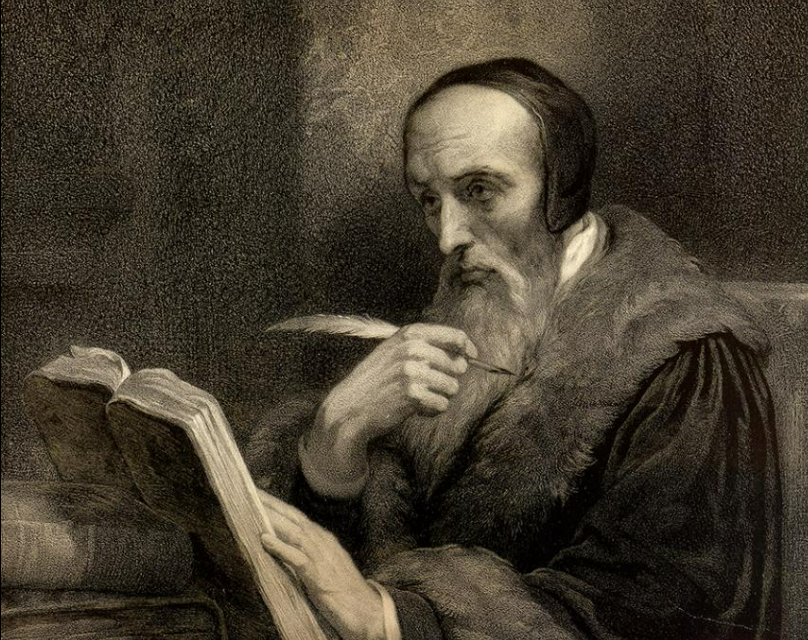
“This arrangement ought, as far as possible, to be commonly observed, that every one, content with his own limits, may not encroach on another’s province. Nor is this a human invention. It is an ordinance of God. For we read that Paul and Barnabas appointed presbyters over each of the churches of Lystra, Antioch, and Iconium (Acts 14:23); and Paul himself enjoins Titus to ordain presbyters in every town (Titus 1:5). In like manner, he mentions the bishops of the Philippians, and Archippus, the bishop of the Colossians (Phil 1:1; Col 4:17). And in the Acts we have his celebrated address to the presbyters of the Church of Ephesus (Acts 20:28). Let every one, then, who undertakes the government and care of one church, know that he is bound by this law of divine vocation, not that he is astricted to the soil (as lawyers speak), that is, enslaved, and, as it were, fixed, as to be unable to move a foot if public utility so require, and the thing is done duly and in order; but he who has been called to one place ought not to think of removing, nor seek to be set free when he deems it for his own advantage. Again, if it is expedient for any one to be transferred to another place, he ought not to attempt it of his own private motive, but to wait for public authority.”
John Calvin, Institutes of the Christian Religion, Vol. II, pp. 321
 West Port Experiment