Feeds:
Posts
Comments

Archive for the ‘Parish Theory & Practice’ Category

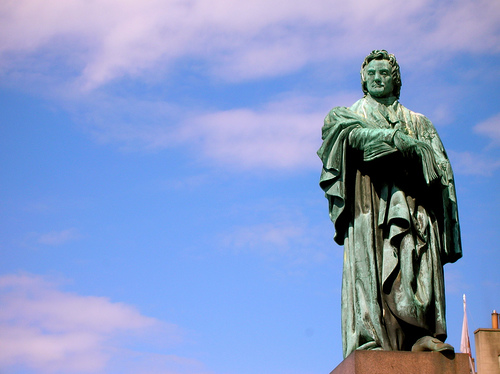
From flickr.comThomas Chalmers has been widely acclaimed for his views and particularly his applications of social concern. And within the current Reformed world, he is pointed to as an example for modern day ‘mercy ministries.’ Consequently, I’d like in this final commentary on Cheyne’s The Practical and the Pious to turn to the principles of Christian benevolence that Thomas Chalmers advocated – principles that the contributors to this collection of essays have helped me grasp a bit better.

(1) The priority of spiritual benevolence

First, I think Mary Furgol was the most helpful in bringing to the fore the evangelical cast of Chalmers the philanthropist. She demonstrates that Chalmers’ view of social concern meant that one should redress the spiritual needs of the poor ultimately. That is the priority. And so she cites Chalmers, “The main impulse of his [the Christian’s] benevolence, lies in furnishing the poor with the means of enjoying the bread of life which came down from heaven, and in introducing them to the knowledge of these Scriptures which are the power of God unto salvation to every one who believeth” (121).

Chalmers felt obliged to deal with the issues of the body because this was the only effective way to deal with the issues of the soul. And so Furgol observes,

His often clinical approach to poverty and its relief must be seen in the light of his growing conviction that the most important thing was to safeguard the eternal welfare of men’s souls. Having realized that he would not be free to concentrate on this until he had dealt with the problem of poor relief and its interference with a minister’s valuable time, as well as its detrimental effects on the morals and the Christian education of the people, he therefore turned to the task of evolving a specific plan to combat the evil. The main purpose behind the plan, however, was still the religious one of bringing the Good News to the poor, and it is vital to understand this when examining his later solution of the problem of poor relief and assessing its impact and success (128).

I wonder, in this connection, if Chalmers is so neglected in the present day precisely because he was too evangelical for the sociologists and too sociological for the evangelicals. It is a delicate balance to retain an evangelical priority in ministry and yet cultivate a meaningful, active humanitarianism.

At the same time, some within the Reformed world hold Chalmers up as an example for mercy ministries.  Yet some seem to coordinate ‘word’ with ‘deed,’ shifting the center of gravity from the preaching of the cross to a middle position.  From my reading, I don’t think Chalmers would have gone there.

That being said, perhaps the ‘mercy ministry’ movement in Reformed Christianity is only seeking to correct the excessive other-worldliness of 20th century fundamentalism that retreated from social action, scared silly by the Social Gospel. That is laudable. I only hope that the pendulum is not rushing past the golden mean.

(2) The focus on locality

If you have read this blog with any frequency, you will certainly recognize the following theme resurfacing here – locality. As any realtors worth their salt (if there are any left) will tell you, the three things that make a property desirable are: location, location and … location. Well, Chalmers never wearied of beating this same drum as well. Locality is vital to the enterprise of Christian benevolence.

For Chalmers, this simply meant that those who would bring the Gospel in word and deed to the poor must to be brought into regular contact with them. Locally. If they do not live in the area, they must regularly visit the area. But even prior to this, that area must first be defined and then assigned to certain benefactors. Without definition, there is no clear locus for intelligent compassion. The vastness of the problem will be daunting without a manageable, delineated territory. But once the areas are defined and parceled up, they must be allocated. An unassigned locality is just an abstraction. Its plight will have no real pull. But once it is assigned – or adopted, if you will – then the spiritually and economically privileged will have a tie to it, a workable plot of their own to cultivate. The rich and poor will be brought together in the locality of the poor, and the results should be evident in time. Multiply this thousands of times over across a nation, and you have Chalmers’ model for dealing with poverty. It is a grassroots solution.

McCaffrey comments on this, as well as on the influence of Chalmers’ locality principle:

Chalmers’ insistence on the need to reform the individual first in the locality, as the means to reforming society in general, continued to be remarkably vibrant in its appeal in both Britain and the United States. In both countries he found a ready audience in those reformers who sought the good society and who were increasingly chary of leaving its realization to the chance workings of unrestrained lasseiz-faire capitalism on the one hand or too extensive a state-imposed regulation on the other (53).

As I reflect on it, there is no question that the locality principle, bringing the benefactors into regular contact with the beneficiaries, goes against the grain of the urban situation. Cities are notorious for the evil of anonymity. Sin likes darkness; it retreats from community especially if community is viewed as an old socio-religious ball and chain that holds people accountable. Now, that is not to suggest that people always migrate to cities for sin. (Though I don’t think that 1 in 3 San Franciscans are gay because their gene pool is different.) Frequently, there are economic pressures that call individuals from field to factory. That is the way it was in Industrial Age Scotland; that is the way it is in 21st century China. But the reality is that cities not only afford more economic opportunity: they also facilitate sin. Sin loves options and hates the Sartre stare.

That’s not the only reason why the locality principle doesn’t easily fit with the urban context. There is also the socio-economic stratification of cities. Today, we call this ‘white flight.’ I’m not sure all of that is bad. People want to raise their children in peace and safety. Many who live in the slums aspire to get out. But it is a reality – almost a law. Distance between the privileged and the underprivileged just happens. Government has tried to change that, as with busing; but it never sticks. I would suggest that North American inner cities have become a kind of de facto social waste confinement area. We retreat from the problem and thus the Welfare State cannot but step in. Otherwise, there will be social unrest.

Yet, while the locality principle is like the syrup of ipecac to the city’s culture, it is medicine that must be swallowed. The spiritually and outwardly privileged must be brought into contact with the spiritually and outwardly underprivileged. And it won’t happen by some government program. It must happen through an army of volunteers. Volunteers who will bridge the geographic divide into needy localities.

Incidentally, the old scheme of parish visitation was built on the locality principle. One cannot care some someone that he doesn’t see, with whom he does not come into contact. And that visitation must be regular if it is to be meaningful.

(3) Voluntary relief

For Chalmers, the cure of ‘pauperism’ – the 19th century term for dependency on the state – lies in a voluntary program. He firmly believed that involuntary schemes (state programs) are doomed to failure for four reasons, according to Checkland:

First, people become systematically trained to expect relief as a right, thereby destroying the connection which nature has established between economy and independence and between improvidence and want. Second, neighbours and kindred of the poor lose their private sympathies and abstain from providing relief. Third, as the number of poor increases they will be less comfortably relieved, since the allowance per pauper tends to decrease. Fourth, an artificial system tends to be wasteful, both in terms of increased expenditure on paupers caused by their demands for relief as a legal right and by the increase in the number of individuals needed to administer relief. It was Chalmers’ belief that every extension of the poor’s fund is followed by a more than proportional increase of pauperism, and he contended that there should be no compulsory assessment, no certainty on the part of the poor that they would obtain relief, and no possibility of the numbers in receipt of relief being infinitely augmented (131).

And Hilton supplements this evaluation of Chalmers’ thought here, explaining, “State poor laws and organized charity transformed beneficence from a thing of ‘love’ and ‘gratulation’ to a subject of resentment on the part of the rich, dependence on the part of the poor, and ‘angry litigation’ between the two” (146). Leaving the old voluntary model is a recipe for class wars.

(4) Education

Next, education is absolutely vital. Writes Checkland, “He believed that education was the fundamental need of the lower orders, transcending in importance and, indeed, canceling out the need for most poor relief” (131). Since the Reformation under John Knox, education had been of paramount importance in Scotland. It was no different for Chalmers. Education furnishes the key for the self-improvement of the poor. Time and money are better spent in providing this form of benevolence.

This is why Chalmers was such an advocate of ‘Sabbath’ or ‘Sunday Schools.’ In their origin, they were not Bible classes for the young of middle-class churches as they are today. They were the only forms of education that many poor people had at all in those days. Sunday Schools were very much agencies of benevolence.

(5) Intelligent benevolence

Which leads us to the distribution of monetary benevolence. Obviously, education is a long-term investment, and some people require immediate help. Chalmers’ response was to lay down certain guidelines, which he both followed and instilled within his diaconate at St. John’s.

Furgol enumerates these guidelines in a survey of his diary entries:

These entries reveal how Chalmers was striving to put into practice his convictions that people should be encouraged to be as independent as possible, that if relief were given it should be minimal, and that is must at all costs be made obvious that no regular official relief system could be automatically depended on in the event of a simple plea for help. Moreover, a letter written to William Johnson of Lathisk at this time reveals two more aspects of his ideas being put into practice: that friends and relatives should be called upon to respond in a spirit of Christian charity, and that any relief given should only be in cases of extreme and deserving want (124).

Dare we call this ‘compassionate conservatism?’

On this basis, some have strongly criticized Chalmers for idealizing a cold, clinical brand of philanthropy. Cheyne writes in his introduction that the strongest criticism that has been made was “a strange heartlessness [that] underlay the treatment of poverty worked out by Chalmers and his supporters” (20). Nor was Chalmers without his critics during his own lifetime. William Pulteney Alison opposed Chalmers’ dogged adherence to strict voluntary relief. He even critiqued the St. John’s model as dealing harshly with the poor under the guise of Christian stewardship. And so Checkland quotes Alison, “The grand object kept in view by almost every parish is the possibility of evading the duty of relieving the poor” (133). Ouch!

Now, it is hard for me to evaluate the degree of truthfulness in these criticisms. Was there a knee-jerk reaction to open-handed benevolence in extreme fears of giving to the ‘undeserving?’ Did they err on the side of thrift and not on the side of liberality? I wouldn’t be surprised if it was the case. And if so, was there some degree of discontinuity between the proverbial Scottish benevolence before Chalmers and that of Chalmers’ more business-like social experiments? And was it called for, given the great demographic shifts from the rural areas to bustling cities?

Concluding thoughts

Having been reared in evangelicalism, I often heard that the concern for our nation’s poor is the responsibility of the Church. The Welfare State exists because we won’t feed the poor. And prior to my own study of Chalmers, I was under the impression that the St. John’s experiment – what little I knew of it – was proof that Chalmers thought it was. But now I’m not so sure.

The following is a thesis that needs confirmation, so I put if forth tentatively. But certain things seem to be emerging as I read him for myself.

I think Chalmers thought that it was the concern of the state to make sure that all its citizens were cared for, physically and spiritually. Those in government are fathers. Citizens are children. The state ought to seek out a Church and finance it for the spiritual instruction of its people, much as a wealthy aristocrat would hire a tutor for his son [see my essay on Chalmers and establishments].

Being a believer in liberal economics, the best way to care for the people, generally speaking, is to avoid interference in the marketplace. But what of the poor, the victims of the unfeeling free market? The state has a duty to care for them as well. Only, this is not to be done by legal assessments (i.e., legislated ‘wealth reallocation’). It should be left voluntary, on the lines of the old Scottish model.

But the state should support the poor by supporting the Church of the poor – the establishment, which is first of all the spiritual instructor of the people. By subsidizing a religious establishment, lives are changed. Drunkards are sobered, prostitutes are made chaste, thieves go to work, and spendthrifts turn frugal. That is how the state may and ought to care for the poor, Chalmers contends.

But further, the state ought to aid the poor by providing for universal education. The spiritual education of the established Kirk is the first and most important prong of that agenda. But the second is not far behind. Education is the key to self-improvement, and consequently, the improvement of the nation. ‘Give a man a fish, and you have fed him for a day: teach a man to fish, and you have fed him for a lifetime.’

Yet, Chalmers wasn’t blind to the fact that the state has to do more for the poor than providing spiritual and secular education. The state cannot say, ‘be ye warmed and filled,’ yet do nothing immediately for the hungry. It should not leave the poor altogether to the whim of, well, whoever. Rather, it should take an active role in encouraging and facilitating neighborly benevolence, particularly the benevolence of the wealthy.

This is best and most efficiently done through the mechanism of the established Kirk. The Kirk, after all, operates territorially and already competently cares for the poor of its own number. The Kirk performs this care best because it operates on the soberest principles. “If a man will not work, let him not eat.” The Kirk already has assumed the spiritual care, the cura animarum, of the people, and the state only acknowledges that reality, honoring it in a pecuniary way. She also cares for the body of the unchurched throughout its parishes since love comprehends the whole man, body as well as soul. Why not, then, outsource ‘welfare’ to her? If I am not mistaken, that is exactly how Chalmers sought municipal cooperation in the St. John’s experiment of Glasgow.

If this is Chalmers’ view of the role of the Church and the care of the poor, then he obviously thinks it is a responsibility of the Church when and only when the state explicitly contracts with her. It happens when she enters into a partnership with the state as a religious establishment. Before that, the state does not recognize the Church. She is not chosen to care for the souls of a nation’s citizens or their bodies, for that matter. She has no special obligation to the poor, other than the law of love to one’s neighbor.

If I am right on my assessment of Chalmers, and if Chalmers is right (and, surprise of surprises, I lean that direction), then we as an organized Church have no special responsibility for the poor. We have no formal authorization, because the state wishes to retain management of this beast directly.

Yet, I am hardly suggesting that the Church has no responsibility for the nation’s poor, or that Chalmers thought that unestablished Churches may wash their hands of this great civic duty.

Generally speaking, I wonder if it is not so much the obligation of the Church qua Church to care for the nation’s poor as it is the duty of the nation, which comprises also the Church. The care for the poor is our duty not as the Church, but as citizens. And, of course, our Christian principles all the more compel us to our neighborly duties. It is not the Church’s problem per se. But it is the Christian citizens’ problem, collectively with the rest of the nation.

This is a collective problem. We as Christians are called to “seek the peace of the city” where He has placed us in our earthly exile, and to “pray unto the LORD for it: for in the peace thereof shall [we] have peace” (Jer. 29:7). We are Christians first, yes. But we are also citizens of an earthly order. I am a citizen of Rhode Island. Our prison system has swelled to an overflow. Our unemployment rate is the highest of any state in the nation. This is not someone else’s problem. This is my problem, because I am a citizen of Rhode Island. It is not the Church’s problem, directly. Yet it is the Church’s problem, insofar as the Church in secular matters holds it citizenship on earth.

Very practically, I think that what we have before us is an opportunity for volunteers. The state will not ask us to educate its people in the truths of Christianity. Nor will it ask us to care for their bodies (except on April 14). Yet it presently will not interfere with us if we choose to volunteer.

That we volunteer to care for souls is just another way of describing evangelism. But volunteering for social improvement beyond the community of faith can be sticky. The ministry of the Church should not “leave the word of God, and serve tables” (Acts 6:2). And while we must “do good unto all men,” we are “especially” to do so for “the household of faith” (Gal. 6:10). Let us not forget that one great apologetic argument for the authenticity of our faith is the love that Christians have for each other (Jn. 13:35).

Yet to some degree and in a very tangible way there must be concern for our neighbor. He has a body, and not just a soul. So let us follow Chalmers as he followed our Lord, “who went about doing good” (Acts 10:38).

Read Full Post »

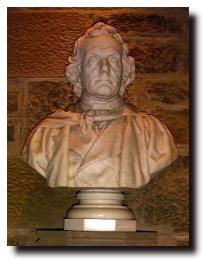
Bust of Thomas ChalmersThe Practical and the Pious – 2
Chalmers the Manager: Lessons in Christian Leadership

In the first part of my review of A. C. Cheyne’s collected essays, The Practical and the Pious: Essays on Thomas Chalmers (1780-1847), we observed the way in which Thomas Chalmers was great Christian bridge builder in his day. He sought to connect the teaching of Scripture and the best traditions of the Christian past to the then-present issues. He sought to obey the Kingdom mandate to the best of his abilities and leaves us to follow the path he pioneered for His and our Lord.

In this second installment, I would like to turn to another theme that emerged for me as I read these essays. Chalmers, in addition to being – or at least striving to be – a bridge builder, was a great administrator. Our ‘practical pietist’ was a churchman, and as a churchman he managed – impressively.

First, Chalmers was a great administrator because he was a man of vision. As a manager, one must have a clear, well-defined purpose. Otherwise, both the manager and the managed will be directionless. And if you aim at nothing, you are sure to hit it, as they say.

His great ambition was the ‘Christian good of Scotland.’ The land must be Christianized.  Everything else was subordinate to this – even the established Kirk. Sefton quotes Chalmers,

I have no veneration for the Church of Scotland merely quasi an Establishment, but I have the utmost veneration for it quasi an instrument of Christian good; and I do think, that with the means and resources of an Establishment she can do more, and does more, for the religious interests of Scotland than is done by the activity of all the Dissenters put together. I think it a high object to uphold the Church of Scotland, but only because of its subserviency to the still higher object of upholding the Christianity of our land (169).

Chalmers inspired others with this vision of a Scotland thoroughly leavened with the Gospel.

But he wasn’t a great administrator because he had vision. One can be a visionary and yet very impractical. Chalmers embodied both vision and practicality – a potent combination. Everything Chalmers said and did was really a strategy to reach the great end of Christianizing Scotland.

The locality principle that he tirelessly advocated was but a strategy, a means to an end. This principle, as I have explained elsewhere, is that the church should spearhead evangelistic efforts geographically, focusing on defined territories with regular district visitations. Only through habitual cultivation of these areas by ‘territorial ministers’ would true Christian communities reemerge in the new urban context; only through this method – wrought in the aggregate – would the land be permeated with the Gospel.

The Church Extension campaign of the 1830s was yet another strategy. The Church of Scotland, in order to Christianize the burgeoning, unchurched population of the major cities, desperately needed to finance new church buildings and ministers. Chalmers took over the convenorship of the committee and, through his fundraising efforts, was able to witness the erection of more than 200 new church buildings. And all for the Christianizing of Scotland.

Interestingly, this strategy was complementary of the territorial principle. Sefton writes, “The enterprise was concerned not only with the building of new churches but also with the vicinity for whose good the new church was intended. The object was to provide a church near enough and with seat rents low enough to benefit the families by whom it was surrounded” (169, emphasis mine). Chalmers made sure that the program was efficient by making it conform to the territorial principle. The strategies were synergistic. Not a territory without a meeting place, or a meeting place without a territory.

Church establishments comprised another prong of Chalmers’ strategy. We’ve already seen in the quote above that he only viewed them as efficient instruments for the promotion of Christian good. They exist to facilitate territorial church extension (see my essay on Chalmers on establishments). Since the days of Constantine, the goal of establishments is “not to extend Christianity into ulterior spaces but thoroughly to fill up the space that had been already occupied” (168). Specifically, then, an establishment is a “universal home mission.” That is, it is a structure that exists for the further Christianization of a land where the Gospel has already gained a footing. It is phase 2 in the mission program. It is what the army does after taking Normandy.

These profound quotes further nuance my concept of establishments and the territorial principle. The latter is always a strategy that the church can and should employ. The Gospel has always come to districts and territories, and it always comes to put the standard up for Jesus, who speaks for every land, saying, ‘Mine!’ Yet, the principle is applied with lesser openness and focus during times of persecution and more breadth when the church hasn’t taken firm footing in a region.

One cannot implement the parish principle in Muslim countries, with a territorial minister going door to door as M’Cheyne in Dundee or Bonar in Finnieston. Yet, cells of believers can and do still influence their communities. True, they cannot be as open and must even pay for their successes with their blood. Omaha Beach was taken, yet at a high price. But it is worth it. And the territorial principle can be applied when missionaries are first introducing the Gospel into a region; only, the strategy is usually to work more broadly without narrowed reference to fixed districts until nuclei of converts develop. Churches are then formed, which become centers for saturating communities.

And establishments, as I am beginning to see, are a strategic step in the typical process of Christianization. Christianization begins before establishments arise and continue after they are formed. Paul preaches the Gospel throughout the Empire until at last the movement overtakes the Emperor – several generations later. But at the time of Constantine, while Christianity was on the rise, there was much work yet to be done. And so the magistrates became promoters and patrons of the true Gospel. They became, in the words of Isaiah “nursing fathers” and “nursing mothers” (Isa. 49:23). We in the United States are not at the establishment stage, yet thankfully, we are not at the persecution stage. We can therefore apply the territorial principle more consistently and with greater focus, since Christianity is settled. But Congress does not yet subsidize us. Yet.

Chalmers was also a great manager because he was cognizant of realities on the ground as he developed strategies. We’ve essentially addressed that in the previous essay. But a further point is in order. One cannot help but observe the very language of ‘experiment’ that Chalmers used for the efforts that he undertook and advocated. He believed that there were certain tried and true principles that could be effectively implemented when thoughtfully applied in new contexts. Furgol points out that Chalmers, before commencing the St. John’s experiment, conducted an “extensive analysis of the mechanics of poverty and its relief” before implementing his scheme (127). He became well versed in the realities of things before applying principles. Now, perhaps Chalmers read more success into his experiments than others would allow. But the point is that strategies are timeless principles manifested in particular situations.

In addition to being a visionary and a practical, strategy-making and executing worker, Chalmers was a great manager of human resources. Perhaps what Chalmers did best was preach. Hands down, many might say. But his ability to recruit, delegate, train, supervise, and inspire people – that is, to manage them – must come in a close second.

Successful people know how to surround themselves with other successful people and to use their unique gifts. So with Chalmers. Says Maciver, “Part of his flair lay in an ability to recruit able and dedicated aides” (93). And “organization was not to be haphazard” either (89). People work best in structures. Concrete plans were drawn up for the Church Extension campaign, significantly mirroring the organizational model of the Bible Societies. Perhaps the world-wisdom of his business and industrialist friends also rubbed off on him.

From the inner circle and within the preconceived structures, Chalmers led the people. Average, yet not unimportant members of the Kirk throughout the land were sought out and used. In the Church Extension campaign, He “emphasized the local factor, the legacy of his poor relief experiment, again and again, and was anxious to devolve local organization ever downwards” (89).

Referring to the St. John’s experiment early on in Chalmers’ career, Cheyne points out how vital the non-ordained ‘ministry’ was to the success of Christian home mission:

The scheme was more than just a successful exercise in the delegation of duties and the deepening of Christian fellowship. It also pioneered what would now be called the training of the laity; for the congregation of St. John’s learned to regard itself as being less an assemblage of hearers than a body of workers, its mission to the parish planned and directed by the clergy but managed and carried through by a subordinate band of elders, deacons, Sunday and day school teachers, and others – the NCOs, as it were, of a Christian army (17).

So from beginning to end, Chalmers was interested in a popular Kirk, a Kirk of the people. I cannot help but ask here, to what degree was Chalmers paving way for the heightened lay activity so characteristic of the late 19th and 20th centuries? Though an old school establishmentarian with a high view of the ordained ministry, did Chalmers further the increased democratization of the Church?

Chalmers also artfully and efficiently managed his peer relationships. He courted MPs, made alliances in the business world, and strove to cooperate with clergyman outside the established Church. Equals were not a threat to him, but a resource. And in the interests of Christianization, collaboration – not competition – was the rule.

On this point, I can’t help but answer for Chalmers as I read the following criticism made by Dr. John Lee, a contemporary of his within the Kirk. He thought that the Church Extension campaign, built on the territorial principle, turned a blind eye to harsh realities. Chalmers could not transpose the model of the rural Anstruther parish into Edinburgh, precisely because the slums of Edinburgh were nothing but a “perpetual fluctuation of inhabitants on whom no impression could be made” (91). In other words, you visit them once, and they’re gone forever the next week. Those with any experience in the inner city will see that some things don’t change.

But I would suggest that the comity principle here comes to the aid of the territorial. By applying the territorial principle throughout the land, a resident leaves one parish only to land in another. Even if the individual leaves no notice of his move to another district, in Chalmers’ ideal he will probably come under the influence of another Christian minister in his regular visitations. And, true, even if this ideal ‘parish patchwork’ didn’t exist in a land, still the seed sown shall not return void! A territorial minister is always sowing seed. Sometimes that seed takes flight and lands somewhere else, only to yield fruit that the faithful minister never sees.

Chalmers, as a shrewd steward, also made friends with the mammon of unrighteousness. He was so successful in his fundraising efforts for Church Extension, that the Free Church inherited a well-oiled machine at its exodus from the establishment. But it was not enough to raise money. It had to be managed wisely. This is especially clear in his poor relief model. Only the worthy poor were to receive benevolence. Consequently, the office of deacon was resurrected in the St. John’s experiment to distribute the hard-earned money of those who wished to show intelligent charity.

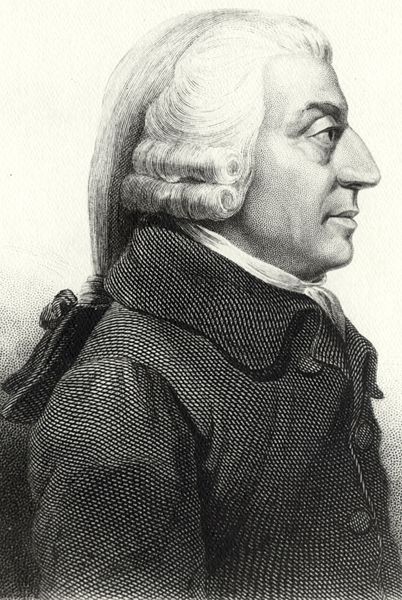
Then there was his concern for time management. When he came to the Tron in Glasgow, he devolved as many clerical responsibilities in the civic arena to laymen. According to Furgol, this was an instance of Chalmers’ adherence to Adam Smith’s principle of the division [specialization?] of labor. She quotes Chalmers who wrote at the time,

I know of instances where a clergyman has been called from the country to town for his talent at preaching; and when he got there, they so be-laboured him with the drudgery of their institutions, that they smothered and extinguished the very talent for which they had adopted him. The purity and independence of the clerical office are not sufficiently respected in great towns. . . . He comes among them a clergyman, and they make a mere churchwarden of him. . . . It shall be my unceasing endeavor to get all the work shifted upon the laymen (126).

This also reveals that while Chalmers was a believer in churchmen following managerial principles, yet he remained firmly convinced that ministers ought not to contaminate their spiritual office by the mundane.

The last thing I’d like to mention in the example of Chalmers as a model Church manager is his habitual re-investment of resources into bigger projects on bigger and broader scales. Maciver observes:

It is likely that Chalmers saw the ‘principle of locality’, enshrined in his widely-publicised St. John’s parish scheme of the previous decade, being given new life through a national Extension project that sought to combine local effort with the aid of a central fund raised by subscription to help poorer or weaker parishes. The ultimate stimulus would be provided by state grants in the form of an annual endowment of the ministers’ stipends in the new missionary and territorial churches (88).

The Extension campaign brought out to their fullest extent Chalmers’ gifts of inspired leadership and sheer organizing ability. . . Possibly he had absorbed lessons from the problems of his social experiment in Glasgow, for he stressed now the necessity of organizing local efforts on a national scale, explaining to his lieutenant, William Collins, the publisher, that ‘what I particularly wish is to combine a wise general superintendence on the one hand with an entire and intense local feeling in each separate town and district for its own local necessities on the other’ (89).

Retool and re-deploy! He could not stop until the vision had been realized. First, St. John’s, then Church Extension. And even after the Disruption, he would not leave off. So began the West Port experiment.

My only regret with Maciver’s essay “Chalmers as a ‘Manager’ of the Church” is that he only treated his management on the national ecclesiastical level – on the ‘macro’ and not the ‘micro.’ A parallel survey of the St. John’s and West Port experiments with his management of the Church Extension campaign would have been even more fascinating.

With this survey behind us, there are some good lessons to be learned for Christians of all types. But I think that there are special lessons here for modern-day pastors.

First, while pastors should not view themselves as religious CEOs, yet Reformed pastors are in the people business. And in that business, we simply have to manage. We must possess and instill vision. We must set concrete goals. We must devise faithful means to achieve them. We must husband, cultivate, and utilize our people. And we must, in prayerful dependence on the Spirit, wait for the harvest.

Our Lord will one day come and demand an account of us. How we have managed the resources, and particularly the human resources, that He has entrusted to us? Will He judge us wise and faithful stewards? Or, literally in the Greek, ‘economists’ (oikonomoi)? Will we return His own with interest, five or tenfold? Or will we, under the name of being ‘faithful’ return His solitary coin? While we must not accede to the consumer-driven culture, we ought not to abandon wholesale the ‘business model’ in the church. To do so is grave infidelity and will not go unpunished. “Cast ye the unprofitable [or, ‘useless’] servant into outer darkness: there shall be weeping and gnashing of teeth” (Matt. 25:26).

As an aside, I find it profoundly interesting that Chalmers attacks those who would subject the witness of the Church to the free trade doctrine; and yet he was an expert administrator whose example would inspire seasoned entrepreneurs. He promoted a managed, central economy in terms the witness of the Gospel: he was a believer in state-subsidized establishments. But he ran the St. John’s and West Port experiments like one would run a successful business, and reported these success stories to provoke a holy emulation and, yes, a holy competition! Selah.

Second, our ‘practical pietist’ appreciated the sanctity of fundraising. Perhaps we in the Reformed community today have been so negatively affected by Pentecostal health and wealth charlatans that we have thrown the proverbial baby out with the bathwater. Chalmers imitated the Apostle Paul who went from church to church, taking up collections (1 Cor. 16:1-3) and even preaching a rich, biblical theology of benevolence (2 Cor. 8 & 9) to rally the cause. And just like the apostle, Chalmers did this, not to line his wallet or that of his ministerial colleagues, but he did it in the interests of the poor (Gal. 2:10).

Third, Chalmers was a high churchman. (Not a high-church man, but a high churchman.) Chalmers believed that Christ had established the visible Church not only as an organism, but also as an organization. It has, since the institution of Christ in the days of His flesh, been the great vehicle of Christian good throughout the world. In a day when ‘institutional religion’ is disparaged, we need to rediscover the glory of being in this great organization, which is very much visible.

Fourth, Chalmers’ example, in point of fact cautions ministers not to get too managerial. He delegated and devolved responsibilities to free him to focus on the spiritual duties of the ministry. While he was a profoundly efficient manager, yet he was no believer in the ‘minister-CEO,’ to use an anachronism. Chalmers was a preacher first and foremost. Crowds thronged to hear him, from aristocrats and MPs to the common people. William Wilberforce even climbed through a window to hear Chalmers preach in a packed hall. Preaching is the great business of a minister. It remains the greatest means for changing men, for changing culture. That was Chalmers’ conviction.

And even if Chalmers himself was not his whole career a full-time pastor – the responsibilities of his theological professorships and denominational leadership occupied the bulk of his professional life – yet what he inculcated in students and ministers was a very high standard of pastoral self-consciousness. After preaching in the pulpit, the man of God must descend to work among the people.  M’Cheyne, the Bonars, and many other students of his devoted hours upon hours during the week to house-to-house visitation, most of which was specifically evangelistic. This is hardly the picture of a pastor-CEO behind his desk reviewing balance sheets and organizing programs.

In sum, I think Chalmers patterns three basic ideals. First, we must keep the managerial element of the pastoral office in view and not let it fall by the way in a retreat from the pastor-CEO idolatry of today. Second, we must cultivate that managerial dimension of our pastoral office to the best of our abilities. To give our Lord less is to subject Him to a great dishonor. But third, we must keep the managerial element in biblical proportion with the other, indeed the prime elements. “It is not reason that we should leave the word of God, and serve tables. . . but we will give ourselves continually to prayer, and to the ministry of the word” (Acts 6:2, 4).

[Go to Part 3]

Read Full Post »

Anstruther Parish ChurchIn the modern day, old orders are forced to give way to new ones.  This is the inevitable process of capitalism.  In 1942, Joseph Schumpeter coined a phrase for this, that apparently became a buzzword in the dot-com boom of the 1990s.  He called it “creative destruction.”  It is a “process of industrial mutation that incessantly revolutionizes the economic structure from within, incessantly destroying the old one, incessantly creating a new one” (http://www.investopedia.com/terms/c/creativedestruction.asp).

As I was reading further in Greenspan’s Age of Turbulence, he illustrated the opposite of this principle on a holiday with his wife in Venice.  “Venice, I realized, is the antithesis of creative destruction. It exists to conserve and appreciate the past, not create a future. But that, I realized, is exactly the point. The city caters to a deep human need for stability and permanence as well as beauty and romance. Venice’s popularity represents one pole of a conflict in human nature: the struggle between the desire to increase material well-being and the desire to ward off change and its attendant stress” (181).

There we have it again.  A deep human need for the once-familiar and once-enjoyed ‘rootedness.’  We wish we could have it again, and enjoy what once was – true community.  “Sometimes you want to go / where everybody knows your name, / and they’re always glad you came.”  

The Anstruther of Thomas Chalmers’ childhood was his Venice.  It hadn’t changed in his memory, and it would never change in that sense.  Only, Chalmers wasn’t going to let Anstruther remain locked up in the past or remain only as a quaint tourist attraction for future generations.  He fully realized that the idyllic parish community of his childhood would never remain exactly the same; yet he sought to transplant its essential features to the slums of St. John’s in Glasgow and the West Port in Edinburgh.  That is, I think, part of the genius of Chalmers.  In an age of change, he didn’t pay homage to creative destruction.  He reckoned with its reality, yes – perhaps successfully, perhaps not so successfully.  But the past was worth preserving; or better, the past was worth reimplementing.

Read Full Post »

A Review with Observations on Parish and Parish Church: Their Place and Influence in History, by P. D. Thompson

Part 1

In Parish and Parish Church, the ‘Baird Lecture for 1935,’ P. D. Thompson traces the origins, development and significance of the parish system in Western Civilization. It is a very useful volume, stimulating a number of interesting observations in my mind on the institution that has become interwoven in the fabric of Medieval and Reformation Church life and mission. And if the old parish model is to be of any contemporary application as I suggest (see About ‘West Port Experiment’), this book will go a long way for modern day pastors and missionaries. To know the past is to have a roadmap for the future.

Thompson’s treatment of the birth of the ecclesiastical parish is very enlightening. His main contention is that the early Church basically took over an organizational unit or division typical within Greco-Roman civilization. The original parish or paroikia in the first place “signified that section of the inhabitants, living within the bounds of a town or city, who were not citizens in the strict sense of the word, but foreigners or sojourners. In the second place, it signified a community living outwith the bounds, either in a detached suburb or in more widely scattered hamlets and villages in the surrounding rural area” (1). Analogous to the first sense are the ethnic ‘quarters’ or ‘districts’ of Industrial and Post-Industrial era cities.
Now, the New Testament Church did not consciously adopt the ancient division. It is not as though Paul drew up a map of the Mediterranean nations and parceled the area out into a nice and tidy parish system. But insofar as he and his associates strategically infiltrated cities first and the outlying rural (‘pagan’) areas second, they did in a way adopt the parish model. They evangelized the cities and countryside in all their pre-existing districts, enclaves, and regions. Paul intentionally went into the Jewish quarters of each city. He sought to leaven them, and from them to leaven the cities. The first district to become Christianized was thus the beachhead into the city, and the city with its several house churches (Acts 2:46, 20:20; arranged by district?) was the beachhead into the countryside.

While Thompson does not particularly reference New Testament passages in support of the concept directly, I would contend that certain verses show that Paul operated on a territorial principle, which is merely the genus to the species of the parish system (Rom. 15:18-24, 2 Cor. 10:14-16; see my treatment of this elsewhere, https://westportexperiment.wordpress.com/2008/06/04/the-settled-ministry-itinerancy).

In any case, I think Thompson is quite correct to say that the New Testament Church properly and wisely took up the territorial organization of the ancient world for its ecclesiastical organization and missionary strategy. This was only natural since the structures lay ready to hand.

It was entirely in keeping with the policy of the Church from the beginning and for many a century that it should have laid hold of such a secular institution as the ancient parish, adapted it to its own purposes, and ended by transforming it into something wholly different from what it originally was. Wherever throughout the long course of its history the Church came across any pagan institution or custom that could by any means be used to advantage or turned to Christian ends, it sought to breathe into it the Christian spirit, impart to it a Christian significance, and shape it accordingly. That was its deliberate and invariable policy and practice. Like its Master, the Church ‘came not to destroy but to fulfil’ (7).

The charter of Christ permitted and even called for His Church to repossess the strong man’s spoils.

I do think, however, that Thompson oversteps biblical warrant when he continues, “in the same way [the Church] adopted pagan popular customs, such as nature festivals and the like, breathed into them the Christian spirit, gave them a Christian stamp and significance, and transformed them into observances of the Faith and allies of the Gospel” (7). Now, there is nothing wrong with taking over indifferent customs and practices into the bosom of the Church’s life and witness. The Puritan divines put it well when they wrote “that there are some circumstances concerning the worship of God, and government of the church, common to human actions and societies, which are to be ordered by the light of nature, and Christian prudence, according to the general rules of the Word, which are always to be observed” (Westminster Confession of Faith 1.6). But there is a world of difference between indifferent customs and unredeemable ones. Certainly the Ephesian Christians didn’t think that Diana icons should be rededicated to the Blessed Virgin, or that their books of sorcery were useful for any other purpose than for kindling (Acts 19:19)! There is nothing inherently idolatrous in a civic unit of organization; there is in pagan nature festivals. That explains why Calvin and Knox retained the parish system and rid the Church of Christmas, Easter, and the myriad of saints’ days.

Thompson’s sketch of the early Church’s appropriation of preexisting territorial structures does seem quite plausible, fitting with the facts as we have them. First, Thompson notes that there was the practical problem of the administration of charity recorded in Acts 6, which may have lent itself to the adoption of a kind of parochial organization as it certainly did to the emergence of the office of the deacon. Diaconal care had to be centrally organized in the city church, with the resources of the various district or house churches pooled in what he calls the Mother-Church, “so that none should receive preferential treatment and none be neglected” (15). Seven deacons were appointed to superintend the fair distribution of the common resources throughout the church, doubtless as it was organized in its subdivisions.

Even anterior to this contributing development was the logistical problem of meeting places in the context of a burgeoning church. “As the Gospel was preached in the original Mother-Church and propagated by the life and witness of believers, and as the number of believers multiplied and spread throughout the city, there would neither be room for them to worship together in one building, even if they could conveniently reach it, nor would there be facilities for their Christian instruction. As occasion required, therefore, meeting-places, which became churches in their turn, must needs be provided in ward after ward, until the whole city was adequately churched” (15). And with designated meeting-places came the deployment of ministerial manpower for the services, ward by ward.

Just like the parish, the diocese (dioikesis) was also an ancient territorial division. The development of the diocese, however, reflected more the circumstances of a developing episcopacy. As certain bishops were elevated in status and recognition over their peers, “it was [deemed] fitting that the territorial area under the bishop’s supervision and administration should be correspondingly enlarged, and receive an added dignity and importance. This was done by extending the bounds of the episcopal parish, and giving it a lordlier name” (18).

Perhaps it is for this reason that the Reformed Churches took over the parish system, but not the dioceses. The latter went hand in hand with episcopal preeminence from the very beginning. But obviously the Reformers had no qualms with larger territorial units of ecclesiastical organization, provided that they didn’t facilitate or support episcopacy. One thinks of how ‘presbyteries’ and ‘synods’ were used interchangeably for governing bodies as well as for territorial divisions of labor.

Read Full Post »


Chalmers on Church Establishments, Part 4
Some Closing Observations & Questions

Now that we have completed an overview of Chalmers’ Lectures on the Establishment and Extension of National Churches (1838), I’d like to make a number of observations and raise some questions. I’ll start with general ones and then cover some specifics by subject.

So first, some observations and questions on the whole.

One cannot read through Chalmers long without figuring out that he was a practical thinker. He had goals to which varies strategies and experiments were subservient. Strategies, further, are only as good as they work efficiently. Chalmers argued for religious establishments because they were, in his judgment, very useful and proven expedients.

And the goal? In a word, ‘Christianization.’ Or, more specifically, ‘the Christian good of Scotland.’ His vision was the infiltration of the Gospel throughout his home country and its anticipated leavening effects socially. He dreamed of realizing within the darkness of industrialized Britain the old Christian communal ideal of his childhood memories. So really, we should say that Chalmers was a practitioner second and a visionary first.

It is also clear that Chalmers was a large-hearted philanthropist. He was concerned with the well being of the poorest of Scotland. They needed an endowed establishment because they did not have the financial wherewithal to support the ministry. And, more often than not, they lacked not only money to support the ministry, but even the religious impulse to go and seek after the good of their souls. Should they be left to themselves, sitting in the sink of their moral, economic, and especially spiritual squalor?

This dovetails into Chalmers’ view of government, which manifests itself in these lectures as thoroughly paternalistic. Frequently, he appeals for national establishments on the principle that parents should “lay up for the children” (2 Cor. 12:14). “What is true of the smaller family of a household, holds true of the greater family in an empire. If both the parent in the one case, and the governor in the other, be chargeable with a guilty indifference who should suffer their respective families to remain unschooled – there is guilt of a deeper die, if, by the indifference or neglect of either, they are suffered to remain unchristianized” (92). If a Christian father is duty-bound to provide Christian instruction to his children at home, ought not the ‘city fathers,’ as it were, patron-ize a religious establishment to school their citizens in the teachings of Jesus?

The last general observation is that it seems the tone of his lectures fail to reflect a strong evangelical concern for personal salvation. He does speak about the civilizing influence of Christianity (167) and urges the endowment of a national Church as reflecting a “true and enlightened patriotism” (170). This, of course, does not show that Chalmers lacked a passionate zeal for the personal salvation of those who would benefit from a robust establishment. He most certainly did. But if I am at all putting my finger on something here, my guess is that this subdued evangelicalism reveals a broader audience, even those influenced by the Moderatism of his time (from which his evangelical conversion had freed him!). The Moderates were all for education, all for civilization, and even for Christianity insofar as it furthered man’s intellectual, moral, and social condition. If they could stand with him in this cause, then so be it. In short, I think it is important for us to read these lectures, not as seminary addresses on Missiology for churchmen, much less as a series of sermons to rally the troops back at church. But we should read them with the sensitivity that they were delivered and published for many, not the least of whom were MPs sitting on the fence of a pressing, political question.

Now, some specific observations and questions; and first, on the particular establishment theory of Chalmers. His arguments strike me as distinctively post-Enlightenment. For him, a national establishment means the endowment of a national Church in an environment of political tolerance. His Scotland was a “land of perfect toleration” (182). And so his establishment is one that encourages and promotes, but doesn’t discourage, much less impose sanctions on the Kirk’s enemies. There is no sword here to back up the Church, and it is here where I sense a break with the original establishmentarianism of the 16th century magisterial Reformers and their 17th century heirs. One searches in vain to find language in the Lectures that comes anywhere near the words of the Westminster Confession of Faith on this point, that it is the duty of magistrates to ensure that “all blasphemies and heresies be suppressed, all corruptions and abuses in worship and discipline prevented or reformed, and all the ordinances of God duly settled, administrated, and observed” (WCF 23.3).

However, while I do perceive a break here, there does seem to be strong continuity between the magisterial Reformers and Chalmers in a shared paternalistic view of government. Chalmers followed in well-worn paths when arguing that magistrates should be “nursing fathers and mothers” to the Church (Isa. 49:23). There is also continuity in his argument against indifferentism on religion in the affairs of the state; and so he here appears to be in open conflict with the Enlightenment trajectory. “It is reckoned to be in the magistrate the very perfection of enlightened patriotism on this subject, when like Gallio he cares for none of these things” (92). Such make a distinction between “Christian governors and a Christian government” (94). But Chalmers will have none of it, much as his spiritual forbearers.

By way of humble criticism, it appears as though Chalmers’ arguments against the Voluntaries are too simplistic. He puts the onus back on them to demonstrate why they should hold aloof from the established Kirk, when the differences that separate them from her are so minor. But what of confessional subscription? And even if the Voluntaries had wanted to return, would the Kirk have been as willing as Chalmers to re-welcome them into the fold?

I am also unsettled as to Chalmers’ arguments for the basis on which the government should select one Protestant denomination over another. He argues that it is a purely practical one. Which denomination is best for the goal in view, that is, the Christian education of the people? Here again, the highly practical character of Chalmers comes through. But what is meant by ‘best?’ Does this mean the most efficient organ for teaching the people? If so, then this is a question of teaching performance, not of teaching content. If this is the basis, couldn’t the government occasionally test the performance of the established Church, and finding it unsatisfactory, experiment with the performance of, say, the Methodists? He does argue that doctrine counts in the selection process when the choice is between Roman Catholicism and Protestantism, but does it count for nothing after that choice is resolved? What place, then, do the Westminster Standards hold in this matter?

The second specific observation is on his treatment of free trade and Christianity. I find this section absolutely fascinating and do not know of anyone before or since who has dealt with it as capably as he. It is spot-on! Chalmers seems to have put his finger on the beginnings of a market-oriented paradigm in the evangelical world long before it flowered [or degenerated] into the seeker-sensitive paradigm of today. And I think he has defined the issues in clearer philosophical terms than I have come across even in modern critics of that movement. One could say that Willow Creek is a natural consequence of importing the principles of liberal economics – the free, uninhibited exchange of goods and services by the operation of the law of supply and demand – into the work and witness of the Church.

A related observation needs to be made here. Chalmers presumes a Calvinistic anthropology in his arguments against free trade in Christianity. Man is totally depraved. “Nature does not go forth in search of Christianity; but Christianity must go forth in search of nature” (53). That is why it is profoundly flawed to subject Christianity to Adam Smith’s economic principles. But this rejection of laizzeis faire religion, so to say, only makes sense within the Calvinistic orbit in which Chalmers then moved. Could he have envisioned the ascendancy of evangelical Arminianism in Great Britain and America, with its somewhat more optimistic anthropology, he might have been able to predict Willow Creek. That is, he might have forecasted the adaptation of Christianity to the unsaved man. Make the supply of Christianity more attractive, and the demand in the spiritually ‘sick’ will be teased out. There were really two enemies at work, then. Free trade, the commodity, and evangelical Arminianism, the willing buyer.

Last, some observations on what I call Chalmers’ secondary strategies in Christianization. The primary strategy is the funding – for which an establishment exists. The secondary strategies are territorialism and education. (I’m not totally comfortable with ‘primary’ and ‘secondary’ strategies, since he contends that the great strength of establishments lies in its usefulness to implement territorialism.)

I’ve written elsewhere on Chalmers’ advocacy of the locality principle, or territorialism. But before simply passing on, a couple of comments are in order.

The first is that Chalmers has explained for me something that I think I hadn’t understood – or fully understood. The language of a ministerial ‘charge’ has been a longstanding part of Reformed ecclesiastical jargon. A minister is installed into a pastoral ‘charge.’ He therefore has a responsibility placed upon him by God and superintended by his colleagues. Is he faithful or unfaithful in his charge? I think, however, that contemporary Reformed Christianity has lost a significant element of what Chalmers, following in the steps of the Reformation forefathers, understood in a ‘charge.’ A charge for them was more than a defined congregational responsibility. It was that, but it also included the assigning of a district to a minister for evangelistic efforts. The congregation and the parish, related but distinct, were his twofold charge. Ideally, the meetinghouse would be located within the assigned geographical district to evangelize that the minister could more easily and efficiently perform both duties in his charge. Incidentally, I suspect that the same flattening of meaning occurs today with the language of presbyterial ‘bounds.’ But that rabbit trail will have to wait for another day!

I would also like to raise a question about a somewhat peripheral matter on territorial visitation. Chalmers responds to those who suggest that district visitation is idealistic by saying that warmth and appreciation should be the natural response among those visited (156). And that was, he says, his and others’ experience. However, one might ask whether the people whom Chalmers and others visited responded with such warmth in large part because they enjoyed fond memories of ministerial visitation in their past. Those who lived in these large, industrialized urban centers in the 19th century were largely former country-dwellers of rural Scotland. And so they (and if not they, then their parents) probably would have had exposure to a regular parochial ministry that would have included house-to-house visitation. If that is the case, then one should not necessarily expect such a warmth for clerical visitation in a place where this had never really been the practice, such as the United States. This is not an argument against the territorial principle, of course. I am fully behind a modern-day application of it. But I think that people will be tend to react with more coldness to such visitations in part because it was never a cherished memory. And then, of course, there is the pesky problem of the Russellites.

The other ‘secondary’ strategy that Chalmers touches on is education. This has had a long history as a tool in the Kirk’s handbag for the Christianization of Scotland, going back to the magisterial Reformation under John Knox. It is not surprising then for Chalmers to place a bulk of his hopes for the success of the territorial plan on the work of the parish schools.

Our best hopes, we confess, are associated with the coming up of another generation; and under a right treatment of the ductile and susceptible young, congregated in parish-schools, and trained from earliest boyhood to a punctual attendance on the ministrations of the parish clergyman. He [a territorial minister], if put in possession of a complete parochial economy, is on mighty vantage ground . . . Over and above the juvenile influence, which, through the medium of their youth, he transplants into the bosom of families, these schools become the direct nurseries of the church, – the feeders, as it were, of that grand reservoir, which, in return becomes the center and the fountain-head of a rich moral dispensation, to the neighborhood around it; and so more prolific blessings every year, as it rises onwards from its first slender beginnings – till filled to an overflow, even before the expiry of the present, or commencement of the succeeding age (168).

For Chalmers, both territorialism and education are expedients in the program of the Church’s extension, and expedients in the life and witness of the Church are not ipso facto wrong. But I question whether education ought to come under the direct auspices of the Church, like an agency within an organization. There are two reasons I raise this doubt. The first is biblical, the second more theological.

In terms of the biblical objection (and I raise it very hesitantly, before such a revered figure as Thomas Chalmers), education – vocational or literary education, that is – is more of a distinct institution. And as an institution, it does not appear to have been placed by Christ under the direct government of the Church. The ascended Christ has lavished officers upon His Church and has committed to them the keys of the kingdom of heaven. They preach, teach, administer the sacraments and exercise discipline. But vocational/literary education of the young doesn’t factor here. This would seem to come under the auspices of parents, who are to provide for their children (2 Cor. 12:14 – and maybe this argument can be used to justify the state’s purview in education, if the government is an assembly of civic fathers). Territorialism, on the other hand, does not appear to me as a distinct institution, but is nothing other than a wise deployment of the Church’s officers and ordinances in the interests of its unity and propagation. It doesn’t ask for a place among the institutions or ordinances of the Church, but simply says, please use them wisely and efficiently! Don’t get me wrong. I am a firm believer in Christian education. And the Church certainly has an interest in the education of the young. But its influence must be indirect.

I could misunderstand Chalmers and his Scottish predecessors on this point. Perhaps they did see education, not as an affair of the Kirk, but of parents, whether immediate, civic, or both. If the Church, in the interests of future generations both in the Church and in the community that it seeks to Christianize, exercises an indirect influence, then I am content. Or, if by ‘Church,’ we distinguish its ‘lay’ element from the ‘clergy,’ I suppose we could say that the Church can directly play a role in the education of its young and the young of the community as a tool in the greater cause of Christianization. But I don’t think that’s how Chalmers conceived it. I could be wrong, however.

My second hesitant objection is more theological. When I was first introduced to Reformed thinking, I was introduced to Covenant Theology. God has throughout human history dealt with man on a federal, representative basis. This also applies to the Gospel, which is the Covenant of Grace. ‘To you and your seed!’ That is the Gospel, both in its essence and in its administration. And so we baptize our entire household as an outworking of that Covenant. If the Gospel is covenantal, essentially and administratively, then evangel-ism must also be covenantal. “For the promise is unto you, and to your children, and to all that are afar off, even as many as the Lord our God shall call” (Acts 2:39). The aim of preaching is then in the first place to win the parents, and only secondarily, through the parents, to win the children. Peter came to Cornelius and Cornelius summoned his house.

But education as a distinct and direct tool in the hands of the Church aims to win the young, and through the young, to win the parents. Chalmers doesn’t shy away from owning this, and I’m not sure I’m comfortable following him. It seems un-covenantal in its administration.

It is on this basis that I’ve long been uneasy about Sunday Schools or Vacation Bible Schools as a method of evangelism. It is not that I don’t want children evangelized. But it seems the natural and biblical way of doing that is getting the parents converted and having them exert their God-given influence to direct their children to Jesus – and to His Church. I would make a distinction, however, between modern day Sunday Schools and those of the 19th century. The latter were first and foremost an expression of philanthropy. The children of those Sunday Schools had no education whatsoever. The large-hearted advocates of Sunday Schools then, like Chalmers, saw masses of children sunken in poverty and having no hope to escape the slums without education. Generosity compelled them. I think evangelism was a happy byproduct, in a sense. But still, I am uneasy about having education as an official tool in the Church’s program, especially if it aims to side step the covenantal approach to households. And this federal approach, I might add, does seem to be compatible with territorialism. When its ministers knock at the door, they are asking first, ‘are your parents at home?’

Read Full Post »

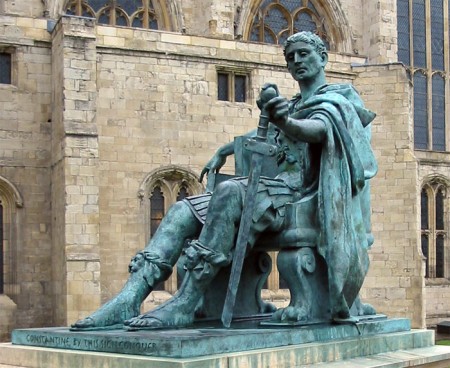
Statue of Emperor Constantine I in York, England

Statue of Emperor Constantine I in York, England

Chalmers on Church Establishments, Part 3
Further Considerations on Establishments

In Lectures 4 through 6 of his Lectures on the Establishment and Extension of National Churches, Chalmers treats some related and pertinent issues. We will continue our survey of these lectures here and close in the final installment with some observations on the whole.

Lecture 4, treating the circumstances that lead up to and justify the state’s selection of a Christian denomination for the instruction of its people in matters of faith and morals, begins with the observation of an ideal. It is ideal when leaders and those who are led are at one and not locked in a struggle of wills, the one against the other. It is ideal when they find themselves in complete harmony and sharing a unity of sentiment. When this actually occurs, we observe “community in its best and happiest mood – when one simultaneous feeling pervades all classes; and, in the pulsations of one mighty heart, the breath of one actuating and reigning spirit, the wealth and efforts of all are consecrated to one common object, and all jealousies are forgotten” (115). Religion has oftentimes been the banner under which governments and the governed have rallied, when the legal and the voluntary principles fused together and acted as one in spiritual concerns. This occurred, of course, in the days of the godly kings of the Old Testament.

But ought religion be the rallying point for national unity between the state and its subjects today in the Christian epoch? The New Testament seems to be quite silent on the matter. So to answer this question, Chalmers turns to the two great instances where this occurred in the Christian era – the first, under Constantine, and the second, at the Protestant Reformation. By examining the circumstances leading up to these establishments of a state Church, it is suggested that the justifications for them will readily appear.

In the first instance, by the time of the Edict of Milan in 313 A.D., Christianity had significantly leavened the Roman Empire. Constantine’s adoption of Christianity as the state religion was by no means an act of coercion; it had very much become a popular religion. Whatever his motivation for the Edict and his later patronage of the Church – a subject that has continually been disputed – he enshrined this obscure, oriental faith as Rome’s own, without general dissent. The government and the governed had happily come together under the aegis of Christ. Further, it should be noted that the Church did not demur at the offer of patronage. She gladly accepted this as nothing other than a clear blessing from heaven. To justify this action biblically, Chalmers observes, “We read of the earth helping the woman. But we nowhere read, that it is the duty of the woman to refuse this help, or to refrain from the facilities which are opened up to her by the hand of Providence, for the multiplication of her converts” (119).

In the second instance, both people and governments of the Reformation came together around the doctrines of the Gospel as it began to enjoy renewed success after ages of obscurity. And this expressed itself structurally much in the same way as it had under Constantine. The Reformed Church was owned and endowed in nations across Europe, to the rejoicing of all (except within the Vatican!).

This great question, whether the state may join the popular sentiment of the people in matters of religion, was before the Parliament of England at the time of the publication of these lectures. Their decision was first a decision of moral and theological consequence; and second, it was one that had ramifications on the outward, economic well being of the people. It was imperative that these considerations be weighed, says Chalmers, when the cry is not for the joining of the people and the rulers around the Gospel, but for their separation.

But can or should the government really enter into the theological disputes of churchmen? “We are aware of the summary and contemptuous rejection to which this proposition is liable – as it would transform the senate-house into an arena of theological conflict . . . and senators into wrangling polemics” (125). This is an exaggeration, says Chalmers. The greatest questions on the matter of religion are well within the capability and are rightly in the purview of the government. A decently educated man in office, with filial respect for sacred scripture, can and ought to decide between the merits of Roman Catholicism and Protestantism. He can consequently select one of these two rival faiths for the doctrine to be taught to his people. But even if the exaggerated objection is granted, Chalmers contends that one should be able to select one of these two on purely economic grounds. There is more than enough evidence, he contends, to select Protestantism as that expression of the Christian faith that best tends to the improvement of the outward conditions of a people. And conversely, “all history and experience tell” us that Romanism is of all religions “most fitted to blind and vitiate a population” (132).

Chalmers concludes the lecture by turning to the then contemporary question of the Protestant Establishment of Ireland, appealing for its continued subsidy, then apparently under threat in Parliament. He freely acknowledges that in prior days, it had been filled with less than perfectly diligent laborers and so had warranted some criticism. Interestingly, he critiques many of the ministers of that establishment for having failed to evangelize Roman Catholics within their parishes.

But over and above this, there was a mistaken policy, maintained and avowed even by their best clergymen, in the form of an honest, though still of a grievously mistaken principle – as if they went beyond their legitimate province if they at all meddled with the Catholic population; at which rate the primitive Christians went beyond their legitimate province, when they meddled with the Pagans of the Roman empire. . . In virtue of this false principle, or false delicacy, the cause of truth suffered, even in the hands of conscientious ministers (135).

The parish plan is an efficient one for the extension of the Gospel. But boundary lines were made for man, not man for the boundary lines!

To continue, the failures of the operators, however, ought not to warrant the dispensing of the machine. And its patronage should continue, especially in light of the renewed and revived ministry that had emerged in his day, who stood in need of the support of the state. If however, the powers that be decided to pull the financial plug, that Church would have to toil valiantly as her unendowed predecessors had in the pre-Constantine era.

The hand of power may strip it of its temporalities; but we trust that its indomitable spirit in the cause of a pure and scriptural faith, will not so easily be quelled. Though despoiled of their rights, they will not abandon their duties. Like the Christians before the days of Constantine, they may perhaps have to win the ground over again – when the Church, purified by the discipline of adversity, will again arise in its strength; and repeating the conquest of truth over the errors of a degrading superstition, will add another victory to the triumphs of former generations (137).

This however is no argument, he contends, that statesmen ought to do evil that good may come. Those deliberating on the matter should be very careful, further, not to give over too soon to the vacillating impulses of the shortsighted masses. Let the fathers have the foresight to provide for their children what is best.

In the sixth lecture, Chalmers turns to the consideration of a previously untreated dimension of a religious establishment. We observed in the opening lecture what an establishment is in essence: it is a sure, legal provision for the Christian education of a nation. But there is a distinction to be made. An establishment can be endowed, but not territorial. While an establishment may exist without a territorial plan, it is inefficient until it adopts and enacts one. An establishment is a very helpful stepping stone to what Chalmers was really after – a mechanism for the effective Christianization of a nation.

This naturally raises the question as to the distinction Chalmers is making. What is territorialism? It is certainly more than a stipend for a clergyman to preach in a church. It is, in addition to this, the giving of an assigned “geographical district” in which “he is expected to take an ecclesiastical cognizance of all the families within its limits” (143). He adds,

To perfect this arrangement, [such subsidized, territorial ministers] must stand so related to his church, as to have a right of preference over all extra-parochial families to the occupation of its sittings; and he, on the other hand, should be so related to his parish, as, if not to have a right of entry into all the houses, at least to be bound in point of duty to make a tender to every householder who is willing to receive him, of such ecclesiastical attentions and services as his time will permit to him bestow, and which might be conducive to the Christian good of himself and of his family. In other words, he is bound to superadd, as far as the people will let him, week-day and household to his Sabbath-day and pulpit ministrations. He is the minister not of a congregation only, as far the greater number of our unendowed ministers are; but he is the minister both of a congregation and of a parish (143-44, emphasis mine).

This distinction is key. ‘Church’ and ‘parish’ are not equivalents for Chalmers. They are concentric circles, the one inside the other, but quite distinct from each other. A territorial minister is not just a parish minister (evangelist), nor is he just a congregational minister (pastor). He is both – a pastor-evangelist, if you will – with distinct responsibilities to both circles.

To illustrate it, he instances two religious establishments that were legally endowed but did not operate on a territorial plan – the Protestant Establishment of Ireland and the establishments active during the American colonial era. Ministers and churches were state-funded, but there was no defined, territorial evangelistic responsibility for anyone in particular. These men served their own congregations, but were not obliged to go after any particular group in the surrounding area. Such a minister, says Chalmers, “has to do with his hearers [those who voluntarily, of their own impulse, come to church]; but there is nothing in such an economy, which at all necessitates him to do with those who are not his hearers. They may choose to attend him if they like; but if they do not choose, they may accumulate in any numbers without the sphere of his observation . . . If they do not come to him, there is nothing in this congregational, even though endowed system, which insures that he should go to them” (145).

Territorialism is the great strength of an establishment. In Chalmers’ thinking, establishments are only valuable as means by which territorialism can be most efficiently established and operated. And it is territorialism alone by which “we can recover a people from the moral degeneracy into which they have fallen” (146).

To argue the virtues of the territorial plan, he suggests an experiment. He challenges anyone to go through some poor city neighborhood, including not more than 2000 souls, and perform a house-to-house survey. How many live there? How many regularly attend church? The result, he is confident from past experience, will be quite surprising. Let the voluntary or the free trade principles reign, and human nature that does not ‘seek after God’ will show itself. Few will be found church-attenders. Even if a Voluntary chapel were placed within the vicinity, few if any of the people in that neighborhood would come. Yes, you might have others “from all distances” beyond the area attending, all with “a predisposition for the services of the sanctuary, and a power as well as a willingness to pay for them” (149). But what of the lost next door? Will they come if they are not sought?

To reclaim these people from their irreligion, Chalmers suggests the territorial model:

Now the specific business which we would like to put into the hands of a Christian minister is, not that he should fill his church any how – that he may do by the superior attractiveness of his preaching, at the expense of previous congregations, and without any movement in advance on the practical heathenism of the community: But what we want is, to place his church in the middle of such a territory as we have now specified and to lay upon him a task, for the accomplishment of which we should allow him to the labour and preference of a whole lifetime; not to fill his church any how, but to fill this church out of that district. We should give him the charge over head, of one and all of its families; and tell him, that, instead of seeking hearers from without, he should so shape and regulate his movements, that, as far as possible, his church-room might all be taken up by hearers from within. It is this peculiar relation between his church, and its contiguous households, all placed within certain geographical limits, that distinguishes him from the others as a territorial minister (151).

Now, if this model is one best suited to reclaim the lost on the lesser level, why not on the greater? So “let the whole country be parceled out into such districts and parishes, with an endowed clergyman so assigned to each, and each small enough to be overtaken by the attentions of one clergyman – we should thus, as far as its machinery is concerned, have the perfect example of a territorial establishment.”

But how, practically speaking, would this territorial plan be carried out within the proposed neighborhood? He suggests picking a neighborhood with the lowest likely church attendance – in his days, some slum of one of the sprawling industrial cities of the United Kingdom – and let the minister frequently visit the people throughout the week over the space of many years. The result should be a gradually increasing attendance of the people in that district of the stated services of worship in the church.

One might object, however, that this proposal seems too idealistic, too romantic. But Chalmers rejoins that experience has shown that ministers who have acted on the territorial principle, visiting the people ‘from house to house’ over a period of time, have discovered only reciprocal warmth and respect. And it is only natural for such a response when men are visited by a truly genuine, caring individual who has taken a concern for their spiritual, physical, moral, and economic well being. Sincere benevolence is naturally drawing. And so he assures his readers that if such an honest Christian philanthropist will but “go forth on such a territory as we have ventured to chalk out for him; and more especially, if he reside within or upon its confines – there is not a month will elapse, before that by his presence and his labours, he will light a moral sunshine throughout nearly all the habitations” (160).

Now, one must retain a measure of sobriety. This plan requires time and diligence for its right operation. “We know it to be a work of slowness and difficulty” (161). It could also be that the older generation will prove past such influences. They may be too hardened in their ways. But it may be that the next generation will be favorably influenced by this “parochial economy,” particularly through the parish schools under the superintendence of the church. This being said, Chalmers wouldn’t give up on the likely effects of a regular, territorial visitation of the older, sin-hardened folk. The following words of encouragement are apt for those weary in well doing:

The most reckless, the most resolute in their moral hardihood, are not beyond the operation of these. Even let them carry it so far, as to barricade their houses, even as their hearts are barricaded, against the first approaches of this apostolic clergyman; and he need not yet give them up in despair. He has only to watch his opportunity and Providence will work for him. The hand of death may at length open a door for him – even to the worst habitation of aliens in the parish. Let him be ever ready with his services; and, in the house of family disaster or family bereavement, the most sullen and else impracticable of these outlaws from all the decencies and humanities whether of Christian or civilized life, may at last give way (168).

In due season we shall reap, if we faint not!

And of course, all of this is of no avail if unspiritual men are set to operate this territorial establishment. Hirelings will only squander the subsidies and leave the territory uncultivated. But these real facts should not dissuade us from eschewing the “random economy” and embracing the endowed, territorial plan as the most expedient way for the seeking and saving of the lost.

The last lecture turns to the thorny question as to how a government can justify the selection of one particular denomination of Christianity for its religious establishment, to the exclusion of others equally legitimate. The very simple answer is that the alternative is highly impractical. The government “will not find it so convenient, if, attempting to be even-handed with all sects, and at the same time to provide a Christian education for all the people, it shall make the further attempt of arranging” the assortment of evangelical denominations “into parishes” (171). There is a twofold problem here. First, the people “cannot thus be made over, at the arbitrary will either of civil or ecclesiastical superiors … in sections of contiguous households, to this one or that other denomination, just according to the locality in which they happen to reside” (171-72). Second, the government cannot effectively provide Christian education to its people without “the medium of one correspondence, and . . . the simplicity of one management” (174).

So on what principle shall the selection be made? We have already seen that statesmen, if they are thoughtful Christians, should be able to decide in favor of Protestantism. But of which variety? And how shall this choice be made without eliciting the outcry of injustice to those left standing in the rain?

Chalmers reminds statesmen that they ought not retreat from their duty, the provision of a Christian education for their people, because of the complexities and even the delicacies involved. Someone will complain; someone will be offended. But “the moral well being of the nation is not to stand at abeyance, till an adjustment shall have been made among controversies not yet determined, and perhaps interminable” (178). Government, further, in choosing one denomination over another for the religious establishment, should not fear accusations of favoritism. She contracts with one that suits her for the greater good envisaged, the national good, and with a clear conscience leaves the others to their own business.

Turning from defense to offence, Chalmers asks the objectors whether or not the minor differences that separate them should hinder the upholding of a common faith and a common cause, the spiritual well being of mankind? And if the objectors outside the establishment demand to know why they are kept out for such minor differences, he retorts that they should answer as to why they stay out for such minor differences? Then with a frank bluntness, he observes that it is only “through the very wantonness of freedom in this land of perfect toleration” that men “have chosen to besport themselves, and so [have] broken forth into their party-coloured varieties; each having a creed, or rather, I would say (for substantially speaking nine-tenths of the people in Britain have all the same creed), each having a costume and a designation of their own” (182-83).

To close, Chalmers calls for unity. Not unity for unity’s sake, however; unity for the sake of the cause! It is our conviction, he writes, that “only by an undivided church, only by the ministers of one denomination, can a community be out and out pervaded, or a territory be filled up and thoroughly overtaken with the lessons of the gospel. Tell, whether it is of greater consequence that minor differences be upholden, or that the universal Christian education of our families shall be provided for? But, in truth, these minor differences may co-exist with the operations of an effective establishment” (188).

[Go to Part 4]

Read Full Post »

Map of Scotland, 1641-1892 (from mackenziefamilytree.com)

Map of Scotland, 1641-1892 (from mackenziefamilytree.com)


Chalmers on Church Establishments, Part 2
The Foundations of Church Establishments

[Note. For those interested in reading this work firsthand, an edition can be found online on GoogleBooks here.]

Turning now to the lectures themselves, we begin with an overview of the first three of six, which lay the foundation work of Chalmers’ thought on the warrant and function of a religious establishment. In Lecture 1, he defines an establishment and removes some typical prejudices that in his day prevented some from giving it serious consideration. In Lectures 2 and 3, he counters and refutes the two 19th century rivals of establishmentarianism, namely, the liberal ‘free trade’ economists and the Voluntaries, and in so doing vindicates the questioned institution. With this roadmap before us, we turn our attention to Lecture 1.

Chalmers recognizes at the outset that there is a “felt indisposition” on the part of many to religious establishments (9). It seems as though this reliance upon the “machinery” of an establishment betrays a mistrust of simple dependence upon heaven for spiritual blessings. But this over-pious mindset fails to appreciate the harmony between divine activity and human responsibility. One only has to observe the analogy between human cultivation of the soil and the churchly cultivation of the soul. If in the former sphere, there is nothing inappropriate with intelligent, vigorous endeavors to improve the land and a trust in the God who alone controls the weather and the elements, then there is nothing inappropriate with “spiritual husbandry” (11).

The part which God takes in the operation, does not abrogate the part which man ought to take in it. They are the overflowings of the Nile which have given rise to the irrigations of an artificial husbandry in Egypt, for the distribution of its waters. And there is positively nothing in the doctrine of a sanctifying or fertilizing grace from heaven above, which should discharge us – but the contrary – from what may be termed the irrigations of a spiritual husbandry in the world beneath. It is not enough that there be a descent; there must be a distribution also, or ducts of conveyance, which, by places of worship and through parishes, might carry the blessings of this divine nourishment to all the houses and families of a land (12-13).

This being said, he certainly does concede that such an economy of spiritual distribution cannot save in and of itself. If you build it, they will not necessarily come. “Its channels of distribution, however skillfully drawn, will, if dry and deserted of Heaven, convey nothing for human souls; and the goodly apparatus of a strong and thick-set Establishment in the land will neither prevent nor alleviate the curse of its spiritual barrenness” (14). Yet, it is a firm principle of Scripture that God employs humble means to usher in His salvation to this world of sinners. He uses the reading and the preaching of the Word. He uses men, ordained and sent by the Church. “God gives the increase,” to be sure. But He also does so by the “planting” and “watering” of Paul and Apollos, whom He calls as His “fellow laborers” (1 Cor. 3:5-10).

With this in the back of our minds, the question that next confronts us, says Chalmers, is what is the best expedient, the most efficient economy of distribution for ensuring that the blessings of the Gospel will be conveyed to every creature under heaven (Mk. 16:15)? He will be contending in the following lectures that it is a religious establishment that suits the purpose.

Now, what is a religious establishment? In short, it is “a sure legal provision for the expense of [the] ministrations” of the Church within a nation (17). There may be other nonessential elements that are frequently considered in establishments; but this is the core, the essential nature of an establishment according to Chalmers.

This sure legal provision for the maintenance of the established Church does not imply, however, any further connection. The Church, when patronized by the state, is independent from the state in all things spiritual. “For their food and their raiment, and their sacred or even private edifices, they may be indebted to the state; but their creed, and their discipline, and their ritual, and their articles of faith, and their formularies, whether of doctrine or of devotion, may be altogether their own” (20). Chalmers is heading an objection off at the pass here. Those who oppose religious establishments contend that the Church, by receiving state endowment, thus becomes enslaved to an earthly master, and so morphs into mere department within Caesar’s bureaucracy. The Church is then domesticated and enslaved to the ‘hand that feeds her.’ Yet, says Chalmers, this is not necessarily the case. When, for example, a merchant chooses to hire and support a missionary in his West India plantation, the missionary does not necessarily become a spiritual vassal of his financier. His stipend is from men, but His orders are not. This missionary takes the endowment as a blessing from heaven and labors to bring the good news to that district where the hand of Providence has led and provided. If this little model on a small plantation in the West Indies is acceptable, why may it not on a far greater scale?

Ah, but there is the testimony of history. Didn’t Constantine’s adoption of Christianity as the state religion mark the spiritual downfall of the Church? Is it not here that Mystery Babylon had its birth? Chalmers responds that the causes of the spiritual downgrade had begun before Constantine. The misfortune of the Edict of Milan lay in “the ascendancy wherewith the [pre-existing] superstition and ignorance both of princes and people had vested the ecclesiastical power, of which it most unworthily availed itself, to its own enormous aggrandizement in things temporal – at once supplanting the rightful authority of God in His Scriptures; and substituting both a doctrine and discipline of its own, by which to blind the souls of men and subjugate them to its sway” (24).

And if the opponents of the establishment, he writes, want to enlist history, what of the Reformers? They, as their heirs in the 19th century, yearned for the Christianization of Scotland. John Knox cried to heaven, ‘Give me Scotland, or I die!’ Now, did this mean for Knox and company demolishing the old machine, with its universities and parishes, handed to them by Medieval Christendom? No. “They did not, with blind and headlong zeal, demolish the old apparatus of distribution. They substituted the true gospel for a false one; and sent forth its now amended and purified lessons along the old pathways of conveyance” (26). In short, they distinguished between a good expedient, tried and proven, and its bad operators. For the Reformers, they kept the business intact, but changed the management – and with good effect, we might add.

And so, Christians ought not to be so hasty to scrap the means that could be effectively employed for Christianizing the masses merely because it has been misused. “Were the water of London to take on a deleterious tinge from the accession of some impurity – the way surely is to purge it of this, or, if possible, to bar the ingress of it, rather than make insensate attacks on the subterranean machinery, by which distribution is made of it through the streets of the city and into the houses of the citizens” (34).

Having thus dealt with removing initial prejudices to the question, Chalmers turns to the positive argument for religious establishments in Lectures 2 and 3.

To appreciate the warrants for a religious establishment, one must see how it stands opposed to the system of free trade in commerce. The liberal economists of the 19th century, following Adam Smith’s doctrine laid down in his Wealth of Nations, argued that the greatest good would accrue to society by the free and uninhibited trade of goods and services, by allowing the simple laws of supply and demand to prevail. Government should not intervene, for whatever motives. This will only disrupt things and inhibit the greatest good for all.

Adam Smith himself applied these principles to Christianity as a good in society. It ought to be left unregulated by government interference and “limited to the extent of the market” demand (48). However, says Chalmers, Christianity must necessarily fail as a good in society on this plan.

A free trade in commerce, only seeks to those places where it can make out a gainful trade; but it is sure to avoid or to abandon those places, where, whether from the languor of the demand or the poverty of the inhabitants, it would be exposed to a losing trade. By a free trade in Christianity, let the lessons of the gospel follow the same law of movement; and these lessons will cease to be taught in every place, where there is either not enough of liking for the thing, or not enough of money for the purchase of it: Or that religion, the great and primary characteristic of which was that it should be preached unto the poor, must be withheld from those people, who are unable by poverty to provide maintenance for its teachers (49).

Why, then, does the good of commerce work to the fullest advantage upon society by the unfettered laws of supply and demand, while on the same laws the good of Christianity is retarded? Simply put, man does not naturally perceive and so desire Christianity as a good. “There is no such intensity of desire or of demand for the article of Christian instruction” in the marketplace as there is for material goods and services (51). “There is no natural hungering and thirsting after righteousness; and before man will seek that the want should be supplied, the appetite must first be created.” Adam Smith must reckon with St. Paul, who said, “There is none that seeketh after God.”

This reality accords with the historical facts of the Christian movement prior to its establishment in the Roman Empire. Christianity was not a naturally attractive commodity. Consequently, missionaries went out, thrust forth into a world that had no pre-existing taste for the teachings of Jesus of Nazareth. And at whose expense did the pagans receive this doctrine of heaven? Who paid (or housed and fed) the laborers who were worthy of their wages? It was not the beneficiaries: at least not initially. Christianity was heavily subsidized in its movement throughout the Mediterranean world and beyond, through a nameless host of private benefactors. And sometimes, the laborers even paid themselves in order to preach without fees (Acts 20:34, 2 Thess. 3:8)!

Non-establishment missionaries in Chalmers’ day certainly acknowledged that Christianity could only be introduced into a new territory by the underwriting of others. Their home and foreign mission societies were proof of this: the pagans would not pay for what they needed most! Now, one could plausibly counter that once missionaries are introduced to a foreign country and find some success that a “native demand will be set agoing” (68), sufficient to maintain the ministry without subsidy. Yet this will not obviate the need to press still further in the cause of the Gospel in that land. And that is precisely the raison d’être of an establishment. It is not the whole that need a physician, as it were, but the sick.

Further, the dissenting chapels of Chalmers’ day, though unendowed by the state, did not strictly operate by the laws of free trade. The plain facts are that these churches had from time to time run into needs that those with deeper pockets, either within their congregations or associations, benevolently supplied. “Unlike to the other articles which are brought into a market, and of which the supply is continued only because of an adequately returning price – unlike to these, the returns for the article of Christian instruction are very often beneath the prime cost incurred in the preparation of it” (66). As long as there are lost souls to be reclaimed in this world, the Christian enterprise will require subsidy.

Yet this does not answer the question as to why it must be the state and not the Christian public that must subsidize the program of Christianizing a land. Chalmers’ response is that, very practically speaking, the operation of free trade in Christianity, as exhibited in the efforts of the Dissenters, had not Christianized the burgeoning, unchurched massed of Scotland. One can feel the pathos of deep evangelical sentiment when Chalmers bemoans the situation of his day:

Let [there] be a church, for distribution amongst [these unevangelized poor] of the bread of life, or for the supply of their moral and religious wants: and its presence in the midst of them, with the weekly invitations of its Sabbath-bell, will fail to attract beyond the veriest handful of the surrounding population to this house of prayer – and, more especially, if the market-price for the accommodation and the service be expected at their hands. It may or it may not be filled to an overflow by hearers from all distances, who have both the wealth and the will to pay for their attendance. But hundreds often are the families in the precincts of this temple of piety, so near that the voice of its psalms may enter their dwellings, yet not awaken them from the insensibility of their spiritual death (72-73).

Let the rules of unregulated commerce apply, and this population will perish for lack of knowledge.

Finally, in a flourish of righteous passion, Chalmers exposes and excoriates the “cold and secular utilitarianism” behind this imposition of free trade on Christianity. To draw a close analogy between articles of commerce in this world with the grand article of salvation, and with all the moral, intellectual, and social blessings that it entails, is crude at best and heartless at worst. What measure is there between profit and human worth and dignity? Between gaining this world and losing the soul? Further, Chalmers states positively, “after all, there is not only false sentiment but even false arithmetic in the views of these gross mercantile calculators. The universal scholarship for which we are contending, would, if carried into effect, be indeed the cheapest defense of our nation – whether its expenses shall be defrayed in the form of a liberality by the hands of private individuals, or from the public treasury in the form of an endowment” (75).

Clearly, there is no ultimate concord between Christianity and commerce. But is there another model to put in its place, other than the old establishment? Consequently, Chalmers turns in his third lecture to deal with the argument of the Voluntaries to confirm his thesis.

To begin, many confuse liberal economic principles as applied to Christianity with the system of Voluntaryism, which is simply the evangelical contention that the Church should have no connection with the state, financial or otherwise. Chalmers distinguishes between the things that differ. There is within Christianity two types of voluntaryism: internal and external. Internal voluntaryism is the willing financing of the ministry by the people directly benefiting from that ministry. Concretely, this could be a local church membership committing to pay its minister entirely from its own resources. No one is coerced, for they are all quite willing. And no money is taken from other sources, much less the state. This is a commendable scheme, and, incidentally, fits quite nicely with the economic dogmas of Adam Smith. The beneficiaries pay for the benefits, and so supply meets demand. External voluntaryism, on the other hand, is the giving or receiving of financing from other quarters due to monetary shortfalls within struggling churches and ministries. In external voluntaryism, benefactors willingly contribute to the Christian instruction not of themselves but of others who either cannot or (in the case of the unconverted) will not pay. Missions, foreign or domestic, operate on this version of voluntaryism.

Here, it becomes clear that the Voluntaries are not free traders, pure and simple. They finance struggling churches and ministers and underwrite the cost of sending missionaries to the pagans. They, therefore, are external voluntaries, and seriously interfere with the free trade of the commodity of Christian instruction. They subsidize it, “repairing the deficiencies of the market price” (85), and so violate liberal economics. Free trade in Christianity and Voluntaryism must not be confused.

To replace the establishment with Voluntaryism, then, throws us back to another question. We are all agreed, says Chalmers, Churchmen and Dissenters alike, that internal voluntaryism is insufficient to extend the Gospel where it cannot or will not be financed. “We presume it to be agreed on both sides, that the outcast millions ought to be reclaimed from the ignorance and irreligion of heathenism. The only difference relates to the party at whose expense this great achievement ought to be perfected – whether by private Christians, under the impulse of religious benevolence; or by an enlightened government, under the impulse of a paternal regard for the highest weal of its subject population” (87, emphasis mine). The Voluntaries obvious argued for the former, Chalmers and company for the latter. “We, the advocates of a National Establishment, hold it the duty and wisdom of every state, thus to undertake for the education of the great family under its charge, and to provide the requisite funds for the fulfillment of the enterprise – and this without prejudice, but the contrary, to the liberality of those individuals, who might choose of their own means to build more churches, and maintain more ministers – thus adding to the amount of Christian instruction in the land” (87).

When the Voluntaries plead that the establishment should be abolished, Chalmers merely raises the question, with what success have they showed to warrant the scrapping of the old engine for Christianizing the masses? Have they prevailed upon the mushrooming numbers of unchurched in Glasgow or Edinburgh? The numbers do not look promising, he observes. The establishment may be an expedient in Chalmers’ mind. But it is a tried and tested one.

It should also be further asked, why the objection to state-funded Christian education (i.e., the teaching and preaching of the Gospel) of the citizens, when state-funded ‘secular’ education is accepted? Why should the fathers of a commonwealth provide temporal education for their children and on principle (!) withhold spiritual education?

And whence this ‘enlightened indifference’ to religious matters in the state? Is it of heaven or of men? Those who vociferously argue against establishments have imbibed an unbiblical philosophy that presumes that government should be “lifeless to all … things sacred” (93). Those in power, “maintaining a calm and philosophic indifference to all the modes and varieties of religious belief, should refuse to entertain the question, in which of these varieties the people ought to be trained” (93). But would God have those in office indifferent to His will and ways, as though their position granted them an ethical immunity? Further, this enlightened detachment about religion doesn’t even agree with the very human character of the state. “The corporation of a state cannot be … denaturalized, or reduced to a sort of caput mortuum, discharged of all soul and sentiment – as if by a process of constitution-making in the crucibles of a laboratory. The cold metaphysical abstraction that is thereby engendered, may exist in the region of the ideal; but it does not exist in the region of the actual, nor even in the region of the possible” (94). Legislators and governors also have feelings for other issues that concern the good of the commonwealth. Can they be altogether detached on that which most affects the good of those under their care? Would they not wish to patronize, even as a matter of policy, the Christian cause, if it yields “an incalculable saving of the wealth, and still more a saving to the happiness of the nation … [by] the prevention of crime rather than its punishment” (97)?

Then, picking up a thread he had left earlier, Chalmers points out how one branch of the Voluntary principle – external voluntaryism – can actually complement the function of an establishment. Private philanthropy can induce public philanthropy. In fact, “we behold in an ecclesiastical provision by the state, an example of external voluntaryism, or a willing public contributing of their wealth to the Christian instruction of the common people, through the medium of a willing government. It only differs from a separate or a personal contribution, by the channel of conveyance through which it passes” (100-101). And this is precisely what Chalmers was doing in his Church Extension campaign in the Church of Scotland – fundraising and building new church facilities for the impoverished, unchurched classes in the hopes that such a demonstration of initiative and benevolence would help loose the purse strings of the government to assist. He saw no inconsistency, but only the greatest harmony of principle “between the legal and the voluntary part of our conjunct operation” (106). At the time of the publication of these essays, he cites 180 buildings that had been funded and built through the free-will offerings of donors throughout the land.

But lest some should entertain the suspicion, the cause that he advocated was emphatically not a self-serving one. The men of the Church Extension campaign did not seek to line their wallets. Rather, their “sacred object is,” he writes, “the moral well-being of that mighty host who swarm and overspread the ground-floor of the fabric of our commonwealth” (110), who had no money and often no interest for the provisions of the Gospel. And so Chalmers wrote as the man from Macedonia, “Come over … and help us” (Acts 16:9).

And so we have the theoretical foundations of religious establishments in the thought of Thomas Chalmers. In the next installment, we will treat the final three lectures on related matters.

[Go to Part 3]

Read Full Post »

Statue of Dr Thomas Chalmers, George Street, Edinburgh (from flickr.com)

Statue of Dr Thomas Chalmers, George Street, Edinburgh (from flickr.com)

Chalmers on Church Establishments, Part 1:
The Value of Discussing the Merits of Church Establishments Today

In 1838, the Church of Scotland was in the midst of a major effort to win the support of the government for the public financing of a ‘church extension scheme.’ The population of Scotland had mushroomed, and there had been major demographic shifts due to the industrial revolution. Up until that time, the Church had been more or less able, through its endowed parochial system, to meet the spiritual needs of the people. This is what Knox and his successors had sought and, by the blessing of God, had obtained: a reformed Kirk sanctioned and subsidized by the powers that be, enabled to furnish the entire nation with pure Christian instruction in every hamlet, village, town and city. But the winds of change had blown, and the Church of Scotland was treading water. Vast districts and slums of the major cities were teeming with unchurched and unreached sinners. To meet this need, the Church leaders of the day petitioned the state for public funds to supplement voluntary contributions, in order that new church facilities might be built in newly drawn parishes throughout the land. Knox’s program of Christianization should not languish for lack of support!

But in the 19the century, there were voices that combined to threaten the vision. First, there were the Voluntaries, those otherwise orthodox evangelicals, many of whom were staunch Calvinists no less, who opposed all connections of the Church with the State. Second, there were the economists, the followers of Adam Smith, who asserted that religion ought to stand economically on its own two feet, and that it would succeed without the help of Parliament.

It is in this milieu that Thomas Chalmers, then the undisputed leader of the evangelical wing of the Church of Scotland, delivered and published his Lectures on the Establishment and Extension of National Churches (Glasgow, 1838). It presents a very thoughtful and compelling argument to Christian people and to magistrates alike the merits of the institution in question. And I would argue that it, together with much of Chalmers’ other writings, should be unearthed and brought again into the thoughtful consideration of the reformed and evangelical world. To that end, I would like to provide an overview and commentary on the Lectures in a series of installments.

Before that, however, it will probably be asked, why in the world we should we study a work on Church establishments? First, aren’t establishments defunct relics of pre-enlightenment Christianity? If so, this would be a study in matters of mere historical interest. And second, aren’t they just plain wrong? Don’t they enshrine and patronize one denomination over other legitimate Christian bodies? And aren’t we enlightened enough today to contend that there ought to be a perfect tolerance of all religious faiths within a nation? Even to contemplate the virtues of establishments would probably strike most Christians today like endorsing the Salem witch trials. We abandoned that sinking ship long ago; so let’s let the thing lie where it should on the ocean floor!

But there are several reasons why Chalmers’ Lectures should be read and discussed again.

First, we should not dismiss the case at the outset without giving it a thoughtful ear. As Nicodemus rightly put it, “Doth our law judge any man, before it hear him, and know what he doeth” (Jn. 7:51)? And those who argued for Church establishments were not wide-eyed fanatics; they were our venerated fathers in the faith. I think that this should especially resonate with modern-day Reformed folk. This was the position of Luther, of Calvin, and of Knox. This was the position of the divines at Dordt and at Westminster. This was the position of the New England Puritans, who sought to set the Americas as a ‘city on a hill.’ We may not, after having read the arguments, embrace them. But should we prejudge a matter in which our forbearers have lent the weight of their united testimony?

Second, we should have a distinct vision, informed by revelation. And I think that means we should want civil magistrates to be not just adherents, but patrons of Christianity. What is it to pray ‘thy kingdom come?’ Does that kingdom ‘on earth as it is in heaven’ exclude any sphere? Is Christ to be sovereign over our hearts, our bodies, our families, but not our businesses, our centers of learning, our courts and legislatures? Is that what we envision and long for? Is that the aspiration that Holy Scripture incluclates? That Jesus should be Lord of all, except within the beltway? My vision, my longing, is that in every sphere, including the government, men of every rank will do homage to King Jesus – privately and publicly. So I will go out on a limb here. I think that the Constitution is fallible and not of equal authority with the Bible (gasp!). If the First Amendment means that Christ may have no official, recognized honor done Him by our nation, then I say, let us pray for a day when it shall be amended by the universal demand of a spiritually awakened citizenry.

Third, if we are reformed and sincere evangelicals desiring the conversion of our fellow countrymen, I think we should want to understand how our forbearers went about that business in their day. We should sit not only at the feet of their doctrine, but also learn from their sanctified wisdom. It is true that even if we adopt the ‘establishment principle,’ it is impossible to seek a total application of it to the present day. But at the same time, I am convinced that it is a rash mistake to think that everything bound up under the heading of Church establishments is automatically inapplicable today. Establishments work on the territorial principle, for example. That principle, as Chalmers here and elsewhere contends, is simply that evangelism is most efficient when it is focused on a definable community, a ‘parish,’ if you will. And as territorial churches eschew competition and cooperate for the greater good, each habitually cultivating its own charge, the end result of their work in the aggregate will be the Christianization of the commonwealth. This principle does not require an establishment for its operation. True, establishments are conducive to the settling of the territorial system. But establishments are not absolutely necessary for it; and this point Chalmers demonstrated in his territorial efforts in the West Port of Edinburgh after he led Disruption from the Church of Scotland. Without an establishment backing him, he adopted and spiritually renewed the worst slum in Edinburgh.

Fourth, our Lord predicted the eventual triumph of His Gospel Kingdom among men (Matt. 13:31-33). Christ is building His Church, and we may be assured that even the mighty gates of Hell shall not withstand its progress (Matt. 16:18). And of course, this is not totally new; the Old Testament prophets unite in their vision of a Messiah-conquered world, when all men shall submit to Him (Psa. 2:8, Isa. 2:1-4, Dan. 2:31-45). If all this is the case, then we should have a ‘postwar’ reconstruction plan. If God pours out His Spirit today, as He has done in times past, we will be in the same position that the Christians were under Constantine or the Protestants during the Reformation in Europe. Entire nations – people and princes – have been overcome by the persuasive force of the Christian message. What shall we do when it happens again? Shall we or shall we not accept the hand of a converted government to endorse and even endow the Church of Christ? Shall we or shall we not advise them on how to be godly rulers under their Lord Christ if they solicit us? Ought we, citing the First Amendment, politely to opt out of a seat in their cabinet meetings to shape public policy? Or, if it does not happen in our nation, how shall we respond to our Christian brothers, say, in China, if and when they tell us that officials in Beijing have called upon them to be their spiritual guides? What advice shall we offer?

With these reasons in mind, I would hope that Chalmers’ Lectures might be perused once again.

[Go to Part 2]

Read Full Post »


Here is an essay I’ve written on the old parish plan for the modern day, with special attention on the thought of Thomas Chalmers.  It’s attached in PDF.

parish_evangelism

Read Full Post »

Urquhart Castle Prior to its Destruction

It does seem that parish ministry and itinerancy as models of Christianization are quite distinct from each other. The first emphasizes a ‘settled’ ministry with a pastor or pastors within a fixed geographic locale, drawing the unconverted within that charge to the sound of the Gospel call – and so into the regular worship services of the church – by a regular, habitual, and personal (often life-long) labor. Evangelization was by preaching, yes, but preaching that worked hand-in-hand with the methodical visitation of the unconverted in a defined territory, in coordination with other parochial ministers in their settled charges. This, as far as I understand it, was the norm in Reformation and Post-Reformation Scotland, for example. The second presumes an ‘unsettled’ ministry in a geographic area with a great spiritual need and sends men in circuits throughout that region to preach until such a time as regular, settled ministries can be established.

The two models have not always lived in peaceful coexistence. The First and Second Great Awakenings, as I’ve heard, introduced tensions on this subject. The itinerancy of great preachers such as Whitfield was warmly embraced by some, such as Jonathan Edwards, and even by many of the Scots Presbyterians (for a time). But there were many questions lingering as to whether the sensationalism of the comet-preachers with their big, spellbound crowds detracted from the value of the regular, settled ‘parish’ ministers. Did it all tend to remove the ancient boundary marks? Did it in any way contribute to a more market-oriented, consumerist Christianity, which figures such as Thomas Chalmers deplored? A brand of Christianity that focuses upon attracting those already religiously predisposed and fails to go after – habitually and methodically – the indifferent and careless? Perhaps.

But are parish ministry and itinerancy in and of themselves mutually exclusive models? Must we choose one over the other? Are Thomas Boston and Robert Murray M’Cheyne automatically good because they were arduous, settled parish ministers, given to systematic household visitation of all within their charge? Were Whitfield and the American frontier circuit riders automatically bad because they refused to settle down to the parson’s life? While I reject the idea that we should reimplement all the methods of the apostles in those formative days of the Gospel in the 1st century Mediterranean world, including ‘episcopal’ itinerancy and the deployment of apostolic deputies, yet isn’t there something to be said for the lawfulness of a kind of itinerancy during times of unusual need? When elders weren’t raised up in established congregations, Paul and his deputies visited – and appointed ‘settled’ elders. He left to Timothy a model for the continuation of the regular ministry, foreseeing a day when unsettled itinerants would no longer be necessary. Much like scaffolding to a finished building, the itinerant ministry was there for a time until the finished product could stand. Or, like parents to a child until he becomes mature enough to make it on his own.

The 16th century Church of Scotland in the First Book of Discipline made use of ‘superintendants’ to preach, establish new congregations, and ordain ministers throughout large geographical areas, during an extraordinary time when there was a shortage of ministers and the work of evangelizing the nation was a pressing need. And while the Lowlands had been effectively Christianized by the 17th century, yet the Highlands were still under the sway of Rome. The settled parish system of the south could not be easily managed in the north, where the vast, mountainous ‘parishes’ of the Highlands were too difficult to reduce to the order of a settled charge. Consequently the Established Church utilized itinerant ‘catechists’ in the Highlands through agencies such as the Scottish Society for the Propagation of Christian Knowledge (SPCK – incidentally, which also helped fund David Brainerd’s efforts to the Delaware Indians of North America).

Perhaps we may view itinerancy and parish ministry as complementary strategies, given different stages of an offensive. The first is a strategy for quick, broad dissemination of the Gospel of the Kingdom. It is the ‘first strike’ against the Kingdom of Darkness. It establishes the beachhead. Outposts are established in enemy territory. Then the second strategy is phased in. Theses outposts serve as bases to advance the frontline in their respective zones, and all in cooperation with each other. They do not interfere in the zone of another outpost, but fully expect the other to take possession of theirs, as they themselves are busy doing the same from their position. After all, they are fighting a common enemy.

One might think that in itinerancy geography factors less prominently than in parochialism. Itinerancy does not methodically focus on fixed households in a given district; parochialism does. Itinerancy relies mostly upon indiscriminate preaching sporadically in an area, sowing seed broadly; parochialism does not, since it concentrates regularly in one particular area.

But it is not as though geography is less of a concern in itinerancy. The Apostle Paul was an itinerant, it is true. “From Jerusalem, and round about unto [kuklo mechri, lit., ‘in a circuit’] Illyricum, I have fully preached the gospel of Christ” (Rom. 15:19). But note his great concern with localities, areas, regions, and even political territories – nations, along his routes. “As the truth of Christ is in me, no man shall stop me of this boasting in the regions [en tois klimasin] of Achaia” (2 Cor. 11:10). He was claiming lands for the Redeemer, and even had his eyes set on the frontiers – Spain (Rom. 15:24). Territories were divided up, and Corinth belonged to Paul. “But we will not boast of things without our measure, but according to the measure of the rule [to metron tou kanonos – ‘the boundary lines?’] which God hath distributed [emerisen] to us, a measure to reach even unto you. . . having hope, when your faith is increased, that we shall be enlarged by you according to our rule [ta kanona hemon] abundantly, to preach the gospel in the regions beyond you [ta hyperekeina]” (2 Cor. 10:13-16). Corinth then, to use much later Presbyterian jargon, was ‘within his bounds.’ (I cannot help but envision Paul with his deputies poring over a map of the Mediterranean as a general would with his officers!) So it is clear that itinerancy is not necessarily un-geographic in orientation.

One might also conclude that preaching is given a greater place in itinerancy and less in parochialism. It is always through the foolishness of preaching that God saves, whether in more or less settled phases of the Kingdom of God in a certain territory. But even itinerant ministry is not just about getting on a soapbox and preaching to anyone and everyone who might walk by. It also involves interpersonal, private interaction. The Apostle Paul both “taught publicly” in his Gospel labors in Ephesus as well as “from house to house” (Acts 20:20). Paul dealt intimately with the Philippian jailor and his household (Acts 16:32). And our Lord Himself, though an itinerant preacher, dealt privately with Nicodemus (John 3:1-13) and the Samaritan woman (John 4:1-30). Nor is parochial ministry all private visitation. Paul, writing to his deputy Timothy, was to focus on regular public ministry in Ephesus. “Till I come, give attendance to reading, to exhortation, to doctrine” (1 Tim. 4:13). “Preach the word; be instant in season, out of season; reprove, rebuke, exhort with all longsuffering and doctrine” (2 Tim. 4:2). And in addition to preaching, he was to train men who could settle into Timothy’s place, continuing the same, regular, public ministry of the Word (2 Tim. 2:2). The main difference here between the two models, it would seem, lies in the fact that the itinerant ministry is not settled, dealing regularly with the same number of people in a locality for a long period of time whereas the other is. And I also suppose that there is a certain fluidity between the itinerant and settled parochial ministry, especially since Paul stayed ministering in Ephesus for two years (Acts 19:9) and while under house arrest in Rome used his rented house to preach regularly there (Acts 28:30, 31).

But while there are differences and distinctions to be made between the two models or strategies, in one thing they are identical. Both are evangelistically oriented. There is no retreat into the insulated comfort of the congregation of the faithful, but both manifest an impetus beyond.

Read Full Post »

« Newer Posts - Older Posts »