Here is the latest quarterly update. If you missed the last one from June, you can read it here. And visit Reformed Parish Mission to learn more about history and principles of this effort.
Archive for the ‘Parish in American Context’ Category
Jesus, the “First and the Last” | RPM September Quarterly Update
Posted in Parish in American Context, Parish Theory & Practice, Reformed Parish Mission (RPM) Posts on February 6, 2026| Leave a Comment »
RPM: Autumn visits on my parish circuit
Posted in Parish in American Context, Parish Theory & Practice, Reformed Parish Mission (RPM) Posts on November 10, 2025| Leave a Comment »

As the weather cools, the leaves turn and fall, I continue my rounds in my little “territorial vineyard,” as Thomas Chalmers affectionately would call it. Since I arrived in S. Jersey in late 2023, I’ve made it more than midway through my second round. The Lord has been pleased to pick up my spirits after something of a little ‘dry spell’ in the mission. The following are sample conversations of late that have given me some encouragement.
As I approached one particular house that I first visited a year ago, I checked my notes. “Talker.” Yeah, I remember something of that first visit. Talkers in certain ways are definitely better than not-talkers, since they often give you more of an opportunity to proclaim the Gospel. If you can get a word in edgewise! But “talkers” will hardly enter the Kingdom for their much talking, unless of course they finally close their mouths and let God speak.
(more…)“My Kind of Sinners” | RPM February Quarterly Update
Posted in Parish in American Context, Parish Theory & Practice, Reformed Parish Mission (RPM) Posts on April 12, 2025| Leave a Comment »
Here is the latest quarterly update. If you missed the last one from November, you can read it here. And visit Reformed Parish Mission to learn more about history and principles of this effort.
Gathered-church minister: try the parish!
Posted in Gathered Church Ecclesiology, Parish in American Context, Parish Theory & Practice, Thomas Chalmers on March 24, 2025| Leave a Comment »
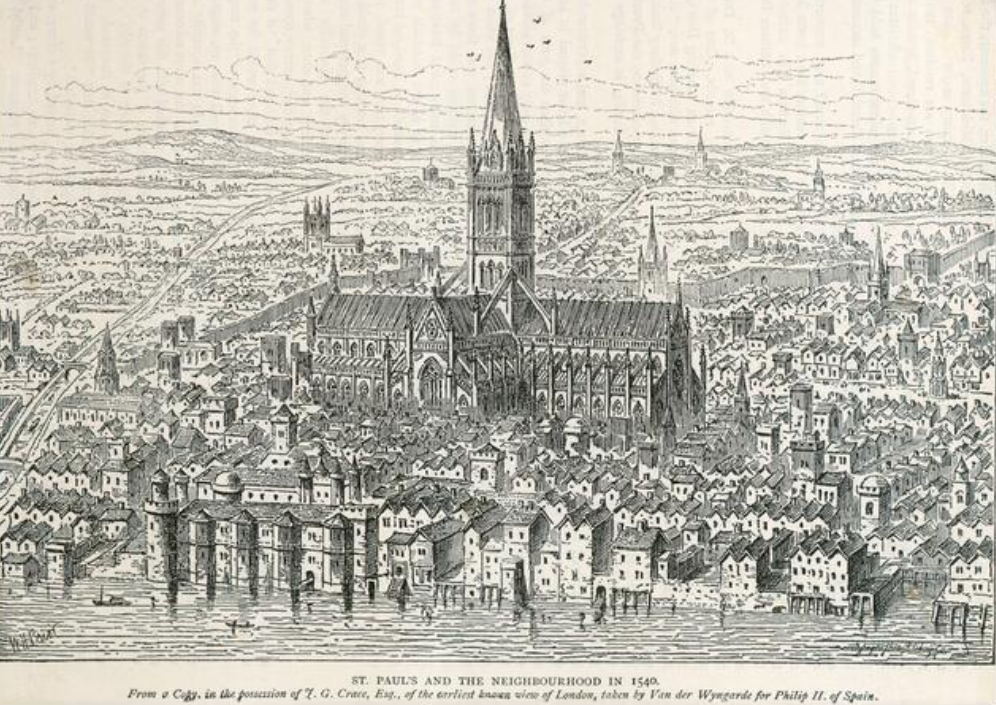
“It is no personal disparagement to the dissenting minister, when we simply say of him that he is less favourably placed. He may officiate through the week among his own hearers, who often lie scattered in isolated families over a wide extent of country, or through all the streets, and to the distant outskirts of a populous town. We have no doubt that he would greatly augment his influence, by assuming a local district in either of these two situations, and, in the way of Christian experiment, charging himself with the duty of religious attention to all the families within its limits whom he shall find willing to receive him. We should look for a far wider and more welcome respondency, and therefore a better result than is generally anticipated. But, in point of fact, this is seldom if ever done by dissenters. They are incredulous of its success—and are even themselves discouraged by a certain haunting sense of inferiority, which in as far as it is well founded, is itself a strong demonstration in favour of a religious establishment. They do apprehend a certain defect of reception and recognition among the families; and that, on the ground too, that they are not the regular or established functionaries of the land. They hang back under a sort of consciousness, that theirs is not so valid a right of entry as that of the parish minister. They cannot help the feeling of a certain defect in their warrant, in virtue of which they are not so authorized to go into every house, and there overture the services of Christianity. They themselves, in short, would have a greater sense of comfort and confidence in the prosecution of such a round, if translated into the place of regular clergymen, or similarly backed by the institutions of the land. For ourselves, we should like if our dissenting ministers could in the spirit of enlightened zeal, or of active religious philanthropy, overleap all these delicacies, and actually make the attempt of carrying their household ministrations into the bosom of every family that would open the door to them. The fact that this is so little done by them, is pregnant with inference. To our mind, it speaks powerfully for a religious establishment; that under the cover of its sanctions, there is on the one side, a greater boldness of access felt by its ministers; and, on the other side, a readier acquiescence by the people, in their offered services. The propriety of a universal movement among the houses of his allotted territory on any Christian errand, or with any Christian proposal, is far more promptly recognized by all, when performed by the parish clergyman, than would be a similar movement, if gratuitously attempted by a sectarian minister. And this would be the feeling not of the upper classes of society alone—but, in truth, the feeling even of workmen and cottagers. It is one of those aptitudes of our nature, of which it were most legitimate to avail ourselves—and which is turned to its best account by the device of an establishment. Without this machinery, the population will fall away in large masses, beyond the scope of any ecclesiastical cognizance. With it a wide door of access is opened to all the families. It is just the access which it is most desirable that a man of principle and prayer should be provided with that as it is a great, so also it may be an effectual door” (Thomas Chalmers, Collected Works 17:123-124).
Chalmers’ rebuttal of religious free trade
Posted in Audio Resources, Establishments, Parish in American Context, Parish Theory & Practice, Religious Marketplace, Thomas Chalmers on February 5, 2025| Leave a Comment »
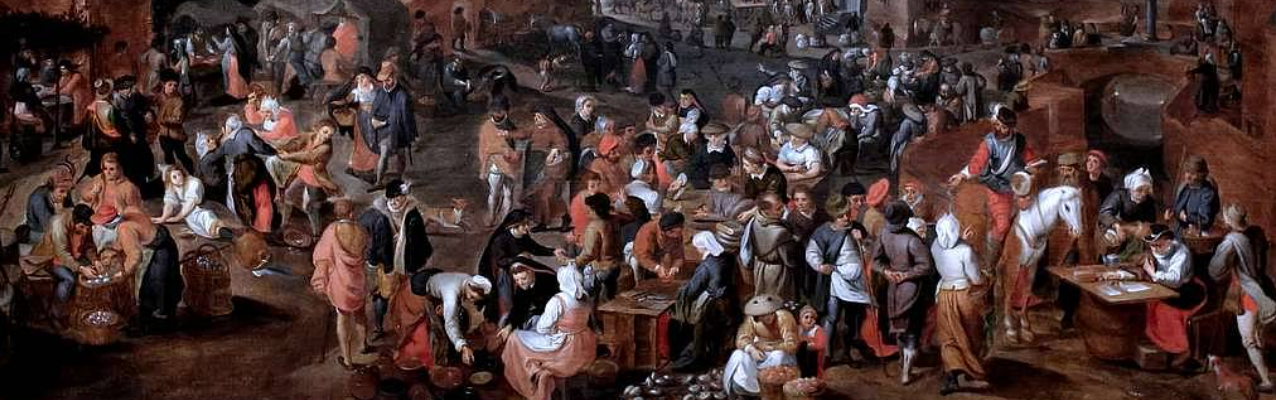
“If you build it, they will come.” Or . . . will they? Smith said yes; Chalmers said absolutely not. The following is an academic article I wrote for the Historical Journal of the Scottish Reformation Society that explains how Thomas Chalmers (1780-1847) argued for religious church establishments as mission agencies against Adam Smith’s regrettable misapplication of laissez faire to matters of religion.
I also gave a somewhat abbreviated lecture last year at Puritan Reformed Theological Seminary. You can listen to that here:
Someday I hope to be free to return to further academic research on Chalmers’ territorial or ‘parish’ missiology, if not to get back into a Ph.D. program. All God willing!
Take church to them! ‘House-churching’ the heathen
Posted in Gospel Tactics, Missiology, Parish in American Context, Parish Theory & Practice, The Gospel & the Poor, Vignettes from the Old Parish Way, tagged bible, christianity, church, faith, jesus on December 16, 2024| Leave a Comment »
The following extract comes from Thomas Cochrane’s, Home Mission-work; Or, Twenty-five Years in a Mission Field (1873; pp. 51-52). Chalmers earlier advocated these exact same tactics years before. In my parish mission efforts, I’m already seeing the profound wisdom and insight of this policy. If they don’t yet come to church, then (assuming they let you in the door) bring church to them!
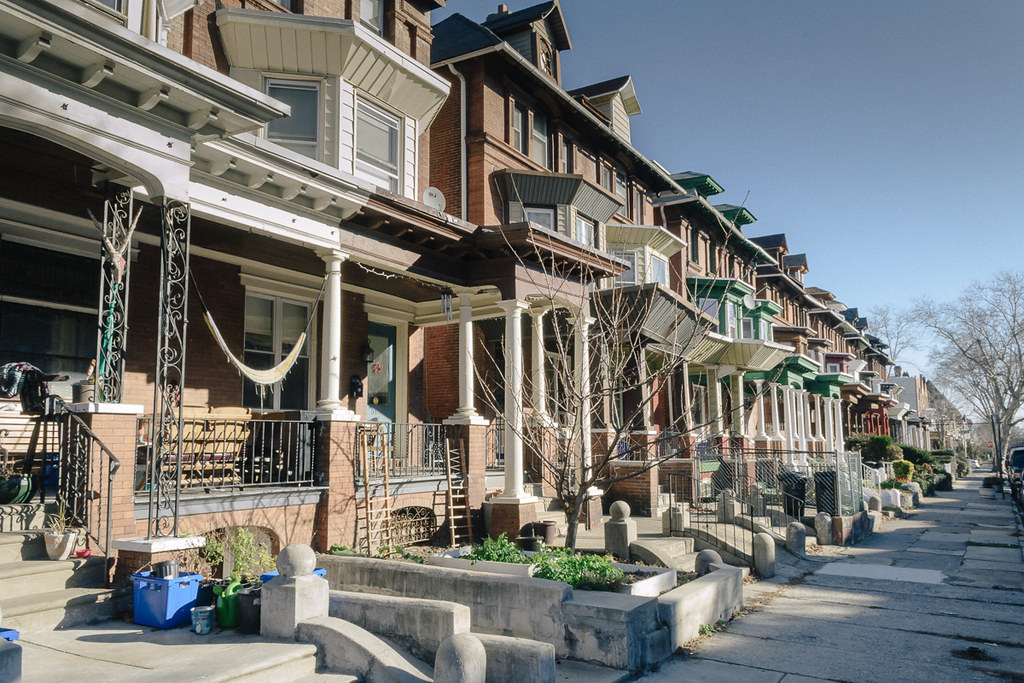
“In all Territorial districts there will be found many not only living in entire neglect of the sanctuary, but many of that number who will scarcely be persuaded by prayer and pains to avail themselves of the privilege To meet such cases, the devoted missionary will often be found to try and bridge over the difficulty by taking the church to them; sometimes, perhaps, even taking possession of the home of the neglectful, and making a church in their house. The effect of such little gatherings is often very blessed indeed. By these meetings there is not only opened a way for bringing the Gospel to the very homesteads of the careless and prayerless, but it is also, under GOD, a very fruitful source of augmenting the central gatherings.
“One of the most useful members of the Mission relates, as his own experience, how by this agency especially he was won to the public ordinances of the church. He was ill to gain over. Many months of prayerful effort were spent, but “by keeping at it,” with God’s blessing on the means, he was at last enlisted in the good cause ; and how useful he has been since in gaining others, the future only can reveal. How devoted he has been cannot be told.
“The services at these fireside gatherings should not, as a general rule, be lengthened above an hour, for many reasons. Mothers cannot conveniently give longer time from household duties. Short telling addresses at such meetings will ordinarily be most useful and acceptable. The grand object being to deal chiefly and closely with those who have not been accustomed to much serious thinking about religious subjects, anything fitted to weary and repel should be carefully avoided. How all-important to leave a good impression, and, by this short pithy service, to beget a thirst for the more extended, if not more formal, services of the house of God! It would not be an easy thing to say how many members of the church first found their footing towards the sanctuary through the influence of these district meetings. They will not only prove useful-almost essential-in the forming of a Territorial congregation, but will be of immense benefit after it has been formed, both as a means of dealing with the neglectful members of the congregation, and of reaching those beyond the pale of the church.”
RPM: Could you possibly help me?
Posted in Parish in American Context, Parish Theory & Practice, Reformed Parish Mission (RPM) Posts on December 13, 2024| Leave a Comment »

Dear friend, would you please take a moment and listen to this short appeal for Reformed Parish Mission? Click on the audio file below. And options for giving are here. All gifts are tax-deductible. God bless you today, in Jesus’ name.
“Go out quickly into the streets and lanes of the city, and bring in hither the poor, and the maimed, and the halt, and the blind. And the servant said, Lord, it is done as thou hast commanded, and yet there is room. And the lord said unto the servant, Go out into the highways and hedges, and compel them to come in, that my house may be filled” (Luke 14:21-23).
RPM August Quarterly Update: Kingdom Collaboration
Posted in Parish in American Context, Parish Theory & Practice, Reformed Parish Mission (RPM) Posts on October 23, 2024| Leave a Comment »
Here is the latest quarterly update. If you missed the last one from February, you can read it here. Also, as a part of my home mission labors under my presbytery, I am free to take pulpit supply opportunities one Lord’s day per month on average. This enables me to supplement our support income with honoraria and, as opportunity allows, raise awareness of Reformed Parish Mission. If you have or know of any opportunities, feel free to drop me a note at michael@reformedparish.com. (Bio & online sermons here.)
Crow Nation, Christian Nation!
Posted in Establishments, Parish in American Context, The Church in America on October 22, 2024| Leave a Comment »

You read it right. There is actually a Christian religious establishment within the U.S. of A., and I imagine that it is completely free of whites. So for you R2K-types, assorted Anabaptists, and secular liberals, “put that in your pipe and smoke it!”
Zoom SRS conference: Thomas Chalmers and the “Great Home Mission”
Posted in Church of Scotland, Constantine, Establishments, Parish in American Context, Parish Theory & Practice, Religious Marketplace, The Church in America, Thomas Chalmers on October 8, 2024| Leave a Comment »
In this public lecture of the Scottish Reformation Society, I will be discussing Thomas Chalmers’ (1780-1847) defense of church establishments over against Adam Smith’s critique. Chalmers championed such an establishment as a “Great Home Mission.”‘ Yet is this a merely an academic question? Does Chalmers have something to offer is in modern, pluralistic America? You might be surprised. Join us Friday, October 18 at 2:30 p.m. Eastern-U.S. / 7:30 p.m. U.K. Watch through Facebook Live. More information below:
 West Port Experiment