Below is an exceprt from Hints on the Art of Catechising by Edward Bather, a 19th century clergyman in the Church of England. Quite helpful material from an obviously seasoned catechist. Enjoy!
* * * * *
I shall understand catechising, then, as it is commonly defined—namely, as signifying—instruction in the first rudiments of any art or science, communicated by asking questions and hearing and correcting the answers. And if I may be allowed to put my meaning into very familiar phrase, and to state plainly what I would recommend, it is this —That the catechist, having taken for his basis, or the subject matter to be unfolded, either some portion of the Church Catechism itself, or some text which illustrates it, or both, should then first “instruct” his pupils by questioning the meaning into them, and then “examine” them by questioning it out of them.  The first process, it is obvious, may most conveniently be attended to in the school, and the second in the church: or, in other words, in the school, where he has most time, and is in least fear of being tedious, he will naturally most apply himself to put those questions by which he means to conduct his pupils into knowledge of the subject; and in the church, those by which he would give them opportunity to produce their knowledge; but in neither situation will he confine himself to either mode exclusively. And then I say, when the meaning of any general head of faith or practice, as proved and illustrated by Scripture, shall have been got out of the children in its particulars, or piece by piece, in answer to the questions put to them—those children themselves and the by-standers together will be a congregation, just in a fit condition to profit, under God, by exhortation or preaching: and there are two ways in which the minister may address them with great advantage. He has the opportunity, whilst the catechetical instruction is proceeding, of interspersing, as he gets his replies, many brief remarks and practical observations in a natural and lively, and therefore attractive and affecting manner; or he may sum up the particulars afterwards in a short discourse, and ground upon them, with good effect, the admonitions which they obviously suggest.
But of this I shall have more to say presently. The practice recommended has, of course, its difficulties, and the method cannot be fully shown without more minute examples than can well be given in an address of this nature. I may possibly, however, explain myself in some degree. The thing to be done is to possess the minds of a number of ignorant and heedless children with the sense and meaning—we will say—of one of our Lord’s parables, and to bring them to perceive and consider the practical lesson which it is intended to convey. In order to this, their attention must in the first place be gained and fixed, and then there will probably be words and phrases to be explained, perhaps old customs also—the literal story or similitude to be compared with the religious truth or doctrine which it is employed to illustrate, and other portions of Scripture to be cited, and brought to bear on the point in hand, in a way of confirmation or further exposition. Then there are two ways of proceeding: you may preach or lecture upon the subject, and in so doing, you tell your hearers what you have acquired and ascertained yourselves: or else you may communicate instruction as I advise, by asking questions, and correcting the answers; or I should rather say, by bringing the children themselves to correct them, by means of further questioning on your part. And in that case they tell you every thing. The truth and meaning comes out of their mouths to you, not out of yours to them, though it is certain you guide them to it, and put it into them. Everybody knows what in the language of the bar is meant by asking leading questions, and that a witness must not be led—because there the object is not to instruct or tell him what he should say, but to examine him or inquire what he really knows and has to say; but the case of which we are now speaking being exactly the reverse, the catechist’s aim being, at least in the first instance, to instil, and not to extract, his proceedings must be just what the advocate’s ought not to be. And then the whole “skill,” to use the words of Herbert in the Country Parson, “consists but in these three points; first an aim and mark of the whole discourse whither to drive the answerer, which the questionist must have in his mind before any question be propounded, upon which and to which the questions are to be chained. Secondly, a most plain and easy framing of the question, even containing in virtue the answer also, especially to the more ignorant. Thirdly, when the answerer sticks, an illustrating of the thing by something else which he knows, making what he knows serve him in what he knows not” (pp. 18-21).
Read Full Post »
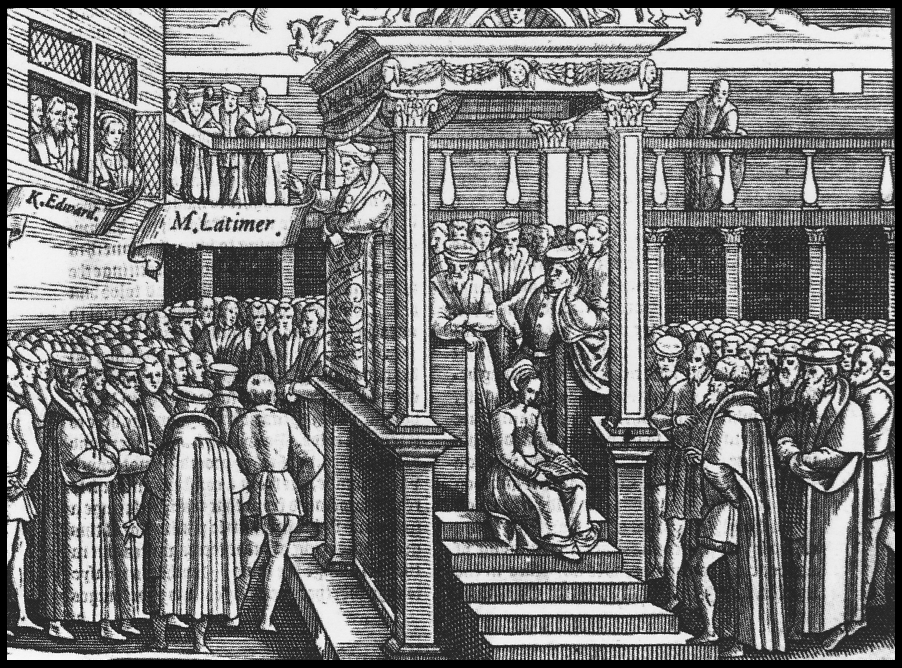
 Related, it seems that they are now being touted (or maybe I’m just noticing it) as suitable vehicles for ‘missional’ outreach. Unbelievers need a ‘safe’ place to be welcomed, where they will not feel judged. So we can win them over to church, with all its trappings, through the back door. Now, I am all for loving unbelievers and making them feel loved. But what about public preaching as a means of grace? What of God’s choice of the foolishness of preaching? What of the scandal of the cross? And does that scandal come in bold face through the small groups, or is it in the fine print on page 236?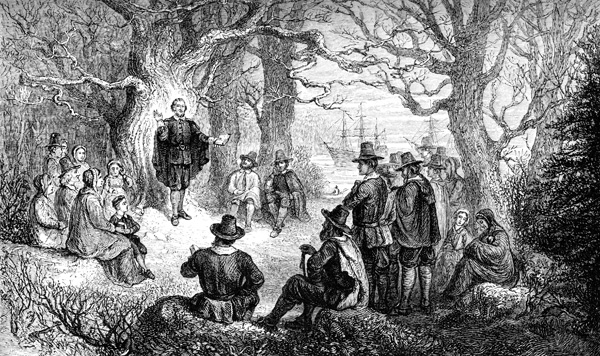

 West Port Experiment